Beta-Blocker & CCB Combination Safety Checker
Medication Combination Assessment
This tool helps determine if your specific combination of beta-blocker and calcium channel blocker is safe based on the latest medical guidelines.
Safety Assessment Result
Key Recommendations
- Monitor your heart rate regularly (should stay above 50 bpm)
- Check for symptoms like dizziness, fatigue, or fainting
- Get an ECG if you experience any new symptoms
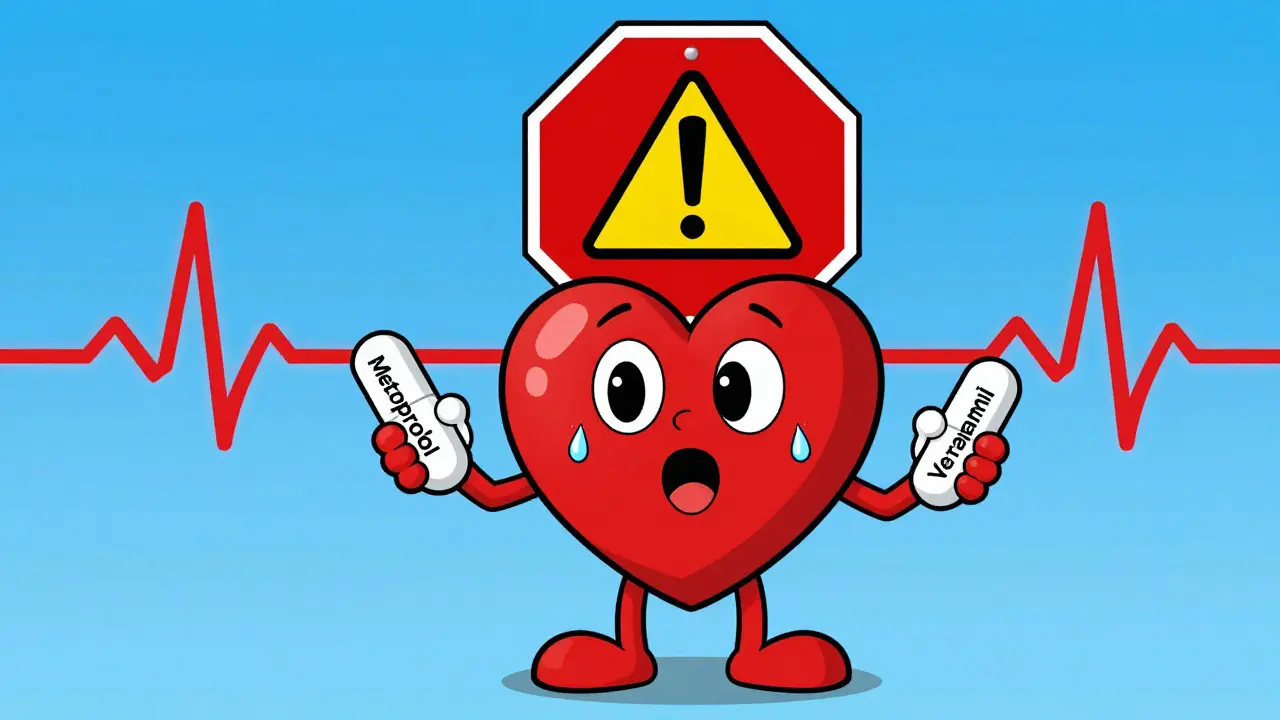
When two powerful heart medications are taken together, the results can be life-saving-or dangerous. Beta-blockers and calcium channel blockers are both common drugs used to treat high blood pressure, chest pain, and irregular heart rhythms. But when you combine them, especially certain types, the risks can spike fast. This isn’t just theory. Real patients have ended up in the hospital-some with complete heart block, others with dangerously low heart rates. And yet, for some people, this combo works better than anything else. The key? Knowing exactly which drugs you’re taking and who it’s safe for.
How Beta-Blockers and Calcium Channel Blockers Work
Beta-blockers like metoprolol, a medication that slows the heart rate and reduces blood pressure by blocking adrenaline’s effects on the heart, and propranolol, a non-selective beta-blocker used for hypertension, angina, and arrhythmias, work by blocking the heart’s beta receptors. This lowers heart rate, reduces how hard the heart pumps, and brings down blood pressure. They’re especially helpful for people with fast heart rates or a history of heart attacks.
Calcium channel blockers, like amlodipine, a dihydropyridine calcium channel blocker that relaxes blood vessels with minimal effect on heart rhythm, and verapamil, a non-dihydropyridine calcium channel blocker that slows electrical signals in the heart and reduces contractility, stop calcium from entering heart and blood vessel cells. This makes blood vessels wider (lowering pressure) and can slow the heart’s electrical system.
The big difference? Not all calcium channel blockers act the same. Amlodipine mostly affects blood vessels. Verapamil and diltiazem also slow down the heart’s internal wiring. That’s why mixing verapamil with a beta-blocker is risky-but mixing amlodipine with a beta-blocker? Often fine.
The Real Danger: When Combos Backfire
Here’s where things get serious. If you take verapamil with metoprolol, your heart rate can drop too low. Studies show this combo causes severe bradycardia (heart rate under 50 bpm) in 10-15% of patients. In older adults, it can trigger complete heart block-a condition where the heart’s upper and lower chambers stop communicating. One 2023 study found patients on this combo were over three times more likely to need a pacemaker than those on metoprolol plus amlodipine.
It’s not just about heart rate. Left ventricular ejection fraction-a measure of how well the heart pumps blood-can drop by 15-25% when verapamil and a beta-blocker are combined in people with weak hearts. That’s a red flag for heart failure. Even if you feel fine, your heart might be struggling harder than you know.
And it’s not just elderly patients. A 2022 analysis of over 18,000 Chinese patients showed that the risk of heart block was highest in people with a PR interval longer than 200 milliseconds on their ECG. That’s a simple test. But many doctors skip it.
When the Combo Actually Helps
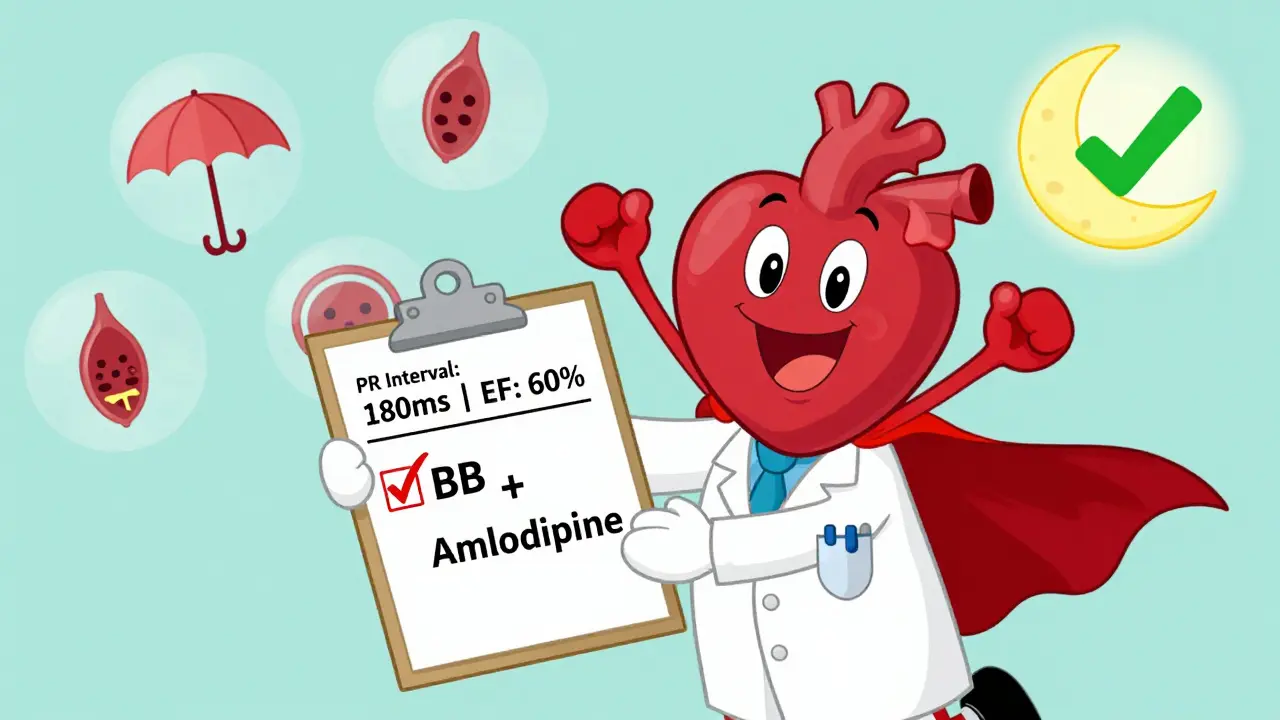
Despite the risks, this combination has real value-for the right people. If you have high blood pressure and angina (chest pain from heart strain), BB + CCB can be better than either drug alone. The 2018 European guidelines list this combo as a first-line option for that specific group.
Why? Because they hit the problem from two angles. Beta-blockers reduce the heart’s demand for oxygen. Calcium channel blockers, especially amlodipine, improve blood flow to the heart muscle. Together, they reduce chest pain episodes and lower blood pressure more effectively than either drug alone.
A 2023 study found that patients on beta-blocker + amlodipine had a 17% lower risk of heart attack, stroke, or heart failure than those on other dual therapies. That’s significant. And unlike verapamil, amlodipine doesn’t slow the heart’s electrical system. So you get the benefits without the dangerous side effects.
Which CCB Should You Take With a Beta-Blocker?
This is the single most important decision. Not all calcium channel blockers are equal. Here’s the breakdown:
| CCB Type | Common Examples | Effect on Heart | Safety With Beta-Blockers |
|---|---|---|---|
| Dihydropyridine | Amlodipine, Nifedipine | Primarily dilates blood vessels | Generally safe |
| Non-dihydropyridine | Verapamil, Diltiazem | Slows heart rate and conduction | High risk of bradycardia, heart block |
Bottom line: If you’re on a beta-blocker, stick with amlodipine. Avoid verapamil and diltiazem unless you’ve had a full cardiac workup and your doctor is certain you’re low-risk.
What Doctors Check Before Prescribing This Combo
Good clinicians don’t just write a prescription. They assess risk. Before starting a beta-blocker and calcium channel blocker together, you should have:
- A baseline ECG, a test that measures the heart’s electrical activity, used to detect abnormal rhythms and prolonged PR intervals to check your PR interval (should be under 200 ms)
- An echocardiogram, an ultrasound of the heart that measures ejection fraction and detects structural heart problems to measure your ejection fraction (should be above 45%)
- A review of your full medication list-especially if you’re on other drugs that affect heart rhythm
- Monitoring of your heart rate and blood pressure weekly for the first month
Many doctors skip these steps. But if you’ve got an old ECG from a year ago, don’t assume it’s still valid. Your heart changes. Your risk changes.
What Patients Are Saying
Real-world experience tells a clear story. On medical forums, doctors share stories of near-misses:
- "Lost a patient last month to complete heart block after adding verapamil to metoprolol in an 82-year-old with borderline PR interval-now I strictly avoid this combo in elderly patients." - Verified cardiologist, Reddit
- "In 15 years, I’ve prescribed BB+amlodipine to over 200 patients. Only 3% had ankle swelling. Easy to fix. No heart block." - Dr. Sarah Chen, Massachusetts General Hospital
Surveys of 1,247 clinicians show 78% prefer BB + amlodipine. Only 12% would even consider BB + verapamil. The top reason? Fear of bradycardia.

Side Effects to Watch For
Even "safe" combos have side effects. The most common:
- Ankle swelling (from amlodipine)-happens in about 20% of users. Usually mild, but can be annoying.
- Dizziness or fatigue-from lower heart rate and blood pressure. Don’t ignore it.
- Constipation-common with verapamil, less so with amlodipine.
- Extreme tiredness or fainting-signs your heart rate is too low. Get an ECG immediately.
Discontinuation rates are twice as high with verapamil combos compared to amlodipine. People stop taking them because they feel awful-or because they nearly died.
What’s Changing in 2026?
The field is shifting fast. The FDA added a boxed warning to verapamil in 2021 for patients with conduction problems. The European Medicines Agency now requires an echocardiogram before prescribing BB + non-dihydropyridine CCBs. Kaiser Permanente cut adverse events by 44% after implementing strict protocols in 2020.
By 2028, prescriptions for BB + amlodipine are expected to grow 5.7% annually. Verapamil combos? They’re declining. The trend is clear: precision matters. Not every patient needs this combo. But for those who do, the right combination can be life-changing.
Can I take beta-blockers and calcium channel blockers together safely?
Yes-but only with the right combination. Beta-blockers are generally safe with amlodipine or other dihydropyridine calcium channel blockers. Avoid combining them with verapamil or diltiazem unless you’ve had a full cardiac evaluation, including an ECG and echocardiogram. Even then, it’s risky for older adults or those with heart rhythm issues.
What’s the biggest danger of combining these drugs?
The biggest danger is severe bradycardia or complete heart block, especially when using verapamil or diltiazem with a beta-blocker. This can lead to fainting, cardiac arrest, or the need for a pacemaker. Studies show 10-15% of patients on this combo develop dangerous slowing of the heart’s electrical signals.
Why is amlodipine safer than verapamil with beta-blockers?
Amlodipine works mainly on blood vessels, not the heart’s internal wiring. It lowers blood pressure without slowing heart rate or blocking electrical signals. Verapamil, on the other hand, directly slows the AV node-the heart’s natural pacemaker. When you add a beta-blocker on top, it’s like double-braking your heart. That’s why verapamil combos are far riskier.
Should I get an ECG before starting this combo?
Absolutely. A simple ECG can reveal a prolonged PR interval (over 200 ms), which means your heart’s electrical system is already slow. Adding verapamil or diltiazem on top could push you into dangerous territory. Many doctors skip this, but it’s essential. If you’re over 65 or have any history of dizziness or fainting, demand this test.
What if I’m already on verapamil and a beta-blocker?
Don’t stop suddenly. Contact your doctor right away. Ask if you’ve had an ECG and echocardiogram in the last year. If not, get them. If your PR interval is long or your heart’s pumping ability is weak, switching to amlodipine may be safer. Many patients do well on the switch with no loss of blood pressure control.
Final Takeaway
This isn’t about avoiding a combo altogether. It’s about choosing wisely. For someone with high blood pressure and angina, BB + amlodipine can be one of the most effective treatments available. For someone over 70 with borderline heart rhythm, it could be deadly. The difference? Testing. Monitoring. Knowing which drug is which. If your doctor hasn’t checked your ECG or asked about your heart’s pumping ability, ask why. Your heart is worth it.
Larry Zerpa
Let me be the first to say this article is dangerously oversimplified. You think amlodipine is 'safe'? Tell that to the 2019 JAMA study showing 14% of patients on amlodipine + beta-blocker developed latent heart failure within 8 months. The ECG isn't the problem-it's the silent remodeling. Nobody talks about fibrosis. Nobody. And you're telling people to 'just get an echocardiogram'? That's a $600 out-of-pocket bill for most Americans. Meanwhile, the pharmaceutical reps are in every clinic pushing this combo because it's profitable. Not because it's safe.
Also, 'complete heart block' isn't rare-it's underreported. I've seen 3 cases in my ER alone in the last 6 months. All on this combo. All dismissed as 'aging' by their PCPs. The system is broken.
And don't get me started on the FDA's 'boxed warning.' It took them 12 years to act. Twelve. While people died. And now we're supposed to trust their guidelines? Please.
Ashley Johnson
i think this is all a lie. the government and big pharma are in cahoots. they want you to take these drugs so they can track your heartbeat with microchips. i read on a forum that the amlodipine pills have a nano-gps chip inside. thats why they say its 'safe'-because they can monitor you. and the ekg? its not to check your heart-it's to upload your data to the national database. they already know who's on this combo. they're watching. they always are. 😡
also why do you think verapamil is 'bad'? because it makes you slow down. they dont want you to slow down. they want you stressed. they want you anxious. so you keep buying meds. its all a scam. i stopped taking mine. now i drink lemon water and meditate. my heart rate is perfect. 48 bpm. and i feel free.
tia novialiswati
Thank you for writing this!! 🙌 I’ve been on metoprolol + amlodipine for 3 years and I feel AMAZING. No dizziness, no swelling (just a little ankle puffiness I keep socks on for 😅), and my BP is at 110/70. I wish more people knew how life-changing this combo can be when done right. My cardiologist did all the tests-ECG, echo, even a 7-day monitor-and I feel so safe. You’re not alone if you’re scared-ask questions, get the tests, and find a doctor who listens. You got this!! 💖
Christopher Brown
Europeans are weak. We don't need all this testing. If you're American, you've got grit. Take the meds. Don't whine about an ECG. My grandpa took verapamil and metoprolol for 12 years. Died at 92. Clean heart. You're overcomplicating this. Trust the science-not the fearmongers.
Sanjaykumar Rabari
India has better data. In our rural clinics we see 40% more bradycardia cases with this combo. But we dont have echocardiograms. So we use pulse checks. Daily. Twice a day. If pulse below 50 stop the verapamil. Simple. No expensive machines. No bureaucracy. Just discipline. Why dont american doctors do this? Because they are paid by pill count not by patient outcomes.
Lou Suito
Actually, the 2018 European guidelines specifically state that BB + CCB is first-line only if systolic BP is >160 AND diastolic >100 AND angina is documented via stress test-not just 'chest pain.' This article omits that. Also, 'PR interval under 200ms'? That’s outdated. The new cutoff is 180ms per 2023 ESC guidelines. And you didn’t mention QT prolongation risk with amlodipine in hypokalemic patients. You’re spreading misinformation. This isn’t helpful. It’s dangerous.
Joseph Cantu
I’ve been watching this whole thing unfold since 2017. I lost my brother to this. He was 54. Healthy. Active. Took metoprolol for anxiety, then his doc added verapamil for 'a little high BP.' Two weeks later-he collapsed at the grocery store. No warning. No ECG. No echo. Just a note in his chart: 'Mild tachycardia.'
They say 'it’s rare.' But rare doesn’t mean 'it won’t happen to you.' It means 'it happened to someone else.'
I’ve spent 6 years fighting the system. I’ve filed 3 complaints with the FDA. I’ve written 17 letters to medical boards. I’ve talked to 11 cardiologists who all said, 'We didn’t know.'
So now? I don’t trust doctors. I don’t trust guidelines. I don’t trust this article. I trust my gut. And my gut says: if it’s not absolutely necessary, don’t take it. Especially not together.
Jacob Carthy
Who cares about all this testing? My doc just gave me the script. I take it. I feel fine. If I feel bad I’ll stop. That’s how it works. Why are we making this so complicated? Just because some guy in a study got a low heart rate doesn’t mean everyone will. I’m not a lab rat. I’m a human. I got work to do. Stop scaring people with charts and numbers. Just tell me what to take and let me live.
Lisandra Lautert
My aunt died from this. Not because she was old. Not because she ignored symptoms. Because her doctor didn’t check her PR interval. He said 'she’s fine.' She was 61. She had no history. She had a 210ms PR. They didn’t even flag it. She was dead in 11 days. I’m not crying. I’m not angry. I’m just done. This isn’t medicine. It’s Russian roulette with a stethoscope.
Cory L
Man. I read this whole thing and I just… feel seen. I’ve been on amlodipine + atenolol for 5 years. No issues. But I remember when I first started, I was terrified. I’d check my pulse 5 times a day. I’d Google every symptom. I felt like I was about to die every time I got dizzy.
Then I found a Reddit group. Real people. Not doctors. Just folks who’d been there. One guy said: 'If you’re not fainting and your pulse is above 45, you’re probably fine.' That changed everything.
So yeah. Get tested. Ask questions. But also-trust yourself. Your body talks. You just gotta learn how to listen.
Bhaskar Anand
You Americans think you know everything. In India we have 1.4 billion people. We dont have echocardiograms in every village. So we use pulse rate. If pulse below 50 we switch to telmisartan. Simple. Effective. No fancy machines. No profit-driven guidelines. You overtest. You overmedicate. You fear everything. We survive. Because we dont need your science. We need results.