Steroid-Induced Hyperglycemia Insulin Calculator
This tool helps calculate appropriate insulin dosage adjustments for steroid-induced hyperglycemia based on clinical guidelines. Always consult your healthcare provider before making medication changes.
Steroid Tapering Guidance
When reducing steroid doses:
Note: Always monitor blood sugar closely during tapering as hypoglycemia risk increases
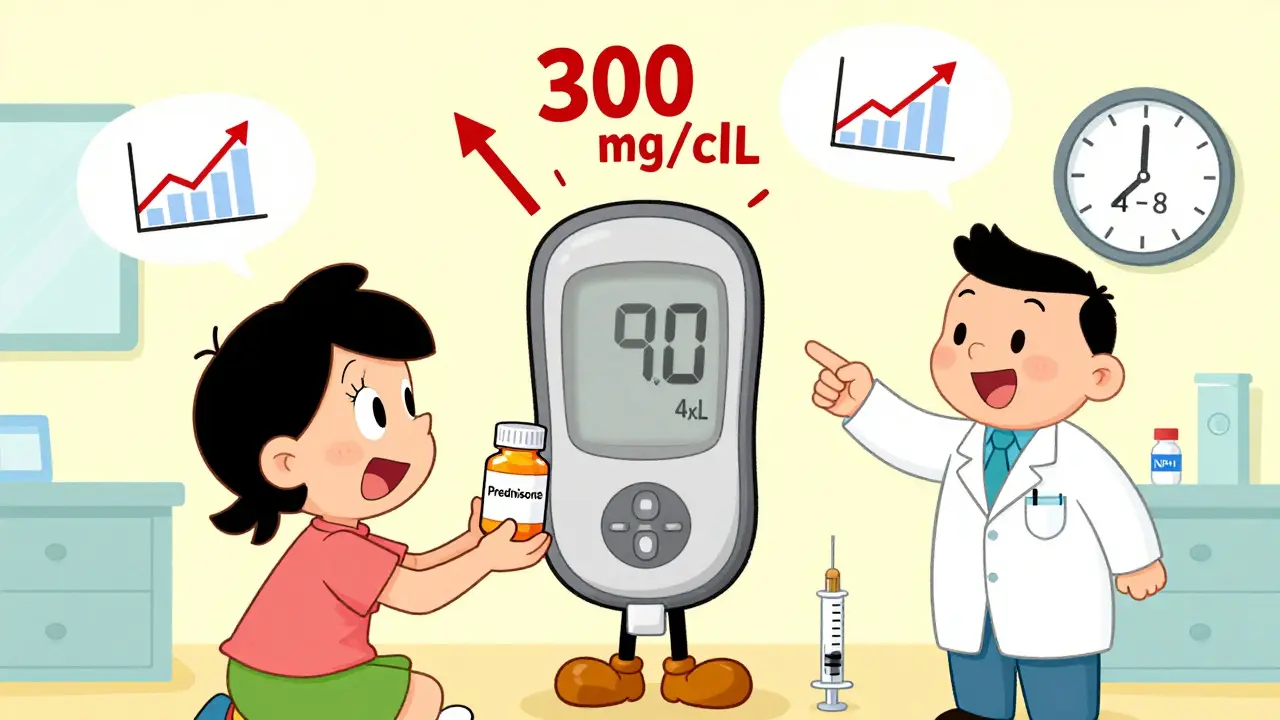
When you start taking steroids like prednisone or dexamethasone for inflammation, asthma, or an autoimmune flare, your blood sugar can spike-even if you’ve never had diabetes before. This isn’t just a side effect. It’s a predictable, well-documented metabolic shift called steroid-induced hyperglycemia. And if you’re already managing diabetes, it can turn your routine upside down. The problem? Most people don’t know how to adjust their meds in time. By the time they feel shaky or dizzy, it’s often too late. The good news? With the right approach, you can avoid dangerous highs and lows-and stay in control during treatment.
Why Steroids Raise Blood Sugar
Steroids don’t just reduce swelling. They mess with your body’s insulin system. They make your liver pump out more glucose, block insulin from doing its job in muscles and fat, and even slow down your pancreas’s ability to produce insulin. The result? Blood sugar climbs, usually within 4 to 8 hours after taking the steroid dose. It peaks around 24 hours and can stay high for days-even after you stop taking the drug.This isn’t random. It’s science. A 2021 review in the Journal of Clinical Endocrinology & Metabolism found that 20% to 50% of people on moderate to high-dose steroids develop high blood sugar. For hospitalized patients, that number jumps to 40%. If you’re already diabetic, your risk is even higher. And if you’re on insulin, you’ll likely need more-sometimes 30% to 50% more-just to keep up.
Insulin: The First-Line Tool for Inpatient and Outpatient Care
For most people, especially those in the hospital, insulin is the only reliable tool to manage steroid-induced hyperglycemia. Oral meds like metformin or DPP-4 inhibitors might help in mild cases, but they’re not enough when steroids are hitting hard.The key is matching insulin to the steroid’s timing. Prednisone lasts 18 to 36 hours. Dexamethasone lasts 36 to 72. That means your insulin plan needs to match that rhythm.
- For prednisone: Use NPH insulin in the morning. It peaks around 6 to 12 hours after injection-right when prednisone hits its strongest effect.
- For dexamethasone: Use long-acting insulin like glargine or detemir. These last all day and cover the prolonged spike.
Starting dose? A common rule of thumb is 0.1 unit per kilogram of body weight. So if you weigh 70 kg, start with about 7 units of rapid-acting insulin at mealtime, plus a basal dose based on your usual needs. Then adjust based on your readings.
Correction doses matter too. If your blood sugar is between 11.1 and 16.7 mmol/L (200-300 mg/dL), give 0.04 units per kg. If it’s above 16.7 mmol/L, use 0.08 units per kg. These aren’t guesses-they’re backed by clinical guidelines from the Joint British Diabetes Societies and the American Diabetes Association.
What Happens When You Taper Off Steroids
This is where most people get hurt.Steroids don’t disappear from your system overnight. Their effect fades slowly. But if you keep your insulin dose the same, your blood sugar will crash. That’s not a myth. A 2021 study at Johns Hopkins found that 27% of patients on sulfonylureas during steroid therapy ended up in the ER with low blood sugar during tapering. Insulin users aren’t immune either. A 2023 survey by the American Association of Clinical Endocrinology showed that 42% of patients with steroid-induced hyperglycemia had at least one hypoglycemic episode while reducing their steroid dose.
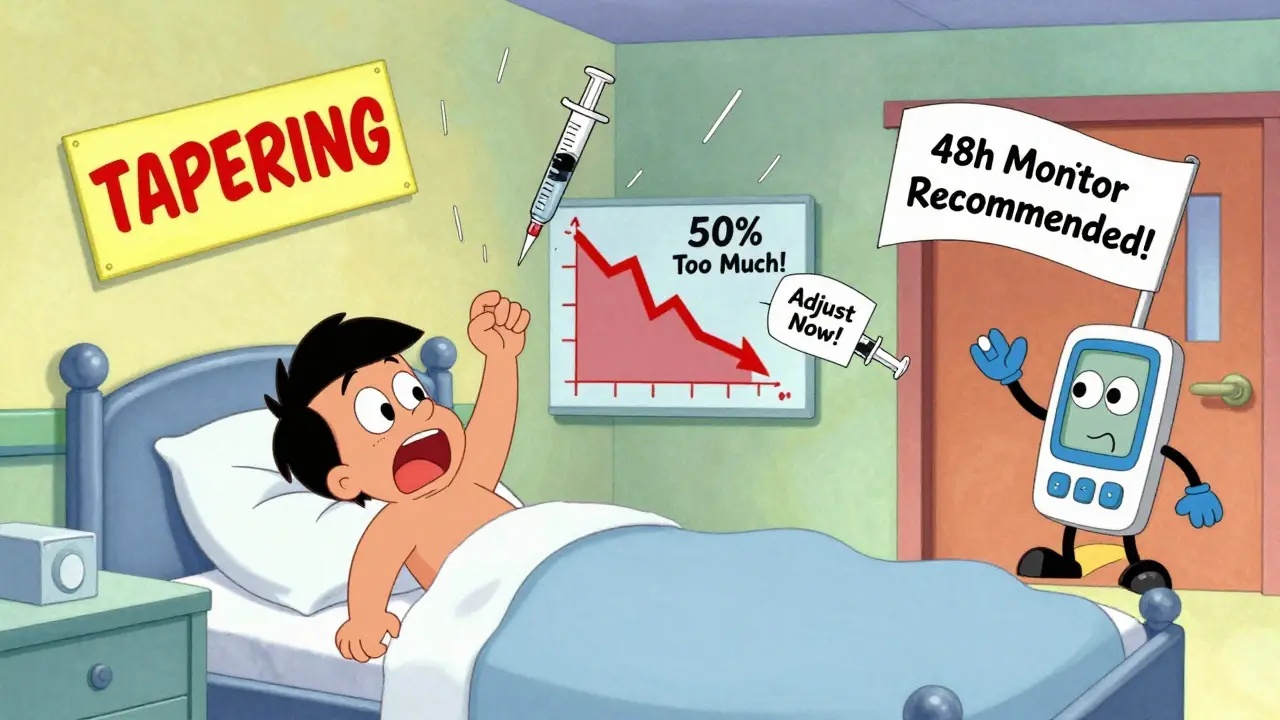
The fix? Reduce insulin as you reduce steroids. If you were on 40 mg of prednisone and needed 50% more insulin, don’t keep that extra insulin when you drop to 20 mg. Start cutting back 24 to 48 hours after each steroid reduction. A good rule: cut insulin by 10% to 20% for every 5 mg drop in prednisone. For dexamethasone, wait longer-its effects linger. Don’t reduce insulin until 3 to 4 days after the last dose.
One patient on Reddit, who goes by ‘Type1Since99,’ wrote: “My endocrinologist didn’t reduce my insulin fast enough. I had three hypos in two days.” That’s not rare. It’s predictable. And it’s avoidable.
Monitoring: Don’t Guess, Measure
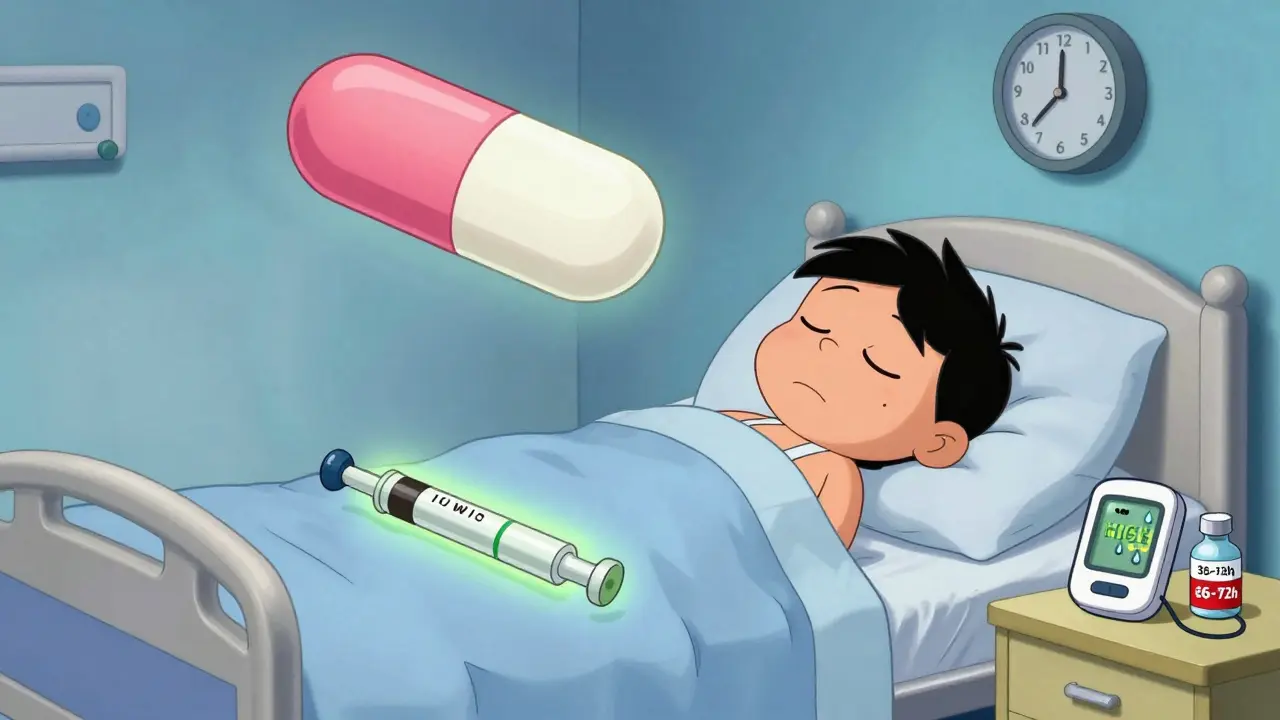
You can’t manage what you don’t measure. Capillary blood glucose checks four times a day-before meals and at bedtime-are the bare minimum. If your steroid dose changes, or if your blood sugar is over 16.7 mmol/L, check every 2 to 4 hours.Continuous glucose monitors (CGMs) are game-changers. They show you trends, not just snapshots. The Joint British Diabetes Societies now recommend at least 48 hours of real-time CGM during high-dose steroid therapy. You want to stay in range: 3.9 to 10.0 mmol/L (70-180 mg/dL). If you’re spending less than 70% of your day in that zone, your insulin plan needs tweaking.
For insulin pump users, temporary basal rate increases of 25% to 50% during peak steroid effect help. But remember: when the steroid tapers, those same increases can cause lows. You need to reverse them just as carefully.
What Not to Do: The Biggest Mistakes
There are three errors that lead to hospital visits and emergency care:- Keeping insulin doses too high during tapering. This causes hypoglycemia. It’s the #1 mistake in hospitals and clinics.
- Using sulfonylureas (like glimepiride or glyburide) during steroid therapy. These drugs force your pancreas to keep releasing insulin-even when the steroid effect fades. That’s a recipe for delayed, dangerous lows.
- Waiting until you feel symptoms to act. High blood sugar doesn’t always make you thirsty or tired. Low blood sugar can sneak up fast. Rely on numbers, not feelings.
Even if your blood sugar is only mildly high-say, fasting under 11.1 mmol/L-don’t assume it’s fine. Steroids can cause sudden spikes later in the day. Proactive management beats reactive damage.
Special Cases: Type 1 vs. Type 2 Diabetes
Not all diabetes is the same when steroids come into play.- Type 1 diabetes: You need 30% to 50% more insulin. Your body can’t make any on its own, so you’re fully dependent on replacement. Missing doses or under-dosing can lead to DKA.
- Type 2 diabetes: You might need 20% to 30% more. Some people can manage with oral meds if the steroid dose is low and short-term. But once you hit 20 mg of prednisone or more, insulin becomes necessary.
And if you’ve never had diabetes? You still need to watch your numbers. About 1 in 5 people without prior diabetes develop high blood sugar on steroids. If your fasting glucose hits 7.0 mmol/L (126 mg/dL) or higher, you’re in the danger zone. Talk to your doctor about starting insulin-even if it’s just for a few weeks.
What’s Changing in 2026: New Tools, Smarter Protocols
Hospitals are catching on. In 2023, 68% of U.S. hospitals used standardized protocols for steroid-induced hyperglycemia-up from 42% in 2019. Many now use automated insulin dosing tools that link steroid type and dose to insulin recommendations in the electronic health record.Emerging research is even more promising. A 2023 study in Diabetes Technology & Therapeutics used machine learning to predict how much insulin a patient would need based on their weight, steroid dose, and HbA1c. The model was 85% accurate. That’s not science fiction-it’s coming to clinics soon.
And the American Diabetes Association’s 2024 Standards of Care will include stronger guidance on matching insulin regimens to specific steroid half-lives. That means more precise, less guesswork.
Bottom Line: Anticipate, Adjust, Monitor
Steroid-induced hyperglycemia isn’t an emergency-it’s an expected event. You don’t need to panic. You need a plan.Start with the steroid’s half-life. Match your insulin type and timing to it. Use insulin, not sulfonylureas. Check your blood sugar often. And when you taper the steroid, reduce your insulin just as carefully. Don’t wait for symptoms. Don’t assume it’ll go away on its own. And never stop monitoring just because you feel fine.
It’s not about being perfect. It’s about being prepared. With the right adjustments, you can manage steroids without crashing your blood sugar-or ending up in the hospital.
Can steroids cause diabetes in people who don’t have it?
Yes. Steroid-induced hyperglycemia can develop in people with no prior history of diabetes. Studies show 20% to 50% of patients on moderate to high-dose glucocorticoids develop elevated blood sugar. While this often resolves after stopping steroids, some people may develop persistent diabetes, especially if they had prediabetes or other risk factors like obesity or family history.
Should I stop taking my diabetes meds when I start steroids?
No. Never stop your medications without medical advice. Instead, you’ll likely need to increase insulin or switch from oral meds to insulin. Sulfonylureas should be avoided during steroid therapy because they raise the risk of dangerous hypoglycemia when the steroid dose is lowered. Always consult your doctor or diabetes care team before making changes.
How long does steroid-induced high blood sugar last after stopping steroids?
The effect typically fades 3 to 4 days after the last steroid dose. But with long-acting steroids like dexamethasone, it can take up to a week. Blood sugar should return to baseline gradually. Continue monitoring for at least 7 days after stopping steroids, and adjust insulin slowly during this time to avoid low blood sugar.
Is it safe to use metformin with steroids?
Metformin can be used for mild steroid-induced hyperglycemia in outpatient settings, especially in type 2 diabetes. But it’s not enough for moderate to high steroid doses or for people with type 1 diabetes. Insulin remains the gold standard for inpatient care and when blood sugar is significantly elevated. Always combine metformin with close glucose monitoring.
Why is NPH insulin recommended for prednisone but not dexamethasone?
Prednisone has a half-life of 18 to 36 hours, peaking around 24 hours. NPH insulin, with its 12- to 36-hour duration, matches this timing well when given in the morning. Dexamethasone lasts 36 to 72 hours, so its effect is prolonged. Long-acting insulin analogues like glargine or detemir provide smoother, all-day coverage without the peak-and-trough pattern of NPH, making them a better fit.
Can continuous glucose monitors (CGMs) help manage steroid-induced hyperglycemia?
Yes. CGMs provide real-time data on trends and patterns, helping you spot highs before they become dangerous and lows before they happen. The Joint British Diabetes Societies recommend at least 48 hours of real-time CGM during high-dose steroid therapy. CGMs are especially useful during steroid tapering, when blood sugar can drop suddenly and unpredictably.
What should I do if I experience low blood sugar while tapering steroids?
Treat the low immediately with 15 grams of fast-acting carbs (glucose tabs, juice, or candy). Then check your blood sugar in 15 minutes. If it’s still low, repeat. After stabilizing, reduce your insulin dose by 10% to 20% and monitor closely. Frequent lows during tapering mean your insulin is still too high for your current steroid dose. Talk to your provider about adjusting your plan before the next reduction.
Jay Powers
Man I wish I'd known this back when I was on prednisone for my lupus flare. My sugar went through the roof and my doc just told me to 'drink more water' 🤦♂️. NPH in the morning makes total sense now. I was taking Lantus all day and wondering why I was crashing at night.
Also, never thought about how long dexamethasone sticks around. I had to take it after my knee surgery and my BG stayed high for a full week after stopping. Should've cut insulin slower.
Christina Widodo
Wait so if you're Type 2 and on low-dose steroids, metformin might still work? I'm on 10mg prednisone for my RA and my doctor just upped my insulin like I was Type 1. I feel like I got overmedicated.
Also why do they keep pushing sulfonylureas? I had a hypoglycemic episode last year because my doc didn't take the steroid taper into account. I was on glimepiride and it was a nightmare. I'm switching to insulin now.
beth cordell
OMG YES 🙌 I’m a type 1 and just got prescribed prednisone for a bad allergic reaction. I’ve been checking my CGM every 2 hours and it’s been wild. I went from 80 to 320 in 3 hours 😱
But your NPH tip saved me! I switched from my usual Lantus to NPH at breakfast and my numbers are finally stable. Also, I’m cutting insulin 10% every 5mg drop like you said. I’m not scared anymore 💪
PS: CGM is a GAME CHANGER. I cried when I saw the trend arrow dropping during my taper. Thank you for this guide!
Lauren Warner
This article is dangerously oversimplified. You're telling people to adjust insulin based on weight and arbitrary percentages? That's not medicine, that's guesswork wrapped in a PDF.
Every patient is different. Some have insulin resistance. Others have beta-cell burnout. You can't just slap on 0.1 units/kg and call it a day. Hospitals use algorithms, not Reddit rules.
And why are you promoting CGMs like they're magic? They lag. They drift. They give false alarms. I've seen patients get scared into hospital visits because of a CGM glitch during steroid therapy.
This is amateur hour. Don't follow this without a diabetes educator.
Craig Wright
While the general principles outlined are not without merit, the casual tone and reliance on anecdotal Reddit references undermine the clinical gravity of this issue. In the United Kingdom, we adhere to NICE guidelines which emphasize structured education, individualized insulin regimens, and mandatory involvement of specialist diabetes teams.
The suggestion that NPH insulin is 'recommended' for prednisone is outdated. Basal-bolus regimens with rapid-acting analogues are now standard of care. Furthermore, the assertion that 'most people' need insulin is misleading; many outpatient cases can be managed with metformin and lifestyle modification under supervision.
This article, while well-intentioned, risks encouraging self-adjustment without professional oversight-a dangerous precedent.
Cassie Widders
My mom was on dexamethasone for her COPD. She didn’t know any of this. Her sugar went crazy and she passed out once. I had to call 911.
We didn’t reduce her insulin fast enough. She had three lows in a week. I wish I’d read this before.
Konika Choudhury
India has no access to CGMs or even NPH insulin in many rural clinics. We use metformin and glibenclamide because that’s all we have. You talk like everyone has a pump and a smartphone app.
For people like me, the only thing that matters is checking sugar once a day and praying it doesn’t crash. This advice is useless for most of the world.
Darryl Perry
Stop recommending NPH. It’s outdated. Use basal insulin analogs. Also, no one should be using sulfonylureas with steroids. That’s basic. This article reads like a blog post from 2012.