
Ever wondered how to take your antibiotic without a hitch? Cefaclor is a second‑generation oral cephalosporin used to treat a range of bacterial infections. When you follow a clear plan, you minimize side effects, keep the infection in check, and avoid common pitfalls. Below is a practical, step‑by‑step guide that walks you through everything from the first pill to proper disposal.
What Kind of Medicine Is Cefaclor?
Antibiotic a drug that kills or stops the growth of bacteria is the broad class Cefaclor belongs to. Unlike penicillin‑based drugs, cefaclor’s chemical structure makes it effective against bacteria that have developed resistance to older antibiotics. It’s commonly prescribed for ear infections, throat infections, sinusitis, bronchitis, and some skin infections.
When Do Doctors Choose Cefaclor?
Doctors turn to cefaclor when they suspect a bacterial infection an invasion of the body by disease‑causing microbes that is likely to respond to this specific cephalosporin. Typical scenarios include:
- Acute otitis media (middle‑ear infection) in children
- Streptococcal or staphylococcal throat infections
- Uncomplicated urinary tract infections
If the infection is viral (like the common cold), cefaclor won’t help, and the doctor will choose a different approach.
Step‑by‑Step: How to Take Cefaclor Safely
- Confirm the prescription. Look for the exact prescription a written order from a licensed prescriber details: total amount, dosing frequency, and duration.
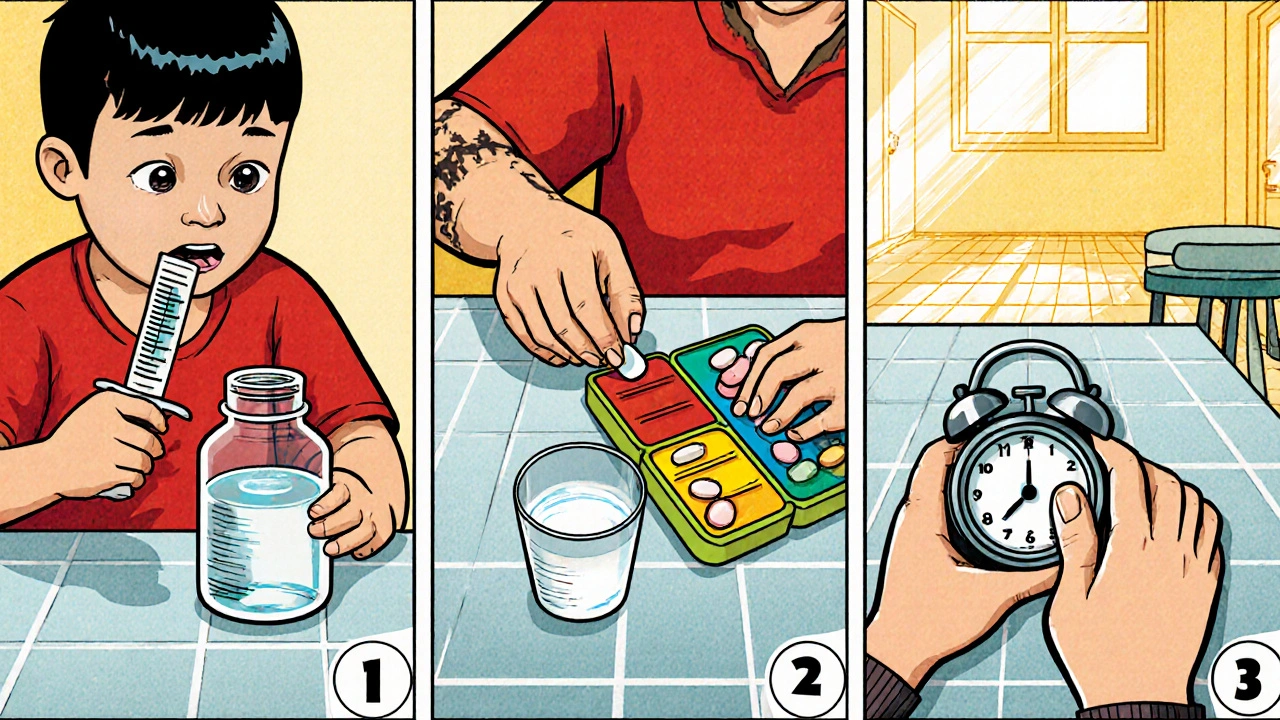
- Measure the dose accurately. If you receive a liquid form, use the calibrated spoon or oral syringe that comes with the bottle. For tablets, check that you have the right strength (e.g., 250 mg vs. 500 mg).
- Know your Cefaclor dosage. Common adult regimens are 250‑500 mg every 8 hours for mild‑to‑moderate infections, or 500‑750 mg every 12 hours for more severe cases. Children’s doses are weight‑based (typically 20‑40 mg/kg per day divided into 2‑3 doses).
- Take it with or without food. Food does not significantly alter absorption, but taking it with a full glass of water can reduce stomach upset.
- Stick to the schedule. Set reminders on your phone or use a pill‑box so you don’t miss a dose. Skipping doses can let the bacteria survive and develop resistance.
- Complete the full course. Even if you feel better after a few days, finish all prescribed tablets. Stopping early often leads to relapse.
- Watch for side effects. Note any new symptoms and refer to the section below.
Common Side Effects and What to Do About Them
Most people tolerate cefaclor well, but mild side effects occur in up to 10 % of patients.
- Gastro‑intestinal upset - nausea, diarrhea, or stomach cramps. Take the medicine with food or a light snack to ease discomfort.
- Skin rash - a mild red patch that usually fades after treatment ends.
- Headache - stay hydrated and rest; over‑the‑counter acetaminophen is usually safe.
If you notice any of the following, stop the medication and call a pharmacist a licensed professional who advises on medication use or your doctor immediately:
- Severe rash or hives (possible allergic reaction the immune system’s over‑response to a drug)
- Swelling of the face, lips, or throat
- Difficulty breathing
- Persistent watery diarrhea (could signal Clostridioides difficile infection)
Drug Interactions You Should Know
Cefaclor can interact with several other medicines, altering how either drug works.
- Probenecid. It slows renal clearance, increasing cefaclor levels and risk of toxicity.
- Warfarin. Some case reports note a modest rise in INR; monitor blood clotting if you’re on anticoagulants.
- Antacids containing aluminum or magnesium. These may reduce absorption if taken within 2 hours of cefaclor.
Always give your pharmacist a full list of current prescriptions, over‑the‑counter meds, and supplements.
Special Populations: Kidneys, Liver, Pregnancy, and Kids
Because cefaclor is cleared mainly by the kidneys, kidney function the organ’s ability to filter blood matters.
- Renal impairment. Reduce the dose or increase the interval (e.g., 250 mg every 12 hours for severe impairment).
- Liver disease. No major dosage adjustment needed, but monitor for rare liver enzyme elevations.
- Pregnancy & breastfeeding. Cefaclor is classified as Category B (no evidence of risk in animal studies). Still, discuss with your OB‑GYN.
- Children. Dosing is weight‑based; always use the pediatric formulation if available.
Storing and Disposing of Cefaclor
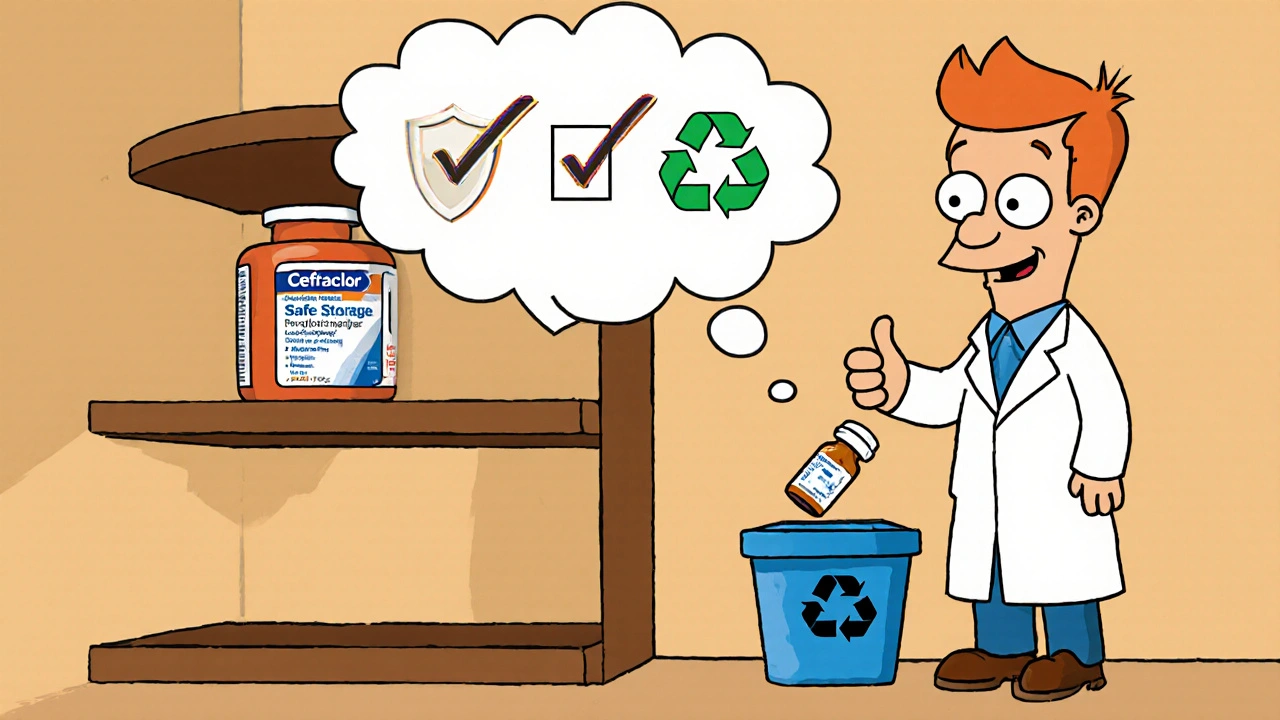
Keep the medication in a cool, dry place away from direct sunlight. Liquid forms should be refrigerated if the label says so, and discard any leftover liquid after 14 days.
When the course is finished, don’t flush pills down the toilet. Bring unused tablets or liquid to a local pharmacy’s take‑back program. This prevents accidental ingestion and protects the environment.
Red Flags: When to Call a Health Professional
Even with careful use, you might encounter a problem that warrants a quick call.
- Persistent fever after 48 hours of treatment
- New or worsening pain at the infection site
- Signs of an allergic reaction (as listed above)
- Severe diarrhea lasting more than three days
If you’re unsure, a quick chat with a pharmacist can often save a doctor’s appointment.
Quick Safety Checklist
- Verify prescription details before starting
- Use the correct measuring device for liquids
- Follow the exact Cefaclor dosage schedule
- Complete the full prescribed course
- Watch for rash, swelling, or breathing trouble
- Avoid antacids within 2 hours of taking the drug
- Adjust dose if you have kidney problems
- Store in a dry place; dispose responsibly
Cefaclor vs. Common Alternatives
| Attribute | Cefaclor | Amoxicillin | Penicillin V |
|---|---|---|---|
| Class | Second‑gen cephalosporin | Aminopenicillin | Natural penicillin |
| Typical adult dose | 250‑500 mg q8‑12 h | 500 mg q8 h | 250‑500 mg q6 h |
| Common side effects | GI upset, rash | Diarrhea, rash | Allergic reactions |
| Renal dosing adjustment | Yes, if CrCl < 30 ml/min | Yes, if CrCl < 30 ml/min | Yes, if CrCl < 30 ml/min |
| Typical infections treated | Ear, throat, sinus, skin | UTI, dental, pneumonia | Strep throat, syphilis |
Frequently Asked Questions
Can I take cefaclor with food?
Yes. Food does not significantly change how cefaclor is absorbed, but taking it with a glass of water and a light snack can lessen stomach irritation.
What should I do if I miss a dose?
Take the missed dose as soon as you remember, unless it’s almost time for the next one. In that case, skip the missed dose and continue with your regular schedule. Never double‑dose.
Is cefaclor safe for children?
Yes, when prescribed at the correct weight‑based dose. Pediatric formulations are usually a liquid, and the exact milligram‑per‑kilogram amount should be followed.
Can cefaclor cause antibiotic resistance?
Any antibiotic can contribute to resistance if used incorrectly. Completing the full course, avoiding unnecessary use, and not sharing pills are key ways to prevent resistance.
Are there any foods I should avoid while on cefaclor?
There are no strict food restrictions, but avoid taking antacids that contain aluminum or magnesium within two hours of the dose, as they may reduce absorption.
How long does it take for cefaclor to start working?
Most patients notice symptom improvement within 48‑72 hours, though full resolution may take the entire prescribed period.
Aaron Kuan
Cefaclor is a breeze-just set a reminder, pop the pill with water, and finish the whole pack.
Brett Witcher
While the guide succinctly enumerates dosage protocols, it neglects to elaborate on pharmacokinetic variance among renal‑impaired patients, which is a nontrivial consideration.
Benjamin Sequeira benavente
Listen up-if you want that infection gone fast, lock in the schedule, stay disciplined, and don’t let a missed dose derail you. The body rewards consistency, so power through the full course and you’ll crush those bugs.
Shannon Stoneburgh
The plan sounds solid, yet many overlook the subtle gut upset that can arise; a bland diet alongside the medication often mitigates discomfort.
Nathan Comstock
Let me be clear: America’s health hinges on citizens obeying medical guidance-any deviation is a betrayal of our collective strength.
Terell Moore
Ah, the ever‑so‑patriotic prescription adherence-how original. One might suggest simply following the doctor’s advice without invoking the flag.
Amber Lintner
Contrary to the usual chorus, I’d argue that blind obedience is the real danger-questioning your meds can be the catalyst for smarter health decisions.
Lennox Anoff
It is morally reprehensible to ignore the detailed safety checklist presented herein. One must honor the responsibility inherent in consuming antibiotics, lest we contribute to the looming crisis of resistance. The guide, while thorough, could benefit from a more explicit moral framing: each pill taken responsibly is an ethical act.
Olivia Harrison
Great point, Lennox-respecting the checklist is indeed a civic duty. For anyone unsure about the timing, setting a phone alarm can simplify adherence, and the pharmacy can clarify dosage adjustments for kidney issues.
Bianca Larasati
Take that advice to heart! Your health journey is a marathon, not a sprint-keep the momentum, celebrate each day you stay on track, and you’ll emerge victorious.
Corrine Johnson
The Cefaclor safety guide, while laudably comprehensive, betrays a subtle hubris in its assumption of universal patient compliance.
It presumes that every reader possesses the cognitive bandwidth to parse dosage tables, side‑effect lists, and renal adjustment protocols without external counsel.
Yet, empirical evidence suggests that health literacy is uneven, and the average adult often glosses over fine print, leading to inadvertent misuse.
Moreover, the guide's suggestion to 'store in a cool, dry place' overlooks socioeconomic realities where such conditions may be unattainable.
The implicit moralistic tone-'complete the full course'-edges into paternalism, as if the prescriber were a sovereign issuing decrees.
One must ask: does the text empower patients or merely dictate behavior?
From a philosophical standpoint, autonomy is a cornerstone of medical ethics, and any educational material should foreground informed choice.
The section on drug interactions, while factual, is presented in a list format that fails to contextualize risk magnitude.
For instance, the probenecid interaction could be negligible for a short course yet catastrophic for prolonged therapy-but the guide remains silent on such nuance.
Furthermore, the warning about antacids lacks a clear temporal framework beyond the vague 'within two hours',
leaving patients to interpret ambiguous time windows that may compromise absorption.
In addition, the emotional tone-'watch for rash, swelling, difficulty breathing'-though well‑intentioned, may induce undue anxiety, especially in vulnerable populations.
A balanced approach would couple risk communication with reassurance, perhaps offering a hotline number for immediate concerns.
Finally, the guide could benefit from integrating visual aids-charts, infographics, perhaps a QR code linking to a dosage calculator-to bridge the gap between textual instruction and practical application.
In sum, while the guide stands as a valuable reference, it must evolve beyond a static manual into an interactive, patient‑centered tool that respects autonomy, accommodates diversity, and mitigates anxiety.
Only then can we claim true safety in the administration of Cefaclor.