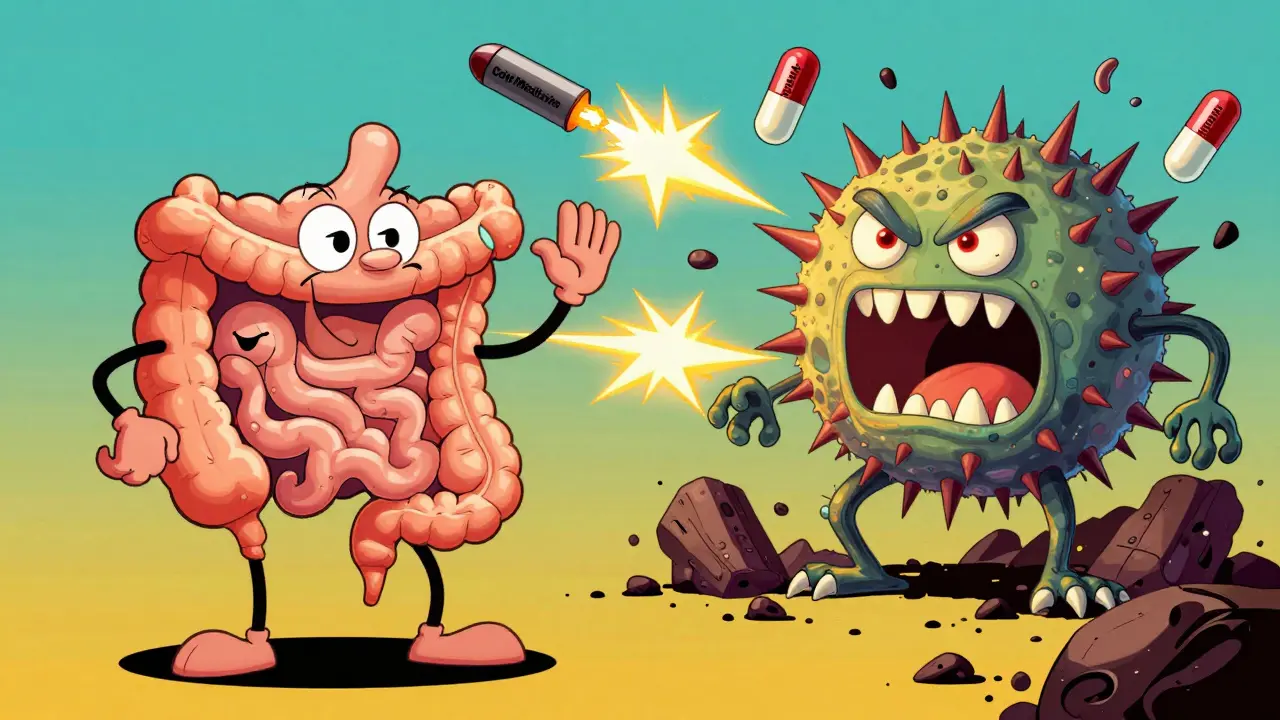
Every time you take an antibiotic when you don’t need it, you’re not just helping yourself-you’re helping bacteria get stronger. It sounds simple, but the consequences are anything but. Antibiotic overuse is no longer a distant threat. It’s here, in hospital rooms, in nursing homes, and in the gut of someone who took a pill for a cold last winter. And it’s making common infections harder-sometimes impossible-to treat.
What Happens When Antibiotics Don’t Work Anymore?
Antibiotics are powerful tools, but they’re not magic. They only work on bacteria, not viruses. That means they do nothing for colds, flu, or most sore throats. Yet, in 2023, nearly one in six bacterial infections worldwide were resistant to standard antibiotics, according to the World Health Organization. That’s up from one in seven just five years earlier.
When antibiotics are used too often-or wrongly-bacteria adapt. They evolve. They learn how to survive. That’s how we get superbugs like methicillin-resistant Staphylococcus aureus (MRSA), or E. coli that shrugs off last-resort drugs like carbapenems. In some places, more than 40% of E. coli infections no longer respond to common treatments like ampicillin or fluoroquinolones. In others, 35% of Staph infections are MRSA. These aren’t rare cases. They’re the new normal in too many hospitals.
And it’s not just about one drug failing. It’s about the whole system crumbling. Doctors used to have a clear path: if a patient has a urinary tract infection, give them trimethoprim-sulfamethoxazole. Now? Sometimes that doesn’t work. Then they try ciprofloxacin. That doesn’t work either. Suddenly, you’re out of options. And when that happens, patients end up in the hospital for weeks, on expensive IV drugs with nasty side effects-or worse, there’s nothing left to give.
C. difficile: The Silent Killer That Follows Antibiotics
One of the most dangerous side effects of antibiotic overuse isn’t resistance-it’s C. difficile. Also called C. diff, this bacteria doesn’t cause trouble until the good bacteria in your gut get wiped out by antibiotics. Once the balance is broken, C. diff takes over. It produces toxins that cause severe diarrhea, fever, and abdominal pain. In serious cases, it leads to colon damage, sepsis, or death.
The CDC estimates that in the U.S. alone, C. diff caused nearly half a million infections in 2017, with nearly 30,000 deaths. While exact 2025 numbers aren’t yet public, trends show it’s not getting better. During the pandemic, hospital-acquired infections like C. diff spiked by 20% compared to pre-COVID levels. Why? More antibiotics. More disrupted guts. More vulnerable patients.
Here’s the kicker: C. diff doesn’t just strike the elderly in hospitals. It’s showing up in healthy people who took a course of antibiotics for a sinus infection or a dental procedure. You don’t have to be sick to be at risk-you just have to have taken antibiotics recently.
Why Are We Still Overprescribing?
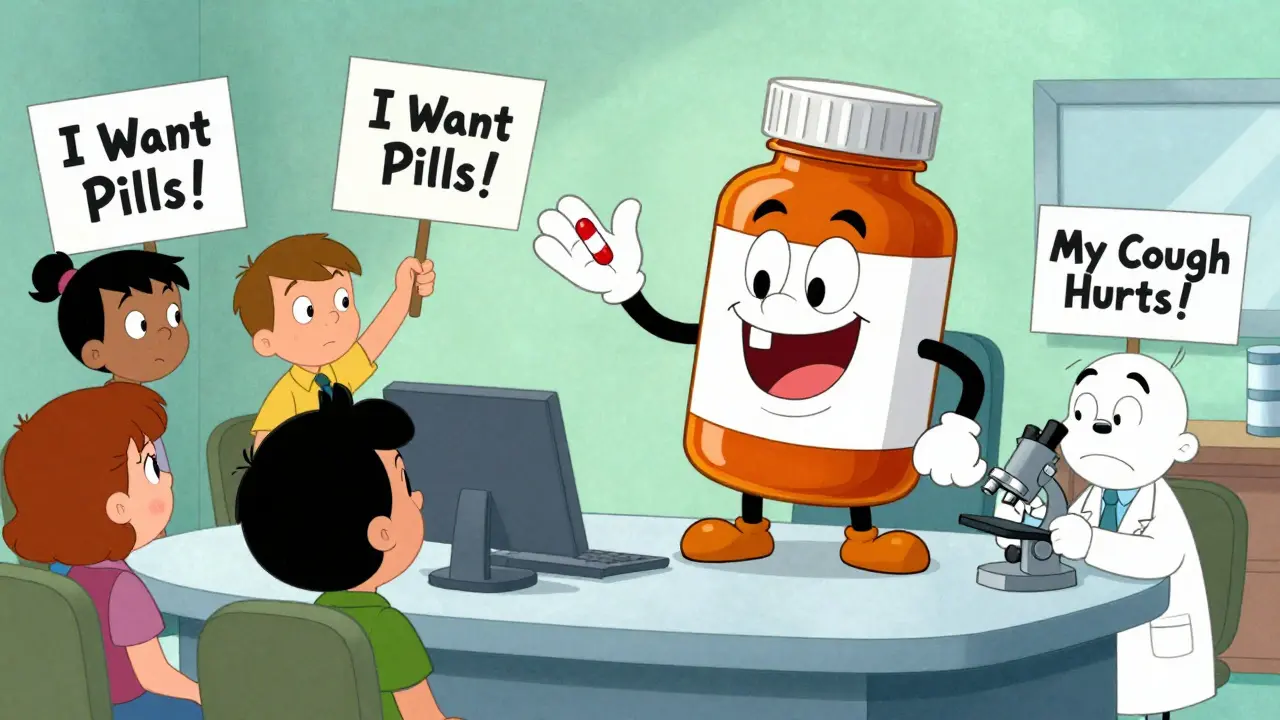
Doctors aren’t ignoring the problem. Many are frustrated. But pressure comes from everywhere. Patients ask for antibiotics because they want to feel better fast. They’ve been told for decades that antibiotics “fix” infections-even when they don’t. Some doctors give in just to keep the peace.
In clinics without quick diagnostic tools, it’s easier to prescribe than to wait. If a patient has a cough and fever, and the rapid test for flu is negative, the default becomes: “Let’s try an antibiotic.” That’s not evidence-based medicine. It’s habit. And in places with limited healthcare access, that habit is deadly.
It’s not just human medicine. In agriculture, antibiotics are fed to livestock to make them grow faster or prevent disease in crowded conditions. That’s another massive source of resistance. Resistant bacteria from farms can spread to humans through food, water, and soil. It’s a loop we can’t ignore.
The Global Picture: Some Places Are Burning, Others Are Trying to Put Out the Fire
Resistance rates vary wildly by region. In South Asia and the Eastern Mediterranean, one in three infections are resistant to antibiotics. In Africa, it’s one in five. Why the gap? It’s not just about how many pills are handed out-it’s about whether you can test for bacteria before treating. In wealthier countries, labs can identify the exact bug and which drugs work. In poorer ones, doctors guess. And guessing means overusing.
Meanwhile, countries like Canada, the Netherlands, and Sweden have cut antibiotic use by 30-50% over the last decade through strict stewardship programs. They train doctors, educate patients, and delay prescriptions unless absolutely necessary. The result? Lower rates of C. diff and fewer resistant infections. It’s possible. We’ve done it before.
What’s Being Done-and Why It’s Not Enough
Organizations like CARB-X have poured over $480 million into developing new antibiotics since 2016. But here’s the problem: antibiotics aren’t profitable. A patient takes a course for seven days. Then it’s over. Contrast that with a drug for high blood pressure that someone takes every day for life. No company wants to invest billions into something that won’t make them back their money.
The WHO lists 25 antibiotics as critically important. But shortages hit 64% of countries. Some places can’t get the last-resort drugs even when they’re needed. Meanwhile, resistance to those last-resort drugs is climbing. By 2035, carbapenem resistance could double from 2005 levels. That’s not a prediction-it’s a trajectory.
Global action plans exist. The WHO’s 2015 plan had 194 signatories. But implementation? Patchy. Few governments fund stewardship programs. Few clinics have the tools to test before treating. And most patients still believe antibiotics are a cure-all.

What You Can Do Right Now
You don’t need to be a doctor or a policymaker to make a difference. Here’s what actually works:
- Don’t ask for antibiotics. If your doctor says you have a virus, trust them. Ask what you can do to feel better without drugs.
- Take antibiotics exactly as prescribed. Even if you feel better after two days, finish the full course. Stopping early leaves behind the toughest bacteria.
- Never share or use leftover antibiotics. A pill meant for a sinus infection won’t help a urinary tract infection-and might make the next one harder to treat.
- Wash your hands. Simple, but it stops the spread of resistant bacteria in homes and hospitals.
- Ask about alternatives. For ear infections in kids, some doctors now wait 48-72 hours before prescribing. Many clear up on their own.
And if you’re caring for someone in a hospital or long-term care facility? Ask: “Is this antibiotic necessary? Can we test first?” That question could save a life.
The Future Is Still in Our Hands
By 2050, antimicrobial resistance could kill 10 million people a year-more than cancer. That’s not science fiction. It’s the math if we keep going the same way.
But it’s not inevitable. We’ve turned the tide before. In the 1990s, the U.S. cut MRSA rates in hospitals by 50% through better hygiene and antibiotic controls. We can do it again.
It starts with understanding: antibiotics aren’t harmless. They’re powerful, targeted weapons. Use them like one. And when you do, make sure it’s necessary. Because the next time you or someone you love gets a bad infection, you’ll want those drugs to still work.
Can I get C. difficile from taking antibiotics for a viral infection?
Yes. Antibiotics don’t work on viruses like colds or the flu, but they still kill bacteria in your gut-good and bad. That disruption lets C. difficile grow unchecked. Even a short course of antibiotics can trigger it. That’s why doctors avoid prescribing them unless a bacterial infection is confirmed.
Are natural remedies like honey or garlic a good alternative to antibiotics?
Some natural substances have mild antibacterial properties, but they’re not replacements for prescribed antibiotics in serious infections. Honey can help with minor wounds, and garlic may support immune function, but neither can treat pneumonia, sepsis, or a kidney infection. Relying on them instead of medical care can delay treatment and lead to worse outcomes.
Why don’t we have more new antibiotics?
Developing antibiotics is expensive and not profitable. A new antibiotic might be used for only a few days per patient, unlike drugs for diabetes or high blood pressure that people take daily for years. Pharmaceutical companies invest where returns are higher. That’s why public funding and global incentives are needed to rebuild the antibiotic pipeline.
Is antibiotic resistance only a problem in hospitals?
No. While hospitals see the most resistant infections, community-acquired resistant bacteria are rising fast. You can pick up MRSA or drug-resistant E. coli from contaminated food, water, or surfaces. Overuse in farming and poor sanitation in some regions also spread resistance into the environment, affecting everyone.
How do I know if my infection is bacterial or viral?
It’s not always obvious. Viral infections often come with runny nose, sore throat, cough, and mild fever. Bacterial ones may have high fever, localized pain, pus, or symptoms that worsen after a few days. But only a test can confirm. If your doctor doesn’t test, ask: “What are you looking for? Can we wait a day or two?”
Alex Danner
Been a nurse for 18 years. Saw a kid die in 2019 because the hospital ran out of vancomycin. Not because it was scarce-because we used it like candy for every fever. We’re not saving lives anymore. We’re just delaying the inevitable. And now? Even the last-resort drugs are starting to glitch. It’s not hype. It’s hospital logbooks.
Katrina Morris
I took amoxicillin for a cold last year and got c diff after 3 days. I was fine before. Now I have to be careful about every pill I take. Even my dentist asked if i really needed it. I said no. Best decision ever
Andrew N
The real issue is that people think antibiotics are like ibuprofen. They’re not. They’re nuclear weapons for bacteria. And we’re using them to kill mosquitoes. We’re not dumb. We’re just lazy.
LALITA KUDIYA
In india we get antibiotics from corner shops for $1. no script no problem. but now my cousin got a UTI and nothing worked. we had to fly to bangalore for iv drugs. sad but true 😔
Poppy Newman
I read this and immediately thought about my grandma’s hospital stay. They gave her 5 different antibiotics in 72 hours. She didn’t even have a fever. Now she’s on probiotics for life. 🌱😞
Jessie Ann Lambrecht
Let me tell you something that keeps me up at night: the next time your kid gets an ear infection, the doctor might shrug and say, ‘We’ve tried everything.’ Not because they’re giving up-but because the drugs don’t work anymore. We’re not just losing antibiotics. We’re losing the safety net that let modern medicine exist. This isn’t about being ‘anti-medical.’ It’s about being pro-survival. Every time you say no to an unnecessary script, you’re not just saving yourself-you’re saving the next generation’s chance to survive a scraped knee.
Vince Nairn
So let me get this straight-we’re supposed to trust doctors who prescribed antibiotics for my sinus infection in 2010… the one that turned into pneumonia… and now they’re telling us to ‘just wait’? Yeah right. I’ve seen the paperwork. They get bonuses for prescribing. It’s not about care. It’s about quotas.
Kyle King
What if this is all a lie? What if Big Pharma is making up resistance to sell more expensive drugs? I mean, why else would they push this ‘superbug’ crap? They’re scared people will figure out that antibiotics are just expensive placebos. And now they’re selling probiotics for $50 a bottle. I’m not buying it. My grandpa took penicillin in ‘43 and lived to 98. No one had C. diff back then. Coincidence? I think not.
Jonathan Larson
The ethical imperative to preserve antimicrobial efficacy is not merely a clinical concern-it is a civilizational one. The erosion of therapeutic options constitutes a systemic collapse of the biomedical contract between physician and patient. We have, through collective negligence, commodified medical intervention and abandoned the principle of therapeutic restraint. The rise of Clostridioides difficile is not an incidental side effect-it is the inevitable consequence of a healthcare paradigm that privileges velocity over vigilance. Until we recalibrate our moral compass to prioritize stewardship over satisfaction, we shall not merely witness the decline of antibiotics-we shall become their obituary.
Kamlesh Chauhan
why do u even care its just bacteria lol everyone dies anyway why u so mad about c diff