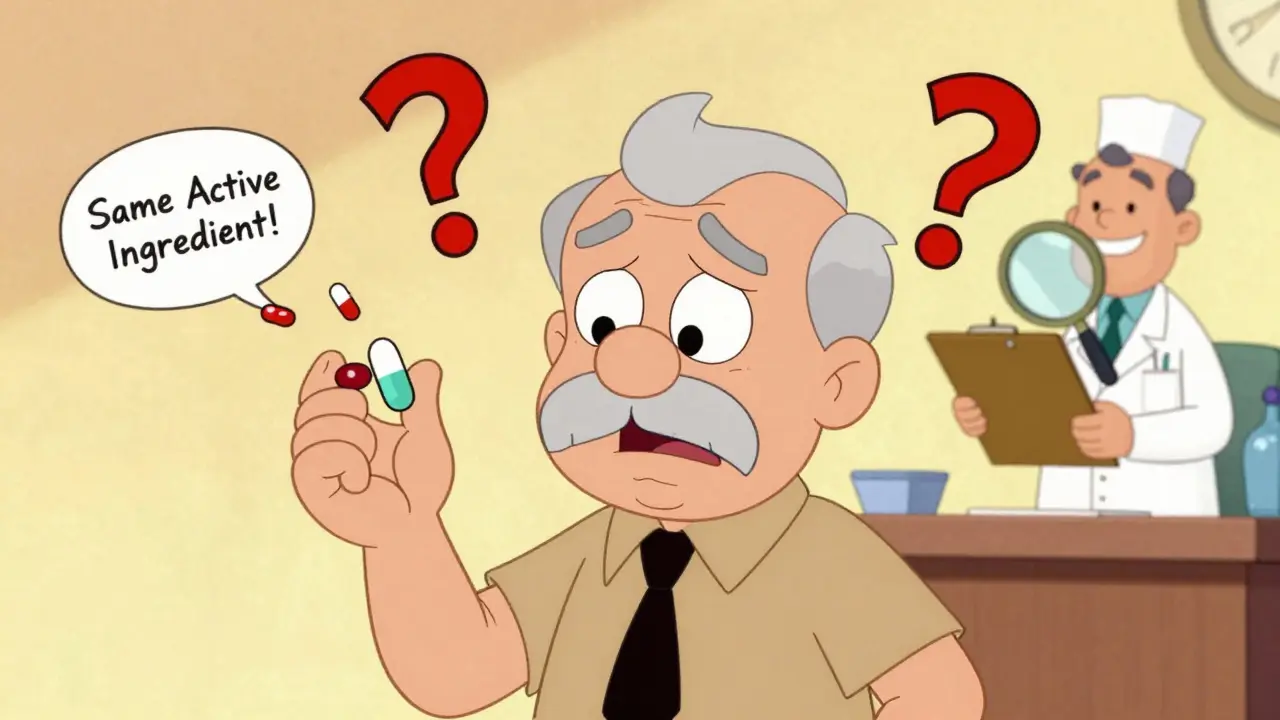
When older adults switch from brand-name drugs to generics, it’s not just a cost-saving move-it’s a decision that can affect how they feel, function, and even survive. For many seniors, the switch happens quietly, often without a full conversation with their doctor. But the reality is, aging changes how the body handles medicine. And those changes matter-especially when the pill in your hand looks different than it did last month.
Why Generics Are Common for Seniors
Medicare Part D beneficiaries filled over half a billion generic prescriptions in 2022. That’s 89% of all prescriptions for seniors. The reason? Price. A typical brand-name blood pressure pill might cost $120 a month. The generic version? Around $10. That’s a $327 annual savings per person, according to AARP. For fixed-income seniors, that kind of difference isn’t optional-it’s necessary. But savings don’t mean simplicity. Many elderly patients don’t realize that generics have the same active ingredient, same dose, and same effectiveness as brand-name drugs. The FDA requires them to be bioequivalent-meaning they work the same way in the body, within a 80-125% range. That’s not a loophole. That’s science. Yet, less than half of seniors believe generics are as safe or effective. That’s a gap between facts and feelings.How Aging Changes the Way Medicine Works
Your body doesn’t process drugs the same way at 80 as it did at 50. Kidneys slow down. Liver blood flow drops. Body fat increases while muscle mass declines. These changes mean even small differences in how a drug is absorbed or cleared can have bigger effects. For example, nearly one in three adults over 85 have low body weight. That affects how drugs spread through the body. And over half of seniors over 65 have kidney function below the normal range. That’s critical for drugs like warfarin, lithium, or certain antibiotics that rely on kidney clearance. A tiny variation in absorption between a brand and generic version? For a young adult, it’s meaningless. For an 82-year-old with a creatinine clearance of 40 mL/min? It might mean the difference between a stable INR and a dangerous bleed. The American Geriatrics Society doesn’t recommend automatic switching for drugs with a narrow therapeutic index-where the line between too little and too much is razor-thin. Warfarin is the classic example. A 2021 Canadian study found a 18.3% higher risk of emergency room visits within 30 days of switching warfarin formulations. That’s why doctors are told: if you’re on brand warfarin, don’t switch to generic without close monitoring of your INR levels.The Real Problem: Perception and Adherence
It’s not just physiology. It’s psychology. And it’s powerful. One in four low-income seniors believe generics are less effective. One in five think they’re less safe. These beliefs come from real experiences: a pill that looks different, a new side effect that appeared after the switch, or a story they heard from a neighbor. On Reddit’s r/geriatrics, 73% of 147 commenters reported symptoms returning after switching from Synthroid to generic levothyroxine. Some said their heart raced. Others felt exhausted. Their TSH levels were normal-but their bodies didn’t feel the same. And here’s the catch: if a patient thinks the drug doesn’t work, they’re more likely to skip doses. That’s called nonadherence. And for seniors, it’s deadly. Studies show 21% to 55% of elderly patients don’t take their meds as prescribed. Some because they can’t afford them. Others because they don’t trust them. Even over-the-counter meds are risky. Four of the top 10 drugs used by seniors-ibuprofen, aspirin, acetaminophen, diphenhydramine-are available without a prescription. Many are in multi-ingredient pills. One man took a nighttime cold med with diphenhydramine and another with acetaminophen. He didn’t realize he was hitting 4,000 mg of acetaminophen a day-the max safe limit. He ended up in the hospital with liver failure.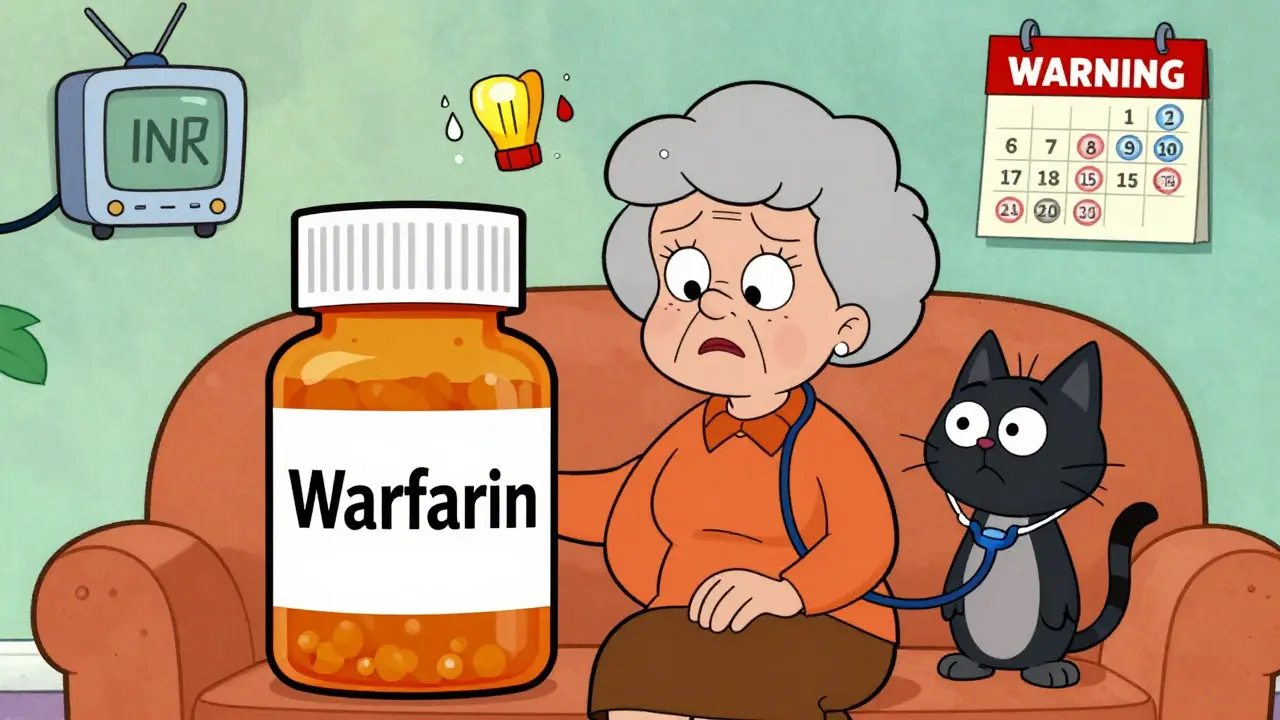
What Doctors and Pharmacists Can Do
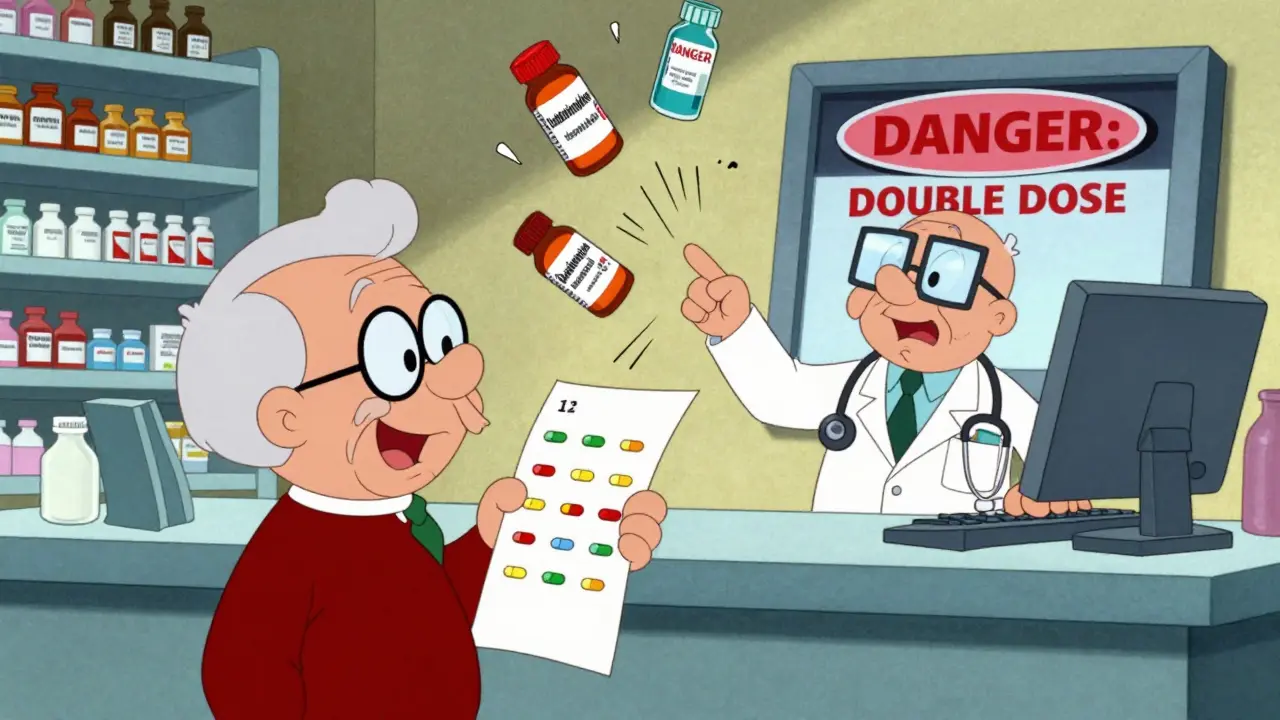
The good news? There are proven ways to fix this. Multidisciplinary teams that include clinical pharmacists cut potentially harmful prescriptions by 37% in elderly emergency patients. That’s not magic. It’s careful review: asking, “Do you still need all 12 pills?” “Can any be stopped?” “Are you taking the same dose every day?” Computerized systems that alert doctors when a senior is on five or more medications also help. They flag interactions, duplicate drugs, and inappropriate choices. One study showed these tools improved prescribing accuracy by nearly 30%. But the most powerful tool? Conversation. The Agency for Healthcare Research and Quality recommends the “teach-back” method: ask the patient to explain in their own words what the medicine is for and why they’re switching. Studies show this boosts adherence by 42%. It’s not about lecturing. It’s about listening. Show them the brand pill and the generic side by side. Say, “This is the same medicine. The color changed because the company that makes it is different. The active ingredient? Identical.” Visual aids help. So does time. Most switches need 15 to 20 minutes of focused counseling during medication reconciliation. That’s not always possible in a 10-minute visit. But when it happens, outcomes improve.When to Be Cautious
Not all generics are created equal in the eyes of older adults-or in practice. Avoid automatic substitution for:- Warfarin - Requires INR checks before and after switch
- Levothyroxine - Even small changes in absorption can affect thyroid levels. Stick to one brand unless monitored closely
- Lithium - Narrow window between therapeutic and toxic
- Anti-seizure drugs - Like phenytoin or carbamazepine - small changes can trigger seizures
- Immunosuppressants - Like cyclosporine - critical for transplant patients
What Seniors Can Do for Themselves
You don’t need to be a medical expert to protect yourself.- Keep a written list of every pill you take, including OTCs and supplements. Bring it to every appointment.
- Ask: “Is this generic? Is it safe for me?” Don’t assume it’s fine.
- Notice changes - Did your energy drop? Did you feel dizzy? Did your sleep get worse? Report it. Don’t blame aging.
- Don’t mix OTCs - Check labels. Many cold and sleep aids have acetaminophen or diphenhydramine. Double-dosing is common and dangerous.
- Use one pharmacy - They can track interactions better than multiple pharmacies.
Beth Cooper
Okay but have you seen the FDA's 'bioequivalence' loophole? It's literally a 20% swing in absorption and they call it 'the same drug'-like my grandma's blood pressure pill suddenly turns into a placebo because the dye changed. I swear, Big Pharma and the FDA are in cahoots. They don't care if your kidneys are failing, they just want you to swallow the cheaper version and shut up.
My aunt switched to generic levothyroxine and started having panic attacks. Her TSH was 'normal'-whatever that means. Her body knew. Her heart knew. The FDA doesn't live in her skin.
And don't get me started on how pharmacies switch generics without telling you. One month it's Teva, next month it's Mylan, next month it's some company I've never heard of that makes toilet paper. Same pill? Nope. Same feeling? Never.
They say 'it's science'-but science doesn't care if you're 83 and can't afford a $120 pill. It just wants you to take the $10 one and hope you don't keel over.
And yet, no one’s suing anyone. No one's doing a class action. Why? Because old people don't have lawyers. They have grandchildren who don't understand why their grandma is suddenly too tired to walk to the mailbox.
I’m not paranoid. I’m just the only one who reads the fine print.
And yes, I’ve filed a complaint. Twice. Got a form letter back both times. Classic.
Donna Fleetwood
I get why people are scared-but let’s not throw the baby out with the bathwater. Generics saved my mom’s life. She was choosing between insulin and groceries. Switching to generic metformin meant she didn’t have to skip meals to afford her meds.
Yes, some seniors feel weird after a switch. But that doesn’t mean the drug is bad-it means we need better communication. Talk to your pharmacist. Ask for the same manufacturer if you feel off. Most will accommodate you.
And if your doctor’s too rushed? Bring a list. Write down how you feel. Say ‘I noticed a change.’ That’s all it takes to get someone to listen.
Generics aren’t perfect. But they’re a lifeline for millions. Let’s fix the system, not fear the solution.
I’ve seen too many people suffer because they stopped taking meds out of fear. Don’t let fear steal your health. Advocate. Ask. Stay curious. You’ve got this.
Melissa Cogswell
Just wanted to add a quick clinical note: the 80-125% bioequivalence range is actually conservative. For most drugs, the variation between batches of the same brand-name drug is wider than the allowed difference between brand and generic.
That said, for narrow therapeutic index drugs like warfarin or levothyroxine, even small fluctuations matter more in elderly patients due to reduced clearance and polypharmacy.
Best practice: if you’re stable on a brand, stay on it. If you switch, monitor closely-TSH for thyroid, INR for warfarin, lithium levels, etc. And stick with one pharmacy-they track your entire med history, not just the current script.
Also, many seniors don’t realize that OTC meds can interact. Diphenhydramine in cold meds + sleep aids = anticholinergic burden. That’s a silent killer in older adults-confusion, falls, urinary retention. Always check labels.
And yes, the teach-back method works. I’ve used it in clinics. Patients remember 70% more when they explain it back in their own words. Simple. Powerful.
Diana Dougan
Wow. So the government tells us generics are fine, but then they don’t even test them on old people? Genius. Of course they didn’t. They tested it on 25-year-old college kids who don’t even have kidneys that work half as hard as a 78-year-old’s.
And don’t get me started on how the FDA approves generics based on ‘bioequivalence’-which means they literally let a pill be 20% weaker or stronger and call it ‘the same.’
My uncle had a stroke after switching to generic lisinopril. His doctor said ‘it’s the same.’ He’s now in a nursing home. Coincidence? Maybe. Or maybe the FDA just doesn’t care about old people.
Also, why do all generics look like crap? Like, who designed these pills? A 12-year-old with a crayon? They’re not even the same color. How is that not a red flag?
And the pharmacies? They switch without telling you. You don’t even get a receipt that says ‘generic substituted.’ You just get a different-looking pill and hope you don’t die.
Wake up, people. This isn’t science. It’s corporate greed with a lab coat.
Bobbi Van Riet
I’ve been a geriatric nurse for 22 years and I can tell you this: the real issue isn’t generics-it’s the lack of follow-up. Doctors prescribe, pharmacists dispense, and then… nothing. No check-in. No conversation. No ‘how are you feeling?’
One of my patients, Mrs. Delgado, switched from brand Synthroid to generic and started feeling like she was dragging through molasses. Her TSH was fine. But she was exhausted, cold, depressed. We switched her back and she cried-she said she felt like herself again.
It’s not always about lab values. It’s about how you live. And if someone says ‘I don’t feel right,’ we should listen-not dismiss it as ‘just aging.’
Also, the OTC stuff? So dangerous. I had a patient who took three different cold meds because he didn’t realize they all had acetaminophen. He ended up in liver failure. He didn’t even know what ‘acetaminophen’ meant. He just saw ‘pain reliever’ on the box.
And yes, one pharmacy helps. I’ve seen it. One pharmacy knows your whole history. Multiple pharmacies? Chaos. One guy was on 14 meds. Four of them were the same thing. From different stores.
So yes, generics are fine-if we treat people like humans, not numbers.
Holly Robin
THIS IS A COVER-UP. I’ve been researching this for 3 years. The FDA doesn’t test generics on elderly patients because they don’t want the data to show that older people are dying from these switches. The drug companies pay for the studies. The studies are done on young, healthy volunteers. The FDA approves. Then they push it on seniors who can’t afford the brand.
And guess what? The same companies that make generics also own the brand-name versions. Same factory. Same chemists. Just a different label. Why? Because they can charge $120 for the brand and $10 for the ‘generic’-and still make the same profit.
My neighbor’s husband died after switching to generic warfarin. The death certificate said ‘natural causes.’ Bullshit. It was a bleed. Because the generic absorbed too fast.
They’re killing us. Quietly. Systematically. And no one’s talking about it because old people aren’t profitable.
Sign the petition. Demand transparency. Demand testing on real patients. Don’t let them turn your grandma into a statistic.
Shubham Dixit
India makes 40% of the world’s generics. We export to the US, Europe, Africa. We have the highest FDA inspection pass rate of any country. You think your ‘brand’ pills are safe? Many are made in the same factories as generics. Same equipment. Same quality control.
Stop blaming India. Stop blaming generics. Blame your own system that forces seniors to choose between food and medicine.
Our pharmacists are trained. Our labs are certified. Your FDA approves our products. So why are you blaming the medicine? Blame your politicians who won’t fix Medicare pricing.
Generics are not the enemy. Greed is.
And if your grandma feels different after switching? Maybe she needs a better doctor, not a more expensive pill.
We make medicine for the world. You make excuses.
KATHRYN JOHNSON
There is no scientific evidence to support the claim that generics are less safe for elderly patients. The FDA’s bioequivalence standards are rigorous and evidence-based. Any perceived difference in efficacy is likely due to placebo effect or nonadherence.
Furthermore, the American Geriatrics Society’s caution regarding narrow therapeutic index drugs is well-documented and widely followed. Automatic substitution is not standard practice for these agents.
Claims of increased ER visits post-switch are confounded by selection bias and lack of controlled data. Correlation does not equal causation.
It is irresponsible to spread fear without evidence. Seniors deserve accurate information-not fearmongering.
Pharmacists are trained to counsel patients. If counseling is lacking, that is a systemic failure of healthcare delivery-not a flaw in generic drugs.
Sazzy De
My grandma switched to generic levothyroxine and didn’t say anything for months. Then one day she said, ‘I just feel… lighter.’
Turns out she’d been so tired she thought it was just getting older.
She’s been on the generic for 2 years now. No issues. No drama.
Maybe it’s not about the pill. Maybe it’s about whether someone’s paying attention.
Just saying.
Blair Kelly
Let’s be real. The entire generic drug system is a scam. The FDA is a puppet of Big Pharma. The same companies that make brand-name drugs own the generic versions. They just repackage them under a different name and charge less so they can say ‘we’re helping seniors.’
Meanwhile, the pills are made in the same factories. The same chemists. The same machines. The only difference? The label.
And yet, they want you to believe that the blue pill is different from the green pill because the dye changed? That’s not science. That’s marketing.
And the worst part? They don’t even tell you when they switch it. You just get a different-looking pill and they expect you to be grateful.
This isn’t about cost. It’s about control. And they’re using our grandparents as guinea pigs.
I’m not paranoid. I’m informed.
Rohit Kumar
In India, we say: ‘The medicine is not in the color, but in the molecule.’
Generics are not inferior. They are the embodiment of access. They are the bridge between science and survival.
When a 70-year-old in rural Bihar takes a generic antihypertensive, she doesn’t care if it’s blue or white. She cares that she can walk to the market again. That her grandson doesn’t have to skip school to care for her.
Here in the US, you have the luxury of choice. You have doctors. You have pharmacies. You have information.
But you are choosing fear over function.
Science does not discriminate by age. But human fear does.
Perhaps the real question is not whether generics work-but why we have stopped trusting each other enough to let them.
Lily Steele
My mom’s on warfarin. She’s 81. We never let the pharmacy switch her. Ever.
We always check the bottle. We always ask. We always call the doctor if it looks different.
It’s not about being paranoid. It’s about being careful.
And yes, I keep a list. On paper. In my wallet.
One pharmacy. No OTC combos.
Simple. But it works.
Just don’t assume it’s fine.
Ask. Always ask.
Gaurav Meena
As someone who works in global health, I’ve seen how generics save lives in places where brand-name drugs are unaffordable. In rural India, a generic statin means a man lives to see his grandchildren graduate. In the US, a generic thyroid pill lets a woman keep her job.
But you’re right-aging changes everything. The body doesn’t process drugs like it used to. And that’s why we need better systems, not fear.
Pharmacists should be paid to counsel. Doctors should have time to explain. Insurance should cover follow-up labs after a switch.
Generics aren’t the problem. The system is.
Let’s fix the system.
Not the pills.
And yes, I’ve seen seniors thrive on generics. And I’ve seen them suffer because no one asked them how they felt.
It’s not the medicine. It’s the care.