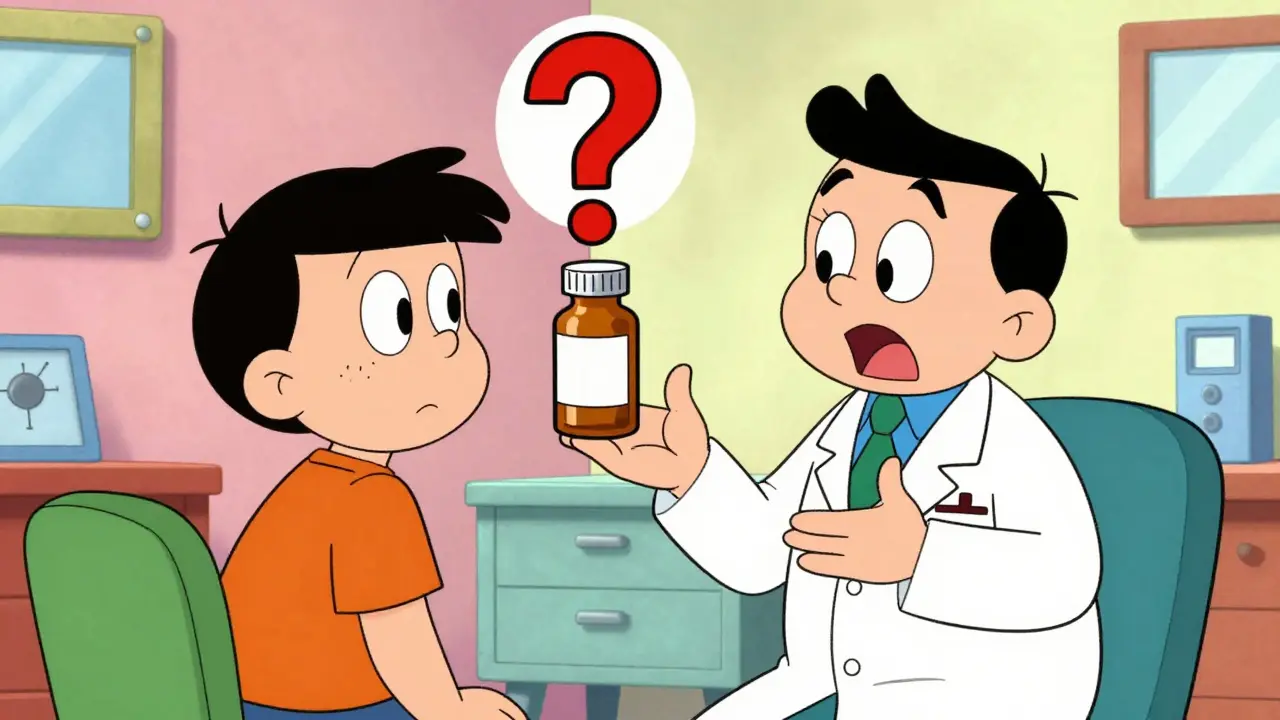
Imagine finding out that the medication you've been taking for years wasn't actually approved for your specific condition. For many, this sounds like a medical error or something illegal. In reality, it's a standard part of modern medicine. Off-label drug use is the practice of prescribing an approved drug for a purpose, age group, dose, or administration route that the FDA hasn't officially signed off on. While it might seem risky, it's often the only way patients with rare diseases or complex needs get the help they need.
What Exactly Does "Off-Label" Mean?
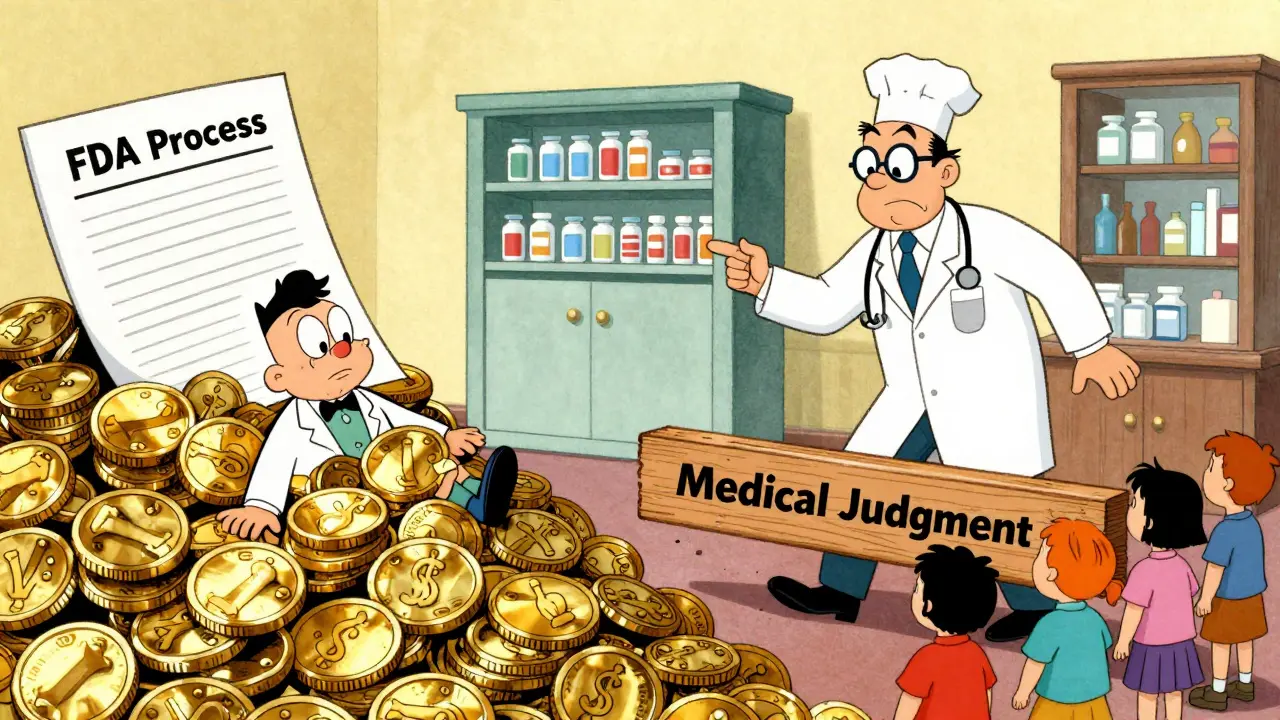
When we talk about a drug being "approved," we are talking about the U.S. Food and Drug Administration (FDA) verifying that a drug is safe and effective for a very specific use. However, once a drug is on the market, the FDA doesn't police how a doctor uses it. Doctors are allowed to use their professional judgment to prescribe a drug for a different reason if they believe it will help the patient.
Off-label use usually falls into one of four buckets:
- Unapproved Condition: Using a drug meant for one disease to treat another (e.g., using a specific chemotherapy drug for a cancer type it wasn't originally tested for).
- Unapproved Age Group: Giving a drug approved for adults to a child.
- Unapproved Dosage: Prescribing two pills a day when the official label suggests one.
- Unapproved Route: Administering a drug as a liquid when it was only approved as a capsule.
It's a massive part of the healthcare system. In the U.S., roughly 20% of all prescriptions are written off-label. In some fields, like oncology, that number skyrockets-up to 85% of cancer drugs are used this way because cancer biology is so diverse that one "official" label rarely covers every mutation.
Why Do Doctors Do This?
You might wonder why the FDA doesn't just approve everything that works. The answer is usually money and time. Expanding a drug's official label is a grueling process. According to PhRMA, it can cost between $50 million and $100 million and take up to seven years to get a new indication approved. Many pharmaceutical companies simply can't justify that expense for a rare disease that only affects a few thousand people.
This creates a gap where off-label drug use becomes a lifeline. In pediatrics, for example, only 20-30% of drugs have specific labeling for children. If doctors waited for every drug to be officially pediatric-approved, millions of children would go without treatment. By using evidence from peer-reviewed journals or clinical experience, doctors can bridge that gap.
| Specialty | Estimated Off-Label Rate | Primary Driver |
|---|---|---|
| Oncology | 85% | Rapidly evolving molecular targets |
| Pediatrics | 62% | Lack of clinical trials in children |
| Psychiatry | 31% | Complex co-morbidities and symptoms |
| Neurology | 24% | Unmet needs for rare neurological disorders |
The Risks and Rewards: A Balancing Act
Off-label prescribing is a double-edged sword. On the positive side, it allows for "innovative care." Take Methotrexate, for example. While originally for cancer and psoriasis, its ability to modulate the immune system has made it a go-to for various other inflammatory disorders. When backed by science, off-label use saves lives.
The danger arises when the practice is driven by marketing instead of medicine. Not every off-label use is based on a gold-standard clinical trial. Some are based on a few case reports or even a "hunch." A tragic example was the Fen-Phen combination for weight loss; this off-label pairing of two drugs caused severe heart valve damage, eventually leading to its withdrawal from the market.
There is also the issue of the "marketing loop." While doctors can prescribe off-label, pharmaceutical companies are strictly forbidden from promoting those uses. If a company tells a doctor to use a drug off-label, they face massive fines. GlaxoSmithKline, for instance, paid $3 billion in 2012 to settle charges related to illegal off-label promotion. This means the information you get about off-label uses should come from your doctor or a medical journal, not a drug rep.
How to Navigate Off-Label Treatment as a Patient
If your doctor suggests an off-label medication, you don't need to panic, but you should ask the right questions. Not all evidence is created equal. A systematic review of randomized controlled trials is the "gold standard," while a single case study is much weaker. You want to know where your doctor's recommendation is coming from.
Ask your provider these three things:
- Why is this drug being used off-label instead of an FDA-approved alternative?
- What scientific evidence or clinical guidelines (like the NCCN for cancer) support this use?
- What are the specific risks for my age group or condition that might not be on the official label?
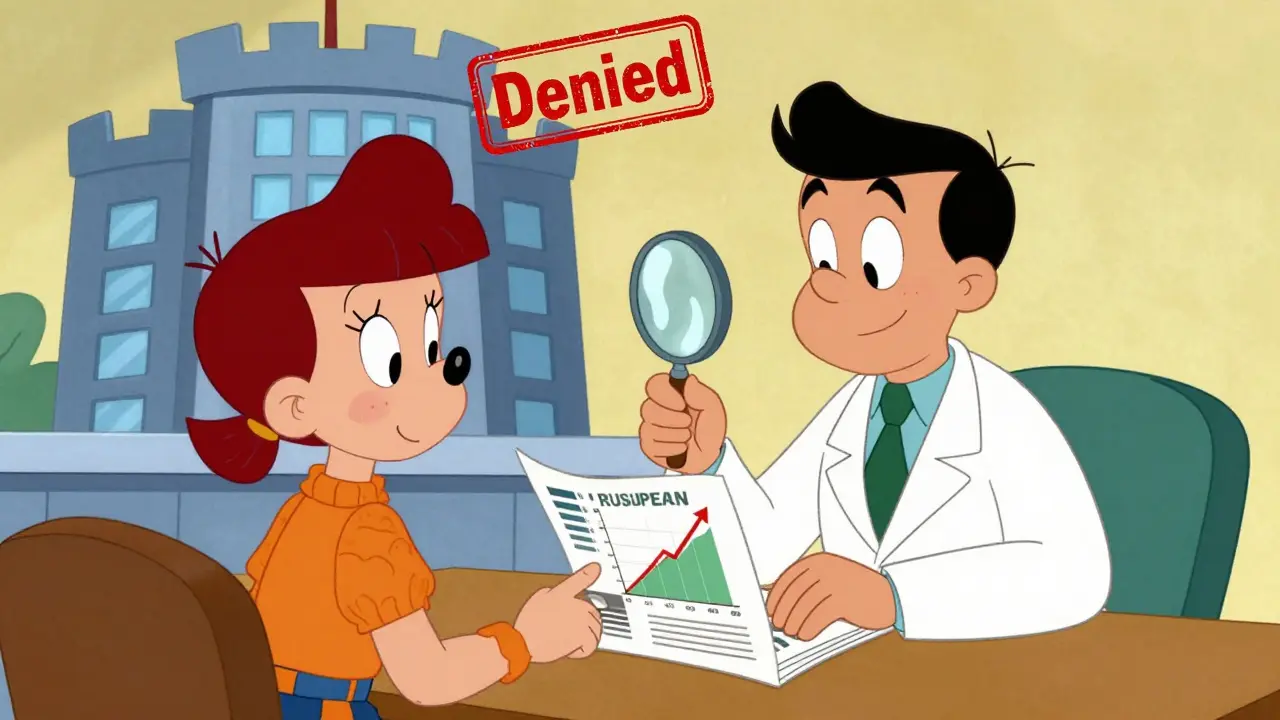
Be prepared for an insurance battle. Because the drug isn't approved for your condition, your insurance company might initially deny the claim. Many insurers, including UnitedHealthcare, require proof that the use is listed in a recognized medical compendium or published in a peer-reviewed journal before they will pay for it. This often requires a "prior authorization" process, which can delay treatment by several days.
The Future of Labeling and Evidence
We are moving toward a world where the line between "on-label" and "off-label" might blur. The 21st Century Cures Act is helping the FDA use "real-world evidence"-data from electronic health records and patient registries-to expand labels more quickly. Instead of a 7-year trial, the FDA can look at how thousands of patients are actually responding to a drug in the real world.
We're seeing this play out right now with GLP-1 agonists like Ozempic. Originally approved for diabetes, their off-label use for weight loss exploded, with some reports showing a 300% increase in prescriptions. This massive real-world usage often pushes the FDA and manufacturers to eventually conduct the trials necessary to make the use official.
Is it illegal for a doctor to prescribe a drug off-label?
No, it is completely legal. The FDA regulates the marketing and approval of drugs, but it does not regulate the practice of medicine. Doctors have the legal authority to prescribe any approved drug for any purpose if they believe it is medically appropriate for their patient.
Is it illegal for drug companies to suggest off-label uses?
Yes, generally it is. Pharmaceutical companies cannot market or promote their drugs for uses that the FDA has not approved. Doing so can lead to billions of dollars in fines and criminal charges, as seen in several high-profile Department of Justice settlements.
Will my insurance cover off-label medications?
It depends. Some insurance plans refuse to cover off-label uses. Others will cover them if the doctor provides evidence from peer-reviewed journals or if the use is recognized in official medical compendia (like the NCCN for oncology). You will likely need a prior authorization from your doctor.
Why is off-label use so common in children's health?
Many drugs are tested only on adults during clinical trials. Because of ethical complexities and the cost of conducting pediatric trials, many medications never get a formal "pediatric label," even though they are safe and effective for kids. This makes off-label use a necessity in pediatric care.
What are the risks of taking a drug off-label?
The primary risk is the lack of rigorous, large-scale data for that specific use. This means there may be unknown side effects, unexpected drug interactions, or a lack of clear dosing guidelines for your specific condition or age group.
Srikanth Makineni
standard practice basically
Danielle Kelley
This is just a fancy way of saying they're using us as lab rats without our consent!
The FDA doesn't "not police" it, they just don't care as long as the money keeps flowing from Big Pharma to the pockets of these doctors. It's absolutely terrifying that we're just expected to trust some "professional judgment" when it comes to chemicals altering our brain chemistry or organs. They're basically running a massive, unregulated experiment on the entire population and calling it "innovative care" to keep us quiet. Wake up people, the lack of labeling isn't a gap, it's a feature of the system to avoid accountability when things go south!
Jamar Taylor
It's actually really inspiring to see how doctors use their expertise to find solutions for people who have no other options! Keep pushing for better health and don't be afraid to advocate for yourself with your provider. We've got this!
Brady Davis
Oh sure, because nothing says "gold standard" like a doctor's hunch and a prayer. I love how the insurance companies are the only ones actually doing their jobs by denying the claims. Truly a masterpiece of a healthcare system we've built here. 🙄
Toby Sirois
You people are so naive. It's obvious that the FDA is just a puppet for the pharmaceutical industry. I've read enough about this to know that the "real-world evidence" they're talking about is just a way to skip the hard work of actual science. If you're taking something off-label, you're basically just gambling with your life because your doctor thinks he's a genius. It's simple: if it's not on the label, it's not proven, and anything else is just noise from people who don't understand how chemistry actually works. Honestly, it's sad that most of you just swallow whatever pill you're given without realizing you're the ones paying for the "experiment." Just a total lack of critical thinking across the board.
shelley wales
I really appreciate how this explains the struggle for those with rare diseases. It can feel so lonely when you're searching for a treatment that doesn't have an official "stamp" of approval, but knowing that so many specialists rely on peer-reviewed research makes me feel much more hopeful for everyone in that position.
Jay Vernon
Thanks for sharing! 😊 Hope everyone stays healthy! 🙏✨
Ethan Davis
Exactly what I'm talking about. The "marketing loop" is just a cover story. They fine these companies billions, but the companies make trillions. It's all a game to keep the public distracted while they push whatever they want through the back door. Absolute joke.
Dhriti Chhabra
I believe it is important to maintain a balance between clinical rigor and the urgent needs of the patient. While the risks are present, the ethical imperative to treat a suffering individual often outweighs the administrative delay of a formal label expansion.