Dry Mouth Product Comparison Tool
Select your primary need to get personalized recommendations for dry mouth products.
What's your primary need?
How long do you need relief?
What's your price preference?
Additional needs
Recommended Products
When your mouth feels like sandpaper, even drinking water doesn’t help. That’s dry mouth - not just discomfort, but a real threat to your teeth and gums. It’s not something you can just ignore. Over 500 medications, from blood pressure pills to antidepressants, list dry mouth as a side effect. For people over 65, it’s not rare - about 3 in 10 deal with it regularly. And if you’re on multiple meds? Your risk goes up fast.
The problem isn’t just the feeling. Saliva protects your mouth. It washes away food, neutralizes acids, and fights bacteria. When it dries up, cavities sneak in. Sores form. Your breath turns sour. Your tongue sticks to the roof of your mouth. You start avoiding food because chewing feels like swallowing gravel. This isn’t normal aging. It’s a condition called xerostomia, and it needs a real plan - not just sipping water.
What Actually Works in Dry Mouth Products?
Not all oral care products are created equal when it comes to dry mouth. Most regular mouthwashes and toothpastes make it worse. Alcohol dries you out. Sodium lauryl sulfate (SLS) irritates sensitive tissues. You need products designed specifically to replace what your body can’t make anymore.
The top-recommended brand by dentists, pharmacists, and hygienists is Biotène is a line of oral care products developed specifically to mimic natural saliva, with alcohol-free, pH-balanced formulas that provide lasting moisture. Their Oralbalance Moisturizing Gel is a thick, long-lasting saliva substitute that contains carboxymethylcellulose and hydroxyethyl cellulose to coat and protect the mouth. Applied at night, it gives relief for up to four hours. That’s why so many people use it before bed - especially if they breathe through their mouth while sleeping.
For daytime use, Biotène Dry Mouth Oral Rinse is an alcohol-free rinse that cleanses while hydrating, with a balanced pH similar to natural saliva. It’s gentle enough to use twice a day. If you prefer lozenges, ACT Dry Mouth Moisturizing Lozenges are sugar-free, xylitol-based lozenges that stimulate saliva flow and help prevent cavities. Xylitol is key here - it doesn’t just moisten, it fights decay. But don’t overdo it. More than 10-15 lozenges a day can cause stomach upset.
For on-the-go relief, XyliMelts are adhesive discs that slowly dissolve, releasing xylitol and gum arabic to soothe dryness for hours. They stick to your gums or the inside of your cheek. No spraying. No spitting. Just quiet, steady relief. TheraBreath also offers flavored lozenges and rinses with clinical formulas, but Biotène still leads in professional recommendations.
Here’s how they compare:
| Product | Key Ingredient | Relief Duration | Best For | Price (approx.) |
|---|---|---|---|---|
| Biotène Oralbalance Gel | Carboxymethylcellulose, hydroxyethyl cellulose | Up to 4 hours | Nighttime use | $8.29 / 1.5 oz |
| Biotène Oral Rinse | Xylitol, pH-balanced | 2-3 hours | Daily cleansing | $12.99 / 33.8 fl oz |
| ACT Dry Mouth Lozenges | Xylitol | 1-2 hours per lozenge | Daytime, on-the-go | $6.79 / 36 pieces |
| XyliMelts | Xylitol, gum arabic | Up to 6 hours | Extended relief, sleep | $11.49 / 40 discs |
Non-Product Habits That Make a Big Difference
Products help - but habits change everything. You can’t rely on gels and rinses alone. You need to change how you live.
First, stop breathing through your mouth. It’s tempting when you’re congested, but it evaporates moisture fast. Try nasal strips at night. If you snore or have sleep apnea, talk to your doctor - that’s often the root cause.
Second, sip water all day. Not gulping. Sipping. Keep a bottle nearby. Ice chips work too - they melt slowly and keep your mouth moist without sugar. Avoid sugary drinks, soda, and citrus juices. They feed bacteria and erode enamel. Even diet soda has acid that attacks teeth when saliva isn’t there to buffer it.
Third, chew sugar-free gum or suck on xylitol lozenges during the day. It’s not just about moisture - it’s about stimulation. Chewing tells your body to make more saliva. Look for gum with xylitol listed as the first ingredient. Avoid anything with sugar, even "natural" sweeteners like honey or agave - they’re still food for cavity-causing bugs.
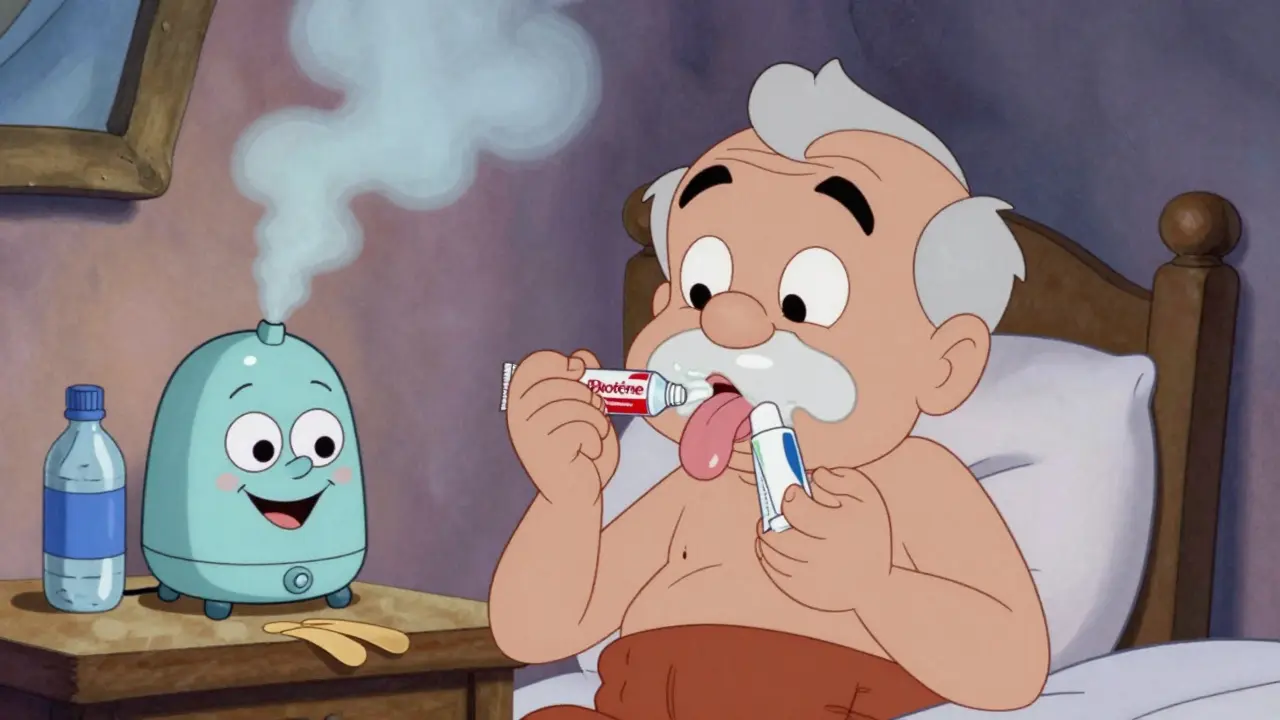
Fourth, add moisture to your air. Especially in winter. A simple humidifier in your bedroom can cut dry mouth symptoms in half. You don’t need a fancy one. A basic cool-mist humidifier works. Clean it weekly - mold in a humidifier is worse than dry air.
What to Use - and What to Avoid
Not every oral product is safe for dry mouth. Some make it worse.
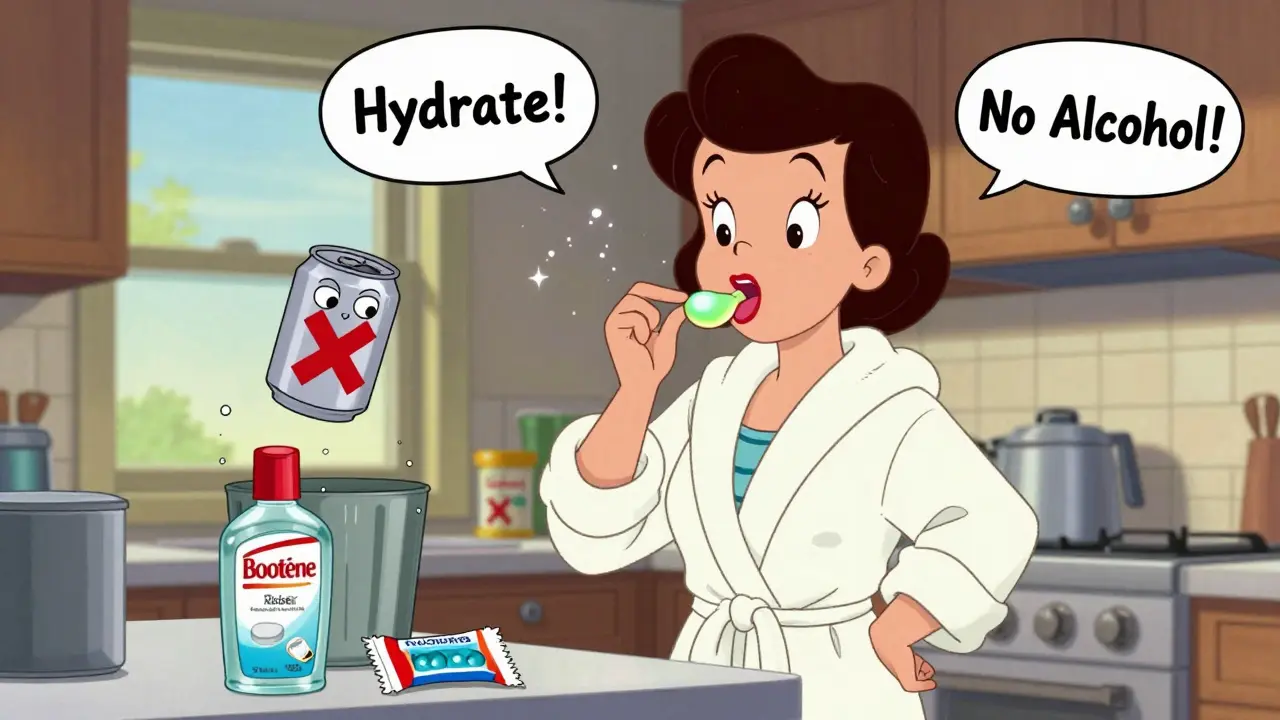
Steer clear of:
- Alcohol-based mouthwashes (they burn and dry)
- Toothpaste with sodium lauryl sulfate (SLS) - it strips protective mucus
- Sugary candies, sodas, and fruit juices
- Caffeinated drinks - coffee, tea, energy drinks - they’re diuretics
- Smoking or vaping - they dry out tissue and increase cancer risk
Instead, choose:
- Fluoride toothpaste (Colgate, Sensodyne, or Biotène brands)
- Alcohol-free rinses with xylitol
- Saliva substitutes with carboxymethylcellulose or hydroxyethyl cellulose
- Soft-bristled toothbrushes to avoid gum irritation
- Fluoride gel or rinse before bed - your dentist can give you a custom tray for nightly use
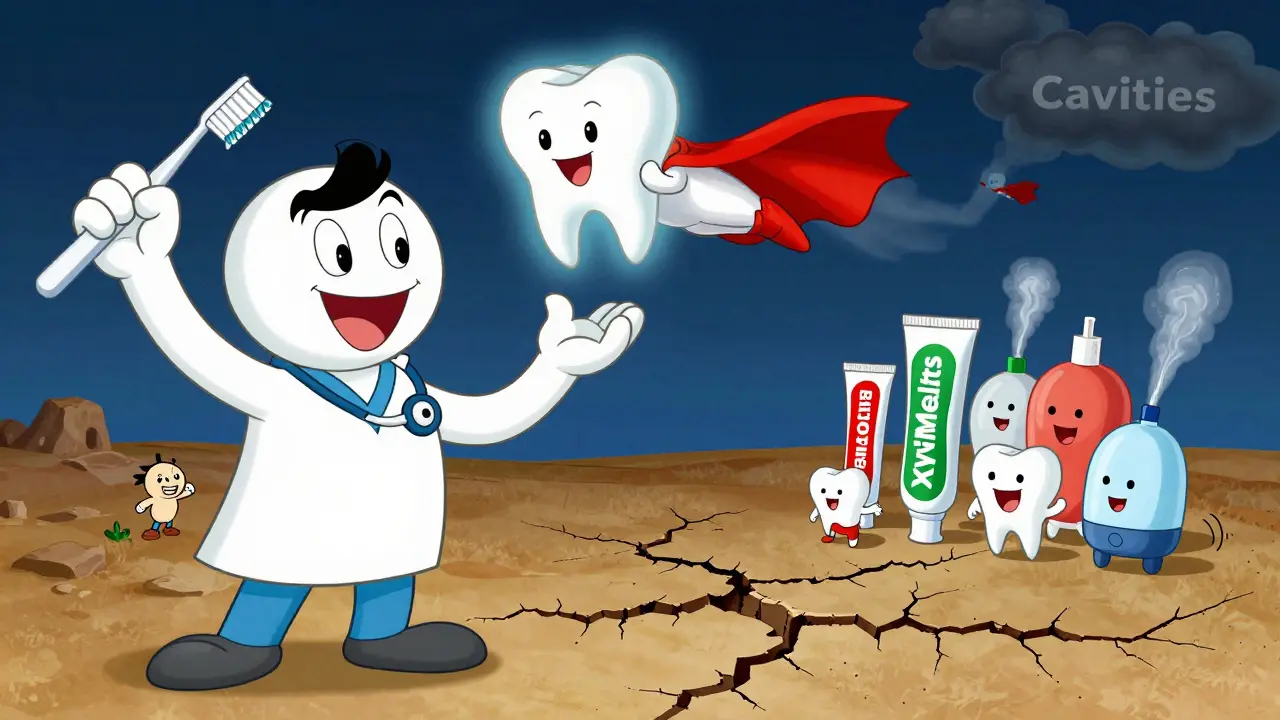
Fluoride is non-negotiable. Dry mouth means your teeth have zero natural defense. Cavities can form in weeks. A fluoride toothpaste with 1,450 ppm fluoride is ideal. If your dentist sees you’re at high risk, they might prescribe a stronger fluoride gel or a custom tray that holds fluoride against your teeth overnight.
Your Daily Routine: Simple, Realistic Steps
You don’t need a 10-step routine. Just do these:
- Morning: Brush with fluoride toothpaste. Rinse with Biotène or ACT dry mouth rinse. Don’t rinse with water after - let the protective layer stay.
- Midday: Sip water. Chew a xylitol gum or suck a lozenge. Avoid coffee or soda.
- Afternoon: If you feel dry, use a Biotène mouth spray. It’s quick and portable.
- Evening: Brush again. Apply a thin layer of Biotène gel to gums, tongue, and inside cheeks. Use your humidifier.
- Weekly: Visit your dentist at least once a year. If you’re on meds that cause dry mouth, ask for a check-up every 4-6 months.
Don’t wait until your teeth hurt. Dry mouth damage builds silently. Cavities under fillings, root decay, gum disease - they don’t always show up until it’s too late. Your dentist can spot early signs and adjust your plan.
When to See a Doctor
If you’ve tried the products and habits, and your mouth is still bone-dry, it’s time to look deeper. Dry mouth isn’t always just from meds. It can signal:
- Sjögren’s syndrome (an autoimmune condition)
- Diabetes
- Thyroid problems
- Dehydration from chronic illness
See your doctor if:
- It’s getting worse, not better
- You have dry eyes too
- Your lips crack and bleed
- You’ve lost taste or have trouble swallowing
There’s no cure for medication-induced dry mouth - but there are ways to manage it. And with the right tools, you can keep your mouth healthy, your breath fresh, and your smile intact.
What’s the best product for dry mouth at night?
The Biotène Oralbalance Moisturizing Gel is the top choice for nighttime use. It’s thick, stays in place, and provides up to four hours of relief. Apply a thin layer to your gums, tongue, and inside cheeks before bed. Pair it with a humidifier for best results.
Can I use regular mouthwash if I have dry mouth?
No. Most regular mouthwashes contain alcohol, which dries out your mouth even more. Look for alcohol-free formulas specifically labeled for dry mouth. Biotène Dry Mouth Oral Rinse and ACT Dry Mouth Rinse are both safe and effective choices.
Does xylitol really help with dry mouth?
Yes - but not because it moistens. Xylitol stimulates saliva flow slightly, but its real power is preventing cavities. Bacteria can’t digest xylitol, so they starve. This reduces decay risk, which is critical when saliva is low. Use lozenges or gum with xylitol as the first ingredient, but don’t overdo it - more than 10-15 pieces a day can cause bloating or diarrhea.
Why do I need fluoride toothpaste if I have dry mouth?
Saliva protects teeth from acid and rebuilds enamel. When you have dry mouth, that protection vanishes. Fluoride toothpaste helps replace that defense. It strengthens enamel and makes teeth more resistant to decay. Use a toothpaste with at least 1,450 ppm fluoride - and don’t rinse with water after brushing.
How often should I see a dentist with dry mouth?
At least once a year. But if you’re on medications that cause dry mouth, or if you’ve had cavities before, go every 4 to 6 months. Your dentist can monitor for early decay, apply fluoride treatments, and even make a custom tray for nightly fluoride gel application - a game-changer for high-risk cases.
What Comes Next?
If you’re managing dry mouth right now, you’re already ahead. The key isn’t perfection - it’s consistency. Use your gel at night. Sip water. Chew xylitol gum. Skip the soda. See your dentist. These aren’t chores - they’re your new normal.
And if you’re caring for someone else - an aging parent, a loved one on multiple meds - help them set up their routine. A humidifier on the nightstand. A bottle of water by the couch. A small tube of Biotène gel on the bathroom counter. Small changes. Big impact.
Dry mouth doesn’t have to mean losing your smile. With the right products and habits, you can keep your mouth healthy - even when your body isn’t making enough saliva.
Brad Ralph
Bro, I just used Biotène gel before bed and woke up like I’d been kissed by a hydrating angel 🌙💧
Still can’t believe I paid $8 for this magic.
Also, humidifier = life. My cat approves.
christian jon
Oh, SO you’re telling me that the pharmaceutical-industrial complex is NOT trying to keep us all dry-mouthed so we buy more $12 rinses??
Let me guess-Biotène’s CEO is secretly on the board of Big Water™!
And don’t even get me started on fluoride-fluoride is a COMMUNIST TOOL to make your teeth obedient!!
Also, xylitol? That’s just sugar with a fancy name and a fake accent.
I’m not falling for this corporate saliva cult.
Go drink rainwater. It’s purer. And cheaper. And NOT patented.
Suzette Smith
Actually, I’ve been using sugar-free gum with sorbitol instead of xylitol, and it’s been fine. I mean, why assume xylitol’s the only thing that works? Maybe it’s just marketing hype.
Also, I don’t use a humidifier-my dog breathes too loudly. So I just sleep with a glass of water. Works for me.
Not saying your way’s wrong… just saying mine’s… also a way.
Autumn Frankart
They don’t want you to know this-but Biotène? It’s made by the same company that makes those ‘miracle’ nasal sprays that are banned in 17 countries.
And fluoride? It’s been linked to thyroid suppression since the ’70s-hidden in plain sight.
They’re not selling relief-they’re selling dependence.
Why do you think they push the ‘daily routine’ so hard?
It’s not about health. It’s about habit.
And the humidifier? That’s just a distraction. The real cause is the 5G towers in your ceiling.
Check your Wi-Fi router. It’s emitting dryness waves.
You’re being manipulated.
Wake up.
Pat Mun
Okay, I’ve been dealing with dry mouth for over 10 years since my chemo, and let me tell you-this guide? It’s the real deal.
For years I was using regular mouthwash and wondering why my tongue felt like sandpaper even after brushing.
Then I tried Biotène gel at night-and oh my gosh, I actually slept without waking up to lick my lips.
And the lozenges? I keep them in my purse, my car, my desk drawer.
One time I was at the grocery store and started choking on dry air-I pulled out a lozenge and the lady behind me said, ‘Is that magic?’
I said, ‘Yeah. And it’s cheaper than therapy.’
Also, humidifier? Best $35 I ever spent.
Don’t overthink it. Just try the gel. It’s not a cure, but it’s peace.
And if you’re caring for someone older? Do it with them. Make it a ritual. It’s not about products-it’s about dignity.
And yeah, I cried the first night I didn’t wake up with a cotton mouth.
It’s small. But it matters.
andres az
From a systems analysis standpoint, the entire dry mouth product ecosystem is a suboptimal feedback loop.
Fluoride application is a symptomatic intervention, not a root-cause solution.
Moreover, the reliance on xylitol as a salivary stimulant lacks longitudinal clinical validation.
Also, the gel’s viscosity coefficient is inconsistent across batches-this introduces measurement error into therapeutic efficacy.
And let’s not ignore the confounding variable of ambient humidity levels.
Bottom line: You’re optimizing the wrong metric.
Focus on salivary gland function, not surface hydration.
Also, why are we still using toothpaste? Why not IV hydration?
Steve DESTIVELLE
Life is dry. The mouth is just a mirror.
Water is an illusion. Saliva is a memory.
They sell you gel to forget you are already broken.
Chew xylitol? No. Chew silence.
Humidifier? No. Breathe the wind.
Fluoride? A chain.
You think you are fixing a mouth.
You are burying a truth.
There is no cure.
Only acceptance.
And maybe a sip.
Just one.
Then let go.
Stephon Devereux
Just wanted to add something real quick-this post is spot-on, but I’d emphasize one thing most people miss: your tongue’s health matters more than you think.
When saliva dries up, your tongue doesn’t just get dry-it starts to harbor biofilm like a bacterial hotel.
That’s why even with rinses, if you don’t gently brush your tongue with a soft brush or scraper daily, you’re still getting that sour taste and bad breath.
I started doing it after my dentist showed me how white and coated mine was-turns out, it was a sign of early candida overgrowth.
Not saying you have it-but if you’ve been doing all this and still feel ‘off,’ check your tongue.
Also, if you’re on blood pressure meds, ask your doc about ACE inhibitors-they’re less drying than diuretics.
Small tweak. Huge difference.
And yes, fluoride is non-negotiable. Your enamel is your last line of defense.
Don’t let it crumble silently.