What Are Pharmacy Dispensing Errors?
Pharmacy dispensing errors happen when the wrong medication, dose, or instructions are given to a patient. These aren’t just small mistakes-they can lead to serious harm, hospitalization, or even death. According to a 2023 global review of 62 studies, about 1.6% of all prescriptions filled contain some kind of dispensing error. That might sound low, but with millions of prescriptions filled every day, that adds up to millions of patients at risk. In the U.S. alone, an estimated 7 million people are affected by medication errors each year.
These errors don’t always come from careless pharmacists. More often, they’re caused by systems that are too busy, too messy, or too outdated. A study from the Institute for Safe Medication Practices found that only 18.7% of pharmacies saw error reductions when they focused on blaming individuals. But those that fixed their systems-like improving workflows, using technology, and adding checks-saw a 62.3% drop in errors. The problem isn’t the person. It’s the process.
Top 5 Types of Dispensing Errors
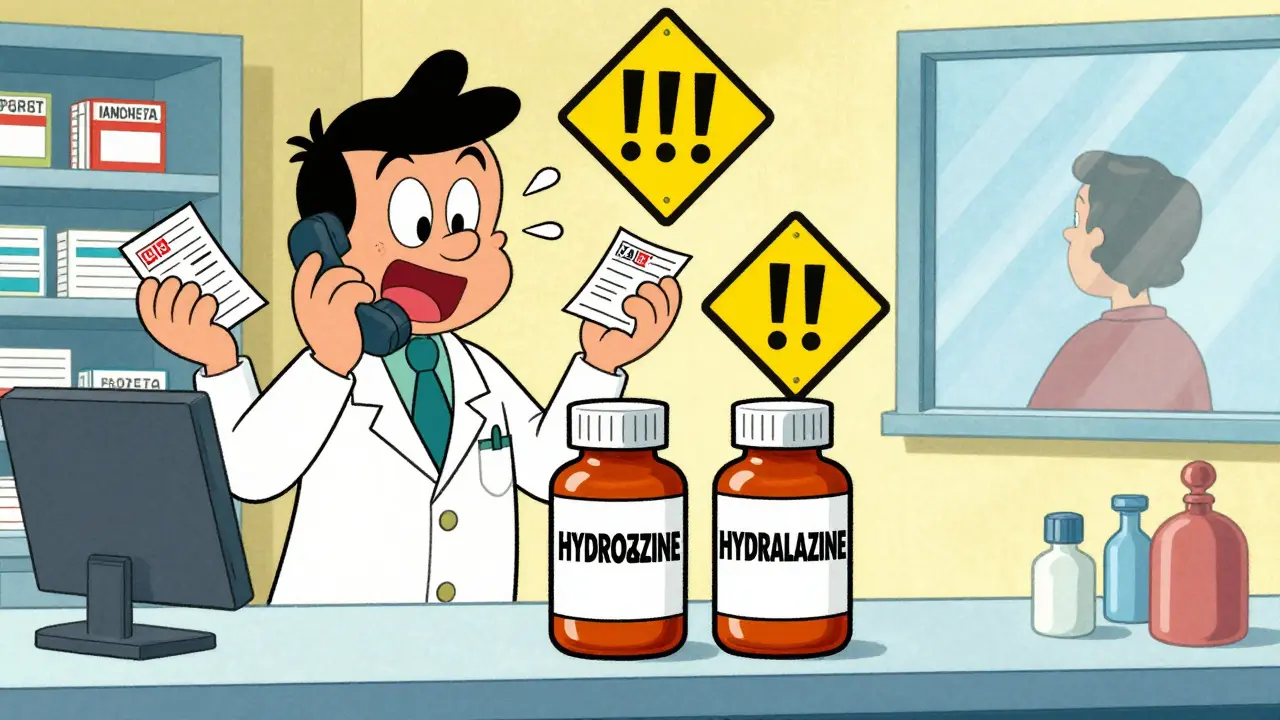
- Wrong medication - Giving Patient A the drug meant for Patient B. This is the most common error, especially with similar-sounding names like hydroxyzine and hydralazine.
- Wrong dose or strength - Dispensing 50 mg instead of 5 mg, or giving a tablet when the prescription calls for a liquid. This happens often with high-alert drugs like insulin, warfarin, or opioids.
- Wrong dosage form - Giving an extended-release pill when the patient needs an immediate-release version. Crushing a pill that shouldn’t be crushed can be deadly.
- Missed drug interactions or contraindications - Failing to catch that a patient’s new antibiotic clashes with their blood thinner, or that their kidney function means they can’t take a certain drug.
- Expired or improperly stored drugs - Medications degrade over time. If a pharmacy doesn’t rotate stock properly, patients might get pills that no longer work-or worse, have turned toxic.
Anticoagulants like warfarin are involved in 31% of serious errors. Antibiotics cause 28% of errors, often because pharmacists skip checking allergies. One study found that 41% of antibiotic-related mistakes happened because the pharmacist never looked at the patient’s allergy history.
Why Do These Errors Keep Happening?
It’s not that pharmacists are careless. They’re overworked. A 2022 study across 47 U.S. community pharmacies found that 37% of errors were linked to high workload and time pressure. When a pharmacist is juggling 15 prescriptions at once, answering phone calls, and helping customers at the counter, mistakes become almost inevitable.
Another big culprit? Similar drug names. Look at these pairs:
- Clonidine (for high blood pressure) vs. Clonazepam (for seizures)
- Hydralazine (vasodilator) vs. Hydroxyzine (antihistamine)
- Epinephrine (emergency cardiac drug) vs. Epinephrine (yes, same spelling, but different concentrations-1:1,000 vs. 1:10,000)
When prescriptions are handwritten, these mix-ups happen even more. In fact, 43% of errors trace back to illegible handwriting. Even when prescriptions are electronic, sound-alike names still trip up systems-especially if alerts are turned off because of alert fatigue.
Interruptions are another silent killer. If a pharmacist is verifying a prescription and gets interrupted three or more times, their chance of making a mistake goes up by 12.7%. That’s not a coincidence. It’s human nature.
Proven Ways to Prevent These Errors
Thankfully, there are clear, evidence-backed ways to cut these errors dramatically. Here’s what actually works:
1. Double-Check High-Risk Medications
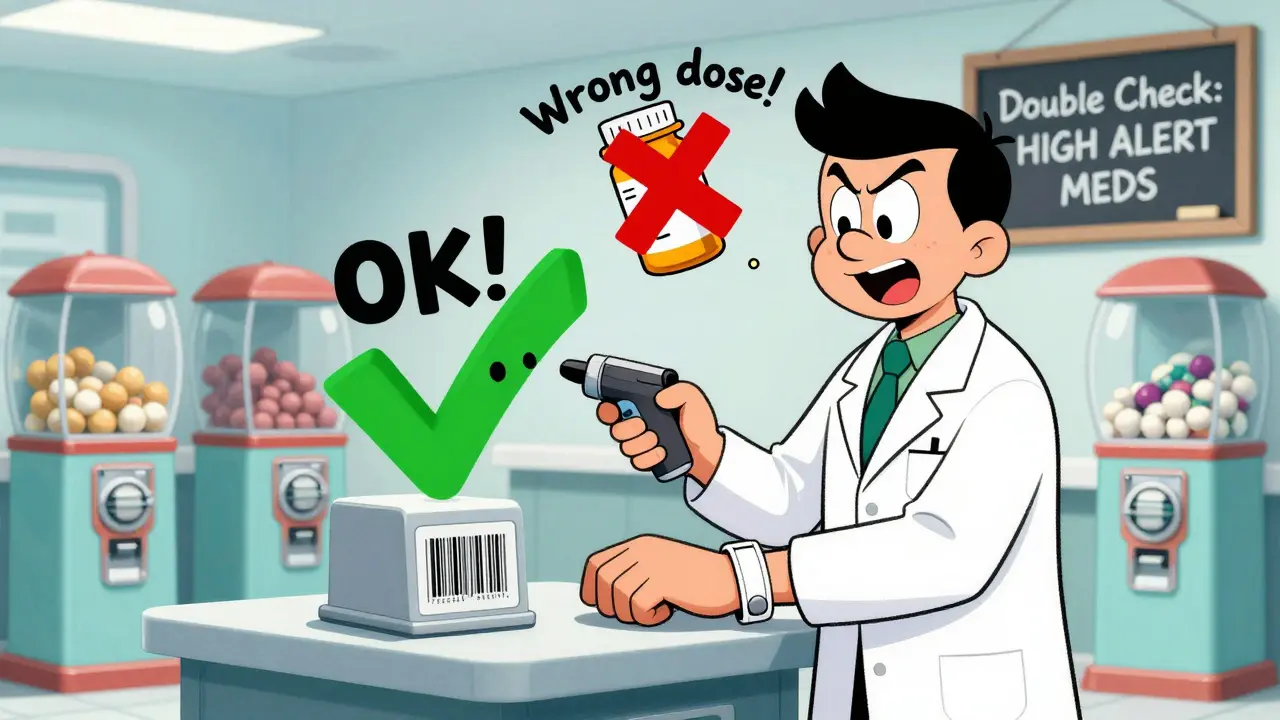
For drugs like insulin, heparin, warfarin, and opioids, two people should verify the prescription before it leaves the pharmacy. One pharmacist checks the order. A second pharmacist or trained technician confirms the drug, dose, route, and patient. One hospital reported a 78% drop in errors after implementing this for high-alert meds.
2. Use Barcode Scanning
Barcodes on medication bottles and patient wristbands are one of the most effective tools. When a pharmacist scans the prescription and the patient’s ID, the system flags mismatches in real time. A 2021-2023 survey of 127 hospitals found barcode systems reduced dispensing errors by 47.3%. Wrong drug errors dropped by over half. Wrong dose errors fell by nearly 50%.
3. Implement Tall Man Lettering
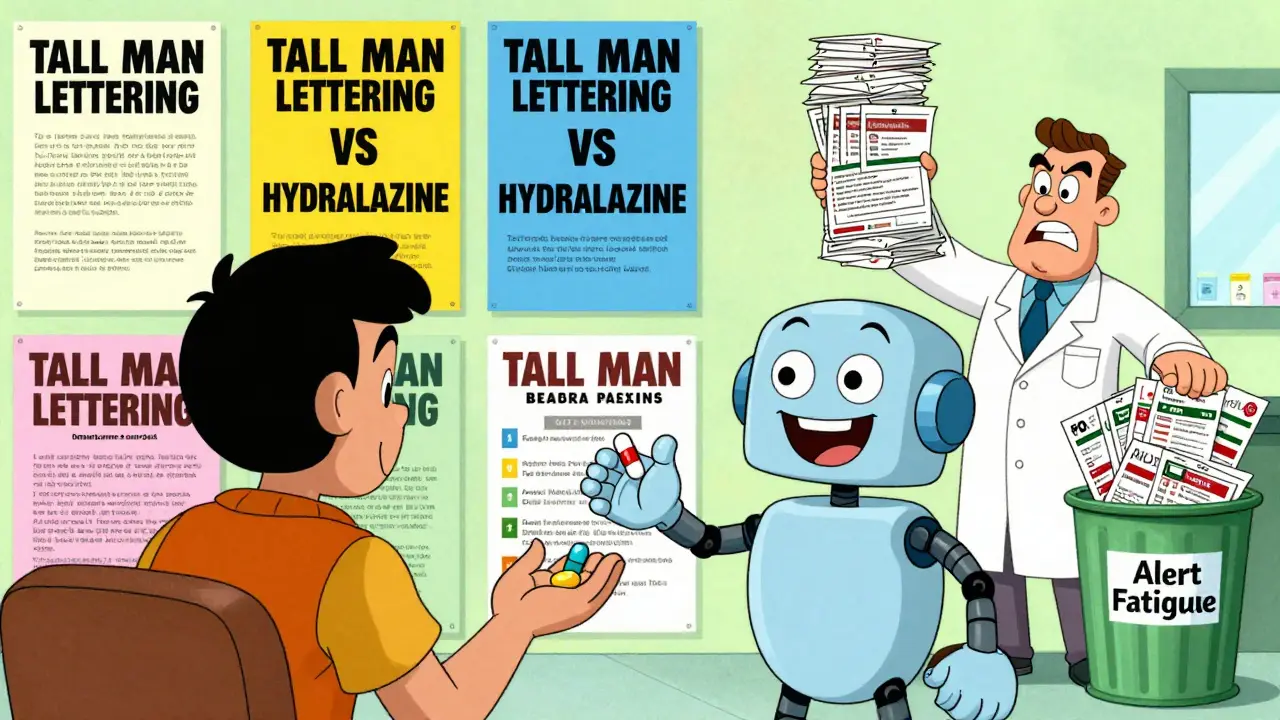
This is a simple fix that’s been proven to work. Instead of writing hydroxyzine and hydralazine the same way, write them as:
- HYDROXYZINE
- HYDRALAZINE
The capital letters highlight the differences. In 214 community pharmacies that adopted this, sound-alike errors fell by 56.8%.
4. Use Clinical Decision Support
Electronic systems that flag drug interactions, allergies, and kidney issues in real time are game-changers. But they only work if they’re well-designed. A 2023 study showed that poorly tuned systems caused alert fatigue-pharmacists started ignoring warnings. The key? Make alerts specific, actionable, and only show them when they matter.
5. Standardize Processes and Train Staff
Every pharmacy should have a written protocol for handling high-risk prescriptions. That includes how to verify allergies, how to check renal function before dosing, and how to handle verbal orders. Training isn’t a one-time event. It needs to be ongoing. Pharmacies that did this saw a 41% drop in knowledge-based errors.
What Doesn’t Work
Blaming the pharmacist doesn’t fix the system. Punishing staff for errors leads to underreporting. If a pharmacist fears getting fired for a mistake, they won’t report it. And if errors aren’t reported, they can’t be fixed.
Also, buying expensive tech without training won’t help. Robotic dispensing systems can reduce errors by over 60%, but only if staff know how to use them and trust them. One hospital installed a $300,000 robot-then didn’t train anyone. Within six months, errors went up because staff were bypassing the system entirely.
And don’t rely on memory. Even the most experienced pharmacists make mistakes when multitasking. That’s why checklists and verification steps exist-for everyone, not just new hires.
What’s Next for Pharmacy Safety?
The future of pharmacy safety is smarter systems. Artificial intelligence is being tested in 34 hospitals and has already cut dispensing errors by over 50% by predicting which prescriptions are most likely to go wrong. Robotic systems are getting cheaper and more reliable. By 2030, experts predict integrated electronic health records with real-time alerts could reduce errors by up to 75%.
But technology alone won’t save us. The World Health Organization and the Institute for Safe Medication Practices are working together to create a global standard for reporting medication errors. Right now, every country-and even every hospital-uses different definitions. That makes it impossible to learn from each other. A unified system, expected in early 2025, could cut international error rates by 42%.
For now, the best thing any pharmacy can do is start small: implement a double-check for high-risk drugs, scan barcodes, use Tall Man lettering, and train staff regularly. You don’t need a million-dollar robot to save lives. You just need to stop treating errors as accidents-and start treating them as system failures waiting to be fixed.
Real Stories, Real Results
One community pharmacy in Ohio started using barcode scanning after a patient nearly got the wrong anticoagulant. In the first month, the system flagged 12 errors-none of which would have been caught by human memory alone. One was a 10x overdose of warfarin. Another was a patient allergic to sulfa getting a sulfonamide antibiotic. Both were caught before the patient walked out the door.
At a long-term care facility in Texas, staff started using the ISMP’s ‘Do Not Crush’ list. Before, they were crushing pills all the time-because it was easier. After the list went up on every counter, crushing errors dropped by 73%. Patients started getting the right form of their meds, and fewer ended up in the ER with choking or overdose.
On the flip side, a hospital in Florida rolled out a new computer system that flooded pharmacists with 50 alerts per prescription. Within three months, they missed three critical drug interactions because they’d learned to click past everything. The system was supposed to help. Instead, it made things worse.
The lesson? Technology is a tool-not a cure. The best systems are the ones that support people, not overwhelm them.
paul walker
I work at a pharmacy and let me tell you, the barcode system saved my life. One time it flagged a 10x warfarin dose because the script said 5mg but the label said 50mg. I almost missed it. Seriously, if your pharmacy doesn't have this, push for it. 🙏
Frank Declemij
Tall Man lettering is such a simple fix it's almost embarrassing we don't all use it. HYDROXYZINE vs HYDRALAZINE. Case closed. Why are we still relying on human eyes to distinguish visually identical words? The tech exists. Use it.
Pawan Kumar
Let us not ignore the elephant in the room: pharmaceutical corporations intentionally design drug names to be confusing. It is a calculated strategy to increase liability and drive demand for more expensive, redundant safety systems. The FDA is complicit. The WHO? A puppet. This is not incompetence-it is systemic exploitation disguised as public health.
Keith Oliver
Bro, the real problem is pharmacists thinking they're above the system. I saw one guy ignore a barcode alert because he 'knew better.' Dude, you don't know better. The machine doesn't get tired. The machine doesn't have a bad day. The machine doesn't have a kid in the ER. Use the damn tech.
Jasneet Minhas
I mean… 🤦♂️ we're still using handwritten scripts in 2025? In a world where my toaster connects to Wi-Fi? Someone get me a time machine. Or just implement e-scripts already. 🚨💊
Megan Brooks
There's a deeper philosophical layer here. We treat medication errors as failures of individuals, but they are symptoms of a society that commodifies care. When a pharmacist is expected to fill 120 prescriptions in 8 hours, we are not asking for precision-we are asking for miracles. The system is designed to fail. We just blame the people inside it.
Robin Keith
I've been thinking about this all day, and I can't help but wonder-when we outsource human judgment to machines, are we not also outsourcing our moral responsibility? If a robot dispenses the wrong drug, who is guilty? The programmer? The hospital administrator? The FDA? Or... are we all just complicit in the slow erosion of human accountability in healthcare? I mean, really... what does it mean to be responsible anymore?
Sheryl Dhlamini
I had a friend nearly die from a mix-up between hydralazine and hydroxyzine. She was in the ER for three days. They didn't catch it until her blood pressure dropped through the floor. I will never, ever trust a pharmacy again without seeing them scan something. This isn't just policy. This is life or death.
Doug Gray
The alert fatigue phenomenon is a classic example of cognitive overload in high-stakes environments. Paradoxically, the very systems designed to mitigate risk exacerbate the problem by inducing desensitization. The solution? Adaptive AI-driven triage protocols that prioritize alerts based on clinical severity and user behavior patterns. But of course, nobody wants to fund that.
Kristie Horst
You know what’s ironic? The pharmacy that implemented double-checks for high-risk meds? They didn’t just reduce errors-they reduced burnout. Staff felt safer. More supported. More human. The real win isn’t the 78% drop in mistakes. It’s that people stopped dreading their shifts. Maybe safety isn’t just about tech. Maybe it’s about treating people like people.