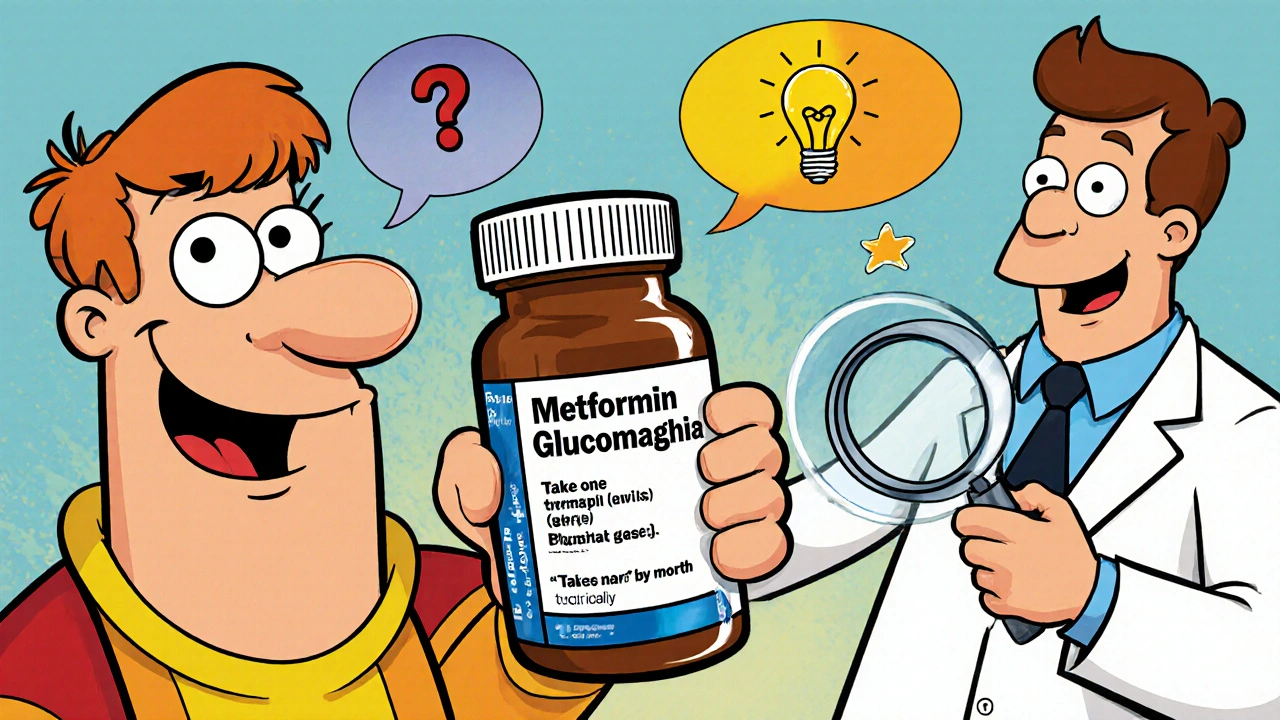
Every time you pick up a prescription or grab a bottle of ibuprofen from the shelf, you’re holding a document that could save your life-or hurt you if you don’t read it right. Drug labels aren’t just stickers on bottles. They’re legal, medical, and safety documents designed to tell you exactly what’s in the medicine, how to take it, and what could go wrong. But here’s the problem: most people don’t know how to read them.
What’s on a Prescription Drug Label?
Prescription labels follow strict rules set by the FDA. The full prescribing information, called the USPI, is written for doctors and pharmacists. But the label you get at the pharmacy is the condensed version. Here’s what you’ll actually see on the bottle:
- Generic name (like metformin) - this is the active ingredient, the chemical that does the work.
- Brand name (like Glucophage) - the name the company sells it under.
- Strength (like 500 mg) - how much of the drug is in each pill or dose.
- Quantity (like 30 tablets) - how many you got.
- Directions (like take one by mouth twice daily) - when and how to take it.
- Prescriber’s name - who ordered it.
- Pharmacy name and phone - who filled it.
- Date filled - when you picked it up.
- Expiration date - when it’s no longer safe to use.
- NDC number - a unique 10-digit code that identifies the exact drug, strength, and manufacturer.
- Storage instructions (like store at room temperature) - where to keep it.
That’s the basics. But what’s missing? The reason you’re taking it. Most labels don’t say why the doctor prescribed it. Is this for high blood pressure? Diabetes? Anxiety? Without that, you’re guessing. And that’s dangerous.
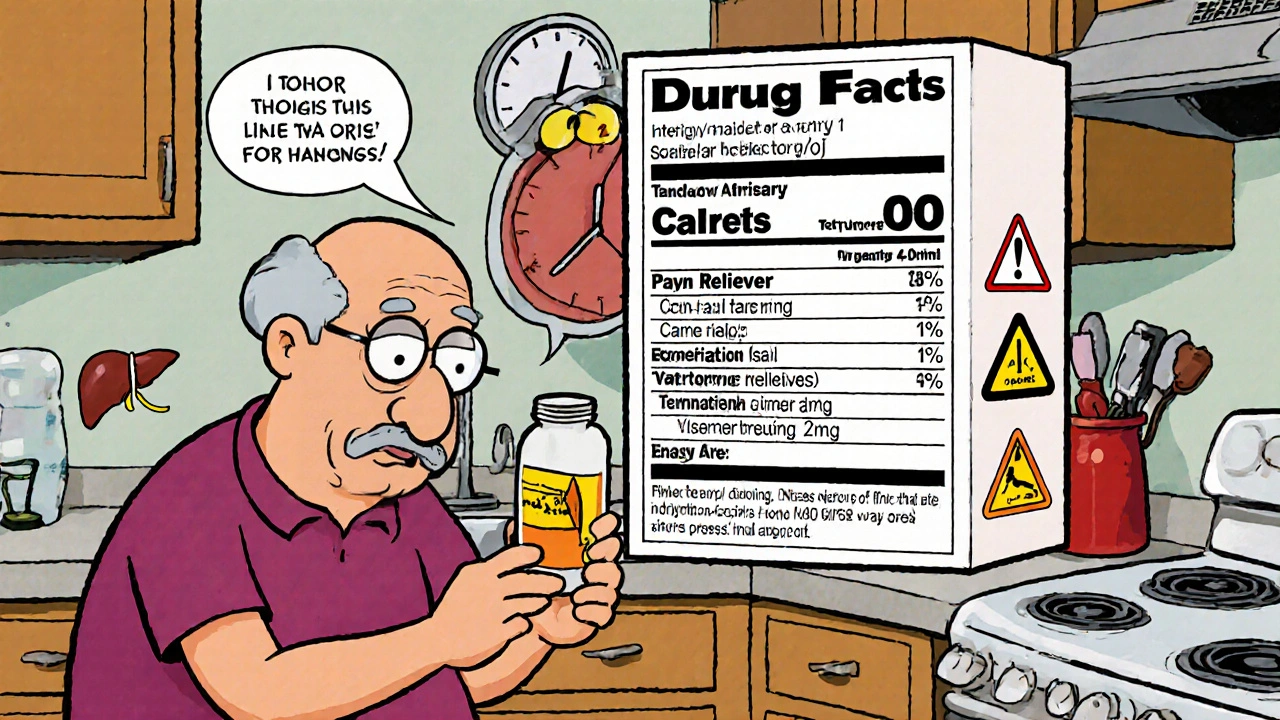
Over-the-Counter Labels: The Drug Facts Box
When you buy Tylenol, Benadryl, or a cold medicine off the shelf, you’re looking at something called the Drug Facts label. This is the FDA’s attempt to make OTC meds easier to understand. It’s structured like a cheat sheet:
- Active ingredient - the medicine itself (e.g., acetaminophen).
- Purpose - what it does (e.g., pain reliever, fever reducer).
- Uses - what symptoms it treats (e.g., headache, sore throat).
- Warnings - when NOT to take it (e.g., don’t use if you have liver disease).
- Directions - how much and how often.
- Inactive ingredients - fillers, dyes, flavors (important if you’re allergic).
- Other information - storage, expiration, and sometimes first aid info.
Unlike prescription labels, Drug Facts are meant for you. No medical degree needed. But here’s the catch: people still miss critical info. A 2022 survey found that 47% of adults didn’t check the active ingredient before taking multiple cold medicines - leading to accidental overdoses of acetaminophen. That’s the most common cause of liver failure from medication errors in the U.S.
Why Prescription Labels Are So Hard to Read
Why do so many people struggle? Because prescription labels weren’t made for patients. They were made for doctors.
The FDA’s labeling rules, updated in 2009, focus on clinical details: drug interactions, trial data, dosing for kidney failure, black box warnings. All important - but not helpful when you’re trying to figure out if you should take your pill before breakfast or after.
And then there’s the handwriting. Not literally - most labels are printed now - but the language. You’ll see abbreviations like:
- q.d. = once daily (but some people read it as “q.i.d.” = four times a day)
- b.i.d. = twice daily
- t.i.d. = three times daily
- q4h = every 4 hours
These aren’t just confusing - they’re dangerous. The Institute for Safe Medication Practices says abbreviations like these cause about 15% of all labeling-related errors. That’s why hospitals now ban them. But pharmacies? Still using them.
And don’t forget the font size. Many labels use tiny print. A 2022 Medicare Rights Center report found that 54% of seniors over 65 had trouble reading their labels. That’s not just inconvenient - it’s a health risk. Older adults are 22% more likely to make a medication error because of poor labeling.
What’s Missing: The “Why” Behind the Medicine
Here’s one of the biggest gaps: most labels don’t say why you’re taking the drug. You get a pill for “hypertension,” but you don’t know if it’s for high blood pressure, heart failure, or kidney protection. That’s a problem.
Research from the University of Florida shows that when labels include the reason for use - like “for high blood pressure” - medication errors drop by up to 42%. Why? Because people remember better when they understand the purpose. If you know the pill is for your blood pressure, you’re more likely to take it even when you feel fine. You’re less likely to skip it because you think, “I don’t have a headache today.”
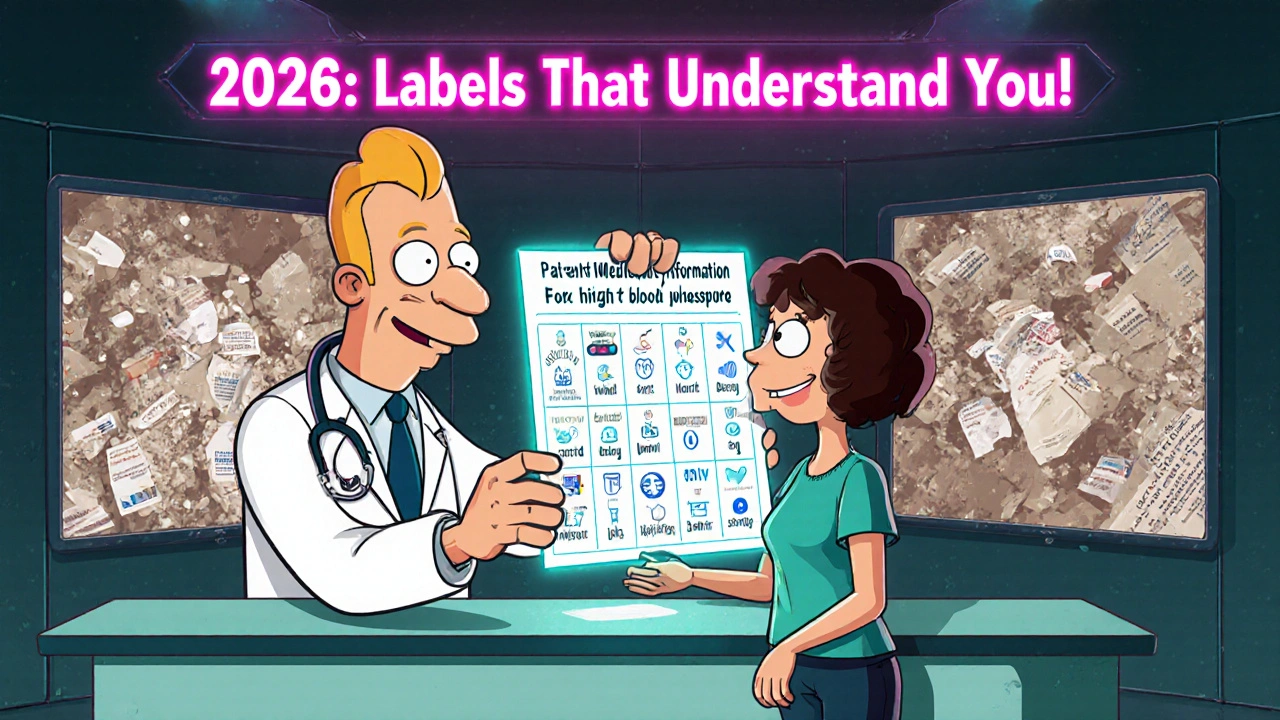
That’s why the USP (United States Pharmacopeia) and the FDA are pushing for a new standard called Patient Medication Information (PMI). It’s a one-page, plain-language summary that will be required for high-risk drugs by 2026. It’ll include:
- What the drug is for
- How to take it
- What to watch out for
- When to call your doctor
- What to do if you miss a dose
This isn’t just nice to have - it’s life-saving. And it’s coming.
How to Read Your Label Like a Pro
You don’t need to be a pharmacist to understand your meds. Here’s a simple 5-step check:
- Check your name - make sure it’s yours. Mix-ups happen more often than you think.
- Match the drug name - compare the generic and brand names on the bottle to what your doctor told you.
- Verify the dose - is it one pill or two? Once a day or twice? Don’t guess. Read it twice.
- Look for warnings - alcohol? Pregnancy? Other meds? If it says “avoid grapefruit,” don’t eat it.
- Ask about the reason - if it doesn’t say why you’re taking it, ask your pharmacist. Write it down.
And if you can’t read the label? Don’t pretend. Don’t squint. Don’t guess. Call the pharmacy. Ask them to print a larger version. Many pharmacies now offer large-print labels on request.
What to Do When You’re Still Confused
Even after reading the label, you might still have questions. That’s normal. Here’s what to do:
- Ask your pharmacist - they’re the medication experts. They can explain what the label means in plain English. A 2021 study showed that when pharmacists spent just 5 minutes explaining labels, medication errors dropped by 29%.
- Use Medication Guides - some drugs come with a separate, FDA-approved guide. These are required for high-risk drugs like blood thinners, antidepressants, or diabetes meds. Look for a small booklet inside the box.
- Use your phone - scan the NDC number on the bottle with a free app like Drugs.com or Medscape. It’ll pull up the full prescribing info.
- Ask your doctor - if you’re unsure about side effects or interactions, call the office. Don’t wait until you feel sick.
And if you’re caring for someone else - a child, an elderly parent - write down the instructions in your own words. Put it on the fridge. Set phone alarms. Use pill organizers. Don’t rely on memory.
The Future of Drug Labels
Drug labeling is changing. The FDA’s 2023-2027 plan says one of its top goals is to make labels easier for patients to understand. By 2026, you’ll start seeing standardized Patient Medication Information sheets for high-risk drugs. Biosimilars - cheaper versions of biologic drugs - will also need clearer labels that explain how they compare to the original.
Some pharmacies are already ahead of the curve. Independent pharmacies are 63% more likely than big chains to offer patient-centered labels - larger fonts, plain language, indication notes. Hospitals? 87% of big ones use digital systems that auto-generate clear labels with dosing alerts built in.
But until everything is standardized, you’re still your own best defense. Don’t wait for the system to fix itself. Learn how to read your labels. Ask questions. Speak up.
Medication errors cause about 7,000 deaths in the U.S. every year. Most of them are preventable. And it starts with one simple thing: reading the label - and understanding it.
What’s the difference between generic and brand name on a drug label?
The generic name is the chemical name of the active ingredient - it’s the same no matter who makes the drug. The brand name is what the company calls it for marketing. For example, the generic name is ibuprofen; the brand name could be Advil or Motrin. Both have the same medicine inside. Generic drugs are cheaper and just as safe.
Why don’t prescription labels say why I’m taking the medicine?
Current FDA rules require labels to focus on clinical details for healthcare providers, not patient education. But that’s changing. The FDA is rolling out Patient Medication Information (PMI) by 2026, which will include the reason for use. Until then, ask your pharmacist or doctor to write it down for you.
What should I do if my label says “take on an empty stomach”?
That means take it at least one hour before or two hours after eating. Food can interfere with how your body absorbs the drug. For example, some antibiotics won’t work if taken with dairy. If you’re unsure, call your pharmacist - they can tell you exactly what to avoid.
Can I trust the expiration date on my medication?
Yes - expiration dates are tested and guaranteed by the manufacturer. After that date, the drug may lose strength or break down into harmful substances. Don’t take expired pills, especially antibiotics, heart meds, or insulin. If you’re unsure, bring the bottle to your pharmacy. They’ll dispose of it safely.
What’s the NDC number on my label for?
The NDC (National Drug Code) is a unique 10-digit number that identifies your exact drug - including the manufacturer, strength, and package size. It’s used by pharmacies and insurers to track prescriptions. You can enter it into apps like Drugs.com to pull up full details about your medication.
Are there apps that help me understand my drug labels?
Yes. Apps like Drugs.com, Medscape, and MyTherapy let you scan the NDC barcode on your bottle or type in the drug name to get plain-language explanations, side effects, interactions, and dosing reminders. Some even let you set alerts for when to take your pills.
Next Steps: Protect Yourself
Don’t wait for a mistake to happen. Right now, take five minutes to look at your most recent prescription. Check the name, dose, and instructions. If you can’t read it, call your pharmacy and ask for a large-print version. If you don’t know why you’re taking it, ask your pharmacist. Write it down. Keep a list of all your meds - including supplements - and bring it to every doctor visit.
Medication safety isn’t about memorizing complex rules. It’s about being curious. Asking questions. Not being afraid to say, “I don’t understand.” That’s the most powerful tool you have - and it costs nothing.
James Allen
I swear, if one more pharmacy prints my label in font smaller than a mosquito’s eyelash, I’m taking my business to the corner store. My grandma can’t read this stuff, and neither can I after 8 p.m. They call it progress? More like negligence with a pharmacy logo.
Edward Hyde
This whole system is a joke. FDA spends millions on jargon and legalese but won’t let a label say ‘this is for your blood pressure.’ Meanwhile, Big Pharma’s making bank off confusion. Wake up, America - you’re being medicated by alphabet soup.
elizabeth muzichuk
I can’t believe people just swallow pills without knowing why. It’s not just ignorance - it’s moral laziness. If you can’t be bothered to ask your pharmacist why you’re taking something, you don’t deserve to be healthy. I’ve personally written out the purpose of every med my family takes and laminated it. Someone has to be responsible.
Debbie Naquin
The pharmacopeia’s failure to standardize patient-facing semantics reflects a systemic epistemological disconnect between regulatory frameworks and embodied health literacy. The NDC isn’t just a code - it’s a node in a distributed pharmacovigilance network. Yet we treat it like a barcode on a cereal box. We’ve outsourced agency to opaque infrastructures. The PMI initiative? A bandage on a hemorrhage.
Karandeep Singh
why do they use latin abbrevs like q.d.?? its 2025. we have phones. just say once a day. also why is the font so tiny??
Mary Ngo
Did you know that the FDA’s labeling rules were written by lobbyists with ties to Big Pharma? The ‘Drug Facts’ box? A PR stunt. The real reason they don’t list why you’re taking the drug? Because if you knew, you might question it. They want you passive. Dependent. Silent. This isn’t safety - it’s control.
Kenny Leow
I’ve been using the Drugs.com app to scan my NDC codes for years. Life changed. Also, my local pharmacy gives me a big-print version for free - just ask. 🙏 No shame in needing help. We’re all just trying not to die from a typo.
Kelly Essenpreis
I dont even read labels anymore. if it looks like a pill i take it. if i feel weird i stop. if i feel better i keep going. its called intuition. you overthinkers need to chill. also why is everyone so scared of expiration dates? i had ibuprofen from 2018 and it still worked fine
Alexander Williams
The NDC is a 10-digit identifier, yes - but its structure is hierarchical: first 5 digits are labeler code, next 4 are product code, last 1 is package code. The FDA’s 2009 update didn’t fix the underlying issue: patient-facing info is an afterthought. We need semantic interoperability, not just larger fonts.
Suzanne Mollaneda Padin
I’m a nurse and I always tell my patients: write down the reason on the bottle with a Sharpie. If your doctor says ‘for hypertension,’ write ‘for high BP.’ It sticks better. Also - if you’re on more than 3 meds, use a pill organizer. I’ve seen too many people mix up their blood pressure meds with their thyroid pills. Don’t be one of them.
Erin Nemo
Just called my pharmacy and asked for a large-print label. They printed it on a 5x8 card and handed it to me with a smile. Best 2 minutes of my week. Seriously, do it. You’re not weird for asking.