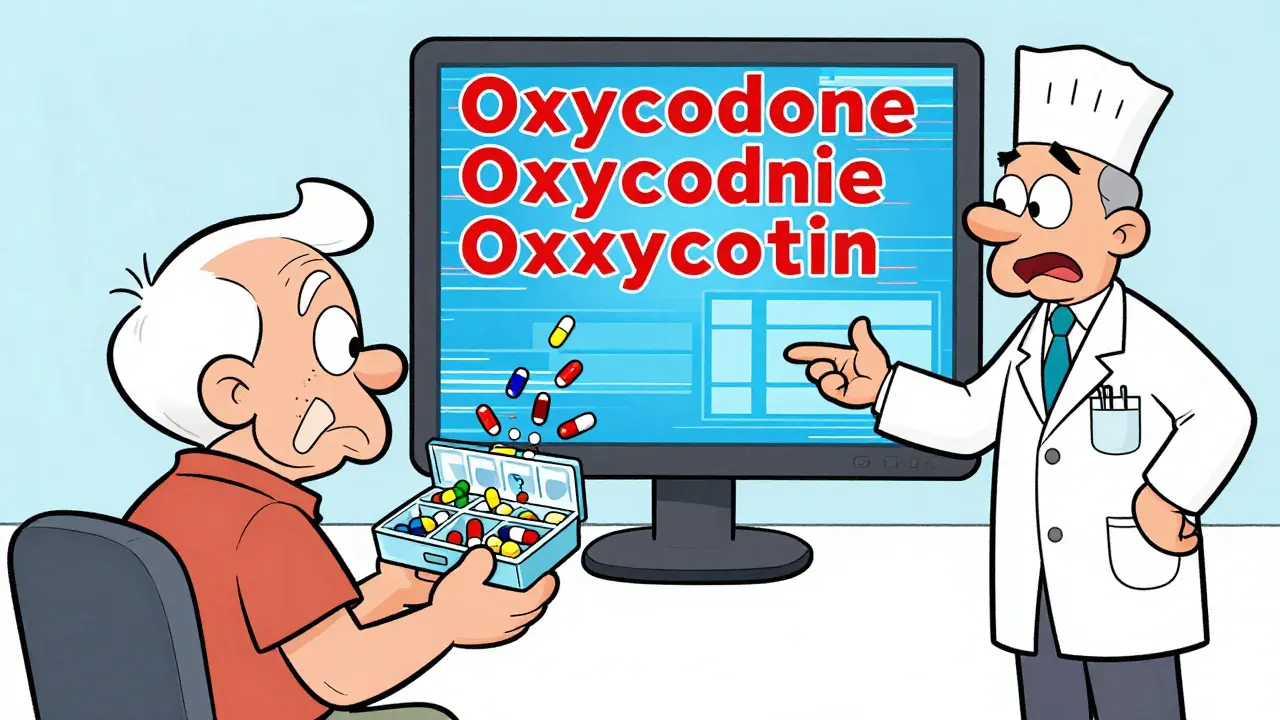
Medication errors aren’t just mistakes-they’re preventable disasters
Every year in the U.S., more than 1.5 million people end up in the emergency room because of something as simple as a wrong pill, wrong dose, or missed instruction. That’s not a glitch in the system. It’s a pattern. And it’s costing lives, money, and trust in healthcare. Medication safety isn’t a side note in medicine-it’s the foundation. When a patient takes a drug, they’re trusting that every step-from the doctor’s prescription to the pharmacy label to the moment the pill hits their tongue-has been checked, verified, and made safe. Too often, that trust is broken.
How bad is the problem really?
The numbers don’t lie. According to the CDC, adverse drug events send over 1.5 million people to the ER annually. The National Community Pharmacists Association says medication non-adherence alone causes 125,000 preventable deaths each year. That’s more than car accidents. More than breast cancer. And it’s not just about forgetting to take your pills. It’s about being given the wrong drug, the wrong strength, or being told to take it with food when it should be on an empty stomach. The World Health Organization estimates that one in every ten patients in high-income countries suffers harm from unsafe medication use. In low- and middle-income countries, it’s one in twenty. This isn’t a rare occurrence. It’s routine.
And it’s expensive. The global cost of medication errors? Over $42 billion a year. In the U.S., non-adherence adds another $300 billion in avoidable healthcare spending. That’s not just insurance bills-it’s lost wages, longer hospital stays, and families drained by preventable crises. The FDA has approved over 3,200 new drugs since 2000. More drugs mean more chances for error. Older medications are being repurposed for new uses. Seniors, who take an average of four prescriptions daily, now make up 21% of the population and are projected to grow. More people. More drugs. More complexity. More risk.
What’s actually going wrong?
Most people think medication errors happen because a doctor typed the wrong dose or a nurse grabbed the wrong bottle. But research shows 89% of these errors come from system failures-not human mistakes. Look-alike, sound-alike drug names. Confusing EHR interfaces. Poor communication between hospital and pharmacy. Discharge instructions that are printed in tiny font and handed to a patient still dazed from surgery. A 2024 study found that 67% of patients experience at least one unintentional medication change when moving between care settings-like from hospital to home. That’s not a slip. That’s a broken handoff.
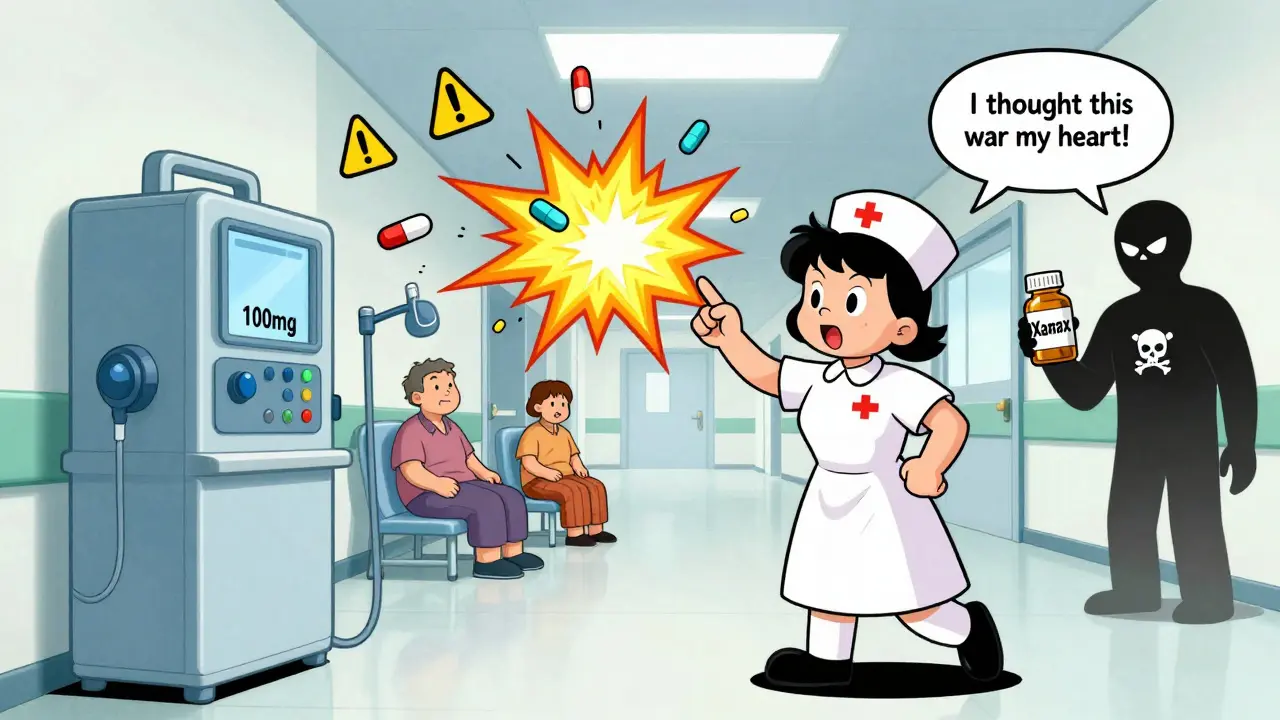
Then there’s the counterfeit drug crisis. In 2023, the DEA seized over 80 million fake pills laced with fentanyl. Fentanyl is now the leading cause of death for Americans aged 18 to 45. These aren’t just street drugs. They’re being sold as legitimate prescriptions-oxycodone, Adderall, even Xanax-through online pharmacies and unregulated distributors. Patients don’t know they’re taking poison. And the system isn’t catching them.
Infusion pumps, devices meant to deliver precise doses of life-saving drugs, have been linked to over 200 deaths and 1,900 injuries in just 18 months, according to FDA data. Why? Poor software design. Incorrect programming. Glitches in the interface. A nurse presses a button thinking it’s a 10 mg dose. It’s 100 mg. It happens. And it’s not because they’re careless. It’s because the system didn’t protect them.
What’s working-and what’s not
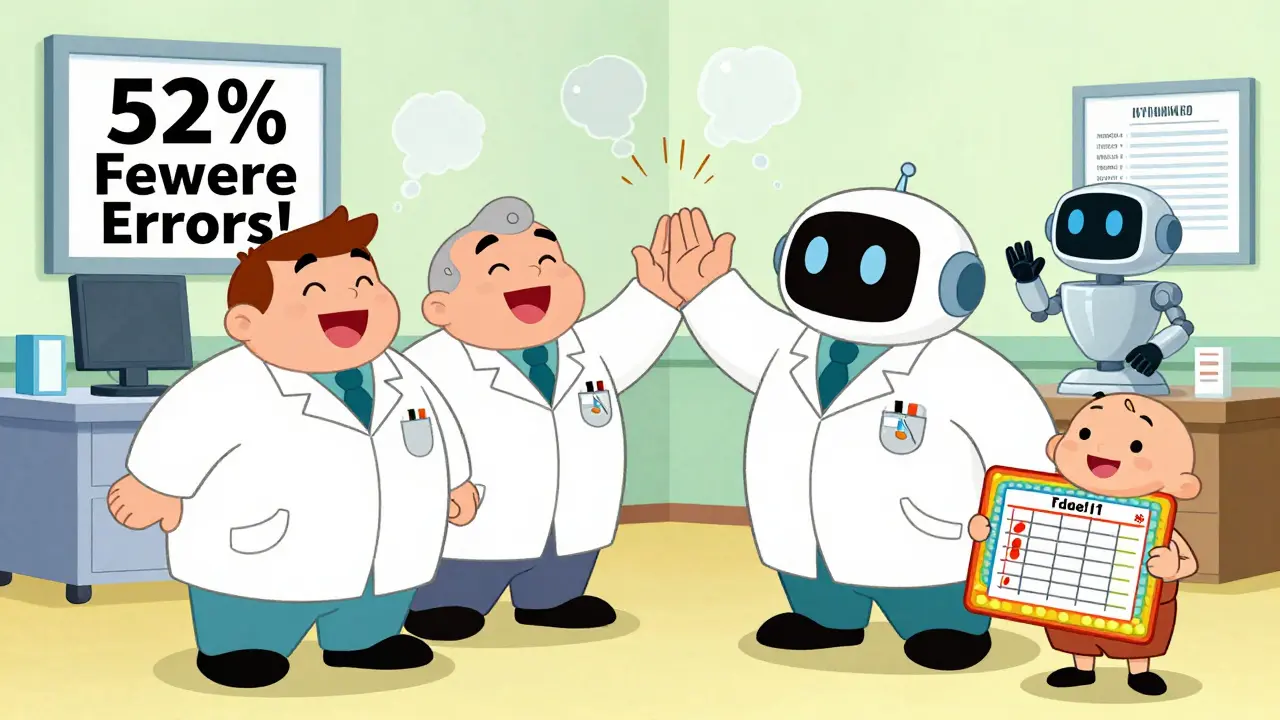
Some places are fixing this. The Mayo Clinic used AI to match patients’ home medications with their hospital records during discharge. Result? A 52% drop in post-discharge errors. Geisinger Health’s pharmacist-led programs boosted medication adherence to 89% and cut hospital readmissions by 27%. These aren’t magic tricks. They’re deliberate, well-funded, team-based efforts.
Technology helps. Barcode scanning at the bedside reduces administration errors by 86%. Electronic prescribing cuts prescribing mistakes by 55%. AI tools can now predict which patients are most likely to have an adverse reaction with 73% accuracy. But here’s the catch: only 63% of U.S. hospitals have fully compliant EHR systems that talk to each other. Only 38 states require pharmacy technicians to be certified. And only 14% of medication errors are even reported. Why? Fear. Lack of time. No clear pathway. Without reporting, we can’t learn. Without learning, we can’t fix.
Compare that to the Netherlands. They mandated electronic prescribing across every pharmacy and clinic. Result? A 44% drop in medication errors. The UK’s centralized reporting system cut serious errors by 30%. The U.S. has the tech. We just don’t have the coordination.
Who’s paying the price?
Patients pay with their health. Families pay with their peace of mind. Providers pay with burnout. Nurses report one near-miss error per month on average because of confusing drug names or bad EHR design. Pharmacists intercept dozens of errors daily-but they’re exhausted. Doctors are drowning in alerts that don’t matter. A 2024 survey found 76% of patients had trouble understanding their medication instructions after leaving the hospital. That’s not patient error. That’s system failure.
And it’s getting worse. The FDA’s 2025 update shows counterfeit drug incidents are rising 25% annually. The drug supply chain is still fragmented. The 21st Century Cures Act promised better data sharing, but only 63% of hospitals are compliant. The CDC says we’re seeing more drug interactions because patients are on more meds than ever. We’re not keeping up.
Why this is a public health crisis-not just a hospital problem
Public health isn’t just about vaccines and clean water. It’s about the pills people take every day to stay alive. Medication safety affects diabetes control, heart health, mental health, chronic pain, and cancer survival. When someone doesn’t take their blood pressure medicine because they didn’t understand the instructions, they’re at risk of stroke. When a senior takes two drugs that interact badly, they could fall, break a hip, and never walk again.
The WHO says improving medication adherence has a greater impact on population health than any single medical treatment. That’s not hyperbole. It’s data. A 2024 analysis by Dr. Donald Berwick showed every dollar spent on medication safety returns $7.50 in savings. Pharmacist-led programs? $13.20 back. That’s not a cost center. That’s a revenue generator. And yet, only 14% of U.S. hospitals have full-time pharmacists on the floor. Rural hospitals? Only 37% offer 24/7 pharmacy support. We’re treating safety like an afterthought.
What needs to change
First, we need mandatory national reporting. Right now, reporting medication errors is voluntary. That means most never get recorded. How can we fix what we won’t measure?
Second, we need standardized training. Pharmacy technicians should be certified in every state. Nurses and doctors need ongoing education on new drugs and systems. The WHO recommends 12 hours of safety training per year. Most places give zero.
Third, we need better technology that works for humans, not just computers. EHRs should not bombard staff with 50 alerts a shift. They should highlight the one that matters. Infusion pumps should have fail-safes built in. Drug names should be redesigned to avoid confusion.
Fourth, patients need to be partners-not bystanders. Simple tools like visual medication schedules and mobile apps that remind people when to take pills and why have been shown to improve adherence by nearly 30%. We need to stop blaming patients for not reading the 10-page handout. We need to make it easy.
And finally, we need to fund this. The CMS 2025 Star Ratings now tie payments to medication adherence. Plans that hit 90%+ adherence get extra money. That’s a start. But we need to make safety a core metric in every hospital’s budget-not a bonus line item.
It’s not too late
Minnesota saw a drop in preventable medication deaths-from 21 in 2022 to 14 in 2024. That’s real progress. It happened because they tracked the data, talked to staff, and changed workflows. The Mayo Clinic and Geisinger proved it’s possible. The Netherlands and the UK showed it can scale.
This isn’t about blaming doctors or pharmacists. It’s about fixing the systems they work in. Medication safety isn’t a nice-to-have. It’s as essential as clean water in a hospital. If we treat it that way, we can prevent hundreds of thousands of injuries and save billions. The tools exist. The evidence is clear. What’s missing is the will.
What are the most common causes of medication errors?
The most common causes include look-alike or sound-alike drug names, poor communication during care transitions (like hospital to home), confusing electronic health record interfaces, incorrect dosing due to system design flaws, and lack of medication reconciliation. Studies show that 89% of these errors come from systemic issues-not individual mistakes.
How many people die each year from medication errors in the U.S.?
Approximately 125,000 preventable deaths occur annually in the U.S. due to medication non-adherence and errors, according to the National Community Pharmacists Association. Additionally, adverse drug events contribute to over 1.5 million emergency room visits each year.
Can technology really reduce medication errors?
Yes. Barcode-assisted medication administration reduces administration errors by 86%. Electronic prescribing cuts prescribing mistakes by 55%. AI tools can predict high-risk patients with 73% accuracy. But technology only works if it’s well-designed, integrated, and used consistently. Many hospitals still use outdated systems that create more confusion than clarity.
Why is medication adherence such a big issue?
Patients often don’t understand why they’re taking a drug, how to take it, or what side effects to expect. Complex regimens, cost barriers, and poor communication after discharge all contribute. The WHO says improving adherence has a greater impact on population health than any single treatment. Simple tools like visual schedules and mobile reminders can boost adherence by nearly 30%.
What’s being done to stop counterfeit drugs?
The FDA’s Drug Supply Chain Security Act requires electronic tracing of prescription drugs by November 2025. The DEA seized over 80 million fake pills in 2023 alone. But enforcement is uneven, and online pharmacies remain a major loophole. Public awareness and better verification tools for patients are still lacking.
Is medication safety getting better or worse?
It’s mixed. High-income countries like the U.S. have advanced tools but lag in coordination. The WHO reports only a 28% reduction in severe harm since 2017-far short of the 50% goal. Meanwhile, counterfeit drug incidents are rising 25% annually. Progress is happening in pockets, but without national standards and funding, it won’t scale.
clarissa sulio
This isn't about technology or training. It's about priorities. We spend billions on military drones but can't fix a system that kills 125,000 people a year? We're not broken. We're choosing to be this way.
Bridget Molokomme
So let me get this straight... we have AI that can predict adverse reactions with 73% accuracy, barcode scanning that cuts errors by 86%, and yet we still let nurses wrestle with EHRs designed in 2008? The real tragedy isn't the errors. It's that we knew how to fix this and chose to ignore it.
jay patel
I work in a hospital in Delhi and we dont have half the tech they talk about here but we still manage because we talk to each other. No one is too busy to double check a name. No one is too proud to ask. In the US, everyone is too busy being efficient to be human. The problem isnt the system. Its the culture that treats people like widgets.
Ansley Mayson
1.5 million ER visits. 125k deaths. 42 billion. All of it. And still no mandatory reporting. No real consequences. Just another feel good report that gets buried under the next crisis
phara don
I'm curious-how many of those AI predictions are actually acted on? Or do they just sit in a dashboard collecting dust while the same nurse gets 50 alerts a shift and ignores them all?
Hannah Gliane
Ohhh so now we're blaming the system? 😏 Meanwhile, my grandma took her blood pressure med with grapefruit juice because the label said 'take with food' and she thought grapefruit was food. 🙃 Not a system failure. A human failure. And no amount of barcode scanning will fix that.
Murarikar Satishwar
I have seen both sides. In India, we have limited resources but strong community trust. In the US, you have the best tech but the worst communication. Technology is not the answer. Communication is. When the pharmacist calls the patient directly, when the nurse sits down and explains, when the discharge summary is spoken aloud and not just printed-those are the moments that save lives.
Dan Pearson
Let me be clear. This is a liberal fantasy. You want more regulation? More bureaucracy? More government oversight? We don't need more rules-we need more responsibility. People need to read their damn labels. Stop blaming the system for your laziness. And for the love of God, stop making everything a public health crisis. It's a pill. Not a nuclear bomb.
Eli Kiseop
I had a friend who almost died because the hospital gave her the wrong med and no one caught it. They didn't even apologize. Just said oh well. That's the system
Gary Mitts
We have the tools. We just don't care enough to use them properly.
Vatsal Srivastava
The WHO says improving adherence has greater impact than any single treatment? That's like saying drinking water is better than surgery. Obviously. But that doesn't mean we should stop doing surgery. Or that we should ignore the fact that most people don't need 4 prescriptions a day in the first place.
Brittany Marioni
We need to remember: behind every statistic is a person. A mother. A father. A grandparent. Someone who just wanted to feel better. And instead, they got lost in a maze of confusing labels, rushed handoffs, and ignored warnings. We owe them better. We owe them more than algorithms. We owe them dignity.
Monica Slypig
This whole thing is just another woke agenda dressed up as healthcare. You want to fix medication errors? Stop giving out so many pills. Stop letting everyone be a patient. People are too dependent on drugs now. The real solution is less medicine. Not more systems.