Aplastic Anemia Risk Checker
Symptom Assessment
Based on the article, this tool helps you assess if your symptoms might indicate medication-induced aplastic anemia. This condition is rare but serious. Don't ignore the signs.
Your Risk Assessment
When you take a new medication, you expect side effects like a headache or upset stomach-not life-threatening bone marrow failure. But for a small number of people, common drugs can trigger aplastic anemia, a condition where your bone marrow stops making enough blood cells. It’s rare, but when it happens, speed saves lives. The difference between catching it early and missing it can mean the difference between recovery and death.
What Exactly Is Medication-Induced Aplastic Anemia?
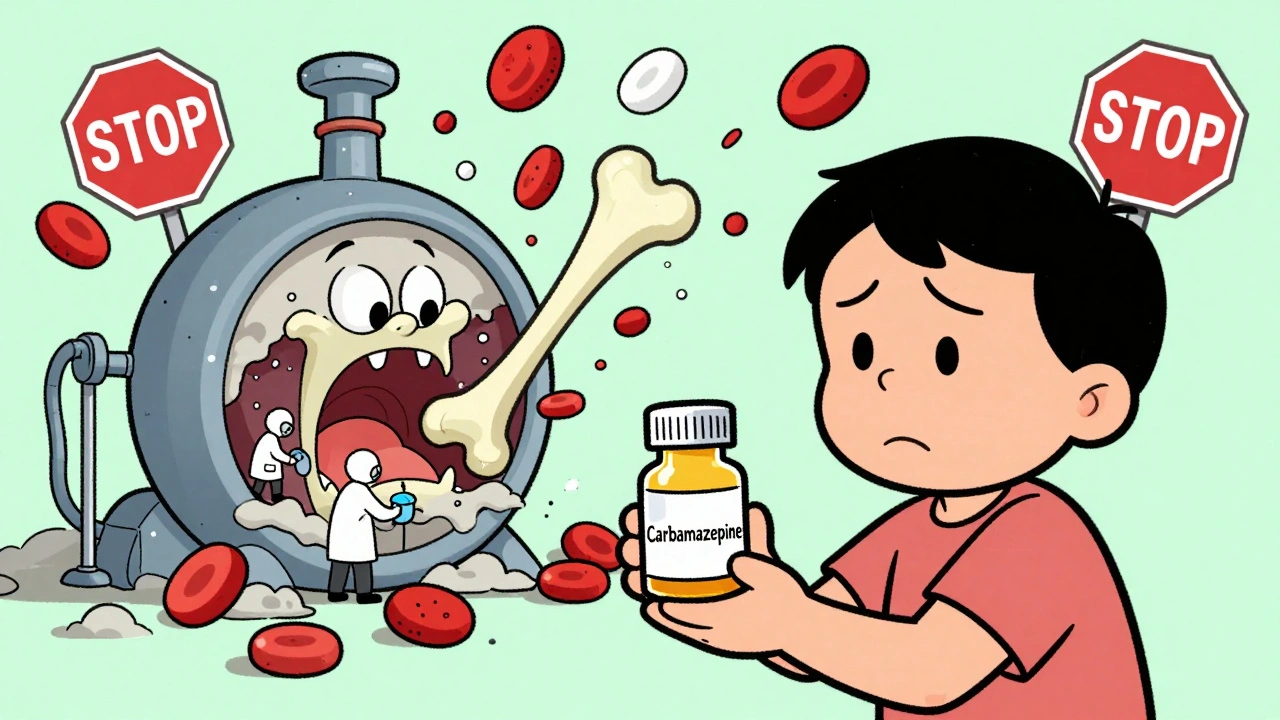
Aplastic anemia isn’t just low blood counts. It’s when your bone marrow-your body’s blood factory-gets damaged and can’t produce red blood cells, white blood cells, or platelets. This is called pancytopenia. Most cases happen for no clear reason, but about 5-10% are caused by medications. These aren’t side effects you can ignore. They’re signals your body is shutting down its ability to make blood.
Some drugs cause direct toxicity to stem cells. Chloramphenicol, an old antibiotic, is the classic example. One in every 24,000 to 40,000 people who take it develops aplastic anemia. Other drugs, like carbamazepine (used for seizures) or phenytoin, trigger an immune attack on your own bone marrow. Gold salts for rheumatoid arthritis, certain NSAIDs, and even some antipsychotics have been linked too. The key point? Not all bone marrow suppression is aplastic anemia. True aplastic anemia means your counts stay low for at least four weeks after stopping the drug-and your bone marrow biopsy shows it’s empty.
Early Signs You Can’t Afford to Ignore
People often dismiss the first signs as stress, the flu, or just getting older. But here’s what to watch for:
- Extreme fatigue that doesn’t improve with rest
- Unexplained bruising-especially multiple bruises without bumping into anything
- Frequent nosebleeds or bleeding gums
- Recurrent low-grade fevers (99-101°F) that come and go
- Shortness of breath during normal activities
- Unintentional weight loss (5-10 pounds in a few weeks)
- Prolonged recovery from minor infections
These don’t show up all at once. Often, they creep in over 4-6 weeks. In one study, 68% of patients didn’t seek help until symptoms had been going on for over a month. That’s too long. Blood tests can show trouble before you even feel sick. A CBC (complete blood count) might reveal hemoglobin under 10 g/dL, platelets under 150,000/μL, or neutrophils under 1,500/μL. If you’re on a high-risk drug and your counts drop 30-50% in just 2-4 weeks, that’s a red flag.
Which Medications Are the Biggest Risks?
Not all drugs carry the same danger. Here are the top offenders, backed by clinical data:
| Medication Class | Examples | Risk Increase |
|---|---|---|
| Antibiotics | Chloramphenicol, sulfonamides, penicillin derivatives | 30-60x higher risk with chloramphenicol |
| Anticonvulsants | Carbamazepine, phenytoin | ~15x higher risk |
| Gold Compounds | Auranofin, aurothioglucose | High risk in rheumatoid arthritis patients |
| NSAIDs | Phenylbutazone, indomethacin | Less common, but documented cases |
| Antipsychotics | Chlorpromazine, clozapine | Low incidence, but serious when it occurs |
Chloramphenicol is the most dangerous. Even though it’s rarely used today, it’s still prescribed in some countries for serious infections. Carbamazepine is more common-it’s used for epilepsy, bipolar disorder, and nerve pain. If you’re on either, your doctor should have flagged the risk. If they didn’t, ask for a baseline CBC before starting and weekly checks for the first month.
What to Do If You Suspect It
Time is everything. The sooner you stop the drug and get tested, the better your chances. Here’s your action plan:
- Stop the medication immediately. Don’t wait for a doctor’s appointment. Discontinuing the drug is the single most important step. In mild cases, blood counts often bounce back within 4 weeks.
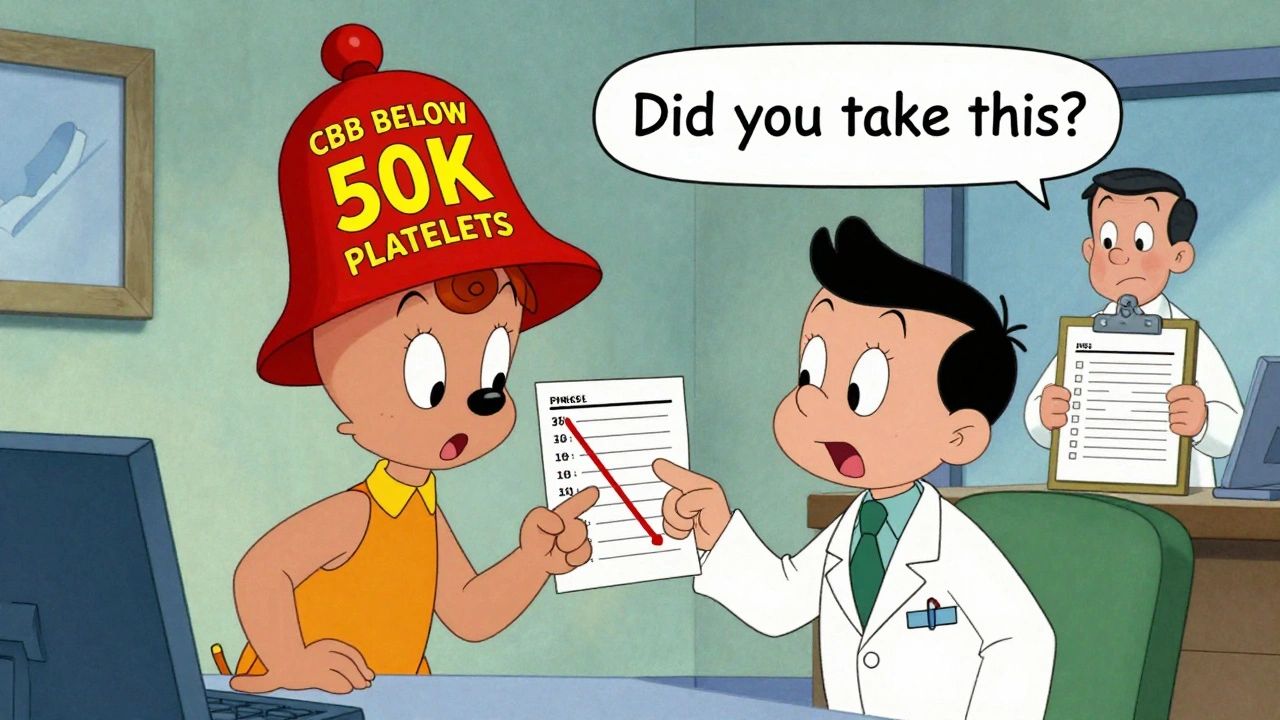
- Get a CBC within 24 hours. Don’t wait for a routine checkup. Go to urgent care or your doctor’s office and demand a complete blood count. If your platelets are below 50,000/μL, you need to see a hematologist right away.
- Request a bone marrow biopsy within 72 hours. This is the only way to confirm aplastic anemia. It shows if your marrow is hypocellular-meaning it’s mostly empty, not filled with blood-making cells.
- Go to the ER if you have a fever above 100.4°F. A fever in someone with low white blood cells is a medical emergency. You could develop a deadly infection within hours. Don’t wait. Don’t call your doctor. Go to the ER.
- Bring your full medication list. Many patients don’t realize their symptoms are drug-related because they forget to mention over-the-counter meds or supplements. Write down everything you’ve taken in the last 3 months.
Studies show patients who act within one week of noticing symptoms have an 89% survival rate. Those who wait three weeks or more drop to 62%. That’s not a small difference-it’s life or death.
Why Most Cases Are Missed
Doctors aren’t to blame. The problem is that aplastic anemia is rare, and most primary care providers don’t see it. In one survey, only 47% of family doctors could name the top five drugs that cause it. Patients often get misdiagnosed with viral infections, anemia from iron deficiency, or even depression.
One patient in Halifax, a 32-year-old teacher, took carbamazepine for migraines. She felt tired, had a few nosebleeds, and lost a few pounds. Her doctor said it was stress. Two months later, she collapsed from a severe infection. Her platelets were at 8,000/μL. She needed a bone marrow transplant.
Another pattern? Pharmacists are often the first to suspect it. In Reddit forums, 41% of patients said their pharmacist was the one who told them to get blood work done. That’s why keeping a written list of all your meds-not just prescriptions-is critical. Show it to every provider you see.
What Happens After Diagnosis?
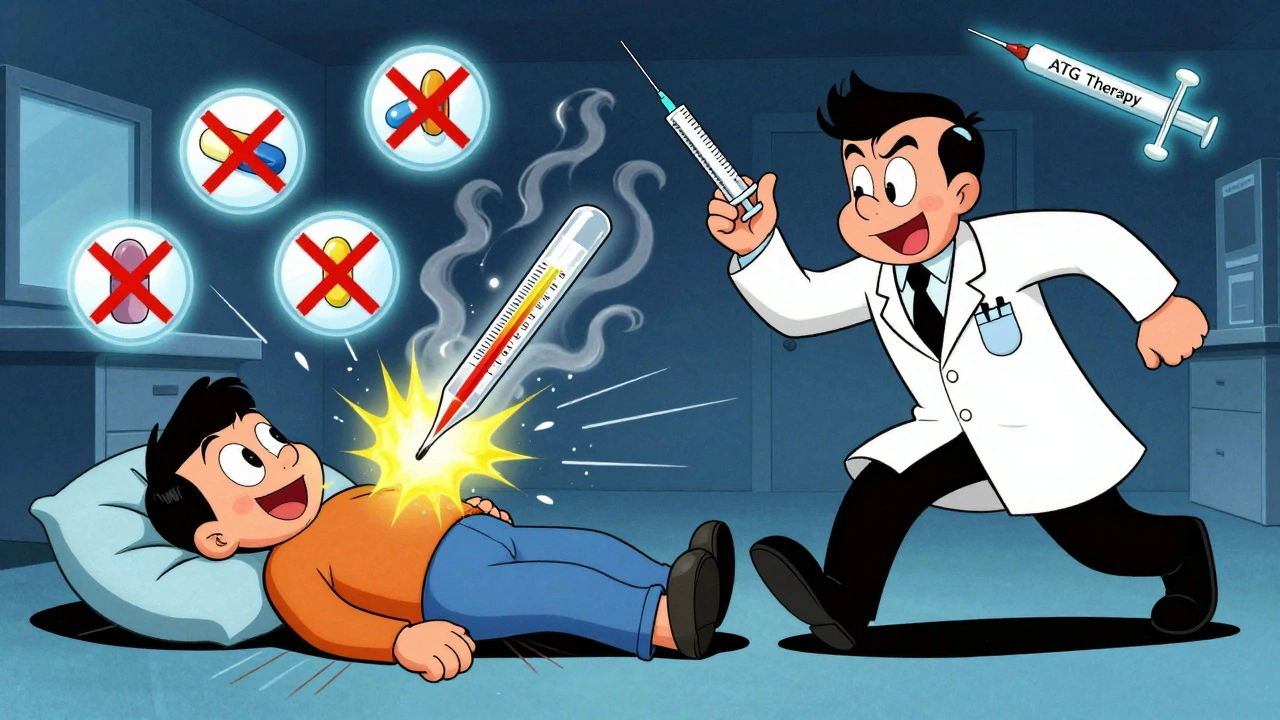
If it’s caught early and the drug is stopped, some people recover on their own. But if it’s severe-neutrophils under 500/μL, platelets under 20,000/μL-you’ll need more aggressive treatment. The current standard is immunosuppressive therapy: horse anti-thymocyte globulin (ATG) plus cyclosporine. In recent trials, 78% of medication-induced cases responded well.
For younger patients with a matched donor, a bone marrow transplant is the best option. It’s not without risk, but survival rates are now over 85% when done early. The FDA and European Medicines Agency now require stronger warnings on labels for high-risk drugs. Some hospitals are starting to use AI alerts in electronic records to flag patients on dangerous meds who haven’t had recent blood tests.
How to Protect Yourself
If you’re prescribed any of the high-risk drugs:
- Ask for a baseline CBC before starting
- Request weekly CBCs for the first 4 weeks
- Keep a written log of your symptoms and meds
- Download the AAMDS Foundation’s tracking app-it’s free and helps you spot trends
- Know your numbers: if your platelets drop below 100,000/μL or your hemoglobin falls below 11 g/dL, get checked
And if you’re ever unsure? Trust your gut. If you feel worse, not better, after starting a new drug, don’t wait. Get a blood test. It takes five minutes. It could save your life.
Can you get aplastic anemia from over-the-counter painkillers?
Yes, though it’s rare. Certain NSAIDs like phenylbutazone and indomethacin have been linked to aplastic anemia. Most common pain relievers like ibuprofen or acetaminophen are not known to cause it. But if you’ve been taking high-dose NSAIDs for months and develop unexplained fatigue, bruising, or bleeding, ask your doctor for a CBC.
How long after stopping the drug do blood counts recover?
In mild cases, counts can start improving within 2-4 weeks after stopping the drug. Full recovery may take 3-6 months. But if your counts don’t rise after 4 weeks, or if they keep dropping, you likely have severe aplastic anemia and need specialized treatment like immunosuppressive therapy or a transplant.
Is aplastic anemia from medications permanent?
Not always. About 40-60% of patients recover fully after stopping the drug and receiving treatment. But if you restart the same medication-even years later-there’s a 90% chance of a much worse relapse. Never take it again, even if you feel fine.
Can children get medication-induced aplastic anemia?
Yes. Children are more likely to be misdiagnosed because symptoms like fatigue and fever are often blamed on growing pains or viruses. Pediatric cases are rare but serious. If a child on anticonvulsants or antibiotics develops unexplained bruising, pale skin, or frequent infections, insist on a CBC and bone marrow evaluation.
Are there genetic tests to predict who’s at risk?
Not yet for routine use. But research is advancing. The NIH is testing a genetic panel that can identify people with higher risk before they take certain drugs. In the future, pharmacogenomic testing may be standard before prescribing carbamazepine or chloramphenicol. For now, the best tool is awareness and early blood testing.
Should I avoid all medications that have been linked to aplastic anemia?
No. These drugs are still used because they’re effective for serious conditions. The key is monitoring. If you need carbamazepine for epilepsy or chloramphenicol for a life-threatening infection, the benefits outweigh the risks-when you’re monitored properly. Never refuse a needed drug out of fear. But do insist on blood tests before and during treatment.
Final Thought: Don’t Wait for a Crisis
Aplastic anemia from medications is preventable. It’s not about avoiding all drugs-it’s about knowing the signs and acting fast. You’re not overreacting if you get a blood test after feeling unusually tired for weeks. You’re being smart. The people who survive this condition aren’t lucky-they’re the ones who asked the question: “Could this be the drug?” And they acted before it was too late.
Pamela Mae Ibabao
I had a friend who got hit with this from carbamazepine. She thought she was just stressed out-tired all the time, tiny bruises on her arms. Took her two months to get a CBC. By then, her platelets were at 12k. She’s fine now, but it was terrifying. Don’t ignore the little signs. Get tested. Seriously.
Also, AAMDS app is legit. I use it to track my meds and symptoms. Saved my butt last year when my hemoglobin dipped.
Gerald Nauschnegg
Bro I just started phenytoin last week and I’m already paranoid. Like I’m checking my gums every morning for bleeding. I’m not gonna lie I Googled ‘can you die from this’ at 3am. I’m getting a CBC tomorrow. My pharmacist told me to. I trust her more than my doctor.
Erik van Hees
Chloramphenicol is obsolete in the US but still used in developing countries where people don’t have access to better antibiotics. That’s why you see cases popping up in immigrants. The real issue is systemic neglect. We’re not talking about rare side effects-we’re talking about preventable deaths because of poor healthcare infrastructure.
Also, phenylbutazone? That’s banned in the US since the 70s. Why is it even on this list? Someone’s pulling data from 1985. This article is outdated in places.
Sara Larson
Y’all I just want to hug everyone who’s reading this and thinking "maybe I should get tested" 🤗
YES. DO IT. Five minutes. One needle. Could be the difference between your next birthday and a hospital bed. I’m not being dramatic-I’ve seen it. My cousin’s boyfriend had this. He was 28. He thought it was "just the flu."
Also-download the AAMDS app. It’s free. It sends you reminders. It’s like a wellness BFF. You got this. 💪❤️
Josh Bilskemper
Most of this is common sense if you’ve taken a single biochemistry course. The fact that people need a Reddit post to understand that drugs can suppress bone marrow suggests a deeper problem with medical literacy. Also chloramphenicol is not a "common drug" anymore. Stop sensationalizing. And why are you listing NSAIDs? Phenylbutazone is a dinosaur. This reads like a blog written by a med student who just learned about aplastic anemia.
Also the survival stats are cherry-picked. You’re not mentioning mortality rates for transplant recipients. But sure, keep scaring people with 89% survival. That’s not the full picture.
Kevin Estrada
okay so i was on clozapine for 6 months and i got so tired i couldnt even watch netflix. i thought it was depression. then i passed out at the grocery store. my mom dragged me to the er. platelets at 9k. they said "youre lucky you didnt bleed out."
my doctor was like "oh that happens sometimes" and i was like ARE YOU KIDDING ME. i lost 15lbs in a month and he said "maybe you’re just stressed."
now i have a tattoo that says "CHECK YOUR CBC" on my forearm. no joke. i want everyone to know. dont be me.
Katey Korzenietz
How can anyone be so careless? This isn't a "maybe" situation. It's a medical emergency. And yet people ignore symptoms for weeks because they're "too busy" or "don't want to bother the doctor."
My sister died from this. She was 34. Took her doctor 3 visits to order a CBC. By then, it was too late. This isn't just info-it's a warning. Stop being passive. Get tested. Now.
Ethan McIvor
It’s strange how we’re taught to fear the worst-case scenario with every new drug, yet we’re never taught how to listen to our own bodies. The real tragedy isn’t the drug-it’s the silence. We’re conditioned to trust authority over intuition. But your body doesn’t lie. If you feel off, it’s not "just stress."
It’s not about paranoia. It’s about presence. A CBC isn’t a test-it’s a conversation with your biology. And if you’re on one of these meds? You owe it to yourself to show up for that conversation.
Also-thank you for mentioning pharmacists. They’re the unsung heroes of patient safety.
Mindy Bilotta
As a nurse, I see this way too often. Patients come in with all these symptoms and say "I didn’t think it was serious." But it is. Always. Especially with anticonvulsants and antibiotics.
One thing I tell everyone: write down your meds on your phone and carry a printed copy. I had a guy come in with 17 different pills in his pocket-no idea what half were for. He was on carbamazepine and ibuprofen daily. His platelets were 38k. He didn’t even know ibuprofen was an NSAID.
Don’t be that guy. Keep a list. Show it to every provider. Even the one you see for your cold. It could save your life.