Managing blood sugar isn't just about picking the right pill or injection; it's about knowing how those choices impact your daily safety. Whether you've been dealing with diabetes for decades or were recently diagnosed, the fear of a sudden "crash" or an unexpected side effect is real. The challenge is that not all medications work the same way. Some gently nudge your glucose down, while others can pull it down aggressively, leaving you shaky and confused. Understanding the specific risks of Diabetes Medications allows you to spot warning signs early and talk to your doctor about adjustments before a small issue becomes an emergency.
Quick Safety Overview
- High Hypoglycemia Risk: Insulin, Sulfonylureas, Meglitinides, and Pramlintide.
- Low Hypoglycemia Risk: Metformin, DPP-4 inhibitors, and SGLT2 inhibitors.
- Critical Warnings: SGLT2 inhibitors can cause DKA; Metformin requires kidney checks (eGFR).
- Common Side Effects: GI issues with GLP-1 agonists; yeast infections with SGLT2s.
Understanding the Insulin Spectrum
Insulin is a lifesaver, but it's also the most potent tool in the box. Because it directly replaces or adds to your body's hormone, a small dosing error can lead to severe hypoglycemia. Insulin is a hormone used to lower blood glucose levels, available in various formulations based on how quickly they start working and how long they last.
You likely use one of these categories: rapid-acting (like lispro or aspart) for mealtime spikes, short-acting (regular) for a slightly slower onset, intermediate-acting (NPH), or long-acting (glargine or degludec) for a steady baseline. A major safety pitfall involves concentrated formulations, such as Humulin R U-500. Because these are much stronger than standard insulin, a mistake in the amount drawn into the syringe can lead to a dangerous overdose. Always double-check the concentration on the vial.
Beyond the dose, where you inject matters. To keep your skin healthy and ensure the medication absorbs consistently, you need to rotate your injection sites. If you always hit the same spot, you might develop lumps of scar tissue that block the insulin from entering your bloodstream predictably, leading to erratic blood sugar swings.
Oral Agents: From First-Line Defense to High-Risk Options
Not all pills are created equal. Some focus on making your liver produce less glucose, while others force your pancreas to pump out more insulin.
Metformin is a biguanide and typically the first-line treatment for type 2 diabetes, which lowers glucose production in the liver. It's generally very safe and rarely causes hypoglycemia on its own. However, it has a serious relationship with your kidneys. Doctors use the eGFR (estimated Glomerular Filtration Rate) to decide if it's safe for you. If your eGFR drops below 30 mL/min/1.73m², Metformin is usually stopped because it can lead to lactic acidosis, a rare but life-threatening buildup of acid in the blood.
On the other end of the spectrum are Sulfonylureas, which include drugs like glipizide and glyburide. These are "insulin secretagogues," meaning they force your pancreas to release insulin regardless of your current blood sugar level. This makes them risky. Roughly 20-40% of people on these drugs experience hypoglycemia, and some suffer from "nocturnal hypoglycemia," where blood sugar drops while they sleep, often without any warning signs.
| Medication Class | Hypoglycemia Risk | Key Safety Concern | Best For... |
|---|---|---|---|
| Metformin | Low | Lactic Acidosis (Kidney failure) | First-line T2DM therapy |
| Sulfonylureas | High | Severe "crashes" / Weight gain | Rapid glucose lowering |
| SGLT2 Inhibitors | Low | DKA and Yeast Infections | Heart/Kidney protection |
| GLP-1 Agonists | Low | Severe Nausea/Vomiting | Weight loss & Glucose control |
| Insulin | Very High | Severe Hypoglycemia | T1DM and advanced T2DM |
The New Guard: SGLT2s and GLP-1s
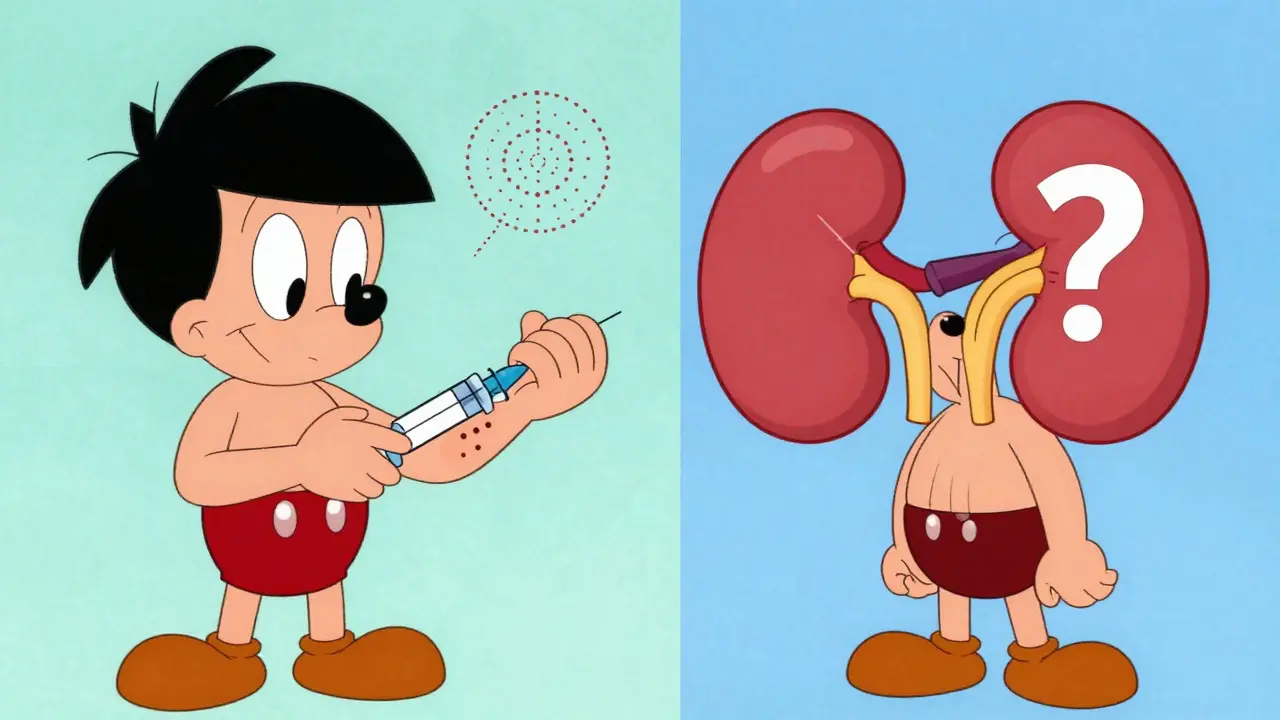
Newer medications offer great benefits for the heart and kidneys, but they come with their own set of "weird" side effects. SGLT2 Inhibitors are drugs that cause the kidneys to remove glucose from the body through urine. Because they put more sugar in your urine, they increase the risk of genital yeast infections (affecting about 4-5% of users). More seriously, they can cause Diabetic Ketoacidosis (DKA), even if your blood sugar isn't extremely high-a condition called "euglycemic DKA." If you're heading into surgery, the AACE recommends stopping these at least 24 hours before the procedure to avoid this complication.
Then there are the GLP-1 receptor agonists (and the newer dual GLP-1/GIP agonists like tirzepatide). These are famous for helping with weight loss, but they hit the gut hard. Between 30% and 50% of users report nausea or vomiting, especially when they first start the medication or increase the dose. It's a slow adjustment process, but the cardiovascular benefits often outweigh the stomach ache for many patients.
Managing Medication Interactions and Age Risks
Medications don't exist in a vacuum. Some common drugs can "potentiate" your diabetes meds, making them work too well and causing a crash. For example, certain antibiotics like sulfamethoxazole/trimethoprim can increase the effect of insulin. If you start a new prescription for an infection, keep a closer eye on your glucose levels than usual.
Age changes how your body handles these drugs. For those over 65, the risk of falls increases significantly. Dizziness and lightheadedness from a mild hypoglycemic dip can lead to a fracture or head injury. Because of this, doctors often use lower starting doses for sulfonylureas in older adults and avoid overly aggressive glucose targets to prioritize safety over a "perfect" number on the screen.

Practical Safety Checklist for Daily Life
To keep your treatment safe, move beyond just taking the pill. Implement these habits to catch problems before they escalate:
- Maintain a Med Log: Write down the exact dose, the time you took it, and any weird symptoms (like sudden sweating or confusion) that followed.
- Check Your eGFR: If you are on Metformin, ensure your doctor is testing your kidney function at least once or twice a year.
- Plan for Surgery: If you use an SGLT2 inhibitor, tell your surgeon immediately. You'll likely need to pause the drug to prevent DKA.
- Avoid "Crash" Triggers: Be cautious with alcohol and very low-carb (keto) diets if you're on SGLT2 inhibitors, as these can trigger ketoacidosis.
- Use Tech: If you struggle with "hypo unawareness," consider an Automated Insulin Delivery (AID) system or a Continuous Glucose Monitor (CGM) to get real-time alerts.
What should I do if I experience a severe hypoglycemic reaction?
Severe hypoglycemia occurs when a person cannot treat themselves and requires third-party assistance. If you or a loved one becomes unconscious or too confused to swallow, do not attempt to give food or drink by mouth as this can cause choking. A glucagon emergency kit should be administered if available, and emergency services (911) should be called immediately. For those on sulfonylureas or insulin, having a designated "emergency contact" who knows how to use a glucagon pen is a critical safety measure.
Can I take Metformin if I have kidney disease?
It depends on the severity of the impairment, measured by your eGFR. Metformin is generally not recommended if your eGFR is below 30 mL/min/1.73m² due to the risk of lactic acidosis. If your eGFR is between 30 and 45, it may be used with extreme caution, and if it's between 45 and 60, a dose reduction is often required. Always ensure your healthcare provider has a current kidney function test before renewing your prescription.
Why do SGLT2 inhibitors cause yeast infections?
These medications work by blocking the reabsorption of glucose in the kidneys, which means more sugar is excreted through your urine. This sugar-rich environment in the urinary tract and genital area provides a perfect food source for yeast (Candida) to grow. To mitigate this, maintain a strict hygiene routine and contact your doctor for antifungal treatments if symptoms occur.
Is it safe to use a CGM with insulin pumps?
Yes, and it is often safer. Automated Insulin Delivery (AID) systems-which link a CGM to an insulin pump-can automatically adjust insulin delivery based on real-time glucose trends. Clinical trials show these systems increase the time a patient spends in their target glycemic range and significantly reduce the risk of severe hypoglycemia compared to manual pump therapy.
What are the signs of euglycemic DKA?
Euglycemic DKA is particularly dangerous because your blood sugar levels may appear normal or only slightly elevated, which often leads people to ignore the symptoms. Look for nausea, vomiting, abdominal pain, and shortness of breath (Kussmaul breathing). If you are taking an SGLT2 inhibitor and feel these symptoms, seek emergency care immediately, even if your glucometer says your sugar is "fine."
Next Steps for Patients
If you are just starting a new medication, don't expect your body to adjust overnight. For GLP-1s, start with the lowest dose and increase slowly to minimize nausea. If you're on a high-risk drug like glimepiride or insulin, carry a fast-acting glucose source (like glucose tabs or a juice box) at all times.
For older adults, the priority is preventing falls. If you notice you're feeling lightheaded more often, ask your doctor about "de-prescribing" or lowering your dosage. The goal isn't always a perfect A1c; sometimes, the safest goal is avoiding a trip to the ER due to a severe sugar crash.