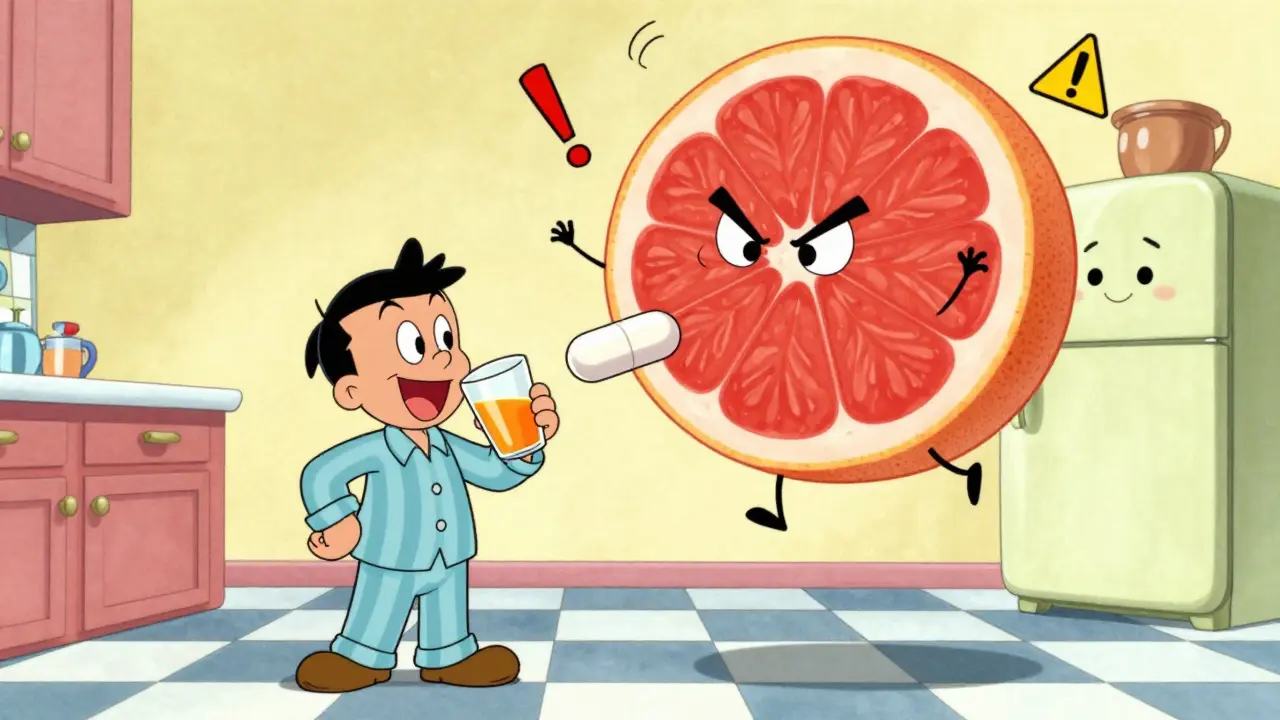
It’s easy to think that if something is natural, it’s safe-especially when it comes to food or supplements. But the truth is, drug interactions can turn your morning orange juice or evening turmeric capsule into a hidden risk. You’re taking your blood pressure pill, your cholesterol statin, maybe your thyroid med-and you’re also popping a multivitamin, fish oil, or St. John’s wort because you’ve heard it’s good for you. Sounds harmless, right? Not always. These combinations can quietly cancel out your meds, make them too strong, or even land you in the hospital.
Why Your Grapefruit Juice Could Be Dangerous
Grapefruit juice isn’t just tart-it’s a silent saboteur. It doesn’t just interfere with one drug. It messes with dozens. The reason? Furanocoumarins in grapefruit block an enzyme in your gut called CYP3A4. This enzyme normally breaks down certain medications so they don’t build up to dangerous levels. When it’s shut down, those drugs flood your bloodstream.Take simvastatin, a common statin for cholesterol. One glass of grapefruit juice can boost its concentration in your blood by up to 15 times. That’s not a typo. That kind of spike raises your risk of rhabdomyolysis-a condition where muscle tissue breaks down and can lead to kidney failure. The risk jumps from 0.15 cases per 100,000 people a year to 1.57. That’s a tenfold increase.
And it’s not just grapefruit. Seville oranges, pomelos, and even some types of tangelos do the same thing. If you’re on a statin, a calcium channel blocker for blood pressure, or certain anti-anxiety meds, skip these fruits entirely. No exceptions. Even a small amount can cause problems that last for days.
Warfarin and Your Salad: A Deadly Balance
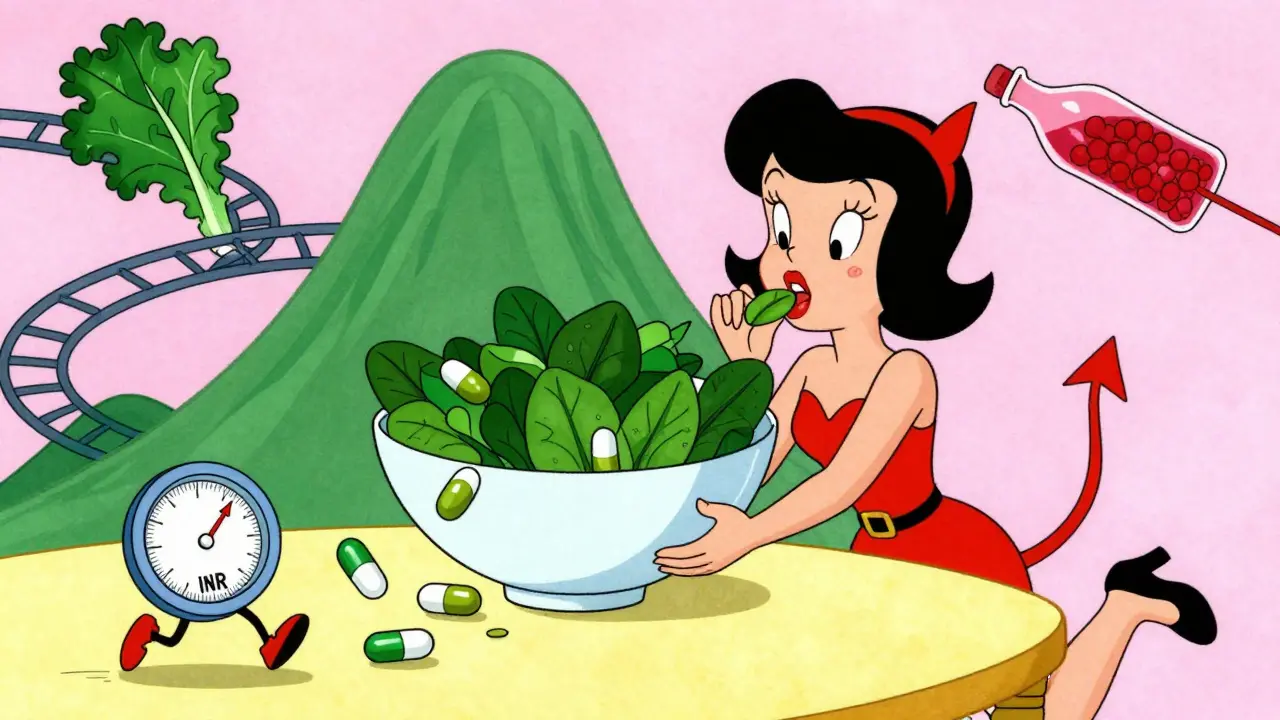
If you’re on warfarin (Coumadin), your doctor likely told you to watch your vitamin K. But most people don’t realize how much vitamin K is hiding in plain sight. One cup of cooked spinach has about 830 micrograms. Kale? Even more. Brussels sprouts, broccoli, and green tea all pack a punch.Warfarin works by blocking vitamin K’s role in blood clotting. If you suddenly eat a big bowl of kale one day and then skip greens the next, your INR (a blood test that measures clotting time) swings wildly. A 2018 study found that eating 150g of cooked spinach in one meal can cut warfarin’s effect by 30-40% in just 24 hours. That means your blood clots faster-and you’re at risk for stroke or pulmonary embolism.
Here’s the fix: don’t avoid greens. Just keep them consistent. If you usually eat spinach twice a week, keep doing that. Don’t go from zero to hero overnight. The FDA recommends 90mcg daily for women and 120mcg for men as a steady target. And yes, cranberry juice? It’s also been linked to over 28 documented cases of dangerous bleeding with warfarin. That’s not a myth-it’s in medical journals.
St. John’s Wort: The Supplement That Breaks Your Meds
St. John’s wort is sold as a natural mood booster. But here’s what the labels don’t say: it’s one of the most dangerous supplements you can take with prescription drugs. It turns on a liver enzyme called CYP3A4-so hard and fast that it can flush your medications out of your system before they even work.People taking cyclosporine after a transplant have seen their drug levels drop by 50-70% in just two weeks. That’s not a small drop. That’s rejection risk. People on birth control have gotten pregnant despite taking their pills correctly. Antidepressants like SSRIs? Combine them with St. John’s wort and you could trigger serotonin syndrome-fever, muscle rigidity, confusion, rapid heartbeat. It’s life-threatening.
And it doesn’t stop there. HIV meds? St. John’s wort cuts their levels by 40-80%, which can lead to drug-resistant strains. Cancer drugs? Immunosuppressants? Anti-seizure meds? All affected. There are over 50 medications that interact with it. The Cleveland Clinic calls it one of the highest-risk supplements out there. And yet, it’s still sold on pharmacy shelves with no warning labels.
Herbs, Garlic, and Ginkgo: The Bleeding Trio
You might think herbs are gentle. But ginkgo biloba, garlic supplements, and even high-dose fish oil all thin your blood. They don’t work like aspirin-they work differently, but the result is the same: longer bleeding time.Ginkgo blocks a substance called platelet-activating factor. That sounds technical, but what it means is your blood doesn’t clot as easily. Studies show it can increase bleeding time by 30-50%. When combined with warfarin, aspirin, or clopidogrel, the risk of internal bleeding-especially in the brain-goes up by 1.7 times.
Garlic supplements? A 2001 study found 32 documented cases of bleeding when people took garlic pills along with blood thinners. One man had a brain hemorrhage after starting garlic with his warfarin. Another had excessive bleeding after dental surgery. And fish oil? High doses (over 3,000mg daily) can also increase bleeding risk, especially if you’re on anticoagulants or have a bleeding disorder.
These aren’t rare cases. They’re documented in medical literature. And they happen because people assume “natural” means “safe.” It doesn’t.
Red Yeast Rice and Statins: Double Dose Danger
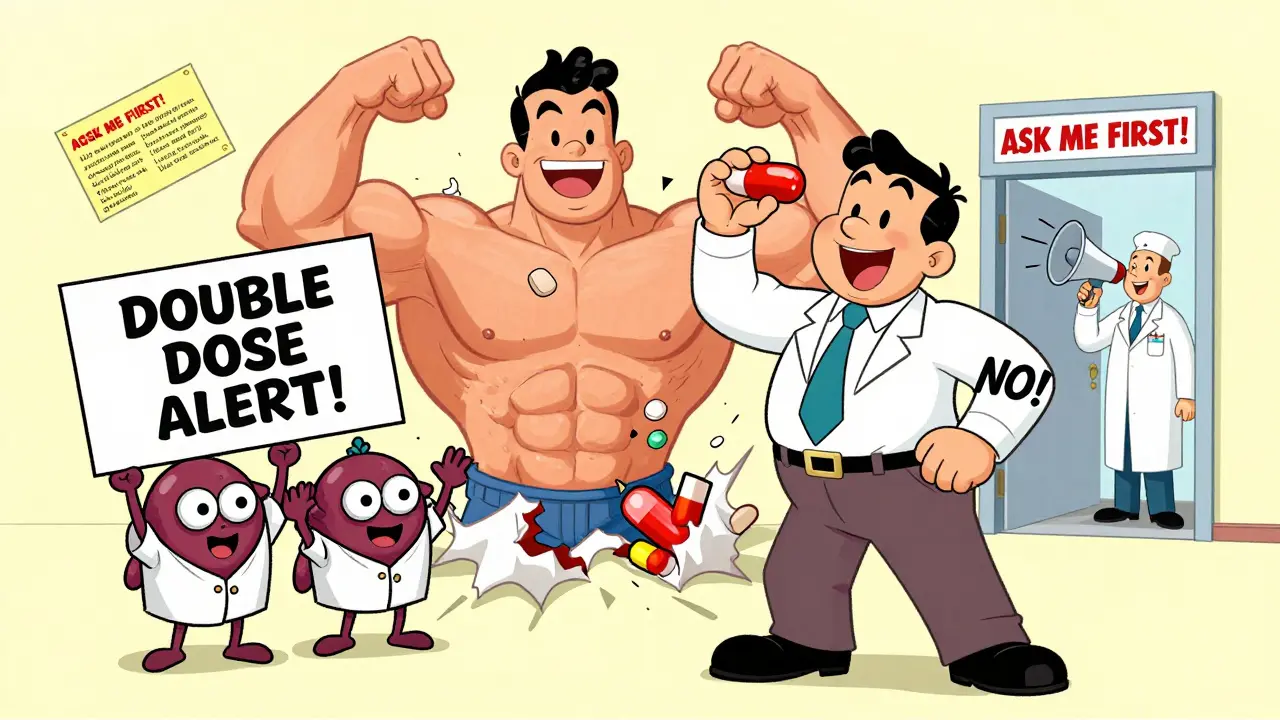
Red yeast rice is marketed as a “natural statin.” And it’s not wrong. It contains monacolin K-the same compound found in lovastatin, a prescription cholesterol drug. So if you’re already taking a statin like atorvastatin or rosuvastatin, and you add red yeast rice? You’re essentially doubling your dose.That’s not a smart supplement strategy. That’s a recipe for myopathy-muscle pain, weakness, and in severe cases, rhabdomyolysis. A 2017 study in the Journal of the American College of Cardiology found that combining red yeast rice with prescription statins increased myopathy risk by 2.3 times.
And here’s the kicker: red yeast rice isn’t regulated like a drug. So you don’t know how much monacolin K is in each capsule. One bottle might have a safe amount. The next might have enough to cause harm. There’s no standardization. No warning label. Just a bottle on a shelf labeled “natural cholesterol support.”
What You Can Do Right Now
You don’t need to panic. But you do need to act.Make a full list. Write down every pill, capsule, tea, and tincture you take-even if you think it’s “just a vitamin.” Include over-the-counter meds like ibuprofen, antacids, or sleep aids. Don’t rely on memory. Keep this list in your phone and your wallet.
Bring it to every appointment. Whether you’re seeing your doctor, pharmacist, or specialist, hand them the list. Ask: “Could any of these interact with my prescriptions?” Most doctors don’t ask about supplements. It’s up to you to bring it up.
Use free tools. The FDA’s MedlinePlus drug interaction checker lets you enter up to five meds and supplements and get instant feedback. The NIH’s LiverTox database has over 1,200 documented interactions with clinical evidence. Both are free and reliable.
Talk to your pharmacist. Pharmacists are trained to catch these interactions. A 2022 study showed that pharmacist-led reviews reduce adverse drug events by 22%. They can flag a dangerous combo before you even leave the store.
Don’t start or stop supplements on your own. Even if you think it’s harmless, check first. A supplement that’s safe for your neighbor might be dangerous for you, depending on your meds, liver function, or kidney health.
What’s Changing-and What Still Needs to Change
There’s progress. The FDA now recommends that new drugs be tested for interactions with common supplements. The National Institutes of Health spent $15.7 million in 2022 on this research alone. AI tools like IBM Watson are learning to predict interactions by scanning millions of medical notes.But the system is still broken. Only 29% of supplement labels include interaction warnings. Prescription drugs? 100%. That’s not a gap. That’s negligence.
Meanwhile, consumer awareness is rising. In 2018, only 43% of supplement users checked for interactions. By 2022, that number jumped to 61%. That’s good. But it’s not enough. We still need mandatory labeling. We need better training for doctors. We need pharmacists to be part of every care team.
Until then, you’re your own best defense. Know your meds. Know your supplements. Ask questions. And never assume something is safe just because it’s natural.
Dayanara Villafuerte
So let me get this straight - we’re supposed to trust Big Pharma’s $200 pills but side-eye a $12 turmeric capsule? 😒
Meanwhile, the FDA lets supplement companies slap ‘natural’ on anything and call it a day. 🤡
My grandma took garlic for 40 years and still outlived three of her kids. Guess what? She didn’t die from ‘bleeding risk.’ She died laughing at the idea that a pill is safer than a clove.
Also - grapefruit juice? I’ve been drinking it with my statin since 2012. My LDL is 87. My muscles don’t hurt. My liver? Fine.
Maybe the real danger is fear-mongering dressed up as science. 🍊⚡
Kristin Dailey
Stop giving people false安全感. Natural doesn’t mean safe. Grapefruit + statin = hospital. Period.
Pat Dean
Of course you’re not surprised. People take supplements like they’re candy because they’re too lazy to fix their diet. You eat processed crap all day, then pop fish oil like it’s a magic bullet. No wonder you’re sick.
And don’t get me started on St. John’s Wort. That’s not ‘natural healing’ - that’s self-sabotage with a side of delusion.
Stop blaming the system. Blame yourself for thinking you can outsmart biology with a bottle from GNC.
Jay Clarke
Bro. I took red yeast rice because I didn’t want to be on a statin. Then I read this post. I stopped. My cholesterol went up 12 points. But my muscles? Not screaming anymore.
Turns out, ‘natural’ doesn’t mean ‘gentle.’ It means ‘unregulated poison with a pretty label.’
Also - why is no one talking about how Big Pharma owns the supplement industry? Same corporations. Same lobbyists. Same lies.
It’s all a game. We’re just pawns in a profit-driven charade. 🤷♂️
Robert Cassidy
You think this is about health? Nah. This is about control. The FDA doesn’t care if you live or die - they care if you obey. They let grapefruit juice slip through the cracks because it’s ‘natural’ - but crack down on CBD like it’s heroin.
Meanwhile, your statin? Made in China. Tested by a lab in Ohio that got defunded in 2019.
They want you dependent. They want you scared. They want you to keep buying pills while ignoring the root cause: your damn diet.
And don’t even get me started on how they banned turmeric supplements in 12 states but still sell nicotine gum like candy. This isn’t medicine. It’s a cult.
Wake up. The system is rigged. You’re being played. 🇺🇸🔥
rachel bellet
Let’s address the pharmacokinetic elephant in the room: CYP3A4 inhibition is a well-documented, dose-dependent, clinically significant interaction pathway - not a ‘myth.’
Pharmacodynamic synergy between warfarin and vitamin K fluctuation is quantifiable via INR variability, with a documented standard deviation of ±0.8 under inconsistent dietary intake.
St. John’s Wort induces P-glycoprotein and CYP3A4 via PXR activation - leading to subtherapeutic plasma concentrations of cyclosporine, with AUC reductions exceeding 60% in controlled trials.
Red yeast rice contains monacolin K at concentrations ranging from 0.2–10.2 mg per capsule - unstandardized, unvalidated, and unregulated under DSHEA.
There is no ‘natural exception’ to biochemistry. Your intuition is not a clinical trial. Your anecdote is not evidence. Your supplement regimen is a liability.
Stop romanticizing ignorance. It’s not ‘holistic.’ It’s negligent. And it’s killing people.
Aysha Siera
They don’t want you to know this - but grapefruit juice is banned in Europe for statin users. Why? Because the WHO knows. The CDC knows. The pharmaceutical lobby hides it. They profit from your kidney failure.
And red yeast rice? It’s been outlawed in Canada. But here? You can buy it next to candy bars.
Who controls the FDA? Who owns the supplement brands? Who funds the ‘studies’ that say it’s safe?
It’s all connected. They want you sick. They want you dependent. They want your data. They want your money.
Check your blood. Check your pills. Check your soul. The truth is buried - but it’s still screaming.
Selina Warren
I used to think supplements were harmless. Then my dad had a stroke because he took garlic pills with warfarin and didn’t tell his doctor.
He’s fine now. But he’s scared. And so am I.
So I made a list. Every single thing I take. I showed it to my pharmacist. She caught three dangerous combos I didn’t even know about.
It’s not about fear. It’s about responsibility.
You don’t have to be perfect. But you do have to be aware.
Your life isn’t a experiment. It’s your only one. Don’t gamble it on a ‘natural’ label.
Ask. Listen. Protect yourself. You’re worth it. 💪❤️
Wendy Claughton
I read this and cried. Not because I’m scared - but because I finally understood why my anxiety got worse after I started taking omega-3s.
I thought I was being ‘healthy.’ Turns out, I was accidentally messing with my SSRI.
My therapist didn’t ask. My doctor didn’t ask. I didn’t even think to ask.
So now? I have a little notebook. Every pill. Every tea. Every herb.
I take it to every appointment. I ask: ‘Could this hurt me?’
And I’ve stopped trusting ‘natural’ as a synonym for ‘safe.’
It’s not about being perfect. It’s about being curious.
And maybe - just maybe - that’s the real medicine.
Thank you for writing this. I needed it. 🌱💛