
When your kidneys stop working, it’s not a sudden event. It’s a slow leak - often going unnoticed until it’s too late. About 1 in 7 adults in the U.S. has some level of kidney damage, and for many, the root cause is one of three things: diabetes, hypertension, or glomerulonephritis. These aren’t just medical terms. They’re real, daily battles that millions face, quietly destroying kidney function over years - sometimes decades.
Diabetes: The Silent Kidney Killer
Diabetes is the number one cause of kidney failure worldwide. In the U.S., it accounts for nearly half of all new cases of end-stage renal disease (ESRD). That’s not a coincidence. High blood sugar doesn’t just affect your feet or eyes - it eats away at your kidneys from the inside.
Here’s how it works: when blood sugar stays too high, your kidneys try to filter out the extra glucose. This forces the glomeruli - the tiny filtering units - to work overtime. Within the first year of diabetes, they swell. Blood flow increases by 20-40%, a state called hyperfiltration. It sounds like a good thing, but it’s like running a car engine at redline 24/7. Eventually, the filters crack.
Structural damage follows. The basement membrane thickens from 300-400 nanometers to 450-650 nm. Podocytes - the cells that keep protein in the blood - start dying. By the time albumin shows up in urine (a sign called microalbuminuria), damage is already underway. Studies show 30% of people with type 1 diabetes and 40% with type 2 will develop kidney disease. Many don’t even know they have it until it’s advanced.
But here’s the good news: early action changes everything. Getting your HbA1c below 7% within the first five years of diagnosis cuts kidney disease risk by 54%. SGLT2 inhibitors - drugs like dapagliflozin and empagliflozin - don’t just lower blood sugar. They reduce pressure in the glomeruli, slow filtration, and cut ESRD risk by 32%. For many, starting one of these drugs as soon as albuminuria appears can stabilize kidney function.
Hypertension: The Pressure That Crushes Filters
High blood pressure is the second leading cause of kidney failure. It’s responsible for nearly 3 out of every 10 ESRD cases. And unlike diabetes, many people don’t feel it. No pain. No warning. Just a slow, steady squeeze on the blood vessels feeding your kidneys.
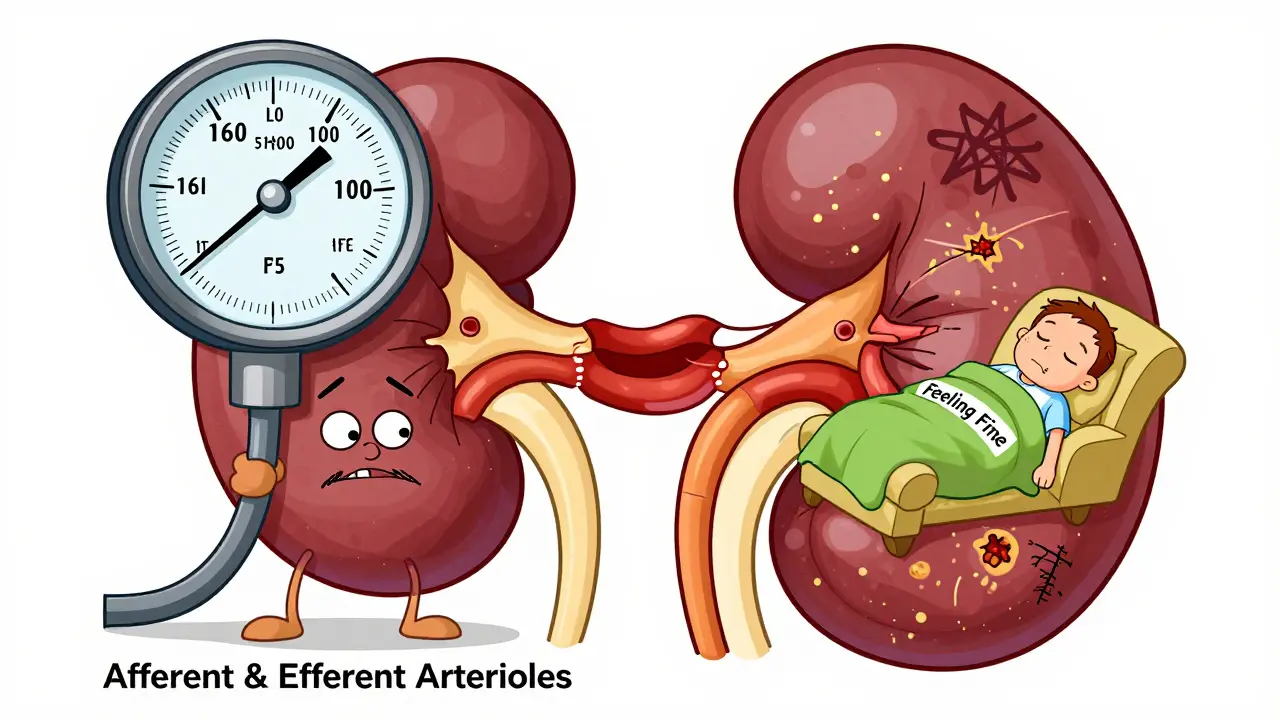
When blood pressure stays above 140/90 mmHg, the small arteries in the kidneys - the afferent and efferent arterioles - begin to thicken and harden. This is called nephrosclerosis. Blood flow drops by 15-25% within five years. Glomeruli starve. They scar. And once scarred, they can’t recover.
What makes it worse? The fact that diabetes and hypertension often travel together. About 75% of people with diabetes develop high blood pressure. Together, they accelerate kidney decline by 3.2 mL/min/1.73m² per year - nearly double the rate of diabetes alone. That’s like losing a full kidney function point every 4 months.
Controlling blood pressure isn’t just about preventing strokes or heart attacks. For kidney health, the target is tighter: below 130/80 mmHg for diabetics, and even lower - 120/80 - if protein is leaking into the urine. ACE inhibitors and ARBs are the go-to drugs. They don’t just lower pressure. They reduce protein leakage and protect the glomeruli directly.
But adherence is a problem. In surveys, 35% of hypertension-related ESRD patients admit they didn’t take their meds consistently because they felt fine. That’s the trap. Kidney damage from high blood pressure is silent until it’s too late.
Glomerulonephritis: When Your Immune System Attacks Your Kidneys
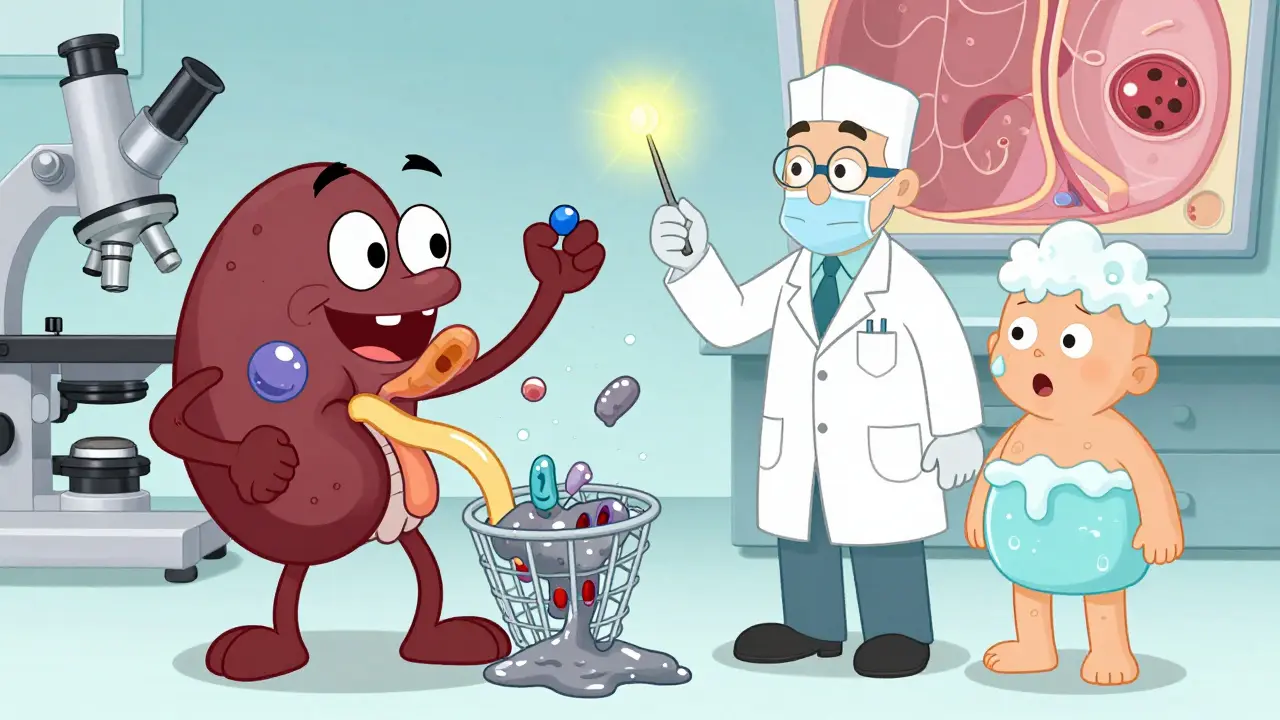
While less common than diabetes or hypertension, glomerulonephritis is one of the most complex causes of kidney failure. It’s not a single disease. It’s a group of disorders where your immune system turns on your own glomeruli.
The most common form is IgA nephropathy. It affects 2.5 to 4.5 people per 100,000 each year, depending on where you live. In Asia, it’s more frequent. The trigger? A misdirected immune response. IgA antibodies build up in the mesangium - the support structure of the glomerulus - causing inflammation. Over time, this leads to scarring.
Another major type is lupus nephritis, which strikes about half of people with systemic lupus erythematosus. If it’s class IV (the most aggressive form), there’s nearly a 30% chance it will lead to kidney failure within 10 years.
Diagnosis is often delayed. One patient on Reddit said they saw seven doctors over 18 months before getting diagnosed. That’s not rare. Symptoms like foamy urine, swelling in the legs, or dark urine are easy to ignore - until they’re not.
Treatment is different here. You can’t just lower blood sugar or pressure. You need to calm the immune system. Rituximab, a drug that targets B-cells, cut ESRD risk by 48% in high-risk IgA patients in one 2022 study. New drugs like sparsentan - approved in 2024 - reduce protein leakage by nearly 50%, far better than older options.
But there’s debate. Some experts warn that aggressive immunosuppression in older patients increases infection risk without clear benefit. Others say delaying treatment costs patients over three years of dialysis time. The answer? It depends on age, protein levels, and biopsy results. There’s no one-size-fits-all.
What Happens When Kidneys Fail
When kidneys lose 85-90% of their function, you’ve reached end-stage renal disease. At this point, your body can’t remove waste or balance fluids. Toxins build up. Fluid pools in your lungs and legs. Blood pressure spikes. You need dialysis or a transplant to survive.
The journey to this point isn’t the same for everyone. Diabetic kidney disease tends to progress faster - from diagnosis to ESRD in about 8.7 years on average. Hypertensive kidney disease takes longer - around 12.3 years. Glomerulonephritis? It’s a wild card. Some people stay stable for decades. Others crash in five years.
But progression isn’t destiny. The Modification of Diet in Renal Disease study showed that albuminuria levels predict risk: normal (<30 mg/g) means 1% chance of ESRD in five years. Microalbuminuria (30-300 mg/g)? 8%. Macroalbuminuria (>300 mg/g)? 44%. That’s a clear warning sign. Catch it early, and you can still change the outcome.
How to Protect Your Kidneys - Even If You Have One of These Conditions
You can’t undo damage, but you can stop it from getting worse. Here’s what works:
- Test regularly. If you have diabetes or high blood pressure, get your urine albumin-to-creatinine ratio (UACR) tested every year. More often if you’re already showing signs.
- Take your meds. SGLT2 inhibitors for diabetes. ACE inhibitors or ARBs for high blood pressure and proteinuria. Don’t skip them because you feel fine.
- Control your numbers. HbA1c below 7%. Blood pressure below 130/80. Protein in urine below 30 mg/g.
- Watch your diet. Too much salt worsens pressure. Too much protein overloads damaged kidneys. Aim for 0.8 grams per kg of body weight - not more.
- Stay active. Even 30 minutes of walking daily improves blood flow and helps control both sugar and pressure.
Many people think kidney disease is inevitable if they have diabetes or high blood pressure. It’s not. Studies show that with early, consistent care, up to 50% of projected kidney failures could be prevented. That’s not just hope. That’s science.
Why This Matters Now
The global number of people with kidney disease is rising fast - 850 million now, and projected to climb. In the U.S., diabetic ESRD costs Medicare $96,000 per patient per year. Hypertensive ESRD? $78,000. These aren’t just medical costs. They’re family costs - lost jobs, missed time with kids, constant anxiety about dialysis schedules.
But here’s what’s changing: we now have tools that work. SGLT2 inhibitors. Finerenone. Sparsentan. Better monitoring. Earlier intervention. The tools are here. The question is: are we using them?
If you have diabetes, high blood pressure, or unexplained swelling and foamy urine - don’t wait. Get tested. Talk to your doctor. Start the conversation. Your kidneys can’t tell you they’re in trouble. But you can listen.
Can kidney failure from diabetes be reversed?
Kidney damage from diabetes is usually permanent once scarring sets in. But early intervention can stop it from getting worse. Starting SGLT2 inhibitors or ACE inhibitors as soon as microalbuminuria appears can stabilize function - and in some cases, even improve it slightly. The goal isn’t reversal. It’s prevention of further decline.
Do I need to take blood pressure meds if I don’t feel high?
Yes. High blood pressure damages your kidneys silently. You won’t feel it until it’s too late. That’s why doctors recommend treatment even if you feel fine. Keeping pressure below 130/80 isn’t about how you feel - it’s about protecting your kidneys long-term.
Is glomerulonephritis hereditary?
Most forms aren’t directly inherited. But some rare types, like Alport syndrome, are genetic. For common types like IgA nephropathy, there’s no single gene, but family history can increase risk. If a close relative has it, you should get screened for protein in urine, especially if you also have high blood pressure or diabetes.
Can I prevent kidney failure if I have diabetes?
Yes - if you act early. Keeping HbA1c under 7%, taking SGLT2 inhibitors, controlling blood pressure, and getting yearly urine tests can cut your risk of kidney failure by more than half. It’s not guaranteed, but it’s your best shot.
What’s the difference between diabetic kidney disease and hypertension-related kidney disease?
Diabetic kidney disease starts with high blood sugar damaging the filtering units, leading to thickened membranes and protein leakage. Hypertensive kidney disease starts with high pressure crushing the small blood vessels, reducing blood flow and causing scarring. They can overlap - and often do - but the damage patterns look different under a microscope.
Alexander Erb
Man, this post is a goldmine. I’ve been living with type 2 for 12 years and just found out last year I had microalbuminuria. Didn’t even know what that meant until I read this. Started on dapagliflozin last month and my UACR dropped from 210 to 89 in 3 months. No side effects, just chill. My nephrologist said I’m lucky I caught it early. Seriously, if you’ve got diabetes or high BP - get tested. No excuses.
Miranda Varn-Harper
While I appreciate the clinical precision of this article, I must note that the emphasis on pharmacological intervention risks overshadowing the foundational role of lifestyle. The Modification of Diet in Renal Disease study, referenced here, demonstrated that dietary protein restriction alone could slow progression by up to 30% in early-stage disease. Yet, the post implies medication is the primary lever. This is a concerning narrative shift in modern medicine - one that equates intervention with prevention.
Donnie DeMarco
bro i had no idea my foamy pee was a thing. thought it was just from drinking too much protein powder. now i’m scared to go to the bathroom. but like… sglts? that’s the drug that makes you pee out sugar? that sounds wild. like your kidneys are basically a sugar filter now. i’m gonna start drinking water like it’s my job. also why is everyone so chill about high bp? like bro, if your blood is pressuring your kidneys like a bad massage, maybe you should chill out too. 😅
Tom Bolt
There is a profound societal failure in how we treat chronic kidney disease. The medical establishment has normalized the idea that kidney failure is inevitable - a self-fulfilling prophecy. The fact that 75% of diabetic patients develop hypertension - and that this combination accelerates decline by 3.2 mL/min/1.73m² per year - is not merely a statistic. It is a systemic collapse of preventive care. We allow patients to drift into ESRD because we’ve outsourced responsibility to pharmaceuticals rather than enforcing accountability in public health policy. This isn’t medicine. It’s triage.
Shourya Tanay
From a nephrology research perspective, the data presented here aligns closely with recent ISN guidelines. The key insight is that glomerular hyperfiltration in early diabetes is not compensatory - it is pathogenic. The shift from GFR-based to albuminuria-based staging, as endorsed in KDIGO 2022, fundamentally redefines risk stratification. What’s underappreciated is the role of podocyte depletion as a biomarker of irreversible injury. Once podocyte density falls below 0.2 per glomerulus, recovery is anatomically impossible. This underscores the urgency of early SGLT2i initiation - not merely as a glucose-lowering agent, but as a podocyte-protective modality.
Denise Jordan
So… we’re saying if you have diabetes, you’re basically just waiting for your kidneys to quit? And the only way to stop it is to take more pills you don’t need because you ‘feel fine’? Sounds like a scam. I’m gonna keep eating tacos and blame the system. 🤷♀️
Gene Forte
Every single one of us has a choice - not just in what we eat or how we move, but in how we respond to our own health. The kidneys don’t ask for much. They just want balance. They want you to listen. You don’t need a miracle drug. You need consistency. One step. One meal. One pill. One day at a time. It’s not about perfection. It’s about showing up - for yourself. Your kidneys are working right now. Don’t let them work alone.
Kenneth Zieden-Weber
Oh wow, so the drugs work? I thought they were just fancy sugar pills with extra steps. Let me guess - the same people who told us ‘low-fat’ was the answer are now telling us to take SGLT2 inhibitors? Classic. But hey, if it works, I’m not mad. Still, I wonder how many people are being sold ‘prevention’ while the real problem - processed food, food deserts, chronic stress - gets ignored. We’re treating symptoms like they’re the disease. And we call that progress?
Adam Kleinberg
Let me get this straight - the government spends $96k per year on dialysis but won’t pay for a $50/month drug that prevents it? And you’re telling me this isn’t corporate greed? The same companies that profit off insulin are now pushing SGLT2 inhibitors like they’re heroes? I’ve seen the financial disclosures. They’re not saving lives - they’re just moving the payment timeline. You think your kidney’s gonna thank you for taking a drug that’s been marketed since 2013? Nah. It’ll just be another line item in their death certificate.
David L. Thomas
Interesting how glomerulonephritis is treated as an outlier, but the real epidemic is the confluence of metabolic syndrome and immune dysregulation. Emerging data from the NEPHROS registry suggests that low-grade systemic inflammation - even in the absence of overt autoimmune disease - drives mesangial IgA deposition. This blurs the line between ‘diabetic nephropathy’ and ‘IgA nephropathy’ - they may be different faces of the same inflammatory cascade. The future of nephrology isn’t in classifying diseases - it’s in targeting the shared pathways: inflammation, oxidative stress, podocyte apoptosis.
Alexander Erb
^^^ I love this. I didn’t even think about inflammation as the common thread. My doc just said ‘take this pill’ and left it at that. But yeah - if your body’s on fire everywhere, why are we just patching the kidneys? Makes me wonder if I should be looking at my gut health too. Maybe that’s why I feel better on a Mediterranean diet - not just because of the sugar, but because I’m not feeding the fire.