Medication Interaction Risk Checker
Check Your Combination
Select your current medications to see interaction risks and safety recommendations
Why Mixing Systemic Antifungals with Statins or Immunosuppressants Can Be Dangerous
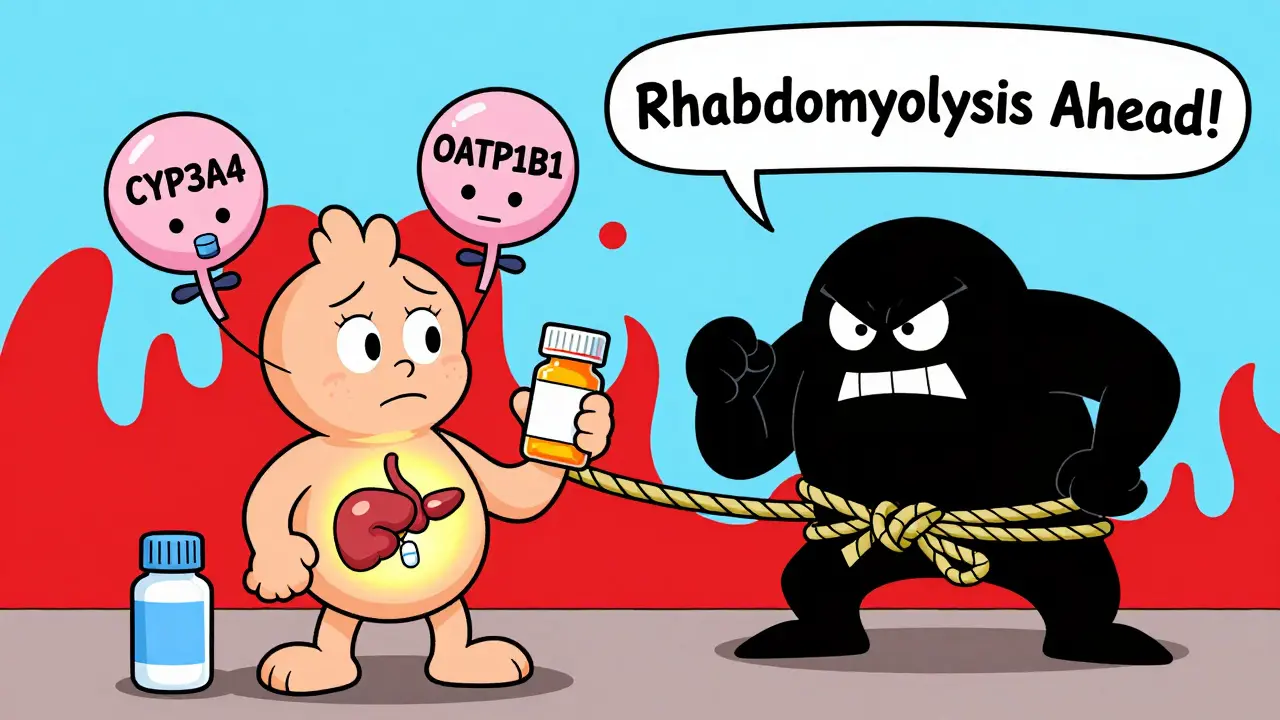
If you're taking a statin for high cholesterol and then get a stubborn fungal infection, your doctor might reach for an azole antifungal like fluconazole or itraconazole. Sounds harmless, right? But here’s the catch: combining these drugs can push your muscle tissue into a life-threatening breakdown called rhabdomyolysis. The risk isn’t theoretical-it’s documented in thousands of cases. And it happens because these common medications interfere with how your body breaks down other drugs.
Systemic antifungals, especially the azole class, don’t just kill fungi. They also shut down key liver enzymes that process statins and immunosuppressants. When those enzymes are blocked, drug levels in your blood skyrocket. One study showed that when ketoconazole is taken with simvastatin, statin levels can jump 15 to 20 times higher than normal. That’s not a small bump-it’s a tsunami.
How Azole Antifungals Disrupt Your Body’s Drug Processing
Azoles like fluconazole, itraconazole, voriconazole, and posaconazole work by blocking a fungal enzyme called lanosterol 14-alpha-demethylase. But they don’t stop there. They also block human enzymes-specifically, the CYP3A4 enzyme in your liver. This enzyme handles about 30% of all medications you take, including most statins and nearly all immunosuppressants.
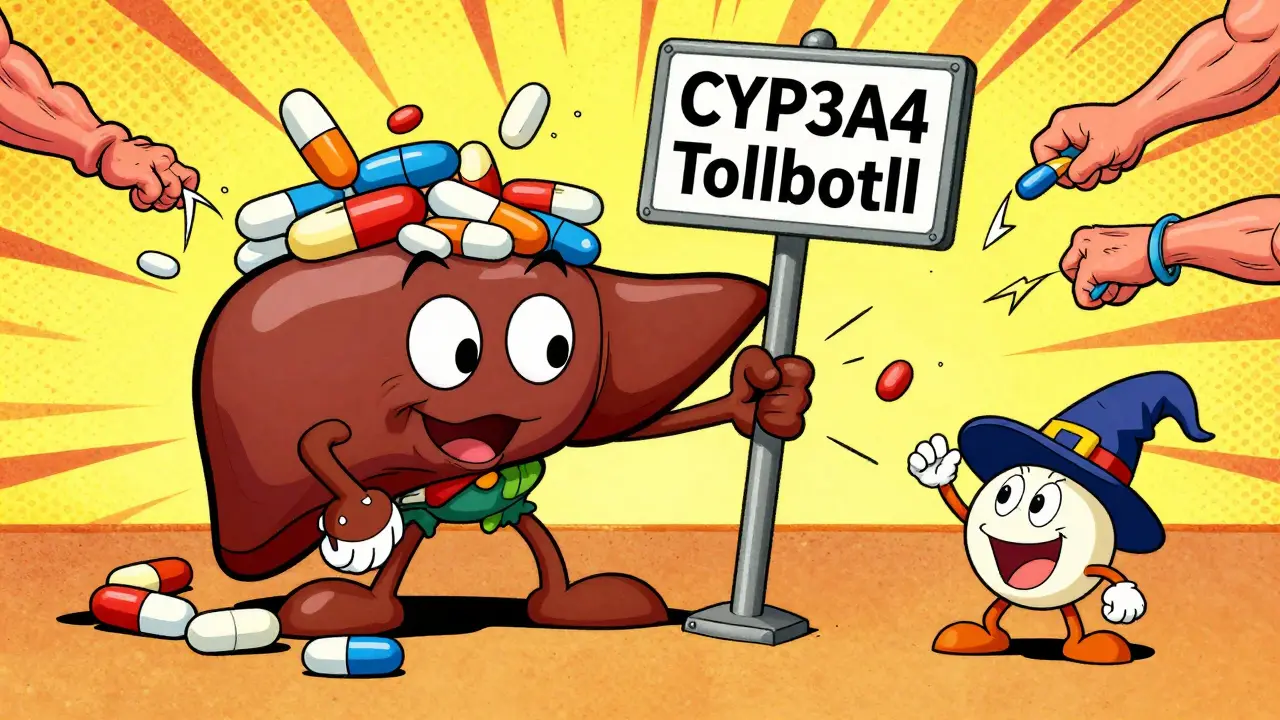
Think of CYP3A4 as a tollbooth on a highway. Statins and immunosuppressants need to pass through it to get broken down and cleared from your body. When an azole antifungal shows up, it slams the tollbooth shut. The drugs pile up behind it. The result? Toxic levels in your bloodstream.
Not all azoles are equally dangerous. Ketoconazole and posaconazole are the strongest CYP3A4 inhibitors. Fluconazole is weaker but still risky, especially with higher doses. Voriconazole and itraconazole fall in the middle. Even if your doctor picks a "safer" azole, the interaction risk doesn’t disappear-it just drops from critical to serious.
Which Statins Are Most at Risk?
Not all statins are created equal when it comes to drug interactions. The ones metabolized by CYP3A4 are the most vulnerable:
- Atorvastatin - High risk
- Simvastatin - Highest risk
- Lovastatin - Highest risk
These three are the most likely to cause muscle damage when combined with azoles. Simvastatin, in particular, has been linked to the majority of rhabdomyolysis cases tied to drug interactions. In one study, patients on simvastatin plus a strong CYP3A4 inhibitor had a tenfold increase in muscle injury risk.
On the other side, some statins barely touch CYP3A4:
- Pravastatin - Low risk (cleared by kidneys, not liver)
- Rosuvastatin - Low risk (minimal CYP metabolism)
- Fluvastatin - Low risk (mostly CYP2C9)
But here’s the twist: even pravastatin and rosuvastatin aren’t completely safe. Ketoconazole blocks a different transporter called OATP1B1, which these statins rely on to enter liver cells. So if you’re on ketoconazole, even low-risk statins can build up dangerously.
Immunosuppressants Make Things Even Worse
If you’re a transplant patient, you’re already on a cocktail of drugs. Cyclosporine, tacrolimus, sirolimus, and everolimus are lifesavers-but they’re also CYP3A4 inhibitors themselves. When you add an azole antifungal on top, you’re stacking two powerful enzyme blockers.
The numbers are alarming. Studies show that in transplant patients taking cyclosporine and a statin, statin levels can rise 3 to 20 times higher than normal. That’s why up to 25% of these patients develop muscle pain or weakness. In severe cases, creatine kinase (CK) levels exceed 10,000 U/L-normal is under 200. At that point, your muscles are literally breaking down and leaking into your blood. Kidney failure can follow.
And it’s not rare. A 2012 study found that despite clear warnings on drug labels, doctors still prescribe statins with CYP3A4 inhibitors-including azoles and immunosuppressants-far too often. Why? Because infections don’t wait. And cholesterol doesn’t pause for a transplant.
What to Do If You Need an Antifungal
You can’t just stop your statin because you have a fungal infection. But you also can’t risk rhabdomyolysis. Here’s what actually works:
- Stop high-risk statins immediately. If you’re on simvastatin, lovastatin, or atorvastatin, pause them the day you start the azole. Don’t wait for symptoms. Don’t reduce the dose. Stop entirely.
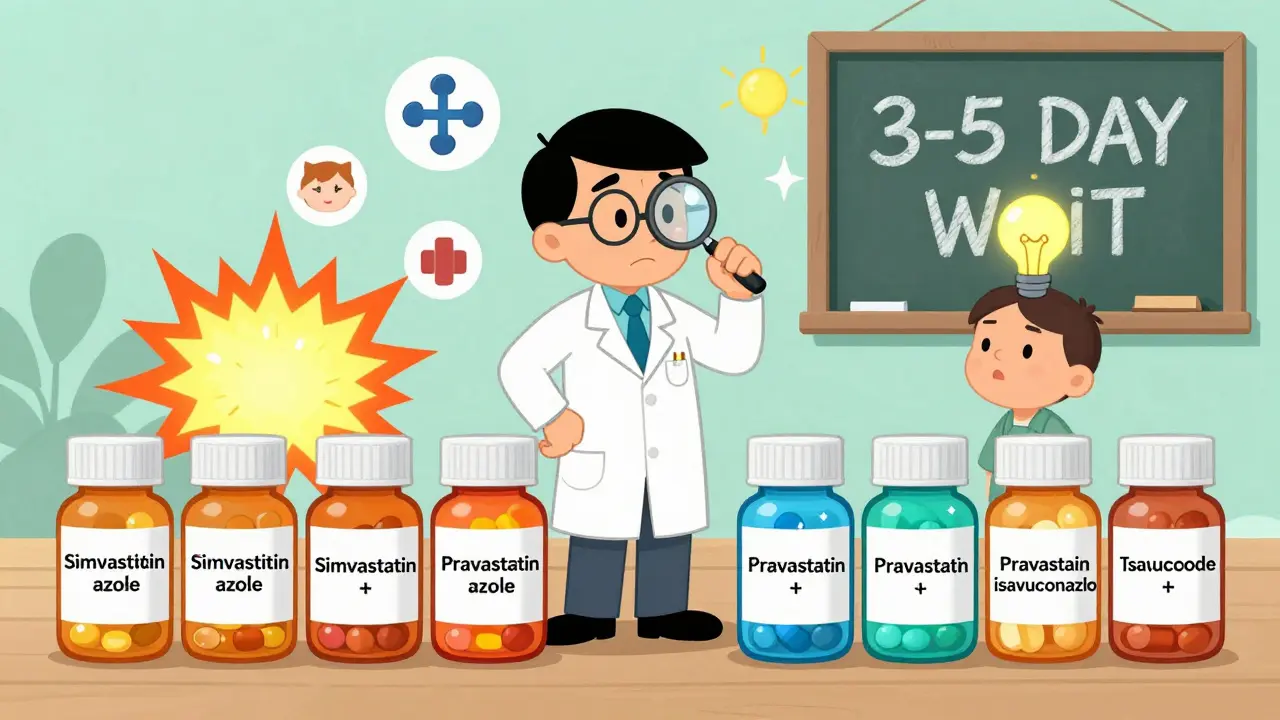
- Switch to pravastatin or rosuvastatin. These are your safest bets. Use the lowest effective dose-10 mg for pravastatin, 5-10 mg for rosuvastatin. Avoid daily dosing if possible; twice-weekly dosing reduces interaction risk significantly.
- Never combine ketoconazole with any statin. Even if you’re on pravastatin. Ketoconazole’s OATP1B1 blockade makes this combination too dangerous. Use alternatives like fluconazole or isavuconazole instead.
- Wait before restarting. After finishing the antifungal, wait at least 3-5 days before restarting a statin. Posaconazole sticks around for 24-30 hours, so its effects linger. Don’t rush.
For transplant patients, the rules are stricter. Your immunosuppressant levels must be monitored closely when starting or stopping an azole. Doctors should lower tacrolimus or cyclosporine doses by 30-50% when adding a strong CYP3A4 inhibitor. This isn’t optional-it’s standard of care.
What’s New in Antifungal Safety
There’s some good news. Newer antifungals are coming that don’t mess with CYP enzymes. Isavuconazole, approved in 2015, is a moderate inhibitor-not as bad as older azoles. And olorofim, currently in phase 3 trials, works by a completely different mechanism. It doesn’t touch CYP3A4 at all. Early data suggests it won’t interfere with statins or immunosuppressants.
Pharmacogenomics is also changing the game. About 12% of people carry a gene variant called SLCO1B1*5. This makes them extra sensitive to statin-induced muscle damage. If you’ve had unexplained muscle pain on statins before, you might have it. Genetic testing isn’t routine yet-but if you’ve had a bad reaction, ask your pharmacist.
Hospitals that use pharmacist-led checks have cut dangerous combinations by over 60%. At academic centers, pharmacists now review every azole prescription for statin or immunosuppressant interactions before it’s dispensed. That’s becoming the new normal.
Red Flags You Can’t Ignore
Even if you follow all the rules, watch for these signs:
- Unexplained muscle pain, tenderness, or weakness-especially in your shoulders, thighs, or lower back
- Dark, tea-colored urine (a sign of muscle breakdown)
- Fatigue beyond normal
- Nausea or vomiting without other cause
If you notice any of these while on an azole and a statin, stop the statin and call your doctor immediately. Don’t wait. CK levels can spike fast. Rhabdomyolysis can lead to kidney failure in hours.
Bottom Line: Safety Over Convenience
Systemic antifungals are powerful. So are statins and immunosuppressants. But when they’re mixed without care, the result isn’t synergy-it’s danger. The good news? This isn’t a mystery. The risks are well known. The solutions exist.
If you’re on a statin and need an antifungal, don’t assume it’s safe. Ask your pharmacist: "Which statin is safest with this antifungal?" Ask your doctor: "Can we switch to pravastatin or rosuvastatin?" And if you’re a transplant patient, insist on therapeutic drug monitoring.
Medication safety isn’t about avoiding drugs. It’s about choosing the right ones at the right time. And sometimes, the safest choice isn’t the most convenient one.
Sahil jassy
This is life-saving info. I'm a transplant recipient and my pharmacist flagged this exact combo last year. Pravastatin 10mg twice a week saved my muscles.
Gloria Parraz
I work in pharmacy and this is why we now have automated alerts in our system. Still, patients get mad when we tell them to stop their statin. They don't get that rhabdo doesn't care how long they've been on it.
Kathryn Featherstone
I had a friend who went into kidney failure from this. She was on simvastatin and fluconazole for a yeast infection. They didn't even talk about interactions. It took three weeks to recover. Please, if you're reading this, ask your pharmacist.
William Storrs
You're not being dramatic if your muscles feel like they're being crushed from the inside. This isn't 'maybe be careful' - it's 'stop everything and call your doctor now'.
Sarah McQuillan
I'm from the US and I've seen this happen too many times. But honestly, I think the real issue is that doctors are too rushed. They don't have time to read the full drug interaction charts. Pharmacists are the real MVPs here.
Kevin Motta Top
CYP3A4 is the silent killer. It's in everything. Coffee, grapefruit, statins, antifungals. Your liver is a busy intersection. Azoles are the guy who parks in the middle of it.
anthony funes gomez
The CYP3A4 enzyme system - a phase I oxidative metabolism pathway primarily localized in the hepatic endoplasmic reticulum - is inhibited by azoles via competitive binding at the heme iron of cytochrome P450, thereby reducing first-pass metabolism of statins and calcineurin inhibitors. The resultant increase in plasma concentration, particularly for lipophilic statins like simvastatin, elevates the risk of myotoxicity beyond the therapeutic window. This is not anecdotal - it's pharmacokinetic inevitability.
pascal pantel
So let me get this straight - you're telling me doctors still prescribe this combo? That's not negligence. That's malpractice waiting to happen. If you're not checking drug interactions before prescribing, you shouldn't be licensed.
Edington Renwick
I read this and immediately thought of my cousin. She was on simvastatin. Got a fungal nail infection. Took fluconazole. Ended up in the ICU with CK levels over 12,000. They said she was lucky to walk again. This isn't a warning. It's a funeral notice.
James Stearns
It is imperative that the medical community adopts a more rigorous protocol regarding the co-administration of azole antifungals and statins. The evidence base is unequivocal. To continue prescribing without stringent safeguards is not merely irresponsible - it is ethically indefensible.
Nina Stacey
i just found out my mom is on itraconazole and atorvastatin and i freaked out and called her doctor. she said 'but my cholesterol is so high' and i said 'but your muscles might melt' and she laughed. i hope she listens. please let her listen
Marsha Jentzsch
I'm not saying this to be dramatic but I have nightmares about this. I was on ketoconazole for ringworm and didn't know about the statin interaction. Woke up one morning unable to stand. I cried for an hour because I thought I was paralyzed. I'm fine now but I will never take a statin again. Ever. Not even for a heart attack.
Dorine Anthony
I'm just here to say thank you for writing this. I've been a nurse for 18 years and I've seen too many preventable disasters. This post is exactly what the public needs to read.
Alisa Silvia Bila
The fact that isavuconazole and olorofim are coming is huge. We need more drugs like this. No more playing Russian roulette with liver enzymes. Let's make safety the default, not the exception.