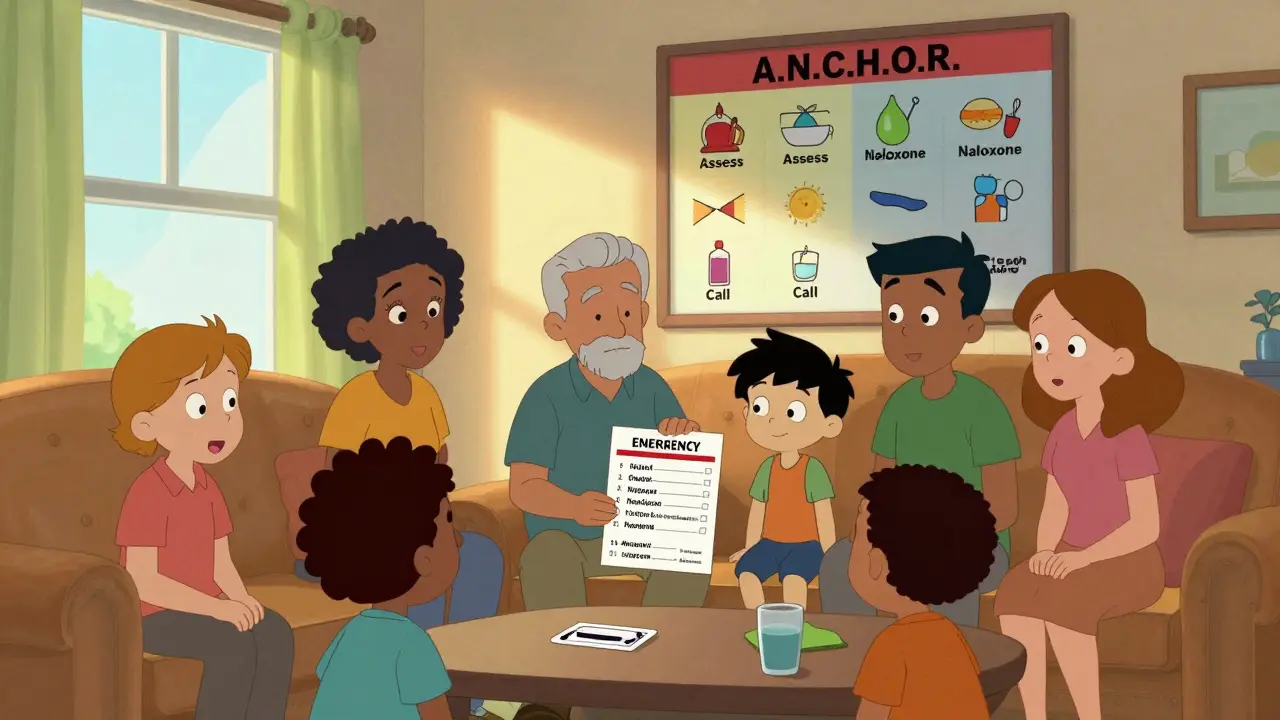
Every year, more than 100,000 people in the U.S. die from drug overdoses. Most of those deaths involve opioids like fentanyl, and many happen at home-where no one knows what to do. If someone in your family takes prescription pain medication, this isn’t just a distant risk. It’s a real possibility. But here’s the good news: an overdose emergency plan can turn panic into action-and save a life.
Why a Family Overdose Plan Isn’t Just Helpful, It’s Necessary
You don’t need to be a doctor to recognize an overdose. You just need to know the signs and have the tools ready. In 2022, synthetic opioids like fentanyl were involved in over 80% of all overdose deaths. These drugs can knock someone out in under three minutes. If you wait for an ambulance, it might be too late. The average EMS response time in urban areas is 8-10 minutes. In rural areas, it can be 20 or more. But naloxone-a medication that reverses opioid overdoses-works in 2 to 5 minutes. And it’s not magic. It’s simple. It’s safe. And it’s legal in every state. The problem isn’t access. It’s preparation. Only about 12% of U.S. households with prescription opioids have a plan in place. That means 88% of families are flying blind. A family overdose plan isn’t about fear. It’s about control. It’s about knowing exactly what to do when seconds count. And it’s not as complicated as you think.Step 1: Know What Medications Are in Your Home
Start by taking stock. Look in medicine cabinets, nightstands, and purses. Write down every opioid medication someone in your household takes. That includes:- Oxycodone (OxyContin, Percocet)
- Hydrocodone (Vicodin)
- Morphine
- Fentanyl patches or lozenges
- Buprenorphine (Suboxone)
Step 2: Get Naloxone and Know How to Use It
Naloxone is the key. It’s available as a nasal spray (like Narcan) or an auto-injector (like Evzio). The nasal spray is easiest for most families. You don’t need a prescription in 46 states. You can walk into most CVS, Walgreens, or local pharmacies and ask for it. Many offer it for $25 or less with insurance. Some even give it away for free. Keep at least two doses at home. Fentanyl is so strong that one dose of naloxone might not be enough. You might need to give a second dose if the person doesn’t wake up after 3-5 minutes. Store naloxone at room temperature-between 68°F and 77°F. Don’t leave it in the car or the bathroom. Keep it in a drawer or box where everyone knows to look. Put a sticky note on the container: “In case of overdose-pull, spray, call 911.” Practice using the training device. Most naloxone kits come with a practice spray that has no medicine. Do this with everyone in the house-even teens. Show them how to:- Remove the cap
- Insert the nozzle into one nostril
- Press the plunger all the way down
- Remove it and call 911
Step 3: Learn the Three Signs of an Overdose
You won’t always hear someone say, “I’m overdosing.” They might just be asleep. But here’s what to look for:- Unresponsive: Shake their shoulders hard. Yell their name. If they don’t wake up, it’s not sleep.
- Shallow or stopped breathing: Count breaths for 15 seconds. If they take fewer than 4 breaths, it’s an emergency.
- Pinpoint pupils: Look at their eyes in good light. If the black part is tiny like a pinhead, that’s a classic sign.
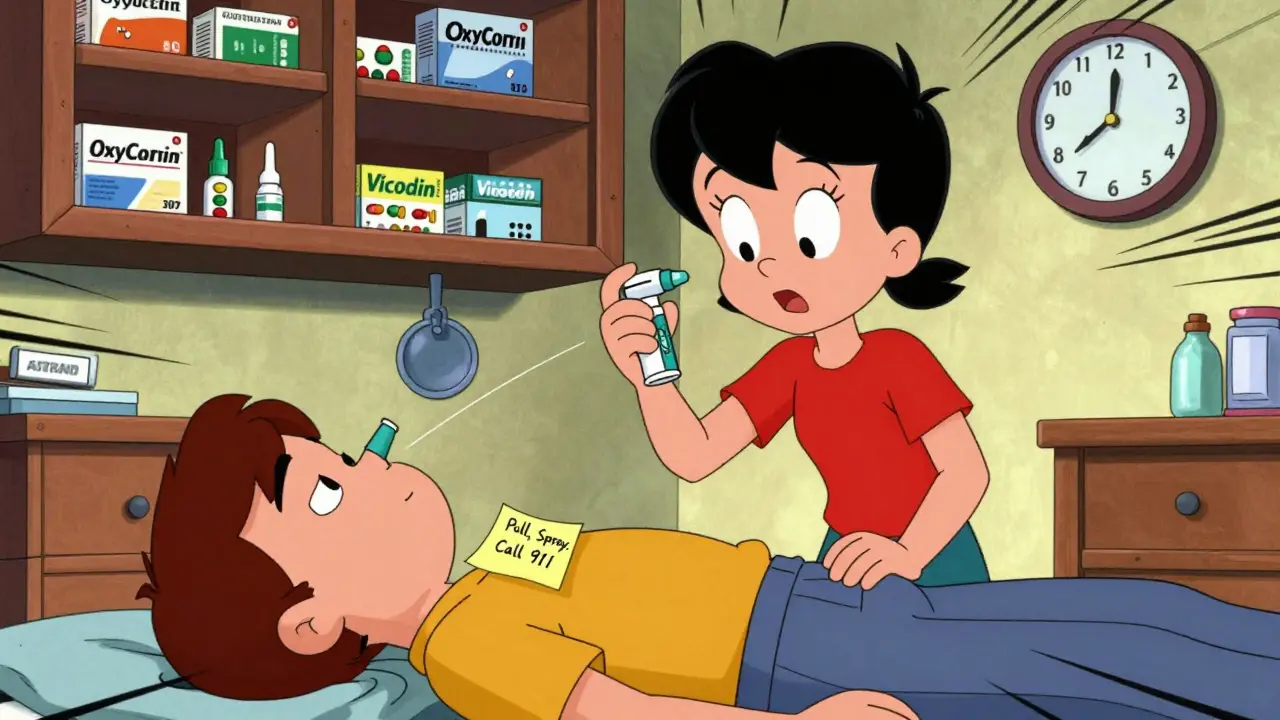
Step 4: Follow the A.N.C.H.O.R. Protocol
This is the step-by-step plan every family should memorize. It’s simple, clear, and proven:- A - Assess: Check for responsiveness and breathing.
- N - Naloxone: Spray one dose into one nostril. If no response in 3 minutes, give a second dose.
- C - Call 911: Even if they wake up, call. Naloxone wears off faster than opioids. They can stop breathing again.
- H - Have more ready: Keep the second dose nearby. Don’t put it away.
- O - Observe: Stay with them. Put them on their side. Watch their breathing. Don’t leave them alone.
- R - Review: After EMS arrives, talk to them. What happened? What meds were taken? This helps future care.
Step 5: Prepare Your Emergency Card
Create a laminated card the size of a credit card. Keep it in every wallet, purse, and car. Include:- Emergency contacts (family, doctor, poison control)
- Names and doses of all opioids in the home
- When the naloxone expires (check every 18 months)
- Step-by-step instructions in bullet form
What About Non-Opioid Overdoses?
Naloxone only works on opioids. It won’t help with alcohol, benzodiazepines, or stimulants like cocaine. But here’s the thing: most fatal overdoses in homes involve opioids-even if other drugs are mixed in. Fentanyl is often added to other pills without the user knowing. If someone overdoses on something else, you still follow the same steps: check breathing, call 911, give CPR if needed, and stay with them. Naloxone won’t hurt them if they didn’t take opioids. So if you’re unsure, give it anyway.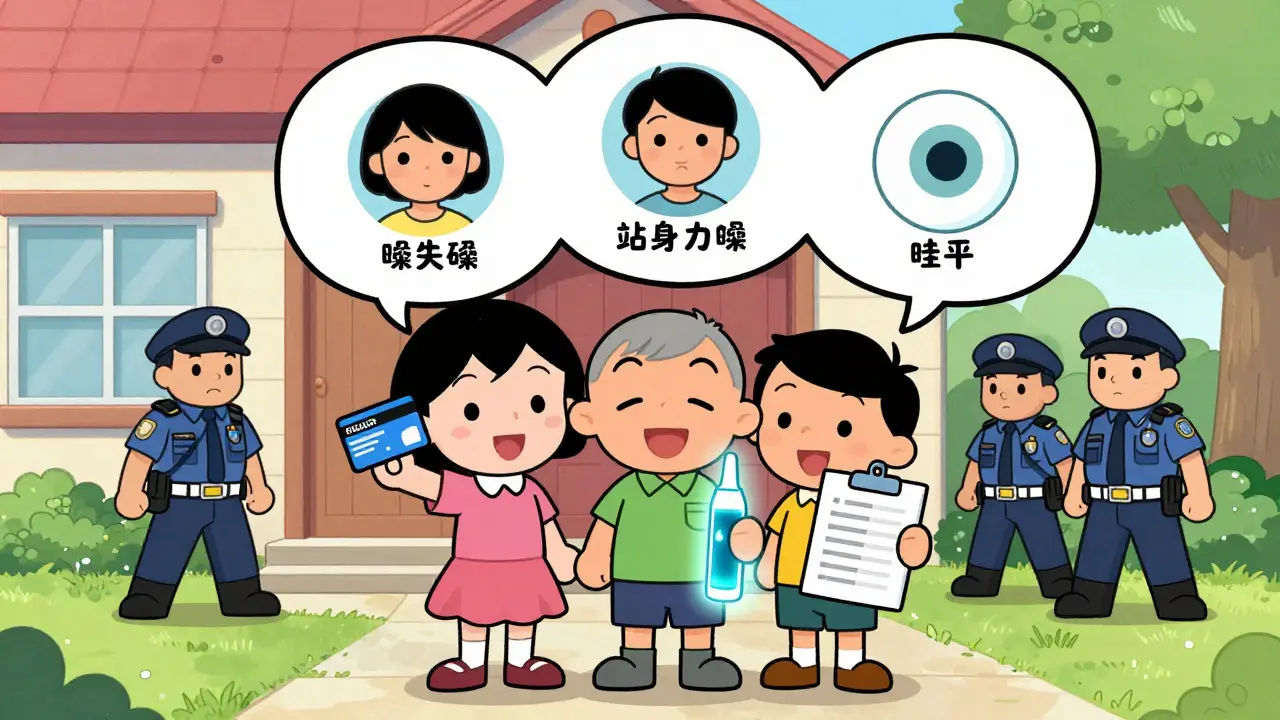
Common Mistakes Families Make
We’ve seen this too many times:- Expired naloxone: 31% of families who’ve used it had an expired kit. Check the expiration date. Replace it every 18-24 months.
- Not practicing: 24% of families didn’t know how to use it correctly when it mattered. Practice every few months.
- Waiting too long: 63% of preventable deaths happened because people waited 6-8 minutes before calling 911. Don’t wait for “proof.”
- Keeping it locked up: If it’s in a locked cabinet, it’s useless in an emergency. Keep it accessible.
- Thinking it’s not their problem: 34% of teens aged 14-17 know someone who’s overdosed. This isn’t rare. It’s everywhere.
What Happens After You Use Naloxone?
Many people think, “They woke up. I’m done.” Not true. Naloxone lasts 30-90 minutes. Opioids like fentanyl can last 4-6 hours. That means the person can stop breathing again. You must stay with them for at least 2 hours after giving naloxone. Monitor their breathing. Keep them on their side. Don’t let them sleep it off. Even if they seem fine, call 911. Emergency responders need to know what happened so they can treat them properly. Also, 89% of people who survive an overdose with naloxone go on to seek treatment. That’s not a failure. That’s a second chance. Your plan didn’t just save a life-it opened the door to recovery.Where to Get Help and Training
You don’t have to figure this out alone.- Visit SAMHSA.gov for free downloadable overdose response guides.
- The American Red Cross offers a free 15-minute online course on overdose response.
- Many pharmacies offer free training when you pick up naloxone.
- Local health departments in Halifax and across Nova Scotia often host free community sessions.
Final Thought: Be the Person Who Acts
You won’t need this plan. I hope you never do. But if you do, you’ll be glad you prepared. You won’t be the one standing there, frozen, wondering what to do. You’ll be the one who grabbed the spray, called 911, and stayed with them until help came. This isn’t about fear. It’s about love. It’s about knowing someone you care about might be one bad pill away from not waking up. And you have the power to change that.Can I get naloxone without a prescription?
Yes. In 46 U.S. states and all Canadian provinces, you can walk into a pharmacy and ask for naloxone without a prescription. Pharmacies like CVS, Walgreens, and Shoppers Drug Mart often keep it behind the counter-just ask the pharmacist. Some offer it for free through public health programs.
Is naloxone safe to use if I’m not sure it’s an opioid overdose?
Yes. Naloxone has no effect on people who haven’t taken opioids. If someone is unresponsive and you suspect an overdose, give it anyway. It won’t harm them. The risk of not acting is far greater.
How long does naloxone last, and do I need to give more than one dose?
Naloxone works for 30 to 90 minutes, but many opioids, especially fentanyl, last much longer. If the person doesn’t wake up after 3-5 minutes, give a second dose. Keep a second dose ready. Some people need three doses, especially with potent synthetic opioids.
What if the person wakes up after naloxone-do I still need to call 911?
Yes. Naloxone wears off faster than the opioid. The person can slip back into overdose within 1-2 hours. Emergency responders need to monitor them and provide further treatment. Never assume they’re out of danger just because they woke up.
Can kids or teens use naloxone?
Yes. Teens as young as 12 can be trained to use naloxone nasal spray. In fact, 34% of youth aged 14-17 know someone who’s overdosed. Training them gives your family more responders. Practice with them so they’re confident in a crisis.
How often should I check my naloxone’s expiration date?
Check every 18 to 24 months. Naloxone expires, and expired kits may not work. Most manufacturers list the expiration date on the box. Replace it before it expires. Some pharmacies will exchange expired kits for new ones for free.
Does having naloxone encourage drug use?
No. Studies show people who have naloxone available are no more likely to use drugs. In fact, 89% of those who survive an overdose with naloxone go on to seek treatment. Having it doesn’t enable use-it gives people a second chance to get help.
Himanshu Singh
Man this is so needed 😅 i had no idea naloxone was just available at pharmacies like gum. My cousin OD’d last year and we were totally lost. Gonna get two sprays this week and train my whole fam. Thanks for this!
Jasmine Yule
Finally someone says it like it is. I’m tired of people acting like overdose is some ‘dirty secret’-it’s a public health crisis happening in living rooms. I keep naloxone next to my toothbrush. My 16-year-old knows how to use it. If you’re not prepared, you’re part of the problem. 💪
Sharleen Luciano
How quaint. A step-by-step guide for the masses. One wonders if the author has ever actually witnessed an overdose, or if this is just another performative wellness checklist from a suburban mom with a $250 deductible. The ‘A.N.C.H.O.R.’ protocol sounds like a corporate branding exercise-overly sanitized, under-informed. Real emergencies don’t come with bullet points.
Jim Rice
Wait, so you’re telling me I should just hand out life-saving drugs like candy? What’s next, giving out guns to toddlers because ‘they might need it’? This is enabling. If people want to OD, let them. Why should I have to carry the burden of their poor choices? Also, I’ve never heard of this ‘A.N.C.H.O.R.’ thing. Sounds like a cult.
Henriette Barrows
This is beautiful. I cried reading this. My brother’s been on methadone for 7 years and I used to be terrified to even talk about it. Now I’ve got the card in my wallet, two naloxone kits in the kitchen drawer, and we did a practice run last Sunday. He even laughed and said, ‘You’re such a mom.’ But I’m glad. I’d rather be overprepared than paralyzed.
Alex Ronald
One thing missing: the importance of keeping naloxone away from humidity. Bathrooms are death traps for it. I keep mine in a sealed plastic container with a silica packet in the bedroom closet. Also, if you’re using the auto-injector, make sure the voice is turned on-it’s a lifesaver during panic. And yes, teens can absolutely use it. I trained my 13-year-old niece after her friend’s sister overdosed. She’s now the most calm person in the house during crises.
Teresa Rodriguez leon
Why do people always act like this is new? My mom was a nurse in the 90s and she had naloxone in the house before it was even FDA-approved. You think this is revolutionary? It’s just basic care. And now everyone’s acting like they invented it. Meanwhile, real addicts are still dying in alleys while you post about your ‘family plan’ on Reddit.
Louis Paré
Let’s be honest: this is performative activism dressed as public service. You’re not saving lives-you’re creating a false sense of security. Naloxone doesn’t fix addiction. It just delays the inevitable. And if your family is so ‘prepared,’ why aren’t you pushing for better access to rehab? Why are you still letting your cousin take fentanyl-laced pills because ‘it’s just a party’? This plan is a Band-Aid on a severed artery.
Marie-Pierre Gonzalez
Thank you for this thoughtful, meticulously outlined guide. I have printed it and laminated it, and shared it with my local community centre in Halifax. I also contacted our pharmacy chain-they agreed to host monthly training sessions. We are all safer when we are informed. 🌟
Janette Martens
Ugh. I’m Canadian and we’ve had naloxone for free since 2017. Why are you Americans still acting like this is some big revelation? We even give it out at libraries. And you’re writing all this like it’s a breakthrough? We’ve been doing this for years. You’re five years behind. #CanadiansDoBetter
Aliza Efraimov
OMG I just found out my neighbor’s 19-year-old son OD’d last month and they didn’t have ANYTHING. I went over and gave them two Narcan kits and sat with them while they watched the training video. They were in tears. I didn’t even know him-but now I do. This isn’t about politics. It’s about being human. If you’re reading this and haven’t gotten naloxone yet-go right now. Just go.
Paige Shipe
While the intent is commendable, the tone of this article is alarmingly reductionist. The medical complexities of opioid metabolism, pharmacokinetics, and polypharmacy interactions are entirely absent. Furthermore, the assumption that laypersons can accurately diagnose respiratory depression without clinical training is both dangerous and pseudoscientific. A more rigorous, evidence-based approach is warranted.