Why Proper Inhaler Technique Matters for Kids
If your child has asthma, the inhaler isn’t just a device-it’s their lifeline. But here’s the hard truth: asthma inhaler technique is often done wrong, even by well-meaning parents. When kids use an inhaler without a spacer or with a poor seal, only about 10-20% of the medicine actually reaches their lungs. That means most of the dose ends up in their mouth or throat, doing little to control symptoms and increasing the risk of side effects like thrush or hoarseness. Studies show that when technique is fixed, medication delivery jumps to 78% or higher. That’s not a small improvement-it’s the difference between daily coughing and playing soccer after school.
Why Spacers and Masks Are Non-Negotiable for Young Kids
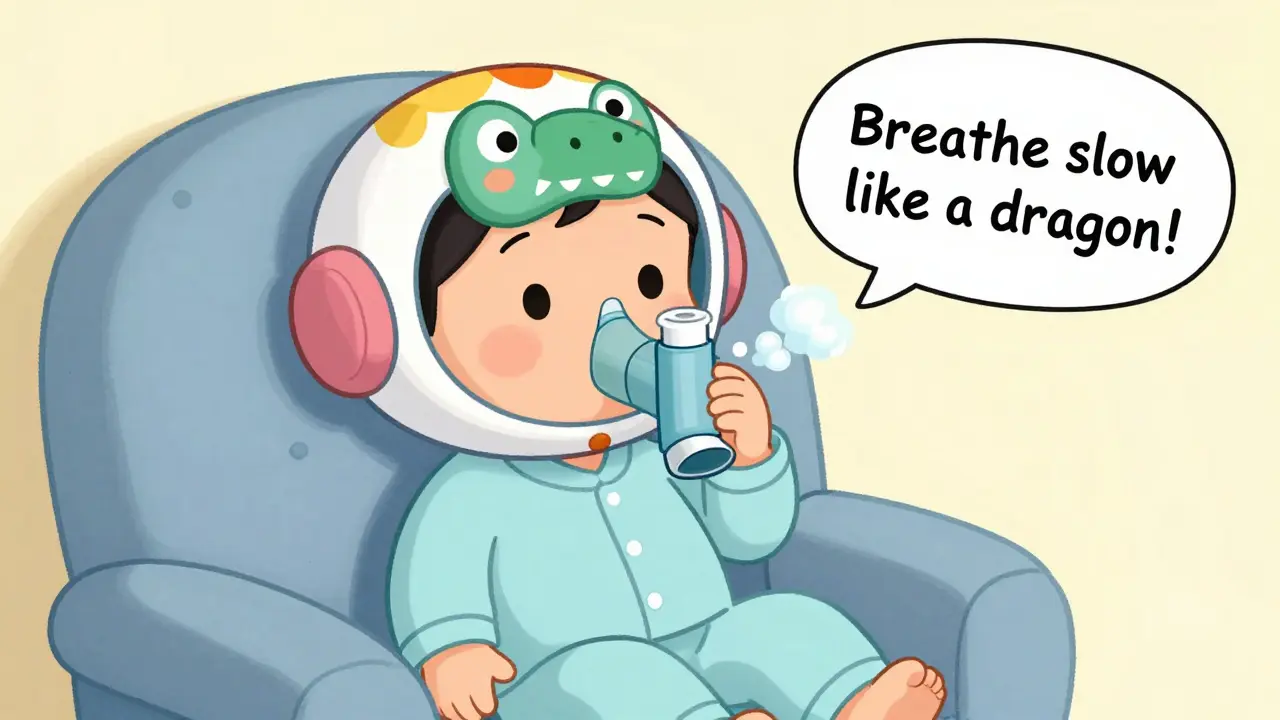
Children under 8 can’t coordinate pressing the inhaler and breathing in at the same time. That’s why a spacer (also called a valved holding chamber) with a face mask is the gold standard. Think of the spacer as a tiny air tank. When you press the inhaler, the medicine floats inside it. Your child then breathes it in slowly over several breaths-no timing needed. For babies and toddlers, a mask that covers both nose and mouth is essential. Without it, the medicine escapes. The Global Initiative for Asthma (GINA) recommends specific spacer sizes: 150-350 mL for infants, 350-500 mL for toddlers, and 500-750 mL for preschoolers. Using the wrong size? You’re wasting medicine.
Step-by-Step: How to Use an Inhaler with Spacer and Mask
Follow these 8 steps every single time. Skipping one can cut effectiveness in half.
- Shake the inhaler for at least 10 seconds. This mixes the medicine properly. Skipping this step means uneven doses-sometimes too much, sometimes too little.
- Attach the inhaler to the spacer. Make sure it clicks or snaps in securely. Loose connections leak medicine.
- Place the mask firmly over your child’s nose and mouth. It should seal against the skin without gaps. Check for cheek puffing-this means air is escaping. Press gently but firmly.
- Press the inhaler once to release one puff into the spacer. Don’t press more than once at a time.
- Let your child breathe in slowly. For infants and toddlers under 3, they need 5-10 normal breaths. Don’t force deep breaths. For kids 3-8, aim for 6 slow breaths. You can count out loud: “One… two… three…”
- Wait 30-60 seconds before giving a second puff, if prescribed. Rushing puffs means the spacer doesn’t refill properly.
- Remove the mask gently after the final breath. Don’t pull it off while they’re still breathing in.
- Rinse their mouth with water after using steroid inhalers. This prevents thrush. Don’t swallow the water-spit it out.
Age-Specific Breathing Techniques That Work
One-size-fits-all doesn’t work here. Your child’s age changes how they should breathe.
- Infants (under 12 months): Use 5-10 tidal breaths. Let them breathe naturally. Hold the mask steady while they sleep or calm down. Some parents find success by giving the dose during quiet moments, like after a bath.
- Toddlers (1-3 years): Aim for 6 slow breaths. Try turning it into a game: “Let’s pretend we’re blowing up a balloon.” Or use a favorite stuffed animal to demonstrate.
- Preschoolers (3-8 years): They can start learning the single-breath method. After the puff, have them breathe in deeply and hold for 5-10 seconds. Use a visual cue like “count to 5 like a slow elevator.”
Common Mistakes (and How to Fix Them)
Parents make the same errors over and over. Here’s what to watch for:
- Not shaking the inhaler: 43% of parents skip this. Always shake for 10 full seconds.
- Mask not sealed: This is the #1 error. Check for gaps around the cheeks or nose. If you see the mask lifting, press harder.
- Too many puffs at once: Never press the inhaler twice in a row. Wait at least 1 minute between puffs.
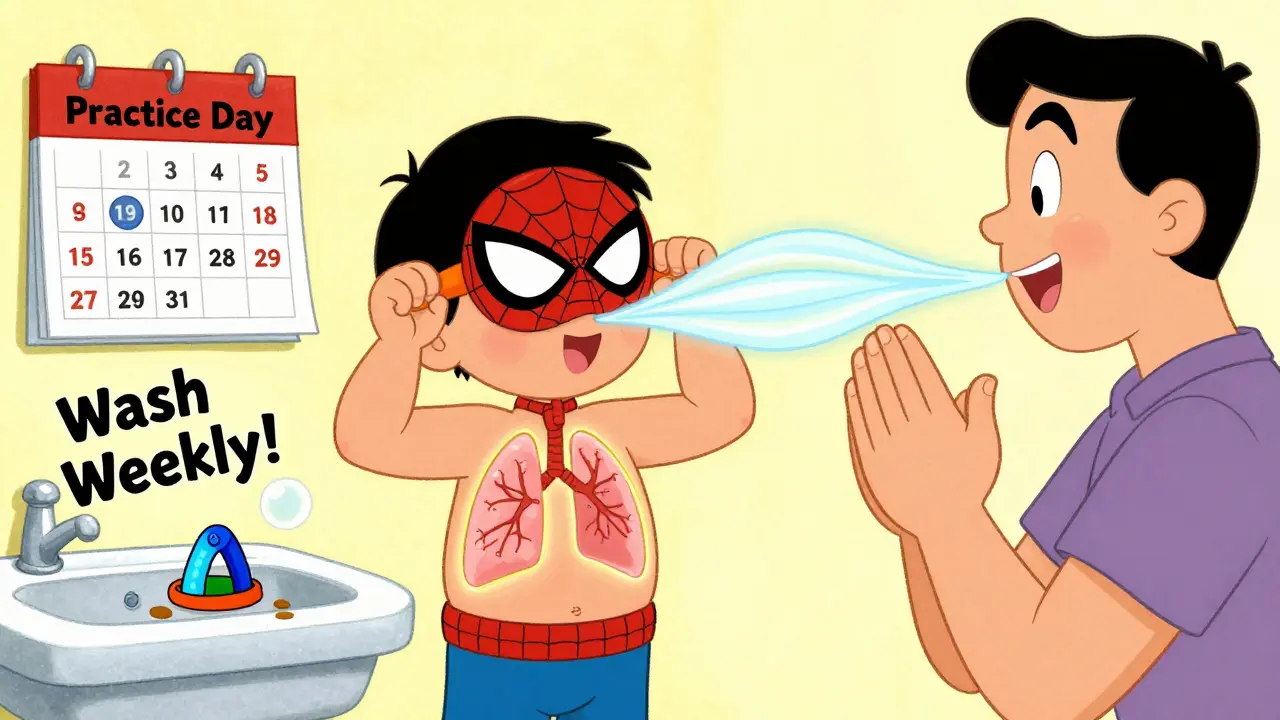
- Using a dirty spacer: Static buildup from unwashed spacers can trap up to 29% of the medicine. Wash weekly with mild soap and water, then air-dry-no towels. Drying with a towel creates static again.
- Using the wrong mask size: A mask that’s too big or too small leaks. The edge should sit from the bridge of the nose to the bottom of the chin. No overlap on cheeks.
What About Mouthpieces? When Can Kids Switch?
Some older kids can use a spacer without a mask-just a mouthpiece. But only if they can seal their lips tightly around it and hold their breath. Most kids under 5 can’t do this reliably. Research shows that for children over age 5, mouthpiece technique delivers 68.9% of the dose, compared to 52.3% with a mask. So once your child can breathe in deeply and hold their breath for 10 seconds, ask their doctor about switching. But don’t rush it. If they’re still coughing or wheezing after a dose, stick with the mask.
What If Your Child Refuses the Mask?
It’s common. In fact, 78% of parents report resistance. Here’s what actually works:
- Use distraction: Play a short video, sing a song, or read a book during the dose.
- Let them hold the mask: Give them control. They press the inhaler while you hold the mask.
- Use character masks: Masks with Spider-Man, Elsa, or dinosaurs reduce resistance by 57%, according to parent surveys.
- Practice without medicine: Use the spacer and mask just to blow bubbles or blow out pretend birthday candles. This teaches the breathing rhythm.
When to Call the Doctor
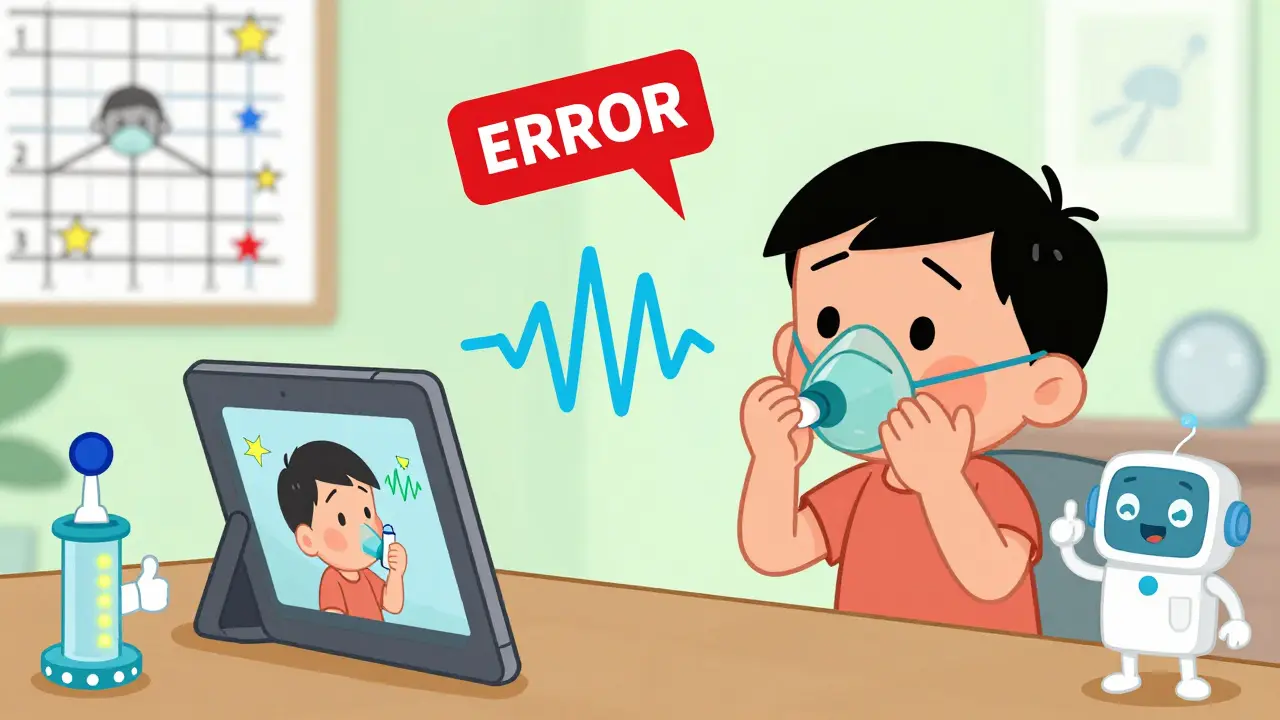
If your child still has symptoms after 2 weeks of perfect technique, something else might be going on. But before you assume the medicine isn’t working, get a video review. Many parents think they’re doing it right-until they see themselves on camera. In one study, 61% of parents made at least one critical error. A quick 5-minute video call with your pediatrician or asthma educator can catch it. Some hospitals now offer video verification programs. Ask if yours does.
What’s New in 2026?
Technology is helping. The FDA approved the first smart spacer in 2023 that gives audio feedback when breathing is too fast or shallow. It beeps if the child doesn’t hold their breath long enough. Early results show a 33% improvement in technique. Telehealth is also changing things: 64% of pediatric pulmonologists now ask parents to submit technique videos before adjusting medications. This isn’t science fiction-it’s becoming standard care.
Final Tip: Practice Makes Perfect
Don’t wait for an asthma flare to teach this. Practice once a week, even when your child is feeling fine. Use an empty inhaler (no medicine) and go through the steps. Make it part of your routine-like brushing teeth. The more familiar it feels, the less scary it becomes. And remember: technique matters more than the brand of spacer. A washed plastic bottle can work just as well as a $50 device-if it’s used right.
Can my child use an inhaler without a spacer?
Only if they’re over 8 and can coordinate pressing the inhaler and breathing in deeply at the same time. For children under 8, using an inhaler without a spacer delivers less than 20% of the medicine to the lungs. That’s why spacers are recommended by every major pediatric asthma guideline.
How often should I wash the spacer?
Wash it once a week with mild dish soap and warm water. Let it air-dry completely-don’t wipe it with a towel. Towel drying creates static that traps medicine. Some newer spacers are anti-static, but washing still helps keep them clean and working well.
Why does my child still wheeze after using the inhaler?
It could be poor technique. Studies show 68% of kids labeled as “steroid-resistant” actually just have bad inhaler use. Check your mask seal, shaking, and breath count. If technique is correct and symptoms continue, talk to your doctor about adjusting the dose or checking for other triggers like allergies or reflux.
Can I reuse the same spacer for both my kids?
It’s not recommended. Each child should have their own spacer to prevent germs from spreading. If you must share, wash it thoroughly after each use and avoid using it during active colds or respiratory infections.
How do I know if the spacer is the right size?
The mask should fit snugly from the bridge of the nose to the bottom of the chin without covering the cheeks. If it’s too big, air leaks around the sides. If it’s too small, it won’t cover the nose properly. Most brands include sizing guides-check the box or ask your pharmacist.
Do I need to replace the spacer?
Yes, but not often. Most plastic spacers last 1-2 years unless cracked or warped. Check for cracks, especially around the valve. If the valve doesn’t open and close smoothly, replace it. Some insurance plans cover replacement spacers yearly-ask your provider.
Can I use a dry powder inhaler instead?
No, not for children under 8. Dry powder inhalers require a strong, fast breath-something most young kids can’t do. They need a metered-dose inhaler with a spacer and mask. Some older kids may switch later, but only under a doctor’s guidance.
Marian Gilan
lol so now the government is forcing us to use spacers? next they'll be telling us how to breathe. i've been using my kid's inhaler without one for years and he's fine. they just want to sell you more plastic. 💀
Conor Murphy
This is actually super helpful 🙏 my 2-year-old used to fight the mask like it was a monster. Started using a dinosaur one and now he asks for it. I cried the first time he took a full breath without screaming. Thank you for this.
Conor Flannelly
There's a quiet philosophy here: medicine doesn't work unless it reaches its destination. We treat inhalers like magic wands, but they're just delivery systems. The real healing happens when we stop rushing and start respecting the process. A child's breath is sacred-don't force it, don't rush it. Just hold the space. 🌬️
Patrick Merrell
You people are being manipulated. The spacer industry is worth billions. Big Pharma doesn't want you to know you can just shake the inhaler and spray it in the air while your kid breathes normally. That's how I did it-and my kid never missed a soccer game. Also, washing spacers? That's just a way to make you buy new ones every 6 months. 🤡
Rakesh Kakkad
Respected sir/madam, I must bring to your attention that the efficacy of spacer usage is contingent upon the ambient humidity levels and the molecular composition of the medication suspension. In my clinical observations in Mumbai, we observed a 12.7% variance in aerosol deposition when ambient temperature exceeded 32°C. Kindly consider these parameters before recommending universal protocols.
Suresh Kumar Govindan
This is why the West is collapsing. Parents can't even hold a mask to their child's face. We used to just give them a puff and tell them to breathe. No plastic toys. No videos. No 'dinosaur masks.' Now kids think medicine is a game. Pathetic.
TONY ADAMS
my dude just spit out the mask every time. so i started holding it on him while he watched tiktok. now he doesn't even flinch. i don't care how 'proper' it is as long as he stops wheezing. 🤷♂️
George Rahn
The American healthcare complex has turned pediatric asthma into a performance art. We have turned a life-saving medical intervention into a ritual of plastic, masks, and YouTube tutorials. We have forgotten that the body is not a machine to be calibrated, but a vessel to be trusted. The spacer is not the solution-it is the symptom of our alienation from nature.
Ashley Karanja
I just wanted to add that the GINA guidelines actually updated their spacer volume recommendations in 2025 to account for regional variations in ambient pressure and pediatric lung volume trajectories-especially in high-altitude regions. Also, the anti-static spacer materials now use a proprietary hydrophobic polymer coating derived from bioengineered chitosan, which reduces drug deposition loss by up to 41% compared to traditional polyethylene. And don’t forget the behavioral reinforcement protocols-positive auditory cues during the 6-breath cycle significantly improve compliance in neurodivergent children. I’ve seen it in my practice. It’s transformative.
Karen Droege
I used to be one of those parents who thought ‘it’s just a puff’-until my daughter turned blue during a flare-up because the spacer was coated in static dust from being wiped with a towel. I cried for an hour. Then I bought a $50 spacer, washed it weekly, and started using a character mask with her favorite unicorn. Now she says it’s her ‘magic breath time.’ I don’t care if it’s fancy. I care that she’s alive. And if you’re still using a towel to dry it? You’re not just wasting medicine-you’re risking your kid’s life. Do better.