
Imagine sitting in a classroom while your teacher speaks, but the words sound like they’re coming through a fuzzy radio. You catch fragments-"write a paragraph," "cite the source," "don’t forget the due date"-but never the full message. You ask for repeats, and people think you’re not paying attention. You’re not lazy. You’re not defiant. You have auditory processing disorder-a hidden listening challenge that affects how your brain makes sense of sound.
What Is Auditory Processing Disorder?
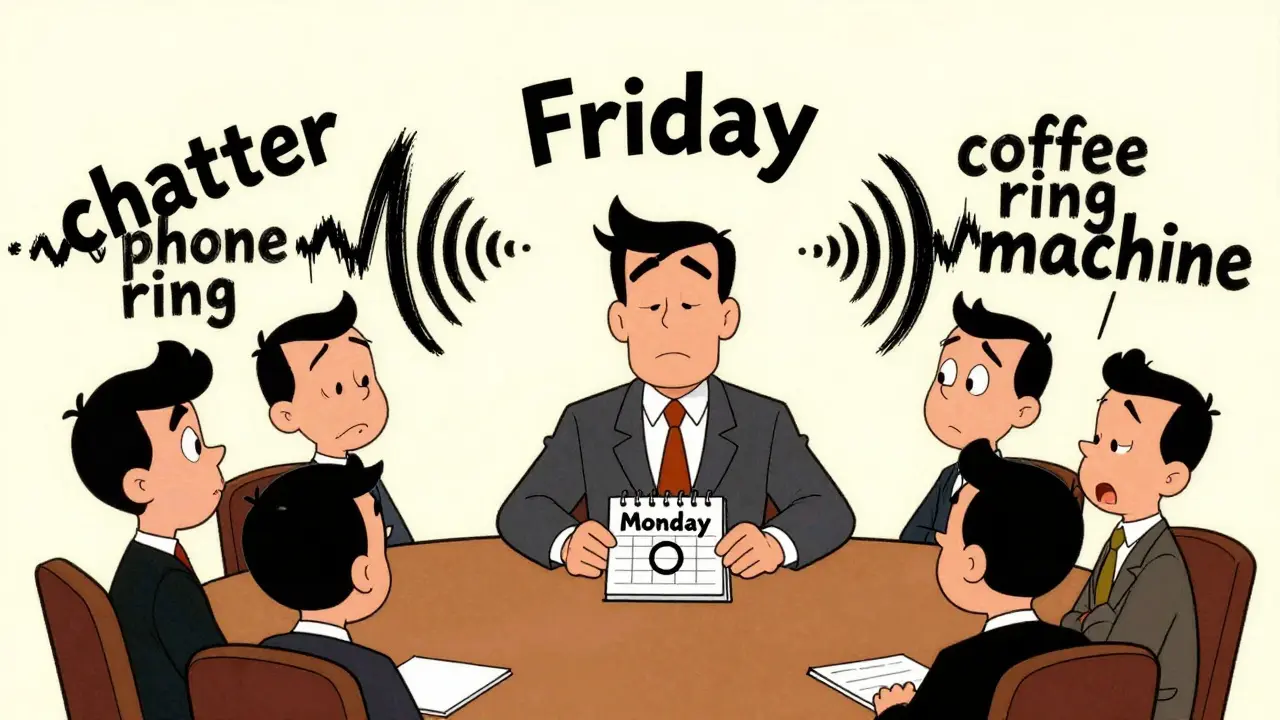
Auditory Processing Disorder, or APD, isn’t hearing loss. Your ears work fine. The problem lies in your brain’s ability to interpret what your ears hear. It’s like having a broken translator inside your head. Sounds reach you clearly, but your brain struggles to organize, filter, or make meaning from them-especially in noisy places like cafeterias, classrooms, or busy offices. This isn’t new. Doctors started documenting it in the 1970s. By 2005, the American Speech-Language-Hearing Association (ASHA) set clear standards: APD is a neurological condition where the central auditory nervous system fails to process sound accurately, even when hearing tests show normal results. It affects 3% to 5% of school-aged children, and while it’s often noticed in kids, adults live with it too-many without ever knowing why they’ve always struggled to follow conversations. Unlike hearing loss, where you can’t hear soft sounds, APD means you hear everything-but miss the details. A child might hear "cat" and "bat" as the same word. An adult might miss half of what’s said in a team meeting because of background chatter. It’s not about volume. It’s about clarity in chaos.How APD Shows Up in Daily Life
People with APD don’t just have trouble hearing. They struggle with how their brain handles sound. Here’s what that looks like in real life:- Asking people to repeat themselves constantly-even when they’re speaking clearly
- Getting lost in conversations when more than one person is talking
- Confusing similar-sounding words like "ship" and "chip" or "door" and "four"
- Struggling to follow multi-step instructions like "Get your jacket, put your lunch in the fridge, and meet me at the car"
- Feeling exhausted after school or work because listening takes so much effort
- Avoiding group settings, parties, or restaurants because noise feels overwhelming
Differentiating APD from ADHD, Dyslexia, and Language Disorders
APD often looks like ADHD or dyslexia. But they’re not the same. ADHD is about attention regulation. Someone with ADHD might zone out because their mind wanders. Someone with APD zones out because the sound is too scrambled to follow. About 30% to 40% of people with APD also have ADHD-but the root cause is different. One is a brain’s ability to focus; the other is its ability to interpret sound. Dyslexia affects how the brain processes written language. APD affects how it processes spoken language. But they can overlap. Around 25% to 35% of children with APD also have dyslexia. That’s why reading struggles in kids with APD aren’t always about letters-they’re about hearing the sounds within words. Language disorders involve trouble understanding or using words. APD is more basic: it’s about hearing the building blocks of language-the individual sounds, timing, and patterns-before the brain even gets to meaning. This is why diagnosis matters. A child misdiagnosed with ADHD might get stimulant medication that doesn’t help their listening issues. A child with APD needs different tools: quieter rooms, visual aids, speech therapy-not behavioral interventions alone.How APD Is Diagnosed
There’s no single test for APD. Diagnosis requires a trained audiologist using specialized tools that check how the brain processes sound-not just whether it can hear it. Standard hearing tests (like the ones you get at the doctor’s office) will show normal results. That’s why APD is missed so often. Instead, audiologists use tests like:- Dichotic Digits Test: You hear different numbers in each ear at the same time. Can you repeat them both? This checks if your brain can handle competing input.
- Pitch Pattern Sequence Test: You listen to rising and falling tones. Can you copy the pattern? This checks your ability to recognize sound sequences.
- Random Gap Detection Test: You hear two clicks with a tiny pause between them. Can you tell when the pause gets shorter? This checks your brain’s timing sensitivity.
Types of APD and Their Brain Connections
APD isn’t one thing. It’s a group of related issues, each tied to different brain areas:- Decoding deficit: Trouble telling similar sounds apart (like "d" and "t"). Linked to the left hemisphere, where language is processed.
- Tolerance-fading memory deficit: Can’t hold onto spoken info, especially if it’s quiet or distorted. Connected to the temporal lobe.
- Auditory integration deficit: Struggles when both ears get different information. Often tied to the corpus callosum-the bridge between brain halves.
- Prosodic deficit: Can’t pick up on tone, sarcasm, or emotion in voices. Linked to the right hemisphere.
Support Strategies That Actually Work
There’s no pill for APD. But there are proven ways to help. Classroom and workplace accommodations are the most effective first step:- Preferential seating-within 3 to 6 feet of the speaker
- Use of FM systems: a small mic worn by the teacher sends sound directly to headphones, cutting out background noise
- Visual supports: written instructions, diagrams, checklists
- Breaking instructions into single steps
- Allowing extra time to process verbal information
- Reduce background noise during conversations-turn off the TV, close the door
- Use clear, slow speech without shouting
- Teach self-advocacy: "Can you say that again?" or "I need you to speak slower"
- Practice listening for 15 minutes a day using apps like Auditory Workout
- Maintain a +15 dB signal-to-noise ratio-meaning speech should be 15 decibels louder than background noise
Long-Term Outlook and Emerging Research
The good news? With the right support, most kids with APD catch up. A 10-year study from the University of Florida found that 80% of children who received early intervention developed strong coping strategies and succeeded academically. But 45% still struggle in adult workplaces-especially in meetings, phone calls, or noisy offices. New research is promising. Functional MRI scans show reduced activity in the left superior temporal gyrus-the brain’s main speech processing area-in people with APD. Scientists are now exploring whether transcranial magnetic stimulation (TMS), a non-invasive brain stimulation technique, can improve auditory processing. Early trials show a 35% improvement in timing skills after a few weeks. The NIH has invested $4.7 million in APD research in 2024, focusing on finding biological markers to make diagnosis faster and more accurate.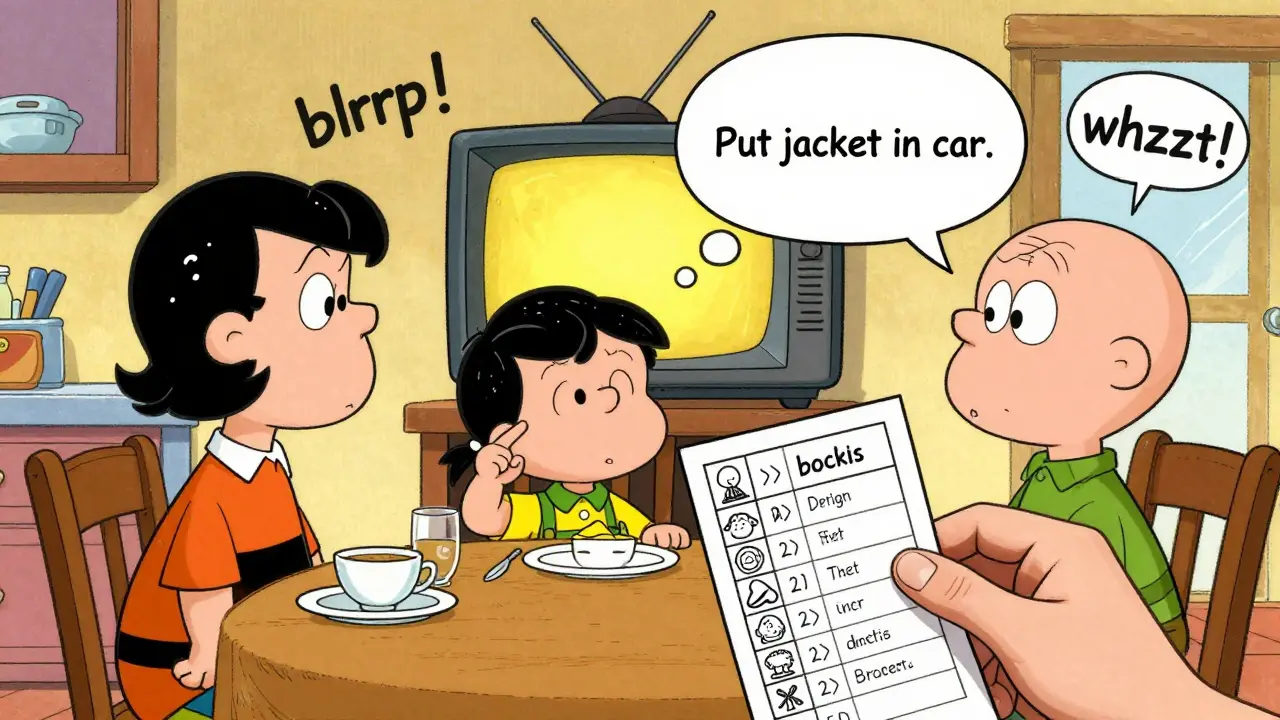
Who’s at Risk?
Some factors increase the chance of developing APD:- Chronic ear infections before age 3-65% of APD cases have this history
- Being born prematurely-three times more likely to develop APD
- Head trauma or concussion-15% of adult-onset cases
- Family history-children with a parent with APD are 50% more likely to have it
- Male gender-boys are diagnosed twice as often as girls
What to Do If You Suspect APD
If you or your child consistently struggles with listening-especially in noisy settings-don’t assume it’s just inattention or laziness. Start with your pediatrician or family doctor. Ask for a referral to a pediatric audiologist who specializes in central auditory processing. Insurance often covers testing for children under 21, especially if Medicaid is involved. Keep a log: when does the struggle happen? What sounds are hardest to catch? Does it get worse in the afternoon? This helps the audiologist pinpoint the issue. And remember: APD is not a reflection of intelligence. People with APD often have average or above-average IQs. They just need different tools to access the same information.Final Thoughts
Auditory Processing Disorder is invisible. But its effects are real. A child who can’t follow a teacher’s lecture, an adult who misses key details in meetings, a teenager who feels isolated because others think they’re ignoring them-these are not failures. They’re signs of a neurological difference that can be understood, managed, and supported. The path forward isn’t about fixing the brain. It’s about changing the environment-making sound clearer, reducing noise, giving time to process, and teaching self-advocacy. With the right tools, people with APD don’t just survive-they thrive.Is auditory processing disorder the same as hearing loss?
No. Hearing loss means the ears can’t pick up sound clearly. APD means the ears hear fine, but the brain has trouble making sense of what it hears. Standard hearing tests come back normal in APD, but specialized auditory processing tests reveal the issue.
Can APD be cured?
There’s no cure for APD, but it can be effectively managed. With the right interventions-like auditory training, environmental adjustments, and speech therapy-most people develop strong coping skills. Many children outgrow the most severe symptoms by adolescence, though some adults continue to need accommodations.
Does APD affect reading and learning?
Yes. APD impacts phonological awareness-the ability to hear and manipulate sounds in words-which is critical for learning to read. Children with APD often struggle with spelling, decoding, and following verbal instructions in class. That’s why many qualify for educational supports under IDEA or Section 504.
How is APD different from ADHD?
ADHD is about attention control-difficulty staying focused. APD is about sound processing-difficulty understanding what’s heard. Someone with ADHD might zone out during a lecture. Someone with APD might hear every word but mix them up. About 30% to 40% of people with APD also have ADHD, but they’re separate conditions.
What can parents do at home to help a child with APD?
Reduce background noise during conversations. Use clear, slow speech. Encourage your child to ask for repeats. Use visual aids like written lists or pictures. Practice listening for 15 minutes a day with apps like Auditory Workout. Teach them to say, "I didn’t catch that-can you say it again?"-and praise them for speaking up.
Are there apps or tools that help with APD?
Yes. Apps like Earobics and Auditory Workout are designed for auditory training and have been shown to improve sound discrimination. FM systems, noise-canceling headphones, and speech-to-text apps can also help in school or work settings. Personal sound amplification products (PSAPs) are becoming more common and affordable.
Can adults be diagnosed with APD?
Absolutely. Many adults live with APD for years without knowing why they struggle in meetings, phone calls, or crowded places. Diagnosis in adulthood is common, especially after noticing persistent listening difficulties despite normal hearing. The same tests used for children apply to adults.
Is APD genetic?
Research suggests a strong genetic link. Children with a parent who has APD are 50% more likely to develop it. Studies also show higher rates in families with a history of language or learning differences, pointing to inherited neurological patterns in auditory processing.
Brian Anaz
This whole post is just woke nonsense. Kids these days are just lazy and don’t want to pay attention. Stop coddling them with fancy terms like APD. Back in my day, we just listened or got punished. No excuses.
And don’t get me started on those FM systems. Taxpayer money wasted on overdiagnosed kids who can’t sit still. Fix their attitude, not their ears.
Saylor Frye
Interesting. I mean, the neurocognitive architecture here is kinda fascinating-especially the dichotic listening paradigms and the lateralization asymmetry in the superior temporal gyrus. But honestly, isn’t this just a subset of executive function deficits masked as auditory pathology? The literature’s been messy since the 90s. I’d love to see a meta-analysis with fMRI correlations.
Also, why is everyone ignoring the phonological working memory component? It’s not just ‘processing’-it’s encoding failure.
Kiran Plaha
I’m from India and my cousin’s son had this issue. Teachers thought he was dumb. We took him to a specialist after he failed two grades. Turns out, he heard everything but couldn’t separate the words in noise. After six months of quiet study time and visual flashcards, he’s top of his class now.
Just needed the right help, not labels.
Harshit Kansal
OMG I thought I was the only one. I’ve been fired from three jobs because I kept missing deadlines. Once I thought my boss said ‘submit by Monday’ and turned it in on Monday. It was Friday. I cried for three days.
Then I found out I have APD. Now I use speech-to-text and always ask for emails. People still think I’m dumb. But I’m not. My brain just processes sound like a corrupted MP3.
Vinayak Naik
APD ain’t some new-age fluff. It’s the brain’s audio decoder glitchin’ like a Windows 95 dial-up. I’ve seen it firsthand-kids who can’t hear the difference between ‘b’ and ‘p’ in ‘bat’ vs ‘pat’? That ain’t bad spelling. That’s their brain hearin’ ‘bat’ as ‘bat’ and then forgettin’ what it meant five seconds later.
My nephew used to hate school. Now he wears earbuds in class that block background noise. His teacher reads aloud while he reads along on paper. His grades? From Ds to straight As. No meds. Just smart tweaks.
And yeah, adults got it too. I’m 42 and still ask people to repeat themselves. My wife thinks I’m deaf. I’m not. I’m just wired different.
Cam Jane
YES. This. So many people think if you hear it, you understand it. But no. It’s like your ears are fine, but your brain is stuck buffering. I’m a teacher and I’ve had kids who aced tests but couldn’t follow a two-step instruction. They weren’t being defiant-they were drowning in noise.
Simple fixes work: sit them up front, use visuals, give written steps, slow down just a little. No need for drama. Just clarity.
And please, stop calling them lazy. Their brains are working 3x harder just to keep up. That’s not laziness-that’s heroism.
Amy Le
Wow. Another ‘neurodivergent victim’ story. Can we stop pathologizing normal human variation? I’m 32 and I zone out in meetings too. Does that mean I have APD? Or maybe I’m just bored?
Also, why is this only a problem in America? In my travels, no one in Europe or Asia is handing out FM systems to every kid who doesn’t listen. Maybe it’s not the brain-it’s the culture of entitlement.
Also, emoji: 🤡
Pavan Vora
My brother, he had this... problem... since childhood. We didn’t know what it was. He used to get scolded for not listening... but he was listening... just... not... understanding... the... sounds... correctly...
Now, after diagnosis, he uses noise-canceling headphones at work... and writes everything down... and he’s doing great...
People need to understand... it’s not about attention... it’s about perception...
Thank you for this post... it’s so important...
Indra Triawan
I’ve been living with this since I was 7. No one believed me. I thought I was broken. I cried every night because I couldn’t follow my own family’s conversations. My dad yelled at me for being ‘disrespectful’ when I didn’t respond. I didn’t hear him. I heard noise.
Now I’m 30. Still struggling. Still tired. Still labeled ‘distant’ or ‘cold.’
Why does no one talk about how lonely this is? It’s not just about school. It’s about love. Connection. Being heard.
Susan Arlene
My brain’s like a slow internet connection. Everything loads... eventually... but by then the page’s moved on.
Still works fine. Just takes longer.
Also, coffee helps.
Joann Absi
APD is a scam created by the education-industrial complex to sell more gadgets and therapy sessions. I’ve seen kids with APD diagnoses who are just spoiled and refuse to focus. Why not teach discipline instead of giving them noise-canceling headphones?
Also, why are all the experts white? Where are the Indian or African studies? This feels like Western privilege dressed up as science. 🤡💅
Ashley S
So we’re giving kids special privileges because they can’t listen? What’s next? Special desks for people who can’t read? This is just another way to excuse laziness under a medical label.
My kid hears everything. They just choose when to pay attention. That’s called parenting, not pathology.
Venkataramanan Viswanathan
As a former audiologist in Delhi, I can confirm: APD is vastly underdiagnosed in South Asia. Cultural stigma around ‘mental’ conditions prevents families from seeking help. We tested 120 children last year; 37 met criteria. Only 3 had been referred. The rest were labeled ‘slow learners’ or ‘unruly.’
Simple interventions-like reducing classroom noise and using visual schedules-cost nothing. But awareness? That’s the real challenge.
Molly McLane
I’m a mom of a 9-year-old with APD. I used to feel so guilty-like I was failing as a parent. Then I learned: it’s not about me. It’s about wiring.
We use a quiet corner at home for homework. I always face my kid when I talk. I write down instructions. We use apps that turn speech into text.
And I stopped saying ‘Why didn’t you listen?’ and started saying ‘Let’s figure this out together.’
You’re not alone. And you’re not broken.
Beth Templeton
So you need a mic to hear your teacher? Cute.
Next you’ll need a translator for your parents.
Just listen harder. Or get a job where you don’t have to talk.