When you fill a prescription for a generic blood pressure pill, you expect it to work just like the brand-name version. But here’s the truth: generic medications are cheaper, widely available, and just as effective-but nearly half of patients stop taking them within a year. Why? Because no one reminds them. No one checks. And no one follows up.
That’s where digital adherence tracking comes in. These aren’t fancy apps that ping your phone with a notification you’ll ignore. These are systems that physically record when a pill is taken, send real-time alerts to pharmacists, and help patients stay on track-especially when they’re managing multiple generics for chronic conditions like diabetes, heart disease, or asthma.
Why Generics Need Special Attention
Generics make up 90% of all prescriptions in the U.S. But they don’t come with the same support as brand-name drugs. Big pharma companies spend millions on apps, reminders, and patient programs for their expensive medications. Generic manufacturers? Not so much. That leaves patients alone with a bottle of pills and no system to help them remember-or know if they’re even taking them right.
The cost of skipping doses isn’t just health-related. It’s financial. In the U.S., non-adherence to medications costs the system $300 billion a year. For patients on generics, that’s often because they forget, get confused by multiple pills, or assume it’s okay to skip a day if they feel fine. But with chronic conditions, skipping even one dose can lead to hospital visits, ER trips, or worse.
That’s why digital tools designed specifically for generics matter. They don’t just remind-you get proof. And that proof changes everything.
How Digital Adherence Tools Actually Work
Not all adherence tools are the same. Some are simple. Others are engineered for clinical precision. Here’s what’s actually out there:
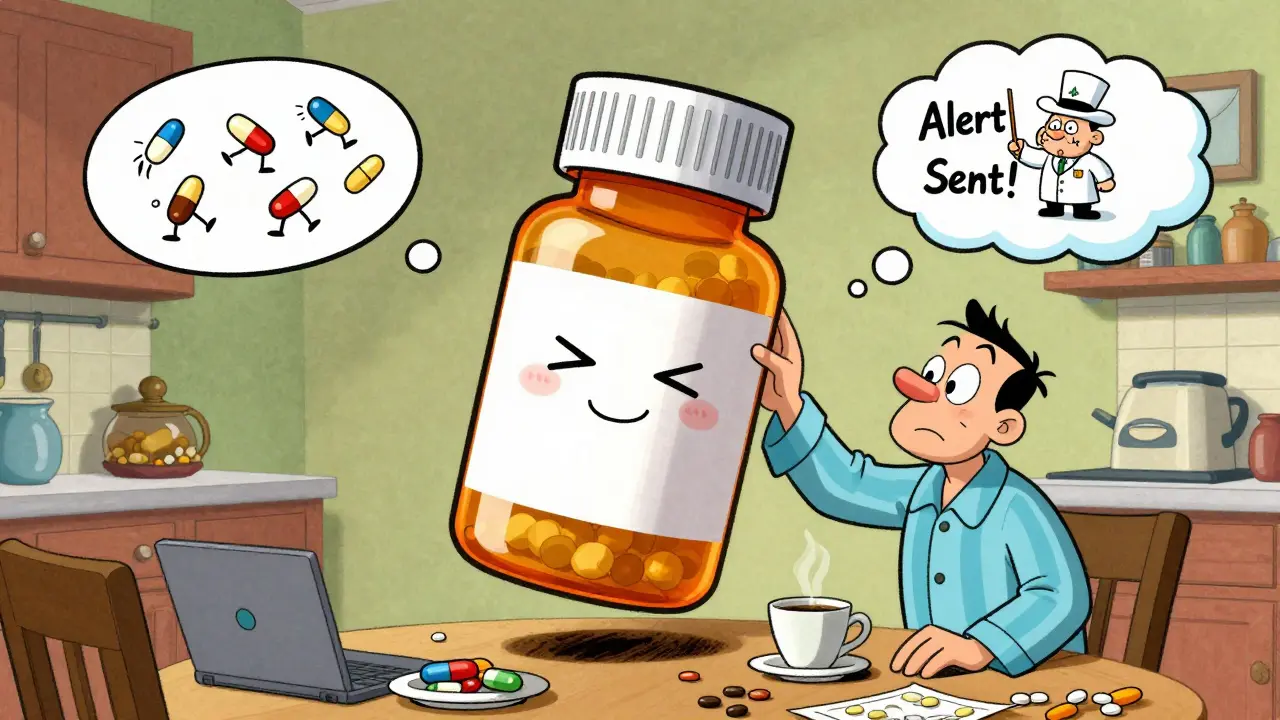
- Smart pill bottles like MEMS AS use electronic caps that record each time the bottle is opened. They don’t know if the pill was swallowed-but they know it was accessed. Used in clinical trials, these systems claim 100% accuracy in tracking access events.
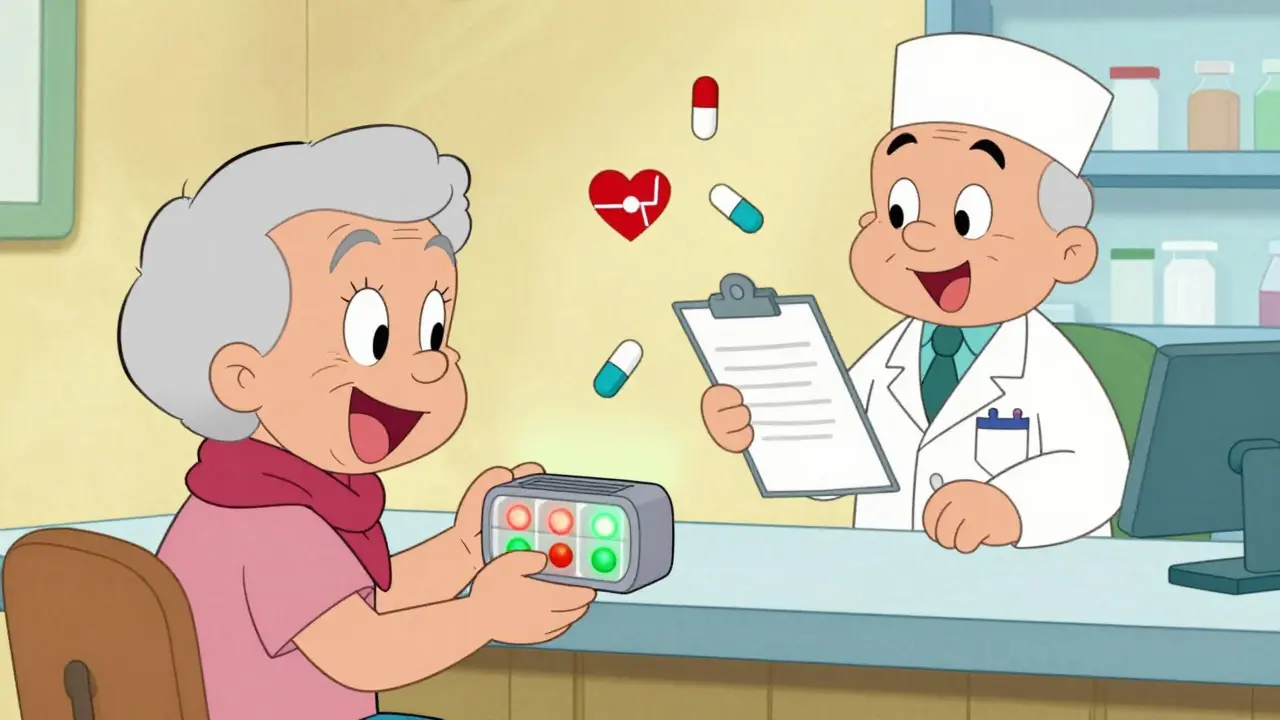
- Smart pillboxes like Tenovi’s system hold multiple medications and use LED lights to show which dose is due (red = pending, green = taken). It connects via cellular signal, sends data to the cloud, and alerts your pharmacist if a dose is missed for two days straight.
- Electronic blister packs from Wisepill Technologies release one dose at a time. When you open a compartment, it logs the time and sends a confirmation. No opening = no dose taken.
- Video monitoring tools like VDOT require patients to film themselves taking medication. It’s accurate-95% in some studies-but many people quit because it feels invasive.
- Pharmacy dashboards like McKesson APS don’t track actual ingestion. Instead, they analyze refill patterns. If you refill your blood pressure med 10 days early, the system flags you as potentially non-adherent. But it’s guesswork-refills don’t equal doses taken.
The best systems combine physical tracking with human follow-up. A smart pillbox that alerts your pharmacist when you miss a dose? That’s powerful. A reminder app that you ignore? That’s just noise.
Real-World Results: What Works and What Doesn’t
Let’s look at what’s happening on the ground.
One study showed patients using Tenovi’s pillbox for heart failure medications improved adherence by 28% compared to smartphone alerts alone. Why? Because the LEDs are impossible to ignore. You can’t swipe away a red light on your nightstand.
But here’s the catch: 40% of users said constant monitoring felt invasive. Some stopped using it after a few months. Technology can help-but if it feels like surveillance, people walk away.
McKesson’s pharmacy dashboard helped one chain boost adherence for diabetes generics from 62% to 78% over 18 months. But they had to hire a full-time technician just to manage the data. That’s not scalable for small pharmacies.
And then there’s the issue of reliability. Amazon reviews for Tenovi mention the cellular gateway dying every three days when tracking four medications. MEMS AS works flawlessly in trials-but most pharmacies can’t afford the $500-per-unit cost or the complex setup.
The truth? No single tool is perfect. The most effective approach combines:
- A simple physical tracker (like a smart pillbox)
- A pharmacist who checks in during pickup
- A system that alerts the pharmacy only when there’s a real problem-not every missed dose
Who’s Using These Tools-and Who Should Be
Right now, large pharmacy chains like CVS and Walgreens are rolling out digital adherence tools. Why? Because Medicare Star Ratings now include adherence metrics. Higher adherence = more money. For every 1-point increase in adherence scores, a plan earns $1.2 million extra per 100,000 members.
But independent pharmacies? Only 18% use any kind of digital tracking. Cost is the biggest barrier. A Tenovi system runs $149 upfront, plus $30 a month. That’s too much for a patient on a fixed income.
So who should be using these tools? Patients on five or more medications. Those with chronic conditions like hypertension, diabetes, or COPD. People who refill early or miss appointments. Seniors living alone. Anyone whose medication is generic and whose health depends on consistency.
Here’s a rule of thumb: If you’re taking three or more pills a day, and they’re all generics, you’re at high risk for non-adherence. A digital tracker isn’t a luxury-it’s a safety net.
What to Look for in a Digital Adherence Tool
If you’re a pharmacist, caregiver, or patient considering one of these tools, ask these questions:
- Does it track actual ingestion, or just access? Opening a bottle ≠ swallowing the pill. Look for systems with blister packs or ingestible sensors.
- Is it easy to use? If it takes more than 10 minutes to set up, it won’t stick. Simple interfaces win.
- Does it connect to the pharmacy’s system? If the pharmacist can’t see the data, the tool is useless.
- Is there human support? A system that sends an alert to a pharmacist who calls the patient? That’s gold.
- What’s the cost? Can the patient afford it? Is it covered by insurance? Most aren’t-yet.
Don’t fall for apps that just send reminders. We’ve tried that. They don’t work. Look for tools that create a digital paper trail-something a pharmacist can use to make real decisions.
The Future: AI, Integration, and Real Impact
The next wave of adherence tools won’t just track-they’ll predict. CVS Health is testing AI models that analyze refill patterns, missed doses, and even weather data to flag patients likely to stop their meds. In pilot programs, this cut non-adherence by 22%.
And the FDA is stepping in. In early 2023, they released draft guidance on how to validate these tools. That means soon, we’ll know which ones actually work-and which are just flashy gadgets.
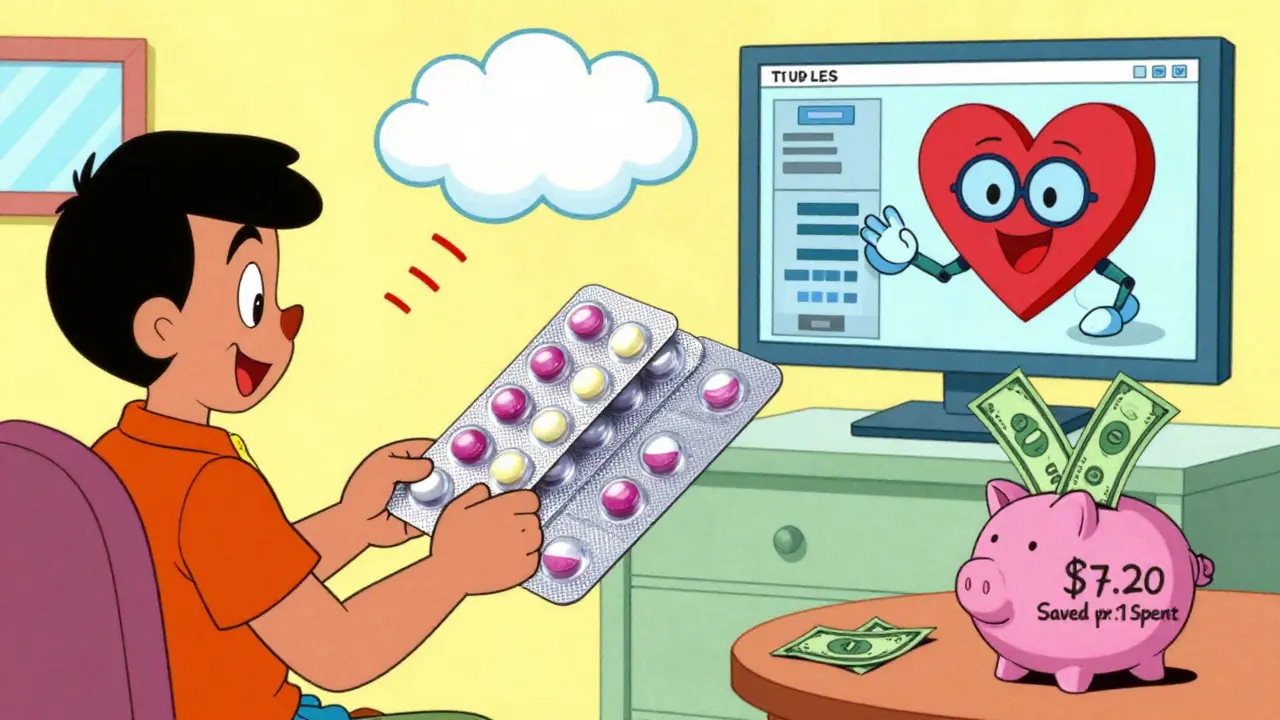
The biggest opportunity? Linking adherence data to health outcomes. One study showed for every $1 spent on adherence programs for cardiovascular generics, the system saved $7.20 in avoided hospitalizations. That’s the kind of ROI that changes policy.
But none of this matters if we ignore the human side. Patients don’t need more tech. They need to feel supported. The best digital tools don’t replace pharmacists-they empower them.
Bottom Line: Adherence Isn’t About Tech. It’s About Trust.
Digital tools for generic medication adherence aren’t magic. They’re tools. And like any tool, they only work if they’re used right.
For patients: If you’re on multiple generics, ask your pharmacist about tracking options. Don’t wait until you’re in the ER because you forgot your pills.
For pharmacies: Start small. Pick one chronic condition. Try one device. Track the results. You don’t need to buy 100 pillboxes. Just one pilot can show you the value.
The goal isn’t to monitor every pill. It’s to catch the patterns before they become problems. And that’s something no app can do alone.
Luke Davidson
I've seen this play out with my grandma-she's on six generics and forgets half the time. We got her a Tenovi box last year and it was a game changer. The red lights? She calls them her 'medicine alarm clocks.' No more ER trips. No more panic calls. Just a little box that cares more than we do sometimes. And yeah, the cellular thing dies sometimes, but the pharmacist calls if it's been two days. That human touch? Priceless.
Big pharma doesn't give a damn about generics. But your local pharmacy? They see you every week. Let them help.
Marie-Pier D.
I just want to say thank you for writing this. My mom has COPD and takes four generics. We tried apps. She deleted them. We tried alarms. She turned them off. Then we got her the Wisepill blister pack. She doesn't even notice it anymore. But when the pharmacist called last month to ask why she hadn't opened her morning dose in three days? She cried. Said she felt seen.
It's not about tech. It's about someone noticing you're still here. 💙
asa MNG
lol so basically we're paying $150 for a fancy pillbox that sometimes breaks and sends alerts to a pharmacist who probably has 200 other patients and no time to call back??
my uncle got one of these and the thing died after 3 days and he just stopped using it. now he just takes his meds when he remembers. which is like... never. but hey at least he's not paying $30 a month for a dumb box that glows red at him like a passive aggressive roommate 😂
Josh McEvoy
this whole thing feels like surveillance capitalism with a side of paternalism.
you're telling people with chronic illness they need to be monitored like prisoners because they're too dumb to remember their own meds?
what about the people who skip doses because they can't afford them? or the ones who feel like crap and just need a day off? this isn't about adherence-it's about control. and it's gross.
Amelia Williams
I work in a small pharmacy and we just started testing MEMS caps with our hypertension patients. We didn’t buy 50-we bought five. One patient, 78, lives alone, doesn’t have family nearby. She started missing refills. We put the cap on her bottle. She didn’t say anything. But two weeks later she came in and hugged me. Said she hadn’t missed a dose in 14 months. Not because of the tech. Because when the system flagged her, I called. We talked. She cried. She said she felt guilty. I told her it’s okay to forget. We’re here.
That’s the magic. Not the cap. The call.
Alexandra Enns
You people are missing the point entirely. This isn't about 'human touch' or 'trust'-it's about accountability. We're spending $300 BILLION a year because people treat their meds like optional snacks. You think a $149 box is expensive? Try a $20,000 hospital bill because you skipped your beta-blocker for three days. The system is broken, and these tools are the only thing keeping people alive. Stop romanticizing non-adherence like it's some kind of rebellion. It's not freedom-it's negligence. And if you're too lazy to use a pillbox, don't blame the tech. Blame yourself.
Heather McCubbin
I've been on meds for 12 years and I've never used one of these gadgets. I take them when I remember. If I miss one I don't die. I just feel a little off. And guess what? I'm still here. Meanwhile, you people are turning medicine into a performance art. Who decided we need to be tracked like cattle? The FDA? The insurance companies? The pharmacies making bank off your guilt? You're not saving lives-you're selling fear wrapped in a shiny box. I don't need a light to remind me to take my pill. I need to stop living in a system that makes me choose between food and medicine.
Luke Davidson
Heather, you're not wrong about the system being broken. But the solution isn't to give up. It's to demand better. The $149 box isn't the problem-it's that it's not covered by insurance. That's the real villain. Why should a senior on Social Security pay $30 a month to stay alive? That's not innovation. That's exploitation. If we can fund space telescopes, we can fund pillboxes. We just have to stop pretending this is about compliance and start calling it what it is: a failure of public health policy.