Every time you pick up a prescription, there’s a label on that bottle with critical information you need to read - not just to know when to take your medicine, but to avoid life-threatening drug interactions. You might think, "I’ve taken this before," or "My doctor knows what I’m on." But here’s the truth: over 2 million adverse drug events happen every year in the U.S. because people don’t understand what’s written on their prescription labels. And half of those could be prevented if you just knew where to look.
What’s on Your Prescription Label - and What You’re Missing
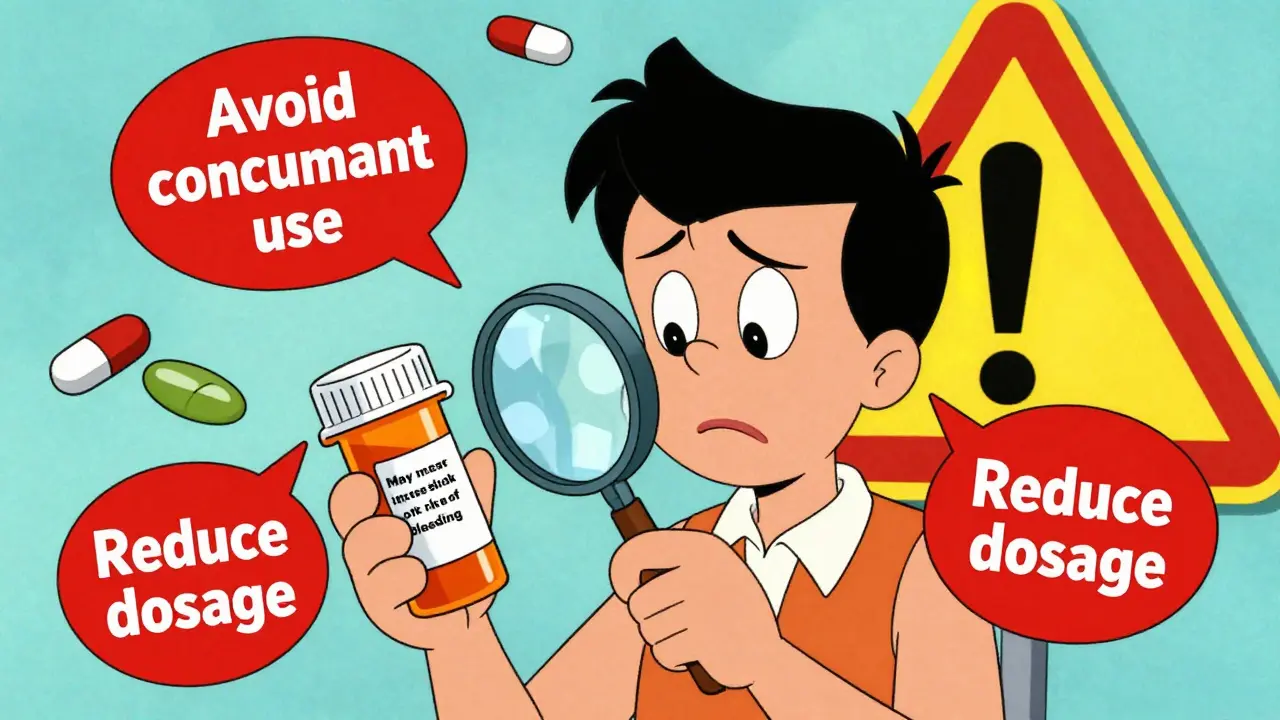
Your prescription label isn’t just a reminder to take your pill. It’s a legal document with specific sections required by the FDA. The most important parts for avoiding interactions are:- Warnings and Precautions (Section 5): This is where the serious stuff lives. If your medicine can cause dangerous reactions with another drug, supplement, or food, it’s here. Look for phrases like "Avoid concomitant use" or "May increase risk of bleeding." These aren’t suggestions - they’re red flags.
- Drug Interactions (Section 7): This section lists every known interaction, from mild to severe. It’s usually longer and more technical, but it’s where you’ll find details like "Reduce dosage when used with X" or "Monitor for dizziness or rapid heartbeat."
- Active Ingredients: This is critical if you’re also taking over-the-counter meds. Many people don’t realize that Tylenol and cold medicines often contain the same ingredient: acetaminophen. Taking both can cause liver damage.
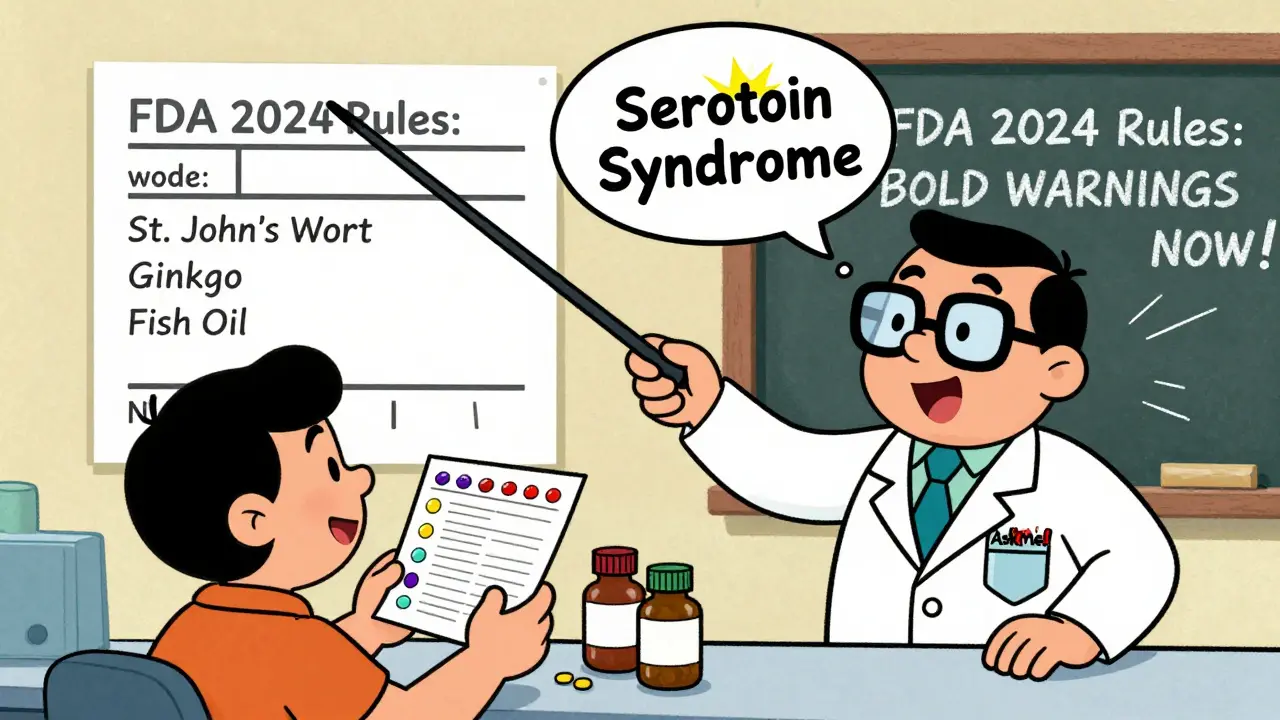
According to the FDA’s 2024 guidelines, every interaction warning must answer three questions: Is there a problem? How bad is it? What do you do? If the label doesn’t make that clear, it’s not just poorly written - it’s failing its purpose.
How to Spot a Dangerous Interaction (Without a Pharmacy Degree)
You don’t need to be a doctor to读懂 your label. Start by scanning for these key phrases:- Avoid concomitant use - means don’t take this with another drug. Ever. This is a hard stop.
- Monitor for - means you need to watch for symptoms like dizziness, bleeding, or irregular heartbeat. If you notice them, call your doctor.
- Reduce dosage - means the other drug makes this one stronger. Your dose might need to be cut.
- May increase risk of - often followed by bleeding, kidney damage, or serotonin syndrome. These are serious.
Take warfarin, for example. It’s a blood thinner. If you’re on it, your label will warn you about ginkgo biloba, garlic supplements, and even large amounts of green leafy vegetables. Why? Because they all affect how your blood clots. A 2023 Harvard study found 147 cases of severe bleeding in patients who didn’t tell their doctor they were taking herbal supplements. The label didn’t always mention them - but it should have.
Over-the-Counter Medicines Are Just as Dangerous
You might think OTC drugs are safe because they’re sold on shelves. But the BeMedWise Foundation found that 98% of common over-the-counter products contain interaction warnings - and only 57% of people even read them.Take ibuprofen. It’s fine for most people. But if you’re on blood pressure medication, taking ibuprofen regularly can make your BP meds stop working. If you’re on antidepressants, it can raise your risk of bleeding. The warning is on the box - under "Warnings." But most people skip it because it says "take with food" or "don’t exceed 1200 mg/day." They miss the part that says "avoid if taking lithium or warfarin."
Same goes for antihistamines like diphenhydramine (Benadryl). They can cause dangerous drowsiness if you’re also on opioids, sleep aids, or anxiety meds. The label doesn’t scream it - it buries it in small print.
What You’re Not Telling Your Doctor (And Why It Matters)
Prescription labels only list interactions with other prescription drugs. They don’t always mention supplements, vitamins, or herbal products - even though they cause 32% of serious drug interactions.Here’s what most people forget to mention:
- St. John’s Wort - can make antidepressants, birth control, and heart meds useless.
- Ginkgo biloba - increases bleeding risk with blood thinners.
- Calcium and magnesium supplements - can block absorption of antibiotics like ciprofloxacin.
- Vitamin K - counteracts warfarin, making it less effective.
A 2023 CDC study showed that 68% of people taking five or more medications couldn’t identify potential interactions from their labels alone. Why? Because they didn’t know what to look for - or they didn’t realize their fish oil or turmeric supplement was part of the problem.
Always bring your entire medication list to your doctor and pharmacist - including every vitamin, herb, and OTC pill. A 2023 study of 10,000 pharmacy visits found that 22% of patients had at least one hidden interaction that wasn’t on their prescription label.
Use Technology - But Don’t Rely on It
Apps like Drugs.com Drug Interactions Checker are helpful. They process over a million queries a month and catch 89% of interactions. But they’re not perfect. They miss 8% of prescription drugs, and they don’t know your full medical history.Think of them like a flashlight - useful, but not a replacement for reading the label. The FDA says apps should be used as a supplement, not a substitute. Why? Because your label has manufacturer-validated data. It’s based on clinical trials, not crowd-sourced reports.
Here’s how to use both:
- Read your label first. Note the drug name and interaction warnings.
- Enter every medication - prescriptions, OTC, supplements - into the app.
- Compare the app’s results with your label. If they don’t match, ask your pharmacist.
And don’t forget: your pharmacist is your best resource. They’re trained to spot interactions you might miss. When you pick up a new prescription, ask: "Is this safe with everything else I’m taking?"
Simple Steps to Stay Safe Every Time
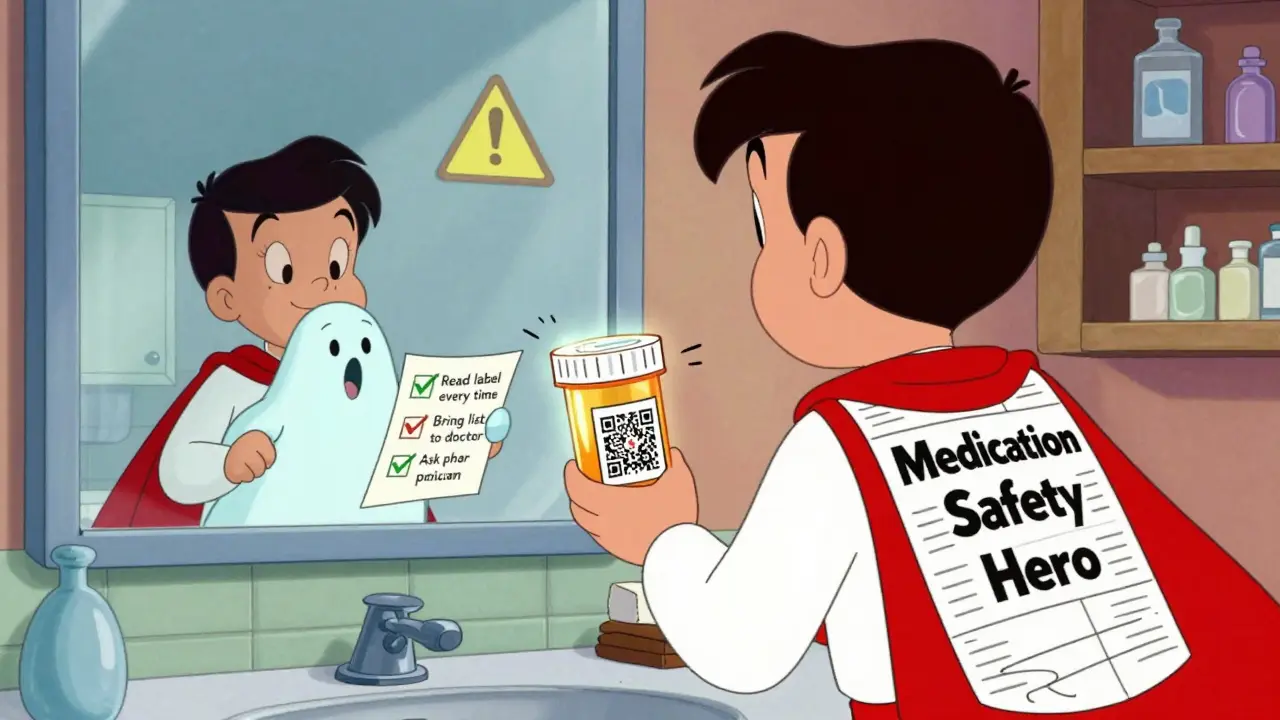
You don’t need to memorize medical jargon. Just follow this routine:- Make a full list of everything you take: prescriptions, OTC meds, vitamins, herbs, even CBD oil. Update it every time something changes.
- Read the label every time - even if it’s the same drug. Manufacturers update warnings. What was safe last month might not be now.
- Look for the red flags: "Avoid," "Monitor," "Reduce dosage." Don’t skip these.
- Bring your list to every appointment - doctor, dentist, ER. Even if they don’t ask, hand it to them.
- Ask your pharmacist for a 5-minute review when you pick up a new prescription. It takes less time than waiting in line.
BeMedWise found that people who do this reduce their risk of interaction-related hospitalization by 47%. That’s not a small number. That’s life-saving.
What’s Changing - And What You Should Watch For
The FDA just updated its labeling rules in June 2024. Starting in 2025, new labels will have to highlight the most critical interactions in bold text and put the "bottom line" at the top. No more burying warnings in paragraphs.By 2026, your prescription bottle might even have a QR code that links to the latest interaction info online. That’s a big step forward. But until then, you still need to read the label - and read it carefully.
One final tip: if you’re taking multiple medications, write the reason for each pill on the bottle. "Klonopin - anxiety," "Clonidine - blood pressure." Mixing up similar-sounding drugs causes 12% of medication errors reported to the FDA. A little label on the bottle can save you from a dangerous mistake.
What should I do if I see a drug interaction warning I don’t understand?
Don’t guess. Call your pharmacist or doctor. Even if the warning says "monitor for dizziness," you need to know what level of dizziness is dangerous. Pharmacists are trained to explain these in plain language. Most will do it for free - no appointment needed.
Can I skip a warning if I’ve taken the drugs together before without problems?
No. Just because you didn’t have a reaction last time doesn’t mean it’s safe. Your body changes. Your other medications change. Your liver or kidney function changes. A warning is there because it’s a risk - not a guarantee. Skipping it could be dangerous.
Why don’t prescription labels list interactions with supplements?
Because supplements aren’t regulated like drugs. Manufacturers don’t have to prove safety or interactions for herbs, vitamins, or CBD. So labels often don’t include them - even though they cause over a third of serious interactions. That’s why you have to tell your doctor and pharmacist about everything you take.
How do I know if a drug interaction is serious enough to stop taking one of my meds?
Never stop a prescribed medication on your own. If the label says "avoid concomitant use," call your doctor immediately. They might switch you to a different drug, adjust the dose, or monitor you more closely. Stopping suddenly can be dangerous - even if the interaction is serious.
Are generic drugs safer than brand names when it comes to interactions?
No. Generic drugs contain the same active ingredient as brand names, so they have the same interaction risks. The label might look different, but the warnings are identical. Don’t assume a generic is "safer" - read the label just as carefully.
What to Do If You’ve Already Had a Bad Reaction
If you’ve taken two medications together and felt unwell - dizziness, nausea, unusual bruising, rapid heartbeat - stop taking both and call your doctor or go to urgent care. Bring your medication list. Tell them exactly what you took and when. Write down your symptoms. This helps them figure out what caused it.And after it’s over, update your list. Add the interaction. Write it on your bottle. Next time, you’ll know.
Medication safety isn’t about being perfect. It’s about being aware. Every label you read, every question you ask, every list you update - it adds up. You’re not just following instructions. You’re protecting your health.
Diana Stoyanova
OMG I just realized I’ve been taking turmeric with my blood thinner for years 😱 I thought it was just for ‘inflammation’-turns out it’s basically adding a bomb to my bloodstream. I’m calling my pharmacist tomorrow. This post saved my life. 🙏
Jenci Spradlin
u shud always read the label even if u’ve taken it 100 times. i missed the ‘avoid with warfarin’ on ibuprofen and ended up in the er with a bleed. no joke. my doc said i was lucky. now i keep a list on my phone and check every bottle. simple, but life saving.
Gregory Clayton
Why the hell are we trusting Big Pharma to write labels that make sense? They bury the warnings like they’re hiding a crime. I’m not a doctor, but I know BS when I see it. This is corporate negligence dressed up as ‘patient education.’
Micheal Murdoch
It’s funny how we treat our prescriptions like they’re vending machine snacks-grab ‘em, swallow ‘em, forget ‘em. But here’s the thing: your body isn’t a machine. It’s a living, breathing ecosystem. Every pill you take is a ripple. Some ripples are harmless. Others? They crash into other ripples and create a tsunami. The label isn’t just instructions-it’s a map of your internal landscape. And if you don’t read it, you’re navigating blindfolded. And no, ‘I’ve never had a problem before’ isn’t a shield. It’s a delusion. Your liver doesn’t remember last year. It only reacts now.
Jeffrey Hu
Actually, the FDA doesn’t require interaction warnings for supplements because they’re not drugs-under the DSHEA Act of 1994. So the problem isn’t the label, it’s the law. And yes, generics have the same interactions as brand names because they’re bioequivalent. You’re not getting ‘less’ of the active ingredient-you’re getting the same molecule. But people think ‘generic’ means ‘weaker’ or ‘safer.’ It doesn’t. The label is identical. You’re just paying less.
Heather Wilson
Let’s be honest-this post is just fearmongering dressed up as public service. 2 million adverse events? That’s 0.6% of prescriptions filled. Most people don’t die from drug interactions-they die from car crashes, heart disease, or being hit by lightning. Why are we treating every OTC pill like it’s a nuclear bomb? The real problem is over-medication. Stop taking so much stuff.
tali murah
Oh my god. You mean people actually *read* the tiny print? I thought that was just there for lawyers to sue if you died. I’ve been taking St. John’s Wort with my antidepressant for 3 years. My therapist says I’m ‘more balanced.’ Turns out I’m just not depressed because the drug doesn’t work anymore. Thanks for the enlightenment, I guess? 🙃
Patty Walters
i’ve been a pharmacist for 18 years and i can’t tell you how many times someone says ‘but my friend takes this with that and it’s fine.’ no one’s friend is your liver. if the label says ‘avoid concomitant use,’ it means ‘don’t do it.’ period. bring your list. ask the question. it takes 3 minutes. your life is worth more than your pride.
Phil Kemling
What’s interesting is how we treat knowledge like a privilege. The label is written in legalese and medical jargon because it’s designed to protect the manufacturer, not empower the patient. We’ve outsourced our health literacy to institutions that profit from our ignorance. The QR code idea? Good. But what if the QR code leads to a page that requires a login? Or a subscription? We’re not fixing the system-we’re just putting a shiny sticker on it.
Maggie Noe
Just read the label. Like, actually read it. Not skim. Not glance. Read. 📖 And if you’re on 5+ meds? Write the reason on the bottle. I did. My mom thought I was crazy. Then she had a stroke from mixing warfarin and ginkgo. Now she writes ‘blood thinner’ on every bottle. 😔❤️
Ashley Kronenwetter
While I appreciate the intent of this article, I must emphasize that patient responsibility should not replace systemic accountability. Healthcare providers have a duty to counsel patients on interactions-not merely rely on printed labels. A well-intentioned warning is meaningless if the patient lacks the education to interpret it. We must advocate for mandatory pharmacist consultations at every prescription fill.
Elisha Muwanga
Wow. This is why America’s healthcare system is broken. We’re expected to be pharmacists, doctors, and detectives just to survive. Meanwhile, the government lets supplement companies sell poison with no testing, and drug companies bury warnings in 8-point font. It’s not the patient’s fault. It’s the system’s. And nobody’s getting punished for it. Just more ‘read your label’ lectures. Pathetic.