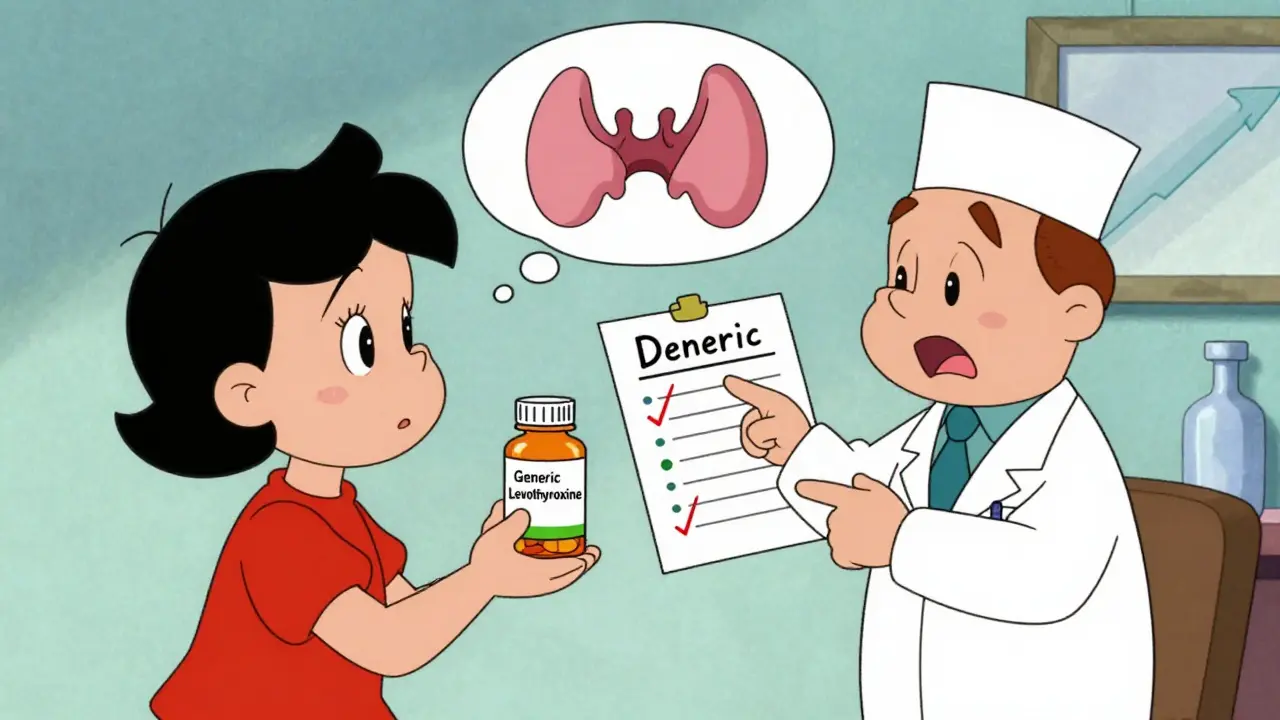
Switching from a brand-name drug to a generic is common - and usually safe. But what happens when the generic doesn’t work for you? Maybe you developed a rash, your blood levels became unstable, or you started having seizures again. You’re not imagining it. Sometimes, switching back to the brand-name version isn’t just a preference - it’s medically necessary.
Why Switching Back Might Be Needed
Generic drugs are required to have the same active ingredient as the brand, in the same dose and form. But they can differ in fillers, dyes, coatings, and other inactive ingredients. For most people, this doesn’t matter. But for some, it does.Take levothyroxine, for example. It’s used to treat hypothyroidism. Even small changes in absorption can throw your thyroid levels off. A 2022 study in Neurology found that patients with epilepsy who switched between different generic versions - or back to brand - had a 27% higher chance of breakthrough seizures. Another study showed that patients on warfarin experienced dangerous INR fluctuations after switching generics, even when the active ingredient was identical.
These aren’t rare cases. The FDA calls drugs like these “narrow therapeutic index” medications - where the difference between a therapeutic dose and a toxic one is very small. Other examples include lithium, cyclosporine, and phenytoin. For these, consistency matters. If your body adjusted to one brand’s formulation, switching to a generic - or even a different generic - can disrupt that balance.
When It’s Not Just About Cost
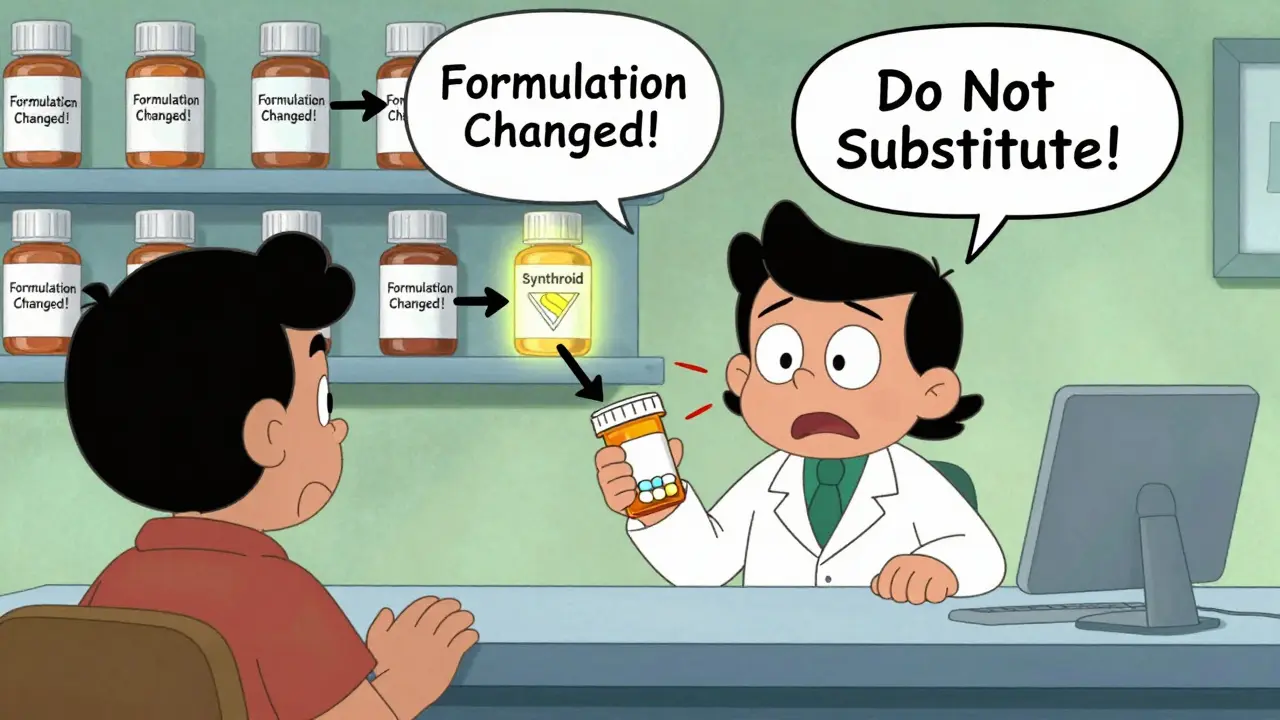
Many people assume switching back to brand is just about preference. But it’s often about safety.One patient in Halifax told me her story: she’d been on generic levothyroxine for six months. Her TSH levels kept creeping up. She felt tired, gained weight, and her depression worsened. Her endocrinologist checked everything - diet, stress, sleep - and then asked: “Have you switched generics recently?” She had. Three times. Each time, her labs drifted. When they switched her back to Synthroid, her levels stabilized in two weeks.
It’s not just thyroid meds. People with inflammatory bowel disease report flare-ups after switching generics of mesalamine. Organ transplant patients on tacrolimus have seen rejection episodes after switching. These aren’t anecdotes. They’re documented in FDA adverse event reports and peer-reviewed journals.
And here’s the thing: brand-name manufacturers rarely change their inactive ingredients. Generics? They change formulations all the time - sometimes without telling prescribers or pharmacists. One 2023 study found that 42% of generic manufacturers altered their formulations within 18 months of approval. That means the pill you took last month might not be the same as the one you get now.
How to Start the Process
You can’t just walk into a pharmacy and ask for the brand. Insurance won’t cover it unless you prove it’s medically necessary. Here’s how to do it right.- Document your symptoms. Don’t say, “I don’t feel right.” Be specific. “My INR jumped from 2.4 to 4.1 two weeks after switching to generic warfarin.” Or, “I developed a rash on my neck after starting generic levothyroxine.” Write down dates, lab results, symptoms.
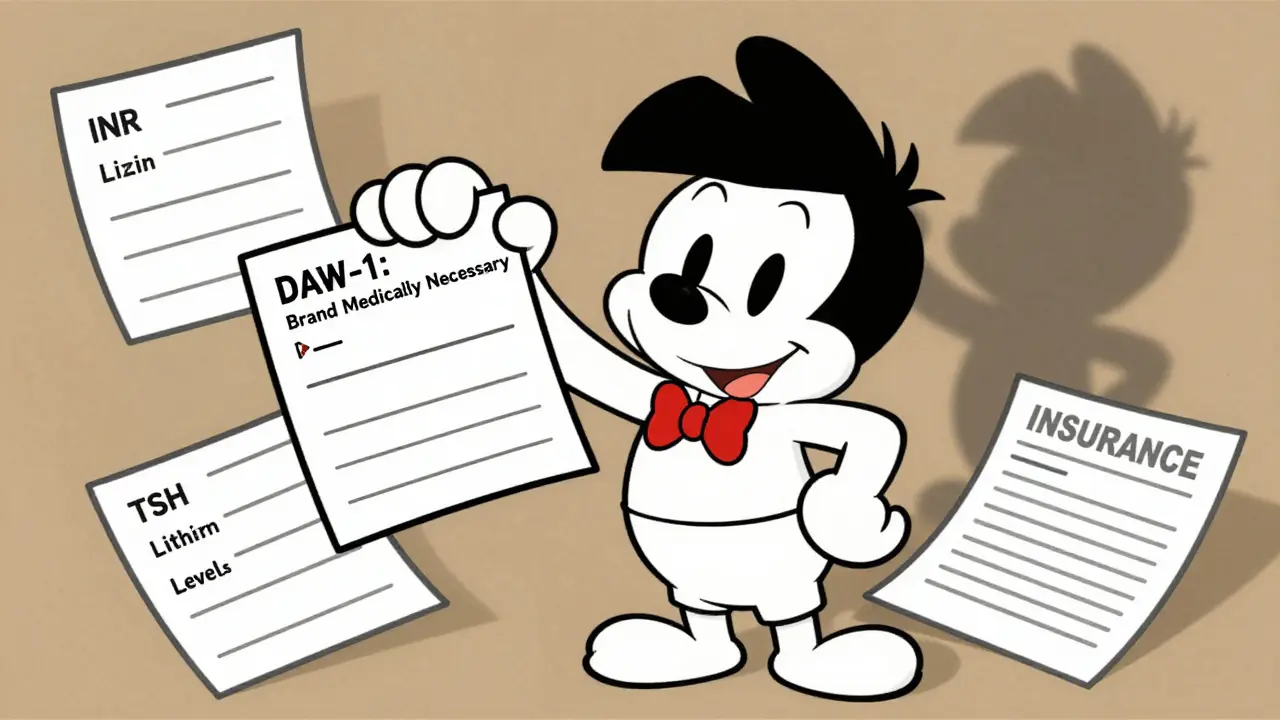
- Talk to your doctor. Bring your records. Ask them to write “Dispense as Written” or “Brand Medically Necessary” on the prescription. This triggers a special code (DAW-1) that tells pharmacies and insurers you’re not choosing the brand - you need it.
- Get lab evidence. If you’re on a drug like warfarin, lithium, or thyroid meds, your doctor should order repeat blood tests before and after switching. Show the numbers. A change of 15% or more in drug levels is often enough to justify the switch.
- Specify the exact brand. Don’t say “the brand.” Say “Synthroid 50 mcg,” not “levothyroxine.” Some generics are made by the same company as the brand (called “authorized generics”), but they’re still not the same formulation. Be precise.
- Follow up. Schedule a check-in within 7-10 days. Your body needs time to adjust. If symptoms return, your doctor needs to know.
Insurance Hurdles - And How to Beat Them
This is where most people get stuck. Medicare Part D and private insurers will deny your request unless you jump through hoops.According to a 2023 KFF analysis, 68% of brand-name requests for drugs with generics require prior authorization. That means your doctor has to fill out paperwork, often with clinical justification. The average wait time? 14.3 days. Some patients go without meds during that time.
Here’s what works:
- Use the CMS Form 1490S (or your insurer’s equivalent) - it’s the official form for “Medically Necessary Brand” exceptions.
- Attach lab results, previous prescriptions, and a letter from your doctor explaining why the generic failed.
- If denied, appeal. A 2022 AMA survey found that 63.7% of appeals were approved when proper documentation was included.
- Ask your pharmacist to call the insurer. They often know the exact language that works.
Some patients report success by switching to a different insurer or using patient assistance programs. Brands like Synthroid and Prograf offer co-pay cards or free samples for those who qualify.
What Pharmacists See - And What They Can Do
Pharmacists are on the front lines. They see patients come in confused, angry, or scared because their meds changed without warning.One pharmacist in Nova Scotia told me: “I’ve had patients show up with rashes, tremors, or seizures after a switch. We can’t stop the substitution unless the doctor says ‘Do Not Substitute.’ That’s why DAW-1 matters.”
Pharmacists can help by:
- Flagging your file in the system if you’ve had a bad reaction to a generic before.
- Calling your doctor if a generic is dispensed without authorization.
- Checking if your brand is available as an “authorized generic” - sometimes the same pill, just cheaper.
But they can’t override insurance. Only your doctor can. That’s why clear documentation is non-negotiable.
When You Shouldn’t Switch Back
Not every complaint about generics means you need the brand.Dr. Jerry Avorn from Brigham and Women’s Hospital points out: “99.7% of generic switches are perfectly safe.” Many people blame the generic for side effects that are actually from aging, diet, or other meds. Anxiety about generics can also make you feel worse - a real psychological effect.
For drugs like atorvastatin, metformin, or lisinopril, switching back is rarely needed. The active ingredient is stable. The fillers don’t matter. Save your money. Save your time.
Stick to the rule: Only switch back if you’ve had a documented, measurable problem - not a feeling.
What’s Changing in 2026
The system is slowly improving. In 2024, Medicare Part D introduced a new “Medically Necessary Brand Exception” pathway with a 72-hour processing guarantee for certain drugs - including thyroid meds, epilepsy drugs, and transplant immunosuppressants.The FDA’s 2023 GDUFA III rules now require generic manufacturers to disclose formulation changes to prescribers. EHR systems like Epic now have mandatory checkboxes for “Brand Medically Necessary” in prescription workflows.
Still, gaps remain. In 28 states, pharmacists can’t switch you to a brand without a doctor’s order - even if you’ve had a bad reaction. In 17 states, they’re required to notify your doctor if you report side effects from a generic. That’s progress. But it’s not universal.
Final Advice
Switching back to a brand isn’t a failure. It’s a smart medical decision - when it’s based on evidence, not fear.If you’ve had a real problem with a generic - lab results that changed, symptoms that appeared, or a doctor who says you need the brand - fight for it. Document everything. Be specific. Use the right terms. And don’t let insurance delays stop you from getting the medicine your body needs.
For most people, generics are perfect. For some, they’re not enough. You deserve the right one - and you have the right to ask for it.
Can I just ask my pharmacist for the brand name instead of the generic?
No. Pharmacists can’t give you the brand name unless your doctor has written “Dispense as Written” or “Brand Medically Necessary” on the prescription. Insurance won’t pay for it otherwise. Even if you’re willing to pay out of pocket, the pharmacy may not have the brand in stock unless it’s ordered specifically.
Are brand-name drugs more effective than generics?
For most drugs, no. The active ingredient is identical. But for narrow therapeutic index drugs - like levothyroxine, warfarin, or epilepsy medications - small differences in inactive ingredients can affect how your body absorbs the drug. That’s why some people respond better to one formulation over another. It’s not about strength - it’s about consistency.
How long does it take for insurance to approve a brand-name drug request?
It varies. Without prior authorization, it can take up to 14 days. With proper documentation, some insurers now process “Medically Necessary Brand” requests in 72 hours under the 2024 Medicare Part D changes. Always follow up - don’t wait for the call.
What if my doctor won’t write a brand-only prescription?
Ask them to review your lab results and symptoms. If you’ve had clear evidence of therapeutic failure - like unstable INR, rising TSH, or breakthrough seizures - that’s medical justification. If they’re unsure, ask for a referral to a specialist (like an endocrinologist or neurologist) who can confirm the need. Many doctors will agree once they see the data.
Can I switch back to a different brand if the first one didn’t work?
Generally, no. If one brand didn’t work, switching to another brand is unlikely to help - they’re usually made by the same company. The issue is likely the formulation itself. Instead, focus on switching back to the original brand that worked for you. If that’s not available, your doctor may need to explore alternative medications entirely.
Shelby Marcel
i switched to generic levothyroxine last year and started feeling like a zombie. like, full-on fatigue, brain fog, weight gain. thought it was stress or menopause. then i read this and remembered i switched generics THREE times. went back to synthroid and boom-i’m human again. why is this so hard to get covered??
Sharon Biggins
thank you for writing this. i’ve been too scared to speak up bc everyone says 'generics are the same.' but my seizures came back after a switch. my neurologist finally listened when i brought lab reports. don’t let anyone gaslight you-your body knows.
Patrick Gornik
ah yes, the great pharmaceutical cabal. let me guess-your 'brand' was actually an authorized generic made by the same company, just repackaged with a different label. the FDA doesn’t regulate inactive ingredients because they don’t want to upset Big Pharma’s profit margins. and now they’re pushing 'DAW-1' codes like it’s some revolutionary reform. meanwhile, the real issue? patent evergreening disguised as patient care. we’re being monetized under the guise of safety. the system isn’t broken-it’s designed this way.
Karen Conlin
to anyone reading this and thinking 'this doesn’t happen to me'-please, listen. i’m a nurse in rural Ohio, and i’ve seen patients show up in ERs because their generic warfarin caused INR spikes. they didn’t know why. no one told them. this isn’t fearmongering. it’s pharmacology. if your doctor dismisses you, bring this post. print it. highlight the studies. you’re not being difficult-you’re being smart. and you deserve to feel like yourself again. you’re not alone.
John McGuirk
they’re lying to you. the 'same active ingredient' thing is a lie. the real difference? the generics are made in India and China with cheaper fillers that cause inflammation. that’s why you get rashes and seizures. the FDA is in bed with the pharma giants. they don’t test the fillers. they don’t care. you think this is about health? it’s about control. and they’re watching you right now.
Phil Maxwell
my mom’s on cyclosporine after her transplant. she switched generics and almost got rejected. we had to fight for 3 months to get her brand back. it’s insane that you have to jump through hoops just to get the medicine that works. i’m glad someone finally laid it out like this.
Vatsal Patel
oh wow, so now we’re supposed to believe that people who can’t afford brand-name drugs are just 'not trying hard enough'? genius. let’s just have everyone pay $500/month for Synthroid while the CEOs buy yachts. what a moral triumph.
Kevin Waters
if you’re on one of these narrow index meds and you feel off after a switch-don’t wait. go to your doctor with your symptom log and lab results. most docs will fight for you if you come prepared. i’ve helped 8 patients get brand exceptions this year. it’s a pain, but it’s doable. you got this.
Kat Peterson
OMG I’M SO GLAD I’M NOT ALONE 😭 I switched to generic phenytoin and had a seizure in my kitchen. my dog saw it. my cat judged me. i cried for 3 hours. now i’m on brand and i feel like a person again. why does this have to be so hard?? 💔💊
Izzy Hadala
the empirical evidence presented herein warrants a reconsideration of current formulary policies governing narrow therapeutic index pharmaceuticals. the variance in bioavailability attributable to excipient heterogeneity constitutes a clinically significant confounder, particularly in populations with heightened pharmacokinetic sensitivity. institutional inertia and cost-driven formulary decisions are demonstrably at odds with patient-centered outcomes. a paradigm shift is not merely advisable-it is ethically imperative.
Elizabeth Cannon
my sister’s on lithium. switched generics, started hallucinating. thought it was psychosis. turns out her blood levels were off by 40%. she’s on brand now. i’m telling everyone i know. if you’re on one of these meds, don’t let anyone tell you it’s 'all in your head.' it’s not. document everything. fight for it.
Gina Beard
generics are fine. if you can’t handle them, maybe your body’s the problem.
Tommy Sandri
the regulatory framework governing generic substitution is grounded in bioequivalence standards established under the Hatch-Waxman Act. while bioequivalence is statistically valid at the population level, interindividual variability in absorption kinetics may result in suboptimal therapeutic outcomes for a subset of patients. institutional responses must balance cost containment with individualized care. the introduction of DAW-1 protocols and EHR integration represents a step toward this equilibrium.
blackbelt security
you’re not weak. you’re not crazy. you’re just one of the 0.3% who actually need the brand. and guess what? you’re not asking for luxury-you’re asking for stability. keep fighting. your health isn’t a line item on a balance sheet.