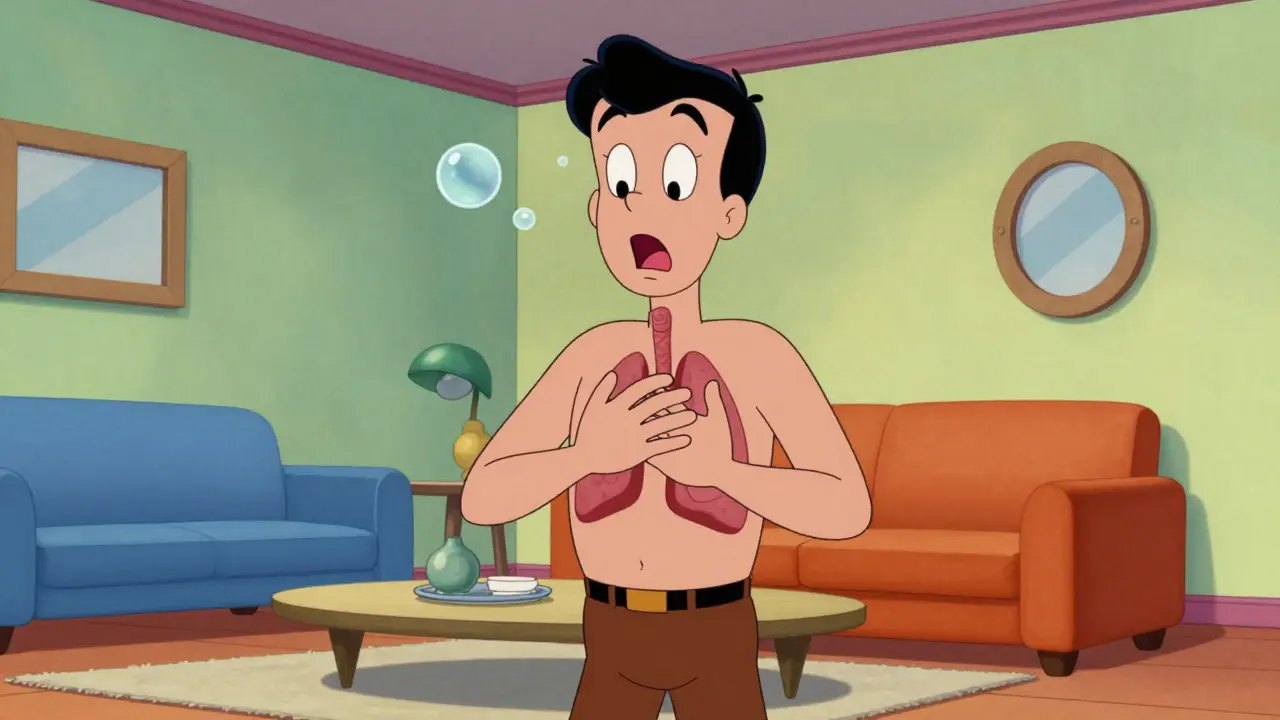
Whether it's caused by a sudden injury or happens spontaneously to a healthy person, a collapsed lung requires a fast response. The goal is simple: get the air out of the pleural space and get the lung inflated again. If you're feeling acute chest pain and shortness of breath, you shouldn't wait to see if it "goes away." The faster the intervention, the lower the risk of permanent damage or critical complications.
The Different Types of Lung Collapse
Not every collapsed lung happens for the same reason. Doctors generally group them into four categories based on what triggered the air leak. Understanding which one you're dealing with helps determine if you need a simple observation period or immediate surgery.
- Primary Spontaneous: This is the "out of the blue" version. It happens in people who have no known lung disease. It's surprisingly common in tall, thin men in their 20s, often caused by tiny air blisters called blebs that rupture on the lung surface.
- Secondary Spontaneous: This occurs when an existing lung condition-like COPD (Chronic Obstructive Pulmonary Disease) or cystic fibrosis-weakens the lung tissue, making it easier for a hole to form. These cases are often more dangerous because the patient already has limited lung function.
- Traumatic: This is a direct result of injury. A car accident, a fall, or a puncture wound (like a stab or gunshot) can force air into the chest cavity or tear the lung tissue.
- Iatrogenic: Sometimes, a collapse is a side effect of a medical procedure, such as a biopsy or the placement of a central venous line.
Warning Signs: How to Spot a Pneumothorax
The symptoms of a pneumothorax are usually sudden and localized to one side of the chest. If you notice a combination of the following, you need to seek help immediately.
The most telling sign is sharp, stabbing chest pain. This is known as pleuritic pain, meaning it gets significantly worse every time you try to breathe in or cough. Interestingly, this pain often radiates up to the shoulder on the affected side. Along with the pain comes shortness of breath (dyspnea). If the lung has collapsed by more than 30%, you'll likely feel breathless even while sitting still. If the collapse is smaller, you might only notice it when you're walking or climbing stairs.
In a clinical setting, doctors look for a few key physical markers. They'll listen for absent or diminished breath sounds on one side using a stethoscope. They might also tap on your chest; if it sounds "hollow" (hyperresonance), it's a strong sign that there's trapped air where lung tissue should be. If you're with someone experiencing this, check for blue-tinted lips or fingernails (cyanosis), which means the body isn't getting enough oxygen.
The Red Alert: Tension Pneumothorax
While a simple collapse is serious, a tension pneumothorax is a full-blown emergency. In this scenario, the air acts like a one-way valve: it enters the chest cavity but can't get out. This creates massive pressure that doesn't just collapse the lung-it actually pushes the heart and major blood vessels toward the opposite side of the chest.
This shift can lead to a rapid drop in blood pressure and a heart rate that spikes above 134 beats per minute. You might notice the windpipe (trachea) shifting away from the affected side, though this is usually a late sign. Because this condition can lead to cardiac arrest within minutes, it is a clinical diagnosis. This means if a doctor sees the classic signs, they will treat it immediately without waiting for an X-ray.
Emergency Care and Diagnostic Tools
When you hit the ER, the priority is figuring out how much of the lung is gone and how unstable the patient is. While there are several tools available, they each have their pros and cons.
| Tool | Sensitivity | Best Use Case | Main Drawback |
|---|---|---|---|
| Chest X-Ray | 85-94% | Initial standard diagnosis | Less accurate if patient is lying flat |
| CT Scan | ~100% | Gold standard / Small leaks | Radiation exposure & cost |
| Ultrasound (E-FAST) | 94% | Rapid bedside trauma screening | Depends heavily on operator skill |
If you're stable and the collapse is small (less than 2 cm rim of air on the X-ray), doctors might just give you supplemental oxygen and watch you closely. High-flow oxygen actually helps the body absorb the trapped air faster. However, if you're struggling to breathe or the collapse is significant, they will move to active intervention.
Treatment Paths: From Needles to Surgery
The goal of treatment is to evacuate the air so the lung can re-expand and stick back to the chest wall. Depending on the severity, the approach changes.
- Needle Decompression: Used exclusively for tension pneumothorax. A large-bore needle is inserted into the chest to let the trapped air escape instantly. This is a life-saving bridge to more permanent treatment.
- Needle Aspiration: For larger primary collapses, a doctor may use a needle and syringe to suck out the air. This has a success rate of about 65% for immediate resolution.
- Chest Tube Insertion: A flexible plastic tube is inserted into the pleural space and connected to a suction device. This is the most common treatment for serious collapses, boasting a 92% success rate, though it carries a risk of infection.
- Chemical Pleurodesis: If you keep having collapses, doctors might use a chemical like talc slurry to "glue" the lung to the chest wall, preventing future leaks.
- VATS (Video-Assisted Thoracoscopic Surgery): This is the definitive surgical fix. Using a camera and small incisions, a surgeon removes the blebs or staples the leak. It has a 95% success rate at one year and is the best option for chronic recurrences.

Recovery and Preventing a Second Collapse
Getting home doesn't mean the danger is completely gone. Primary spontaneous pneumothorax has a recurrence rate of 15-40% within two years. If you've had one, you're at a higher risk for another, and the risk jumps even higher if you've had two episodes on the same side.
The single most important thing you can do to prevent a recurrence is to stop smoking. Quitting reduces the risk of another collapse by a staggering 77% within the first year. Smoking damages the lung tissue and creates the very blisters that lead to leaks.
You also need to be careful with air pressure changes. For 2-3 weeks after your lung heals, avoid air travel. More importantly, avoid scuba diving indefinitely unless you've had the surgical VATS procedure. The pressure changes during a dive can easily trigger a recurrence, which is incredibly dangerous underwater.
Can a collapsed lung fix itself?
Yes, in cases of small primary spontaneous pneumothoraces (typically less than 30% collapse), the lung can re-expand on its own. About 82% of these small cases resolve within 14 days with observation and supplemental oxygen. However, this must be monitored by a doctor to ensure it doesn't worsen into a tension pneumothorax.
What is the difference between a simple pneumothorax and a tension pneumothorax?
A simple pneumothorax involves air leaking into the chest cavity, causing the lung to collapse. A tension pneumothorax is a critical escalation where air enters the cavity but cannot escape, creating a high-pressure environment that compresses the heart and the other lung. This leads to a rapid drop in blood pressure and is a medical emergency requiring immediate decompression.
Who is most at risk for a spontaneous collapsed lung?
The most common profile for primary spontaneous pneumothorax is a tall, thin male in his 20s. Other significant risk factors include smoking (which has a very high odds ratio for recurrence) and underlying lung diseases like COPD, asthma, or cystic fibrosis, which lead to secondary spontaneous pneumothorax.
How long does recovery from a chest tube take?
The tube typically stays in place until the lung is fully expanded and the air leak has stopped, which can range from a few days to over a week. Full healing is usually confirmed by a follow-up chest X-ray 4-6 weeks after the tube is removed. Patients are generally advised to avoid strenuous activity and air travel during this window.
When should I go to the ER if I suspect a collapsed lung?
You should seek emergency care immediately if you experience sudden, sharp chest pain, difficulty speaking in full sentences due to shortness of breath, or if your lips or nails turn blue. Because a pneumothorax can quickly evolve into a life-threatening tension event, any acute respiratory distress combined with localized chest pain warrants an immediate ER visit.
Next Steps and Troubleshooting
If you've recently recovered from a pneumothorax, keep a close eye on your breathing. If you feel a return of that sharp, stabbing pain, don't assume it's just anxiety or a muscle strain-go back to the hospital. Since recurrences often happen within 24 months of the first episode, stay vigilant.
For those with chronic lung conditions like COPD, the risk of recurrence is much higher (up to 52% within a year). Work with your pulmonologist to manage your underlying disease and discuss whether preventive surgery is a better option than waiting for another collapse to happen. Always ensure you have a scheduled follow-up X-ray at the 4-6 week mark to confirm your lung has fully re-expanded.
Ben Jima
This is a solid breakdown of a scary situation. For anyone recovering, remember that walking gently and doing guided breathing exercises once cleared by your doctor can really help the healing process. Keep your head up, you've got this!
Hayley Redemption
The oversimplification here is almost comical. Reducing the nuance of pleural pathology to a few bullet points for the masses is a great way to ensure people ignore the actual clinical complexities. It's basic, really.
Daniel Runion
Wait... so you're telling me tall people just... pop???!!! This is absolutely ridiculous!!!! Why is nobody talking about the actual physics of blebs in a way that makes sense???!!! Absolute joke!!!
William Zhigaylo
It is utterly abhorrent that some of you treat this life-threatening condition as a curiosity. Your lack of intellectual rigor regarding the gravity of a tension pneumothorax is an affront to the medical community. Be silent or be informed.
Carol Yang
Glad this is out there, sounds super intense but totally manageable with the right docs!
Brittney Prince
Sure, 'medical procedures' cause it. Or maybe it's just a convenient way for hospitals to keep you in beds longer and charge more for those tubes. They don't want you knowing the real risks.
Nila Sawyer
Oh my goodness, I am just so incredibly grateful that we have these modern medical advancements to help people breathe again! 🌟 It's just so heartwarming to know that something as scary as a collapsed lung can be fixed with a little bit of help and a lot of positive energy! Keep fighting, everyone, you are all so strong and capable of overcoming anything life throws your way! 💪✨💖
Gauri Parab
The obsession with X-rays as the 'standard' is so outdated. Anyone with a shred of diagnostic insight knows that ultrasound is far more versatile in a trauma setting. But I guess we're just sticking to the textbook here, huh?
Nikita Shabanov
In my experience, the key to recovery is strict adherence to the follow-up schedule. Missing that 6-week X-ray can be a mistake because some lungs don't fully re-expand without further intervention.
Sharyl Foster
Please. Anyone who thinks a chest tube is 'common' hasn't actually dealt with the insurance nightmare that follows. Also, the 'tall thin guy' thing is such a cliché, plenty of stocky people get these too.
Jaclyn Vo
I literally had one of these and the pain was like something out of a horror movie!!! 😱 Like, who just 'observes' a lung collapse?? I would have died of stress alone! 💅✨
Michael Deane
We have the best medical tech in the US and that's why this guide is actually useful, unlike the garbage you see from other countries where they probably just use a prayer and a rusty nail to fix a lung. American healthcare is the gold standard regardless of what the critics say about the cost, because when you're dying of a tension pneumothorax, you want an American surgeon with the best equipment in the world handling your chest!
James Harrison
It's wild how a tiny bubble can just compromise your whole existence in seconds. Makes you realize how fragile the balance of our biology really is.
Vijay AGarwal
The terror of a tension pneumothorax is absolutely unmatched! Imagine the heart being physically pushed to the side of your chest! It is a race against the clock that defines the very edge of survival! Truly a nightmare scenario!
sachin singh
The information regarding the VATS procedure is quite illuminating. It is reassuring to know that a permanent surgical solution exists for those suffering from chronic recurrences.