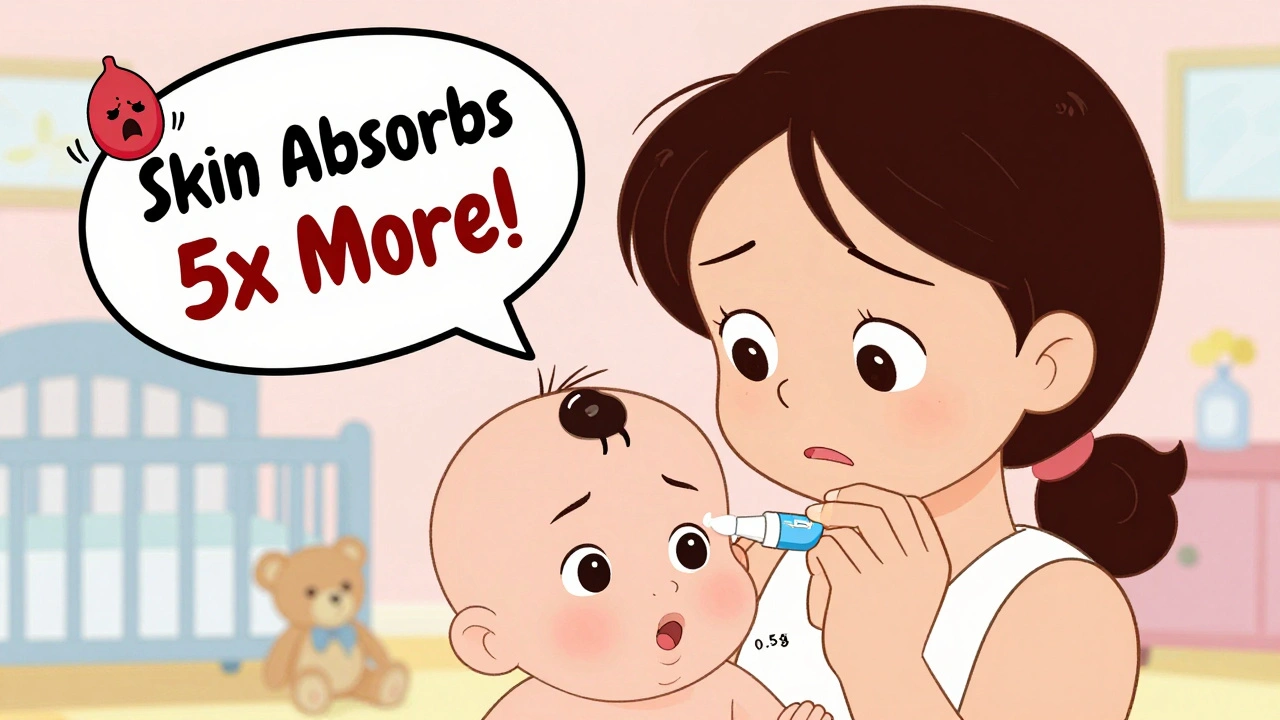
Every parent knows the frustration of a rash, eczema flare-up, or teething pain. It’s natural to reach for a cream or ointment to soothe your child. But what seems like a simple fix can turn dangerous if you don’t know the risks. Topical medications - creams, gels, and ointments applied to the skin - are not harmless. For children, especially babies under 1 year, even a small amount can cause serious harm. The truth is, kids absorb these medicines far more easily than adults. Their skin is thinner, their bodies are smaller, and their systems can’t handle the same doses. And many parents don’t realize how risky some common products really are.
Why Children’s Skin Is Different
Children’s skin isn’t just smaller skin - it’s fundamentally different. A baby’s skin has a higher surface-area-to-body-weight ratio, meaning more of the medicine they apply can get into their bloodstream. Their outer skin layer, called the stratum corneum, is also much thinner. This makes it easier for chemicals to pass through. In fact, infants under 1 year absorb topical medications 3 to 5 times more than adults. For babies with eczema or broken skin, that number can jump to 10 or even 15 times higher. That’s why a pea-sized dab of hydrocortisone on a toddler’s face might be safe, but the same amount spread over half their body could shut down their stress hormone system.The Most Dangerous Topical Medications for Kids
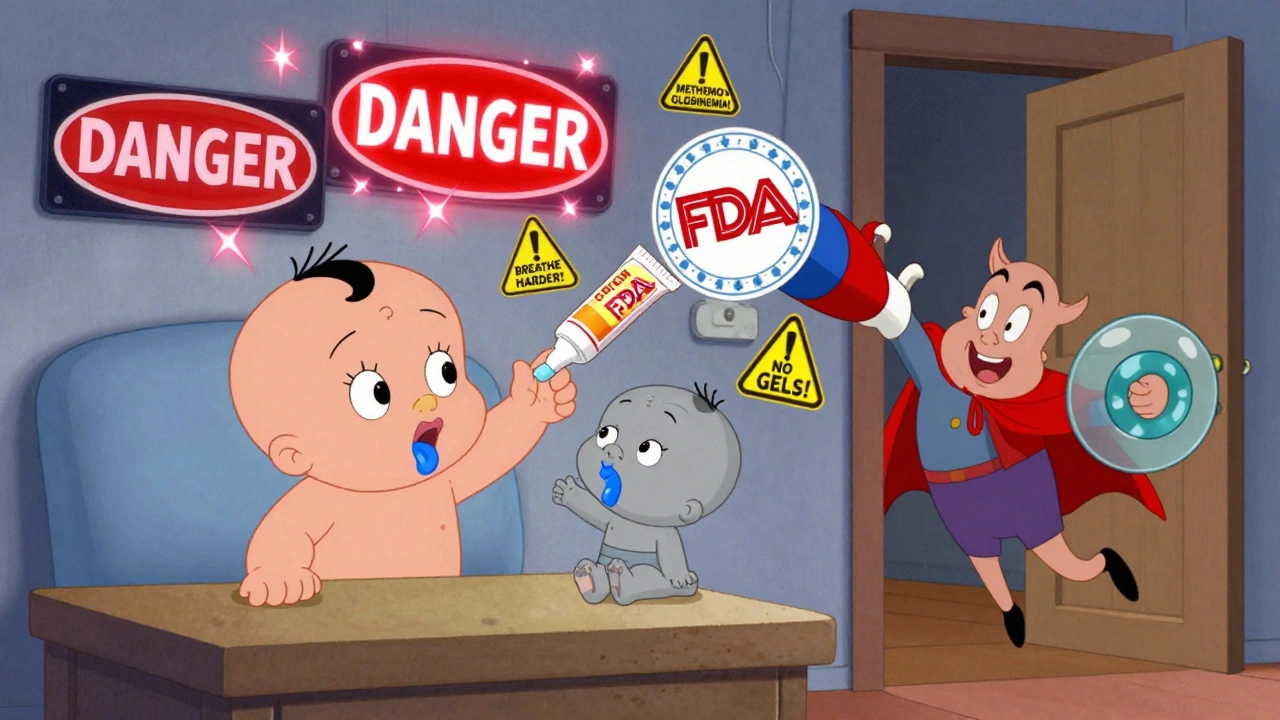
Not all creams are created equal. Some carry hidden dangers that many parents never hear about.Benzocaine - found in teething gels, sore throat sprays, and numbing creams - is one of the most dangerous. It can cause methemoglobinemia, a rare but life-threatening condition where the blood can’t carry oxygen properly. Babies can go from crying to blue lips and difficulty breathing in under 30 minutes. The FDA banned benzocaine teething products for children under 2 because of over 400 documented cases since 2006. There’s no safe amount. Even a tiny smear on the gums can trigger it. Chilled teething rings? Safe. Benzocaine gel? Not worth the risk.
Topical anesthetics like lidocaine are also risky. Used for minor procedures like IV insertions, they’re sometimes applied too broadly or too often. On broken skin, absorption jumps from 3% to 60%. Doses over 3 mg per kg of body weight can cause seizures. The American Academy of Pediatrics says it’s okay for short-term use under supervision, but never for home use on rashes or diaper rash.
High-potency corticosteroids - creams like betamethasone or clobetasol - are the most commonly misused. These are strong anti-inflammatories, often prescribed for eczema. But if used too long, too often, or on large areas, they can suppress the adrenal glands. That means the body stops making its own stress hormones. A 2022 review found that 15.8% of children using potent steroids developed this condition - compared to just 2.3% with low-potency ones. Even over-the-counter hydrocortisone 1% can be dangerous if used daily for weeks on a baby’s face or diaper area.
What You Should Never Use on Kids Under 2
The KIDs List - a trusted guide used by pediatricians - flags specific topical medications to avoid in children under 2. Here’s the short list:- Benzocaine (any form - gels, sprays, wipes)
- Dibucaine (found in some hemorrhoid creams and numbing sprays)
- Class I-II topical corticosteroids (clobetasol, betamethasone, fluocinonide)
- Any product labeled for “adult use only” or without pediatric dosing instructions
These aren’t just warnings - they’re based on real cases of hospitalizations and deaths. If a product doesn’t say “for children” on the label, don’t use it on your baby.
How to Apply Creams Safely: The Fingertip Unit Rule
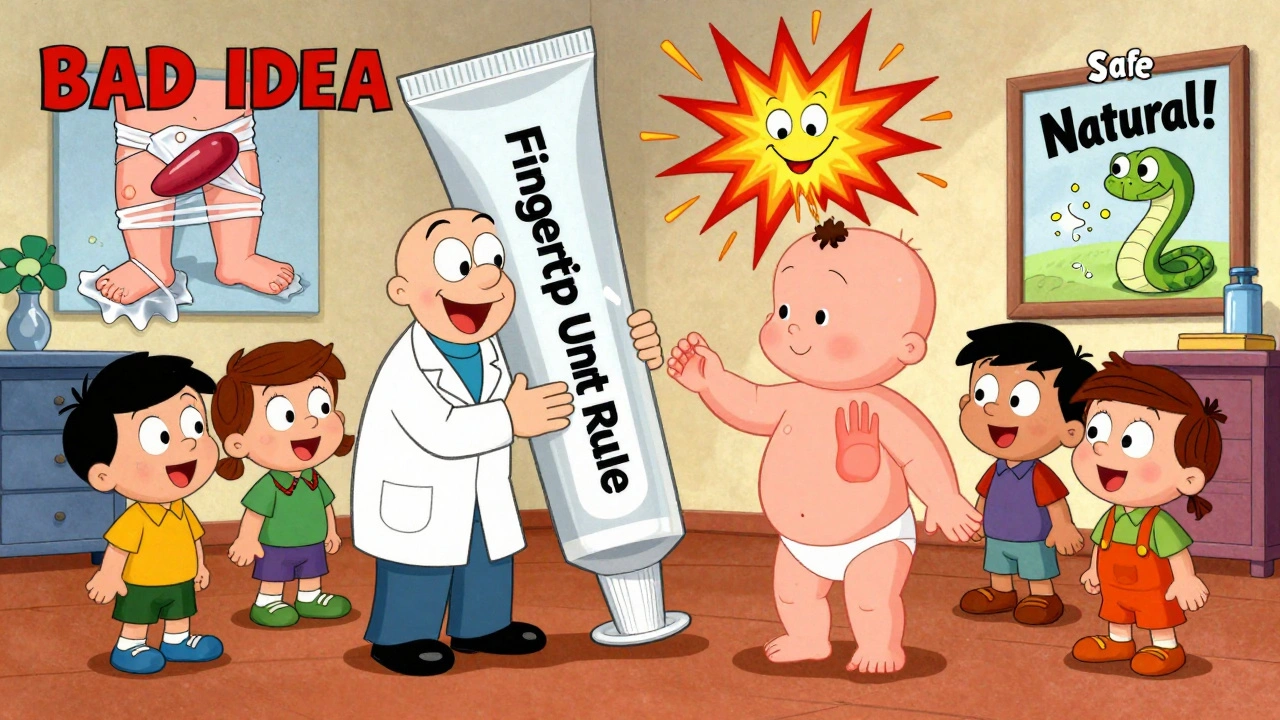
You’ve probably heard “use a pea-sized amount.” That’s not precise enough. The correct way is the fingertip unit (FTU). One FTU is the amount of cream squeezed from a standard tube along the length of an adult’s index finger - from the tip to the first crease. That’s about 0.5 grams.One FTU covers an area of skin equal to two adult palms. For a 10 kg child, the maximum daily dose of a low-potency steroid like hydrocortisone is 2 grams total - that’s four FTUs. Never apply more than that. And never treat more than 10% of their body surface at once. That means if your baby has a rash on both cheeks and one arm, you’re already at or near the limit. Apply it only to the red, flaky patches - not the whole area. And never use it every day for more than a week unless your doctor says so.
Occlusion: The Silent Danger
Some parents think wrapping a rash in plastic wrap or Tegaderm helps the cream work better. It does - too well. Occlusion increases absorption by 300% to 500%. For a child with eczema, whose skin is already damaged, this can be deadly. There are documented cases of infants developing adrenal suppression after their parents covered their legs with steroid cream and plastic wrap overnight. If your doctor recommends occlusion, they’ll tell you exactly how long and how often. Never do it on your own.Alternatives That Actually Work
You don’t need strong steroids or numbing agents to treat common issues.For eczema, the American Academy of Pediatrics now recommends topical calcineurin inhibitors like tacrolimus (0.03%) or pimecrolimus as first-line treatment for facial and sensitive areas in children over 3 months. These work just as well as low-potency steroids but with 72% less systemic absorption. Yes, they have a black box warning about cancer risk - but after 15 years of use in millions of children, there’s not a single confirmed case linking them to cancer.
For teething, skip the gel. Try a chilled (not frozen) rubber teether. A cold washcloth rubbed gently on the gums works too. The pain is temporary. The risk isn’t.
For diaper rash, plain zinc oxide paste is the gold standard. It’s safe, effective, and doesn’t get absorbed. Avoid creams with fragrances, alcohol, or lidocaine - they irritate more than they help.
Storage and Prevention: Keep It Out of Reach
Most accidental poisonings happen because the medicine was left out. The American Association of Poison Control Centers found that 78% of pediatric topical medication exposures occur when products are left on counters, nightstands, or in purses after use. Child-resistant packaging helps - but only if you close it properly. Many parents open the cap, apply the cream, then leave the tube open. That’s a recipe for disaster.Always put topical medications back in their original container, with the cap locked. Store them up high, in a cabinet with a latch. Never leave them in the bathroom where kids can reach the sink. And never use them in front of your child if they’re old enough to grab.
When to Call for Help
If your child shows any of these symptoms after using a topical medication, get help immediately:- Blue or gray skin, especially around lips or fingernails
- Difficulty breathing or fast, shallow breathing
- Unusual drowsiness or difficulty waking up
- Seizures or jerking movements
- Vomiting or confusion
These could mean methemoglobinemia, systemic toxicity, or adrenal crisis. Call 911 or your local poison control center. For benzocaine poisoning, the antidote is methylene blue - but it must be given in a hospital.
What’s Changing in 2025
The FDA is rolling out new rules in 2025 that will require all topical medications sold in the U.S. to include clear pediatric labeling: exact age limits, maximum body surface area allowed, and daily dose caps. New products are already being designed with child-safe dosing pumps and QR codes that link to safety videos. But until then, you’re your child’s best protector.Don’t rely on store labels. Don’t assume “natural” or “gentle” means safe. Don’t use adult products on kids. And never use something just because it worked for your cousin’s baby. Every child is different. What’s safe for one might be dangerous for another.
When in doubt, talk to your pediatrician or pharmacist. Bring the product with you. Ask: “Is this safe for my child’s age? How much can I use? How often? What signs should I watch for?”
Topical medications can be lifesavers - when used correctly. But they’re not toys. They’re medicine. And in children’s hands - or mouths - they can be deadly.
Can I use hydrocortisone cream on my baby’s face?
Low-potency hydrocortisone 0.5% or 1% can be used on a baby’s face, but only for a few days and only on active eczema patches. Never use it daily or over large areas. Apply no more than one fingertip unit total per day. Avoid using it on broken skin or for more than 7 days without checking with your doctor. For long-term management, calcineurin inhibitors like tacrolimus 0.03% are safer and preferred.
Is lidocaine cream safe for diaper rash?
No. Lidocaine is not recommended for diaper rash in children under 2 years. It can be absorbed through irritated skin and cause seizures or heart rhythm problems. Use zinc oxide paste instead. It forms a protective barrier and doesn’t get absorbed. If your baby’s rash isn’t improving, see a doctor - it might be a yeast infection or another condition needing different treatment.
What should I do if my child swallows a topical cream?
Call Poison Control immediately at 1-800-222-1222 (U.S.) or your local emergency number. Do not wait for symptoms. Even a small amount of benzocaine or lidocaine can be life-threatening. Keep the product container handy - the ingredients list will help them determine the risk. If your child is having trouble breathing, turning blue, or having seizures, call 911 right away.
Are natural or organic topical creams safer for babies?
Not necessarily. “Natural” doesn’t mean safe. Some herbal creams contain eucalyptus, camphor, or menthol - ingredients that can cause breathing problems in infants. Others may have hidden steroids or unregulated anesthetics. Always check the ingredient list. If it contains lidocaine, benzocaine, or any unfamiliar chemical, avoid it. Stick to products labeled for infants and approved by your pediatrician.
Can I use my child’s steroid cream on my own rash?
Don’t share topical medications. Your child’s cream may be too strong for you or too weak. More importantly, it may be labeled for a specific age or body area. Using someone else’s prescription can lead to misuse. Always use medications prescribed for you, and keep your child’s medications stored separately. Sharing creams is a leading cause of accidental overdoses in children.
Ignacio Pacheco
So let me get this straight-we’re banning benzocaine teething gels because of 400 cases in 18 years, but we’re okay with giving toddlers daily steroid creams that suppress their adrenal glands? The real danger isn’t the gel-it’s the medical establishment’s selective panic.
Jim Schultz
Oh, absolutely!! The FDA’s new 2025 labeling rules? Long overdue!! But here’s the kicker-most parents still don’t know what a fingertip unit is!! I’ve seen moms apply hydrocortisone like they’re spreading butter on toast!! And don’t even get me started on the ‘natural’ creams with camphor and eucalyptus-those are silent killers!!
Let’s be real: if it’s not labeled for infants under 2, it’s not for infants under 2!! Period!! End of story!! No exceptions!!
I’m a toxic analyst by trade, and I can tell you-this isn’t fearmongering, it’s pharmacokinetics!! Babies absorb 3–5x more!! Their skin is literally a sieve!!
And occlusion?? Please!! Plastic wrap + steroid cream = adrenal crisis waiting to happen!! I’ve seen it!!
Stop treating topical meds like lotion!! They’re not ‘gentle’!! They’re not ‘natural’!! They’re drugs!! And drugs have dosing limits!!
Use the FTU rule!! One FTU = one adult index finger tip!! Two palms of skin!! That’s it!!
And if you’re using hydrocortisone on your baby’s face for more than 7 days?? You’re not helping-you’re harming!!
Calcineurin inhibitors? Tacrolimus 0.03%? Yes!! Safe!! Effective!! No systemic absorption!!
Stop trusting Amazon reviews!! Stop trusting your cousin’s baby!! Your child is not your cousin’s baby!!
And for god’s sake-LOCK THE CAPS!! Store them up high!! Don’t leave them on the nightstand!! 78% of exposures happen because someone was lazy!!
This isn’t opinion-it’s evidence!! And if you’re still using lidocaine on diaper rash?? Please, just… stop.
Kidar Saleh
As someone raised in the UK where topical safety guidelines are drilled into every pediatric nurse, I can say with absolute certainty: this post is not alarmist-it’s essential. The British National Formulary for Children has warned about benzocaine since 2011. The fact that this is still a problem in the US speaks to a systemic failure in public health education. Parents are not negligent-they are misinformed. And misinformation kills.
Chloe Madison
Thank you for this. As a pediatric nurse, I see the aftermath of these mistakes every week. One mother used hydrocortisone 2.5% on her 6-month-old’s entire back because ‘it worked for her eczema.’ That child ended up in the PICU with adrenal suppression. We saved them-but not all families are so lucky. Please, please, please: read the label. Use the fingertip unit. When in doubt, call your pediatrician. You’re not being overcautious-you’re being responsible.
Vincent Soldja
The article is correct. Avoid benzocaine. Use FTU. Store safely.
Makenzie Keely
Let me just say-this is the kind of information every parent needs to carry in their back pocket. I used to think ‘natural’ meant safe-until my niece had a near-fatal reaction to a ‘herbal’ teething gel that contained hidden camphor. No warning labels. No pediatric dosing. Just a pretty bottle with ‘organic’ on it. The FDA’s new labeling rules in 2025? I’m holding them accountable. And if you’re still using adult steroid creams on your toddler? Please. Just stop. Your child’s skin isn’t a canvas-it’s a gateway. And once those chemicals get in, they don’t ask permission.
Use calcineurin inhibitors. Use zinc oxide. Use cold washcloths. Use patience. Not chemicals.
Francine Phillips
I read this because my baby had a rash. I didn’t know any of this. I used the cream anyway. I feel bad now.
Katherine Gianelli
My heart goes out to every parent who’s ever panicked over a rash and reached for the first cream they found. I’ve been there. I used benzocaine gel because my baby wouldn’t stop crying. I thought it was harmless. I didn’t know. But now I do. And I’m so glad I found this. I’ve thrown out every questionable cream in my cabinet. I use chilled teething rings now. I use zinc oxide. I use the fingertip rule. And I talk to my pediatrician before I use anything new. You’re not alone if you made a mistake. What matters is that you’re learning. And that’s everything.
Joykrishna Banerjee
Typical Western overregulation. In India, we’ve used camphor and menthol balms on infants for generations. No adrenal suppression. No methemoglobinemia. The real issue is the pharmaceutical industry’s lobbying to monopolize pediatric care. Benzocaine is not the villain-paternalistic medicine is. You don’t need FTUs. You need trust in traditional knowledge. Also, your ‘evidence’ is funded by Big Pharma. Check your sources.
And yes, I use camphor on my nephew’s rash. He’s 11 months. Still smiling. Still breathing. Still alive. 🌿
Myson Jones
Thank you for sharing this. I’ve been using hydrocortisone on my daughter’s cheeks for weeks because it seemed to help. I didn’t realize it could suppress her adrenal function. I’m going to switch to tacrolimus as recommended. I appreciate the clarity on the fingertip unit-I’ve been eyeballing it. This is the kind of guidance I wish I’d had before my daughter’s eczema got worse.
parth pandya
good post but one thing u miss is that some parents use steroid cream on their kids because doctor prescibe it and they dont know how to use it. also many times the cream come in large tube and parents think more is better. and they dont know ftu rule. also many times they use it for more than 7 days because rash is not gone. so education is key not just warning.
Albert Essel
This is a masterclass in pediatric pharmacology. The balance between caution and practicality is perfect. The FTU rule alone deserves to be taught in every parenting class. I’ve shared this with my entire family group chat-three of us were using hydrocortisone incorrectly. We’ve all switched to zinc oxide and chilled teething rings. No more guesswork. Just science. Thank you.
मनोज कुमार
Stop scaring parents. Kids have been using these creams for decades. The real problem is you overmedicating everything. Let them have a rash. Let them cry. They'll survive.
Jim Schultz
Wow. Just… wow. You think this is fearmongering? Let me ask you this: how many children have died from benzocaine in the last 20 years? 400 documented cases. How many from ‘letting them have a rash’? Zero. Because rashes don’t kill. Methemoglobinemia does. And it doesn’t care if you ‘trust tradition’ or ‘let them cry.’ It just takes their oxygen. And then they turn blue. And then they’re gone. And you’re still sitting there saying ‘it’s fine.’
My nephew was one of those 400. He was 11 months. One dab. One minute of crying. Then his lips turned gray. We got him to the hospital in 12 minutes. They gave him methylene blue. He survived. But he had brain damage. He’ll never walk right. He’ll never speak clearly.
So no. I won’t let you gaslight me into thinking this is ‘overmedicating.’ This is preventing murder disguised as tradition.