Most patients don’t know what generic drugs really are - and social media is fixing that
Every day, millions of people in Canada and the U.S. pick up a prescription for a generic drug. They see the lower price. They trust their pharmacist. But ask them what’s actually in that pill - and most can’t tell you. They don’t know it’s the same active ingredient as the brand-name version. They don’t know it’s just as safe. They don’t know it’s often made in the same factory.
This gap in understanding isn’t about intelligence. It’s about access. For years, patient education on generics has relied on pamphlets, clinic posters, or a 30-second chat with a pharmacist during a busy appointment. Too often, the message gets lost. But now, hospitals, pharmacies, and public health groups are turning to social media to fix it - and it’s working.
Why patients still don’t trust generics - and how social media changes that
Surveys from Health Canada and the Canadian Pharmacists Association show that nearly 40% of patients still believe brand-name drugs are stronger or more effective than generics. That’s not true. But why do they think it? Because the marketing for brand-name drugs is loud. Ads on TV. Billboards. Fancy packaging. Generics? They’re quiet. Plain bottles. No commercials. No celebrity endorsements.
Enter Instagram Reels and TikTok.
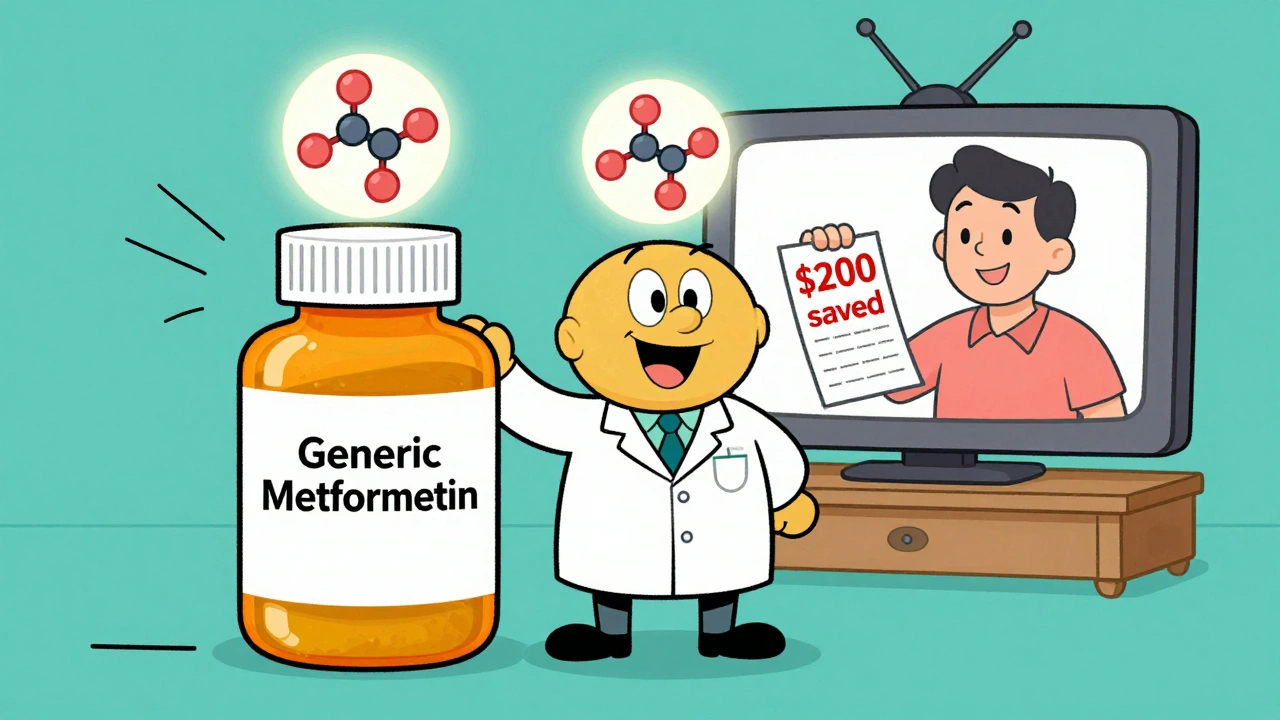
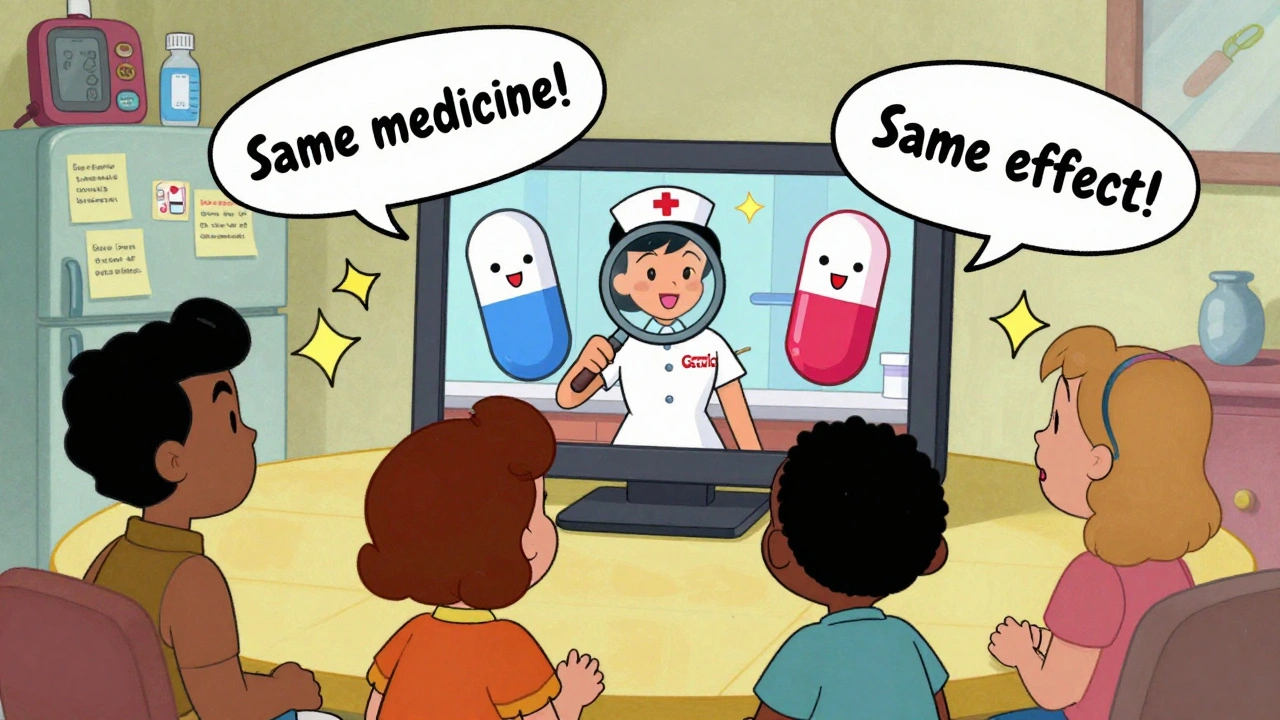
At Halifax’s QEII Health Sciences Centre, a patient education team started posting 60-second videos in late 2024 showing real pharmacists opening a bottle of generic metformin next to the brand version. They held up the pills side by side. They showed the FDA and Health Canada approval stamps. They explained: “Same molecule. Same dose. Same effect.” The first video got 12,000 views. The second, featuring a diabetic patient who switched and saved $200/month, got 47,000 views. Comments flooded in: “I had no idea.” “Why didn’t anyone tell me this before?”
It’s not just about facts. It’s about trust. When patients see real people - not actors or ads - explaining generics in plain language, the message sticks. That’s why schools and clinics using authentic, student- or patient-led content see 57% higher engagement than those using polished corporate videos.
Which platforms actually work for patient education on generics?
Not every social platform is built for health education. Here’s what’s working right now:
- Instagram Reels - Best for visual comparisons. Pharmacies use split-screen videos showing generic vs. brand pills, price tags, and pharmacy shelves. The average watch time is 42 seconds - long enough to explain the key difference.
- TikTok - The fastest-growing tool for reaching younger adults. A 15-second clip of a nurse saying, “Your generic blood pressure pill isn’t ‘weaker’ - it’s just cheaper to make,” got 89,000 views and 5,200 shares in one week. TikTok’s algorithm pushes educational content if it’s clear, quick, and uses captions.
- YouTube Shorts - Used by hospital systems to host mini-educational series. One series called “Generic Truths” by Alberta Health Services has 12 episodes, each under 90 seconds. Total views: 1.2 million.
- Facebook Groups - Still powerful for older adults. Local groups like “Halifax Seniors Health Support” now have dedicated threads where pharmacists answer questions about generics every Tuesday. Engagement is 3x higher than on official hospital pages.
- LinkedIn - Used by pharmacists and clinicians to share research, guidelines, and case studies with other professionals. It’s not for patients - but it helps shape the advice patients get.
Doctors and pharmacists who stick to 2-3 platforms see 31% more patient engagement than those trying to be everywhere. The key? Match the platform to the audience.
Real examples: How clinics are getting it right
In Toronto, the Pharmacy Education Network launched a campaign called “Same Pill, Different Price” in March 2025. They partnered with 12 community pharmacies. Each pharmacy posted a daily Reel showing a different generic drug - from insulin to antibiotics - with a simple message: “This is what your doctor prescribed. This is what you’re paying for. They’re identical.”
Results? Within six months:
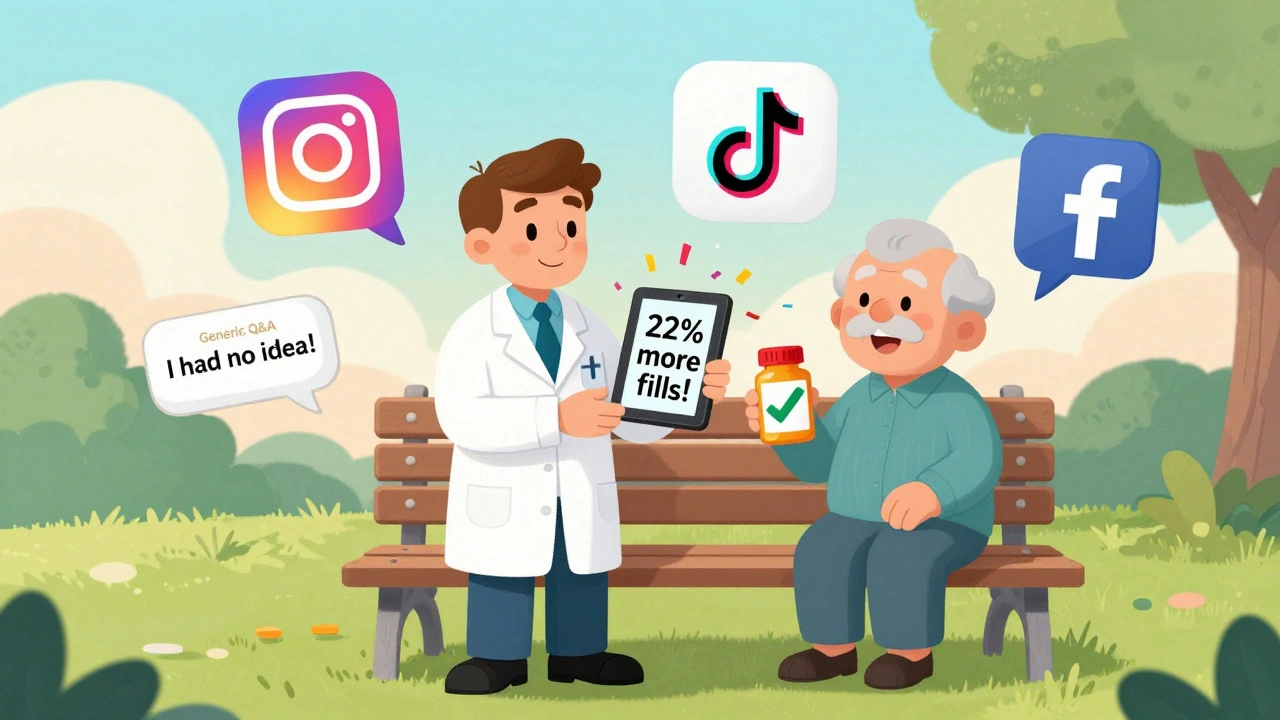
- Generic prescription fills increased by 22% across participating pharmacies.
- Call volume to pharmacy hotlines about generics dropped by 41%.
- Patients reported 58% higher confidence in their prescriptions.
In Vancouver, a public health nurse started a TikTok account called @GenericTruths. She doesn’t use medical jargon. She uses her phone camera. She films in her kitchen. One video: “I take a generic statin. My doctor says it’s just as good as the brand. Here’s why.” She’s hit 2.1 million views. Her comment section is full of people saying, “I’ve been scared to switch. Now I will.”
These aren’t fancy campaigns. They’re real. They’re human. And they’re working.
What doesn’t work - and why
Not every social media effort helps. Some clinics post long, text-heavy posts from their website. Others use stock photos of smiling seniors holding pill bottles. Others post only during drug shortages - then disappear.
These approaches fail for three reasons:
- They feel like ads. Patients can tell when they’re being sold to. Authenticity beats polish every time.
- They’re inconsistent. Posting once a month doesn’t build trust. Successful programs post 3-5 times a week.
- They ignore comments. If someone asks, “Is this safe for my kidneys?” and no one answers, trust disappears.
One clinic in Winnipeg posted a video explaining generic antidepressants. It got 18,000 views. But they didn’t respond to 147 comments asking about side effects. Within two weeks, the same video was being shared in anti-medication groups - twisted to prove generics are dangerous. That’s the risk of silence.
How to start - even with limited resources
You don’t need a big budget. You don’t need a video studio. Here’s how to begin:
- Choose one platform. Start with Instagram or TikTok if you’re targeting under-50s. Use Facebook if you’re reaching seniors.
- Find one common question. “Are generic pills safe?” “Why is mine cheaper?” “Do they work as well?” Pick one.
- Record a 60-second video. Use your phone. Stand by a shelf of pills. Say: “This is a generic. This is the brand. They both have the same medicine inside. Here’s the proof.”
- Post it. Reply to every comment. Even if it’s just “Thanks for explaining.”
- Do it again next week. Consistency builds authority.
Many clinics start with a single pharmacist or nurse leading the effort. That’s enough. The key is showing up - regularly - with honesty.
The future of patient education is social - and it’s already here
By 2027, 73% of Gen Z and millennial patients will use TikTok or Instagram to research their medications before talking to a doctor. That’s not a prediction - it’s happening now. People are searching for health info on social media before they open a browser or call their clinic.
Hospitals and pharmacies that wait for patients to come to them are already behind. The ones using social media to explain generics aren’t just teaching. They’re saving money, reducing fear, and building trust.
The message is simple: Generics aren’t second-best. They’re the same - just smarter. And now, thanks to social media, more people are finally hearing it.
Louis Llaine
So let me get this straight - we’re now using TikTok to teach people that a pill with no logo is the same as one with a fancy name? 🤦♂️ I’m shocked. Next they’ll tell me water is wet. At least the ads are entertaining.
Kyle Oksten
This isn’t just about education - it’s about dismantling corporate mythology. Brand-name drugs aren’t superior; they’re just more expensive marketing. The real tragedy isn’t that patients don’t know generics are equivalent - it’s that they’ve been conditioned to believe otherwise for decades. Social media is the first real counter-narrative that’s stuck. The data proves it: authenticity > advertising. And that’s a win for public health, not just for cost savings.
Sam Mathew Cheriyan
lol i thot genercs are just made in china n its all fake lol 😅 but now i see they got same stuff inside?? wait… so the big pharma companies are lying?? or is this a goverment plot to make us take cheap pills?? 😳 i mean… my cousin took generic adderall and said he felt ‘meh’… so maybe its true?? 🤔
Ernie Blevins
This is all just a distraction. Nobody cares about generics. What they care about is that their insurance won’t cover the brand. They’re not confused - they’re angry. And now we’re giving them cute videos instead of fixing the system? This is band-aid medicine. Stop pretending education fixes broken economics.
Nancy Carlsen
OMG I LOVE THIS SO MUCH 💖 I just showed my mom this and she cried because she’s been taking generic blood pressure meds for 10 years and never knew she was saving $300/month! 🥹 Thank you to every pharmacist and nurse making these videos - you’re literally saving lives, one reel at a time. 🙌❤️ #GenericTruths
Jennifer Anderson
i just watched that tiktok from @generictruths and now i’m switching my statin. i was scared to try generic cause i thought it was ‘weaker’ but she just said it like it was normal?? like… duh, of course it’s the same. why did no one ever just tell me this before?? 😭
Kyle Flores
I’ve been a nurse for 18 years and I’ve watched patients waste hundreds a month on brand names because they thought the blue pill was ‘better’ than the white one. This kind of grassroots education is the most powerful thing I’ve seen in my career. It’s not flashy. It doesn’t need a budget. Just a phone, a shelf of pills, and the willingness to say: ‘I’m not an ad. I’m just telling you the truth.’ That’s all it takes.
Ryan Sullivan
The efficacy of this strategy is statistically significant, but it’s a symptom of a deeper institutional failure. The fact that we’ve outsourced primary pharmaceutical literacy to social media influencers - many of whom lack formal clinical training - reflects a systemic abdication of responsibility by medical education and public health infrastructure. The engagement metrics are impressive, but they’re also a indictment: patients are turning to TikTok because the system failed to provide them with credible, accessible, and consistent information. This is not innovation - it’s triage.