Statin Safety & Monitoring Planner
Based on your doctor's current diagnosis.
Personalized Guidelines
Did you know? Cardiovascular events remain the leading cause of death in NAFLD patients, making statin therapy often safer than withholding it.
Approach Title
Description goes here.
Medication Considerations
Monitoring Protocol Timeline
Before starting: Check ALT, AST, Lipid Panel, CK.
Repeat enzymes/lipids to check early intolerance.
If stable after 3 months, move to annual testing.
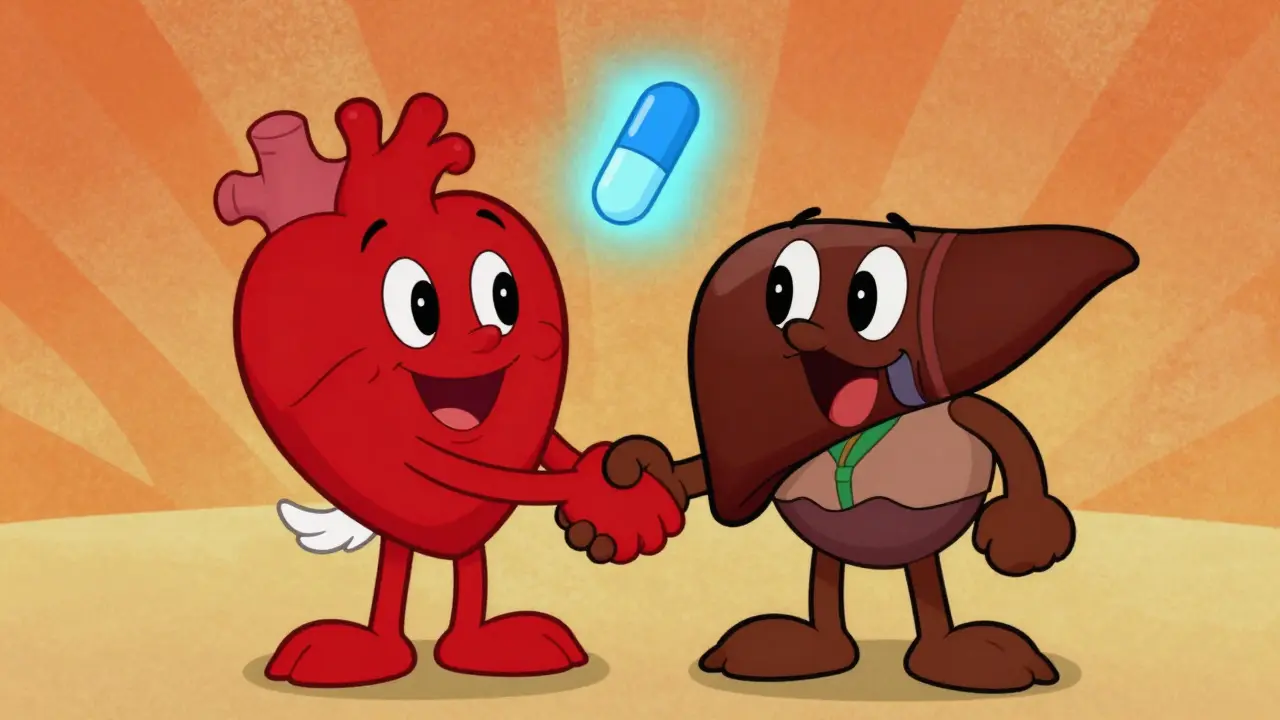
If you've been diagnosed with Nonalcoholic Fatty Liver Disease(NAFLD), also known as metabolic dysfunction-associated steatotic liver disease (MASLD), you might have had a conversation with your doctor that went something like this: "Your liver numbers are high, so we can't give you the heart medicine." It's a frustrating catch-22. You have high cholesterol, which puts your heart at risk, but you also have fat accumulation in your liver, which makes traditional wisdom wary of adding more stress to that organ.
Here's the truth: That hesitation is outdated. For years, there was a widespread belief among clinicians that statins could worsen liver damage. However, the medical landscape shifted dramatically around 2023. Major organizations like the American Association for the Study of Liver Diseases(AASLD) released updated practice guidelines explicitly stating that elevated liver enzymes are not a reason to withhold statins. In fact, protecting your heart might be just as important as protecting your liver, because cardiovascular events remain the leading cause of death in NAFLD patients.
Understanding the Link Between Statins and Liver Disease
To understand why this treatment works, we need to look at what these conditions actually do inside your body. Statin medicationsare lipid-lowering drugs originally developed to lower LDL cholesterol, the primary culprit behind plaque buildup in arteries. They block an enzyme called HMG-CoA reductase, slowing down cholesterol production in the liver.
Historically, doctors avoided prescribing them to patients with fatty livers due to fears of Hepatotoxicityliver toxicity caused by drugs. Since both conditions affect the same organ, it seemed logical to worry. But research published in 2023 analyzing over 200 million records showed that statins do not increase the risk of serious liver-related adverse effects. Instead, they often improve the overall profile.
Why does this happen? Statins have anti-inflammatory properties. They reduce oxidized low-density lipoprotein (oxLDL), which acts like a toxin in blood vessels. By lowering inflammation, statins help stop the progression of liver fibrosis (scarring). A systematic review found that patients taking statins saw average reductions in Alanine Aminotransferase (ALT) levels by roughly 15.8 units per liter. This isn't just theoretical; it's measurable improvement in liver function markers.
Safety Profile: Debunking the Hepatotoxicity Myth
The biggest barrier to getting treatment isn't necessarily biological-it's psychological. A survey from 2021 revealed that nearly 70% of hepatologists still expressed concerns about starting statins in NAFLD patients despite evidence proving safety. Why? Because older FDA labels included warnings about liver injury that have since been softened.
In 2012, regulatory updates removed the requirement for routine liver monitoring before starting statins, yet old habits die hard. Dr. Zobair Younossi, a leading voice in liver disease research, noted in a 2022 update that statins are safe and well-tolerated. He emphasized that the benefit of reducing cardiovascular risk outweighs the negligible risk of liver issues.
However, safety doesn't mean zero risk. Muscle pain remains the most common side effect. About 9% of patients with liver disease report muscle symptoms while on statins, compared to much higher rates in placebo groups historically seen in general populations, though current data suggests the rate aligns closely with the general population once adjusted for age and comorbidities. Serious liver failure induced directly by statins is exceptionally rare, occurring in only about 1 in 100,000 users.
Dosage Considerations for Different Liver Stages
You can't treat every liver condition exactly the same way. While uncomplicated fatty liver is generally considered safe for standard dosing, things get more nuanced when the disease progresses. We categorize liver health broadly, but one specific classification system doctors use is the Child-Pugh score.
For patients with Compensated Cirrhosisadvanced scarring where liver function is maintained (Child-Pugh class A or B), standard doses of statins are usually acceptable. The liver is struggling but still functioning well enough to handle the medication. However, if you reach Decompensated Cirrhosisstage where complications like ascites occur (Child-Pugh class C), caution becomes paramount.
In decompensated cases, a study published in 2022 showed a 2.3-fold higher risk of muscle injury if standard high doses were used. The recommendation here shifts toward lower potency options. For instance, instead of atorvastatin 80 mg, a doctor might prescribe simvastatin 20 mg daily. This provides some cholesterol protection without overwhelming the compromised liver's ability to metabolize the drug.
| Liver Condition Status | Recommended Approach | Specific Drug Example |
|---|---|---|
| NAFLD (Uncomplicated) | Standard Therapy | Atorvastatin 20-40 mg |
| Compensated Cirrhosis | Standard Dosing | Pitavastatin 1-4 mg |
| Decompensated Cirrhosis | Low Dose / Monitor Closely | Simvastatin 20 mg max |

Monitoring Protocols: What Tests Do You Need?
If your doctor finally agrees to start you on a statin, you shouldn't walk away without asking about the monitoring plan. You want peace of mind that your liver isn't under attack. The American Association for Clinical Chemistry recommends a clear schedule.
First, establish a baseline. Before taking your first pill, get blood work drawn for ALT and AST levels. These two enzymes indicate liver stress. Also check Creatine Kinase (CK) to ensure your muscles are healthy beforehand.
Here is the typical timeline:
- Baseline Visit: Check ALT, AST, and Lipid Panel.
- 12 Weeks Later: Repeat the liver enzymes and lipids. This checks for early intolerance.
- Annually: If stable after three months, testing moves to once a year.
The rule of thumb is simple: If your liver enzymes rise to more than three times the upper limit of normal (ULN) while on the drug, you should stop temporarily. Once levels return to normal, the doctor may try a different type of statin. Sometimes, simply lowering the dose fixes the issue.
Interestingly, many patients see their liver enzymes actually drop during therapy. One case series from Johns Hopkins tracked 84 NAFLD patients over two years. 92% of them showed stable or improved enzymes while on statins. Only 3% stopped due to side effects. This reinforces the idea that the monitoring exists mainly for reassurance rather than predicting inevitable harm.
Cardiovascular Benefits Outweigh Liver Concerns
Why bother taking the risk at all? The answer lies in the numbers regarding heart attacks and strokes. Cardiovascular Diseasea group of disorders of the heart and blood vessels kills more people with NAFLD than liver failure does. A massive analysis showed that NAFLD patients on statins had a 48% reduction in major heart events compared to those who weren't.
This protection is vital because metabolic syndrome-the cluster of conditions including obesity, high blood pressure, and high blood sugar-often drives both the fatty liver and the heart risk. When you take a statin, you are treating the root cause of the vascular damage, not just the symptom. Long-term viability studies project a 27% reduction in all-cause mortality for NAFLD patients treated with statins versus those untreated.
There are other drugs available, like fibrates or ezetimibe, but they don't offer the same proven track record for preventing heart attacks. Pioglitazone helps the liver histology more effectively (improving scarring), but it increases heart failure risk in some populations. Therefore, unless you have a very specific contraindication, statins remain the first-line defense for the dual threat of bad cholesterol and fatty liver.

Navigating Provider Hesitation
Even with all this data, you might encounter a physician who hesitates. It's not always out of malice; medical culture changes slowly. If your doctor refuses to prescribe a statin solely because of a slightly elevated ALT number (as long as it's below 3x normal), ask for the 2023 guideline reference.
It helps to know that cardiologists are generally more comfortable with this approach than liver specialists are. In a recent survey, only 29% of cardiologists worried about giving statins to fatty liver patients, whereas almost 40% of liver specialists held back. Asking specifically about "cardiovascular risk reduction" rather than "treating my liver" might change the conversation dynamics. Remember, the goal is keeping you alive, and protecting the heart is a huge part of surviving liver disease.
Frequently Asked Questions
Can statins cure Nonalcoholic Fatty Liver Disease?
Statins are not currently approved specifically to "cure" the fatty liver condition itself, though they show promise in improving liver enzyme levels and reducing inflammation. Their primary benefit in this context is reducing cardiovascular risk, which is the leading cause of death for these patients.
Are liver tests required before starting a statin?
According to current guidelines, routine screening is not mandatory for everyone, but baseline testing is recommended to detect pre-existing liver conditions. If you already have elevated enzymes, your doctor should confirm they are not above three times the upper limit of normal.
What happens if my ALT spikes while taking a statin?
If ALT or AST rises to greater than 3 times the upper limit of normal, the medication should be stopped immediately. Levels should be monitored until they normalize. Re-challenging with a lower dose or switching to a different statin (like rosuvastatin) is often successful.
Is it safe to drink alcohol while taking statins with NAFLD?
While moderate alcohol consumption isn't always forbidden, patients with fatty liver disease are advised to minimize or eliminate alcohol intake completely to prevent further liver stress, regardless of whether they are on statins.
Do all statins have the same risk of muscle pain?
Muscle symptoms occur across various types, but intensity can vary by individual metabolism. Patients intolerant to one statin often tolerate another. Low-dose formulations are typically better tolerated by those with advanced liver disease.
Jeannette Kwiatkowski Kwiatkowski
Look, most people walk away from this info without understanding the nuance involved. The distinction between hepatotoxicity myths and actual clinical outcomes is starkly clear here. It's amusing how older medical generations cling to outdated fears despite overwhelming evidence to the contrary. When you analyze the enzymatic breakdown of HMG-CoA reductase inhibition, the safety profile becomes obvious. The fact that cardiovascular risk outweighs liver concerns is mathematically undeniable. Yet, patient hesitancy remains high due to psychological barriers rather than biological ones. This highlights a systemic issue in how medical information disseminates to the lay public. Guidelines update frequently, yet practice rooms lag significantly behind the curve. We see this pattern repeatedly in metabolic disorder management. The reduction in ALT levels observed is statistically significant enough to warrant attention. Ignoring statin therapy essentially leaves patients vulnerable to higher mortality risks. The data supports aggressive lipid management even with existing liver complications. Clinicians need to stop projecting historical anxieties onto modern pharmacology. We are dealing with a nuanced organ system that adapts well under supervision. Routine monitoring protocols exist precisely to mitigate any hypothetical adverse reactions. Safety is paramount, but efficacy shouldn't be sacrificed for fear. Ultimately, informed consent requires reading beyond the FDA labels.
Rohan Kumar
Oh sure just listen to the suits in labs 💉 ignore what actually happens inside your body until something goes wrong then it's just statistics 📉🤥 we're pawns in the end anyway #truthhurt
Paul Vanderheiden
i know so many friends who are scared to start taking anything because of liver issues but seeing this new research makes me feel way better about things happening now its so important to keep your heart safe especially when living with conditions like fatty liver thanks for posting this kind of info
Debra Brigman
There is an underlying existential narrative here regarding human fragility and pharmaceutical intervention. Our relationship with our own biology is fraught with contradiction and hesitation. To accept the pill is to accept the chemical alteration of our internal state. But perhaps the greater truth lies in the prioritization of survival over purity. The liver acts as a silent sentinel while the heart drums the rhythm of life itself. Balancing these two forces requires a wisdom that extends beyond mere clinical trials. We stand at a crossroads of old beliefs and new evidence clashing like opposing tides. The color of our health choices defines the spectrum of our longevity. Embrace the complexity of treating the vessel and the engine simultaneously. Knowledge is the true antidote to the poison of uncertainty.
tyler lamarre
You sound like you read the abstract once and wrote poetry. The actual science is straightforward without the flowery prose. Stop romanticizing drug trials and look at the raw data points. People die of heart attacks not poetic liver failures. Facts matter more than metaphors here.
Tony Yorke
appreciate the details on dosing
Rachael Hammond
yeah i was reading about the dosing part too and it made me think about how personalized medicine needs to be for everyone its nice that lower doses help those with worse liver function and maybe that means we can trust doctors more if they explian stuff like this clearly its really important to feel safe starting meds
Devon Riley
my mom has both conditions so hearing this helps a lot 🙏🫵 it's tough waiting for appointments so this reassurance helps a lot
Aaron Olney
wait did u tell her to ask for guidelines though cause mine said no im freaked out now that i know this why didnt they say anything earlier i feel betrayed by the whole system and now my heart is racing just thinking about it whats gonna happen next 😱❄