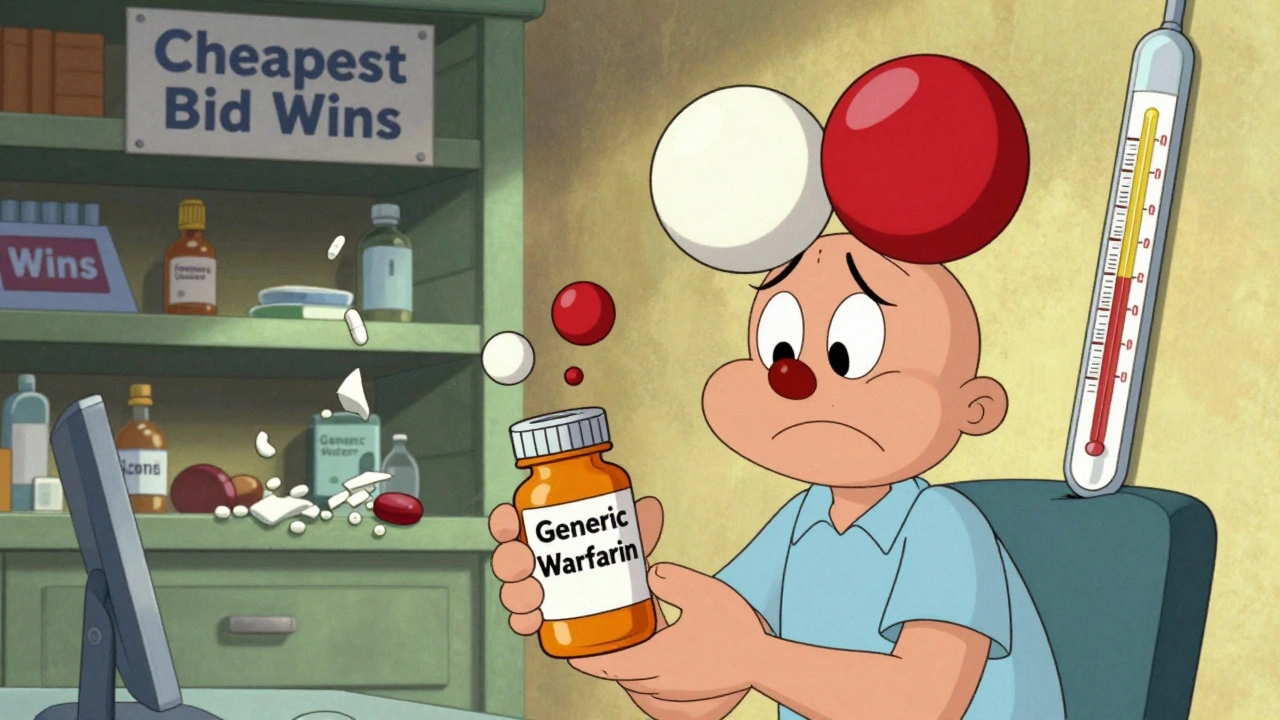
It’s supposed to be the same drug. Same active ingredient. Same price. So why does it sometimes feel like your generic medication isn’t working like it used to?
For millions of people, switching from a brand-name drug to a generic is a routine, cost-saving step. But for some, that switch leads to something far more dangerous: therapeutic failure. When a drug doesn’t do what it’s supposed to - whether it’s controlling seizures, preventing blood clots, or keeping cancer in check - the consequences can be life-altering. And while most generics work fine, the system has cracks that can let dangerous inconsistencies slip through.
Why a Generic Might Not Work the Same
The FDA says generics must be bioequivalent to brand-name drugs. That means they must deliver the same amount of active ingredient into your bloodstream within a certain range - usually 80% to 125% of the original. Sounds fair, right? But here’s the catch: that range allows for a nearly 50% difference in how much drug actually gets absorbed.
For most medications, that’s fine. But for drugs with a narrow therapeutic index (NTI), even small changes can be deadly. These include warfarin (a blood thinner), phenytoin (for seizures), digoxin (for heart rhythm), and tacrolimus (for transplant patients). In these cases, the difference between a therapeutic dose and a toxic one is razor-thin. A 10% drop in absorption might mean your seizure returns. A 15% spike could cause internal bleeding.
And it’s not just about the active ingredient. The fillers, coatings, and binders - the inactive ingredients - can change how the pill breaks down in your body. One study found that some generic versions of Concerta, a long-acting ADHD medication, dissolved over three times faster than the brand version. That meant patients got a sudden spike of medication instead of a steady release, leading to side effects like jitteriness, insomnia, and even heart palpitations.
The Hidden Problem: Manufacturing Inconsistencies
Generic drugs are made in factories around the world. Some are in the U.S., but many are in India, China, and other countries where oversight isn’t as strict. And quality control? It’s not always consistent.
A 2025 investigation found that nearly one in three generic drug applications had deficiencies tied to manufacturing. Some pills had too little active ingredient - as low as 88% of what was labeled. Others had too much - over 112%. In extreme cases, pills from the same blister pack contained wildly different doses. Imagine taking two pills from the same bottle and getting two different strengths. That’s not a mistake. That’s a systemic failure.
One of the most shocking cases involved chemotherapy drugs. Researchers documented cases where generic versions of drugs used to treat breast, ovarian, and leukemia cancers contained such inconsistent levels of active ingredient that they were essentially useless. Some patients saw their tumors grow while on treatment. Others developed severe organ damage from sudden spikes in drug concentration.
When It Hits Close to Home: Real Patient Stories
Dr. Okuda’s 2024 study tracked multiple sclerosis patients who switched to generic medications. Those whose disease stayed stable were taking generics with 97% to 103% of the labeled dose. But those who suffered relapses? Their generics contained just 91%, 82%, and even 73% of the required dose. That’s not a small variation. That’s a treatment failure.
One heart transplant patient, Salberg, noticed her energy dropping and her breathing getting harder after switching to a generic version of her immunosuppressant. She worried the drug was being absorbed too quickly - not lasting long enough to protect her new heart. Without the right dose, her body could reject the transplant. That’s not speculation. That’s a real, life-threatening risk.
Another patient, on methotrexate for rheumatoid arthritis, ended up in the ER after vomiting violently for hours. The generic version she’d been given had a higher concentration than expected. She didn’t overdose on purpose. The pill just had more of the drug than it was supposed to.
The Silent Culprits: Degradation and Poor Storage
Even if a generic is made correctly, it can degrade before it reaches you. Heat, humidity, and light can break down the active ingredient. Some pills are designed to release slowly over 12 hours. If the coating breaks down in a hot warehouse or during shipping, the drug might hit your system all at once.
That’s what happened with Glenmark Pharmaceuticals’ potassium chloride tablets in 2024. Nearly 47 million doses were recalled because the pills weren’t dissolving properly. Patients with low potassium levels - often elderly or on diuretics - were at risk of dangerous spikes in blood potassium. Too much potassium can cause cardiac arrest. Too little can cause muscle weakness and irregular heartbeat. Either way, the drug had to work exactly right.
And it’s not just about the pills. Some liquid generics, especially those made overseas, have been found to contain contaminants like nitrosamines - cancer-causing chemicals. Valsartan, losartan, and irbesartan, all common blood pressure drugs, were pulled from shelves after these toxins were discovered. The FDA knew about the problem for years before acting.
Who’s Responsible? The Broken System
The problem isn’t just bad manufacturing. It’s a system built for speed and profit, not safety.
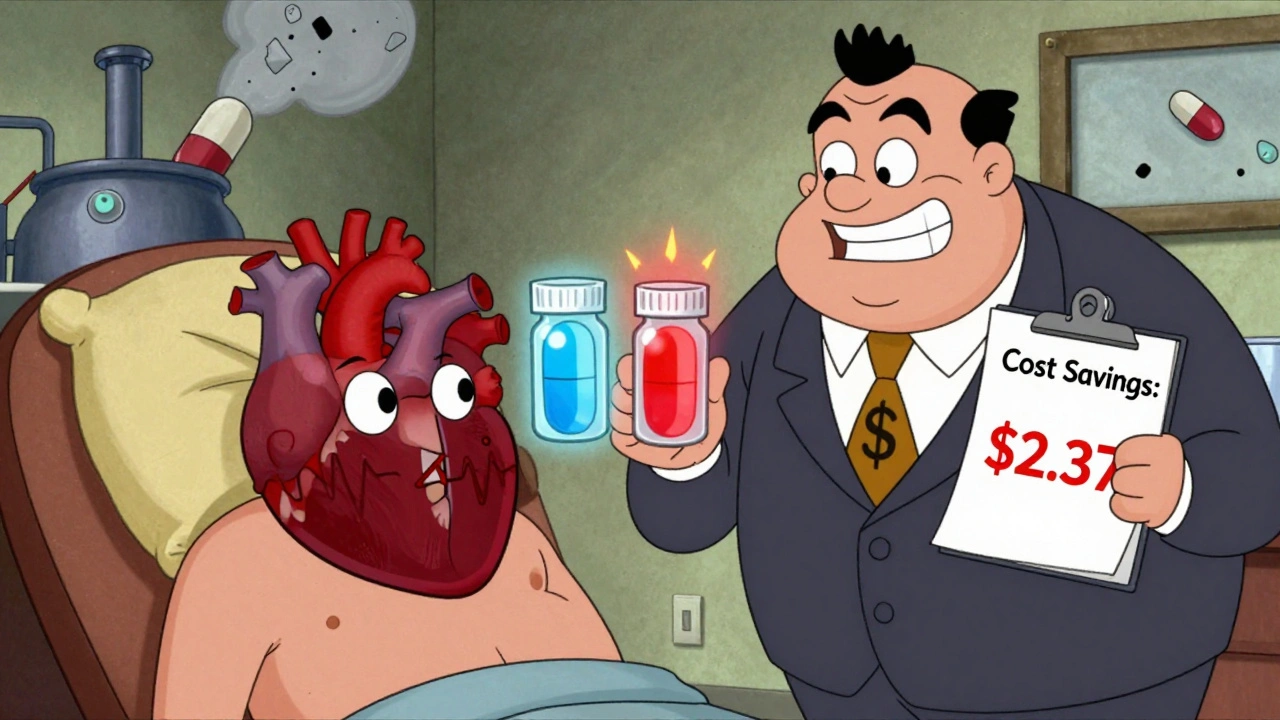
Pharmacy Benefit Managers (PBMs) - the middlemen who negotiate drug prices between insurers and pharmacies - often push for the cheapest generic, regardless of quality. They get paid based on the difference between what they pay the pharmacy and what they charge the insurer. So the cheaper the pill, the more they make. Even if that pill doesn’t work.
Manufacturers know this. They cut corners. They skip stability tests. They use cheaper ingredients. And because the FDA’s approval process allows such a wide bioequivalence range, they don’t have to prove the drug works the same way - just that it’s close enough.
Experts call the current standards “rather broad.” One former FDA official said, “Valsartan is just the one we caught. Who knows how many more are out there?”
What You Can Do
If you’re on a generic drug and notice something’s off - your symptoms are returning, you’re having new side effects, or you feel worse than before - don’t assume it’s your condition getting worse. It might be the drug.
Here’s what to do:
- Track your symptoms. Write down when you started the generic, what changed, and how you feel day to day.
- Talk to your doctor. Say: “I think this generic isn’t working like the brand did.”
- Ask for a brand-name prescription if your drug is an NTI medication. Many insurers will approve it if you show evidence of therapeutic failure.
- Check the manufacturer. If you’ve had issues with one generic, avoid that brand. Look at the pill’s imprint code and check the FDA’s database for recalls.
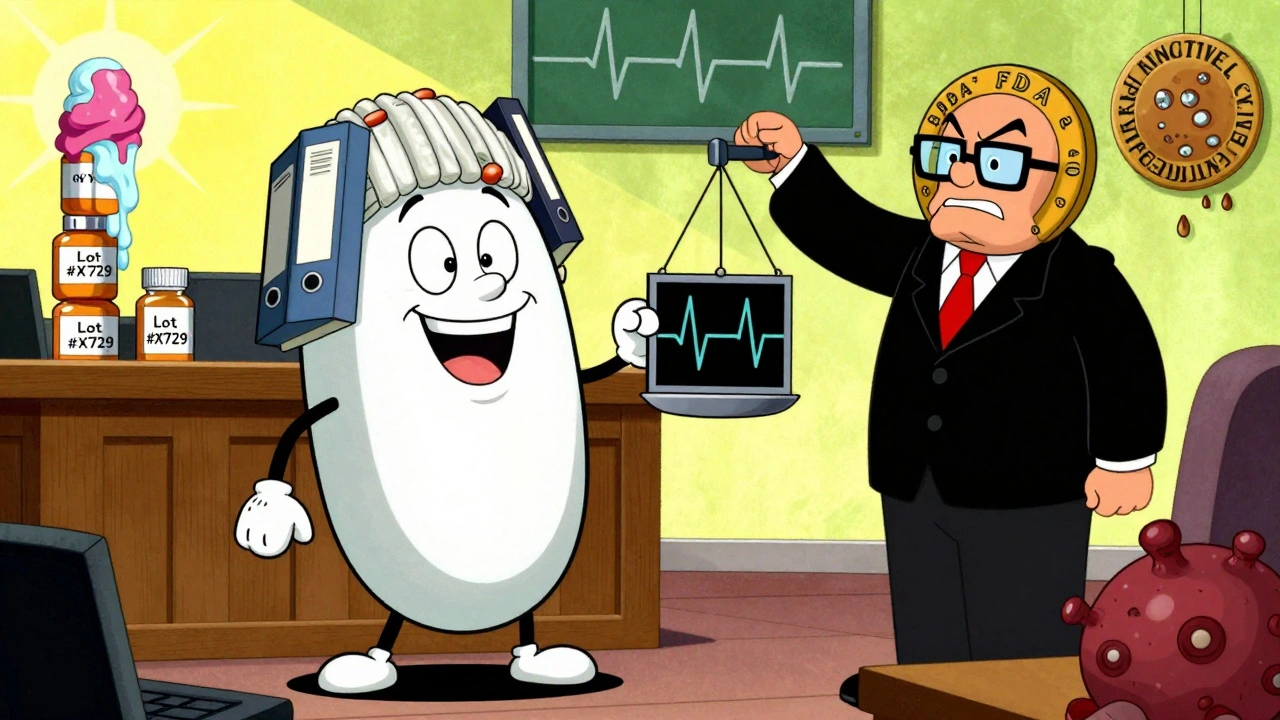
- Ask your pharmacist to check the lot number. If your pills came from a recalled batch, get them replaced.
For drugs like warfarin, your doctor should check your INR levels more often after a switch. For epilepsy meds, seizure frequency should be monitored closely. For transplant patients, drug levels in the blood (trough levels) should be tested regularly.
The Bigger Picture
Generic drugs saved billions in healthcare costs. That’s good. But when safety is traded for savings, the cost is measured in lives.
Regulators need tighter standards for NTI drugs. Manufacturers need real accountability. And patients need transparency - not just the name of the drug, but who made it, where, and when.
Until then, don’t assume all generics are equal. If your medication stops working, it’s not in your head. It might be in the pill.
Can a generic drug really be less effective than the brand-name version?
Yes. While most generics work the same, some - especially those with a narrow therapeutic index - can have differences in how they’re absorbed or released. These differences can be small, but for drugs like warfarin, phenytoin, or tacrolimus, even a 10% change can lead to treatment failure or toxicity. The FDA allows a wide range of bioequivalence (80-125%), which means a generic could theoretically deliver up to 25% more or 20% less of the active ingredient than the brand. That’s enough to matter.
Which generic drugs are most likely to cause problems?
Drugs with a narrow therapeutic index (NTI) are the highest risk. These include anticoagulants like warfarin, anti-seizure meds like phenytoin and carbamazepine, heart drugs like digoxin and cyclosporine, immunosuppressants like tacrolimus and sirolimus, and some psychiatric drugs like lithium. Chemotherapy agents and thyroid medications like levothyroxine also have a history of inconsistent performance in generic form. Always ask your doctor or pharmacist if your drug is on this list.
How do I know if my generic is from a bad batch?
Check the lot number on your prescription bottle and compare it to the FDA’s recall list. If you’ve had no issues with a generic before but suddenly start having side effects or your condition worsens, it could be a bad batch. Also, if you switch between different generic manufacturers and notice changes in how you feel, that’s a red flag. Keep a log of which manufacturer you’re using and how you respond.
Can I ask my doctor to prescribe the brand-name drug instead?
Yes. If you’ve had a therapeutic failure with a generic, your doctor can write a prescription for the brand-name drug and mark it “dispense as written” or “no substitutions.” Many insurance plans will approve this if you can show documented issues - like abnormal lab results, worsening symptoms, or hospitalizations linked to the switch. Don’t be afraid to ask. Your safety matters more than cost savings.
Are all generic drugs unsafe?
No. Most generics are safe and effective. The problem isn’t generics as a category - it’s the lack of consistent quality control and the pressure to produce the cheapest version possible. For many medications - like antibiotics, statins, or blood pressure drugs - generics work just as well. But for drugs where the dose has to be precise, the risks are higher. Know your drug. Know your options.
Mark Curry
Been on generic warfarin for 3 years. My INR stayed perfect until last month. Then suddenly I was bleeding out my nose for no reason. Switched back to brand-fixed in a week. Not in my head. The pill changed.
:(
luke newton
Of course the generics don’t work. We outsource everything to countries that can’t even keep their own water clean. FDA lets them slide because Big Pharma bribes politicians. Wake up, people. This isn’t about cost-it’s about betrayal.
And don’t tell me ‘most generics are fine.’ I’ve seen people die because someone thought ‘close enough’ was good enough.
Juliet Morgan
I’m a nurse and I’ve seen this so many times. Elderly patients on digoxin switch to generic, start getting dizzy, fall, break hips. We pull the script, go back to brand-boom, they’re walking again within days. It’s not ‘adherence.’ It’s the damn pill.
Doctors need to stop assuming it’s the patient. And pharmacies? Stop swapping brands without telling anyone.
Harry Nguyen
Wow, another crybaby article about how the world owes you brand-name drugs. You think the government should pay more so you can avoid reading the label? Go buy a Tesla instead of whining about your $3 pill. We don’t need fancy pills-we need tough people.
Also, China makes everything. Get over it.
Katie Allan
This is such an important conversation-and so rarely had with care. I’ve worked with transplant patients who lost their organs because a generic tacrolimus batch was off by 18%. It’s not theoretical. It’s happening right now, to real people.
We need mandatory batch tracking on every pill. Not just the drug name-manufacturer, lot, country of origin. Transparency isn’t a luxury. It’s survival.
Deborah Jacobs
My mom took generic levothyroxine for six months. She went from ‘I can climb stairs’ to ‘I can’t get out of bed.’ Weight gain, brain fog, heart racing. We switched back to Synthroid-she’s like a new person. I swear, that little white pill had more power than any therapy session.
It’s not ‘in her head.’ It’s in the fillers. The coatings. The damn manufacturing line in some warehouse where they’re cutting corners to hit quarterly numbers.
James Moore
Let’s be real here: the FDA’s 80–125% bioequivalence window is a joke. It’s like saying two cars are ‘equivalent’ if one goes 40 mph and the other goes 65 mph on the same highway. That’s not equivalence-that’s chaos. And for NTI drugs? It’s criminal negligence.
Meanwhile, PBMs are raking in billions while patients are getting poisoned by inconsistent doses. And the worst part? The same companies that make the generics also lobby to keep the standards this loose. It’s a closed loop of greed. We need federal audits. Random inspections. Public databases. Not just ‘trust us, it’s fine.’
Carole Nkosi
You think this is unique to the U.S.? In South Africa, we get generics from India that arrive in boxes with no labels. No lot numbers. No expiration dates. People take them anyway. My cousin died on a fake generic antiretroviral. No one was held accountable. No one even blinked.
Global supply chains are broken. And the people who suffer? They’re not statistics. They’re our mothers. Our brothers. Our friends.
Stephanie Bodde
Just wanted to say-you’re not alone. I was terrified to speak up about my generic seizure med. Felt like I was being dramatic. But when I started having mini-seizures again? I went to my neurologist with my symptom log. She immediately switched me back. Said, ‘I’ve seen this too many times.’
Trust your body. Track everything. And don’t let anyone tell you it’s ‘all in your head.’ You know your body better than any algorithm.
💖
Manish Shankar
It is a matter of grave concern that the regulatory framework governing generic pharmaceuticals remains insufficiently stringent, particularly for drugs possessing a narrow therapeutic index. The current bioequivalence criteria, while statistically acceptable for broad-spectrum agents, are demonstrably inadequate for life-sustaining medications. I respectfully urge the adoption of pharmacokinetic bioequivalence standards with tighter confidence intervals, ideally within 90–110%, and mandatory post-marketing surveillance for all NTI generics. Patient safety must supersede economic expediency.