Why Your Medications Can Fail on the Road
It’s not just about forgetting your pills. The real danger is that your meds could be working at half power-or not at all-without you even knowing it. Think about this: if you’re carrying insulin, thyroid pills, or antibiotics, heat, cold, or even just being tossed around in a suitcase can ruin them. A study from the CDC found that 78.6% of medication-related travel emergencies happen because of temperature exposure. That’s not a small number. It’s the main reason people end up in ERs while on vacation.
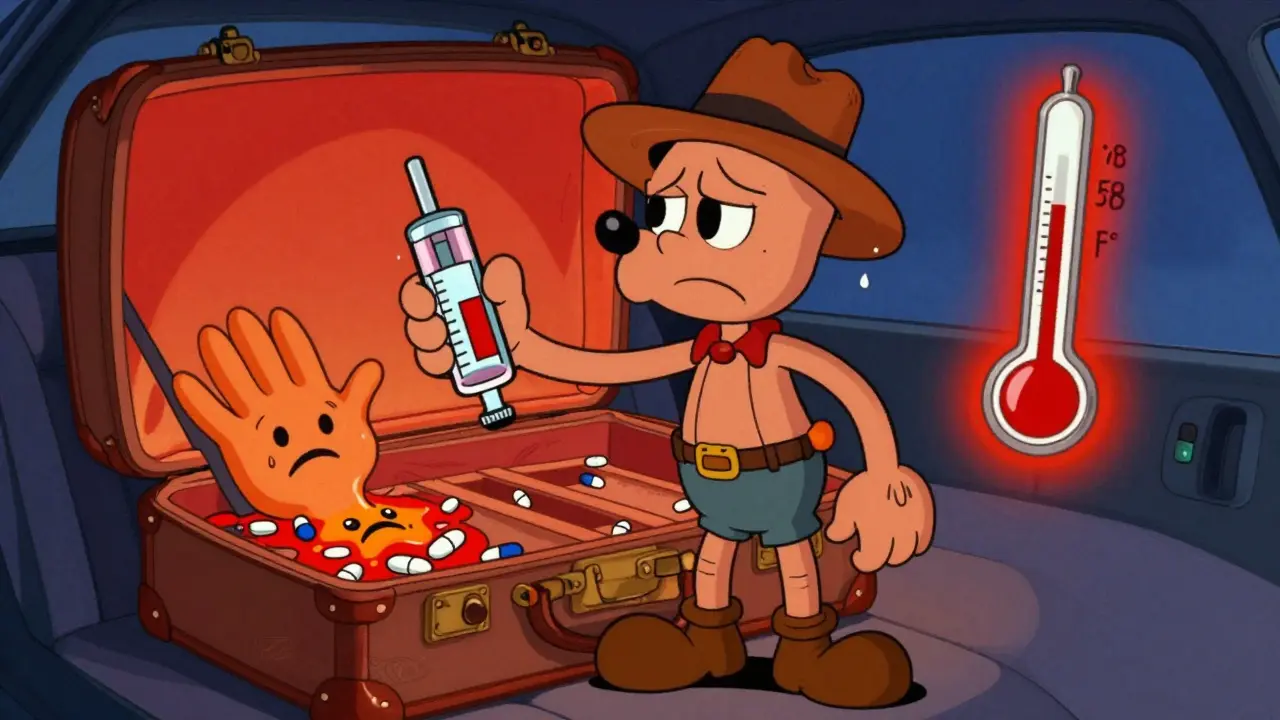
Here’s what most people don’t realize: your car’s glove compartment isn’t just a storage spot-it’s a mini oven. On a sunny day, it can hit 158°F (70°C). That’s hotter than an oven set to broil. If your blood pressure pill or asthma inhaler sits there for a few hours, it could lose effectiveness. Same goes for your purse or backpack left in a hot hotel room. The damage isn’t always visible. You won’t see a change in color or smell. But your body will feel the difference.
What Temperature Is Safe? The Numbers Don’t Lie
Most medications need to stay between 68°F and 77°F (20°C to 25°C). That’s room temperature. But 12.7% of prescriptions, including insulin, certain antibiotics, and biologics, need refrigeration: 36°F to 46°F (2°C to 8°C). Too cold? Just as bad. Freezing can break down the structure of liquid meds, like insulin or epinephrine. Too hot? Above 86°F (30°C), potency drops fast. One study showed a 37.2% loss in effectiveness after just two hours in that heat.
Insulin is the most common problem. A traveler on Reddit shared how her insulin stopped working after being left in a car trunk at 95°F for three hours. She ended up in the hospital with dangerously high blood sugar. That’s not rare. The r/Diabetes subreddit has over 200 posts from people who had similar experiences. The science is clear: every 1°C above 8°C causes a 1.7% drop in insulin potency per hour. That means if your cooler runs at 10°C instead of 8°C, you’re losing potency while you sleep.
Keep It in the Original Bottle-No Exceptions
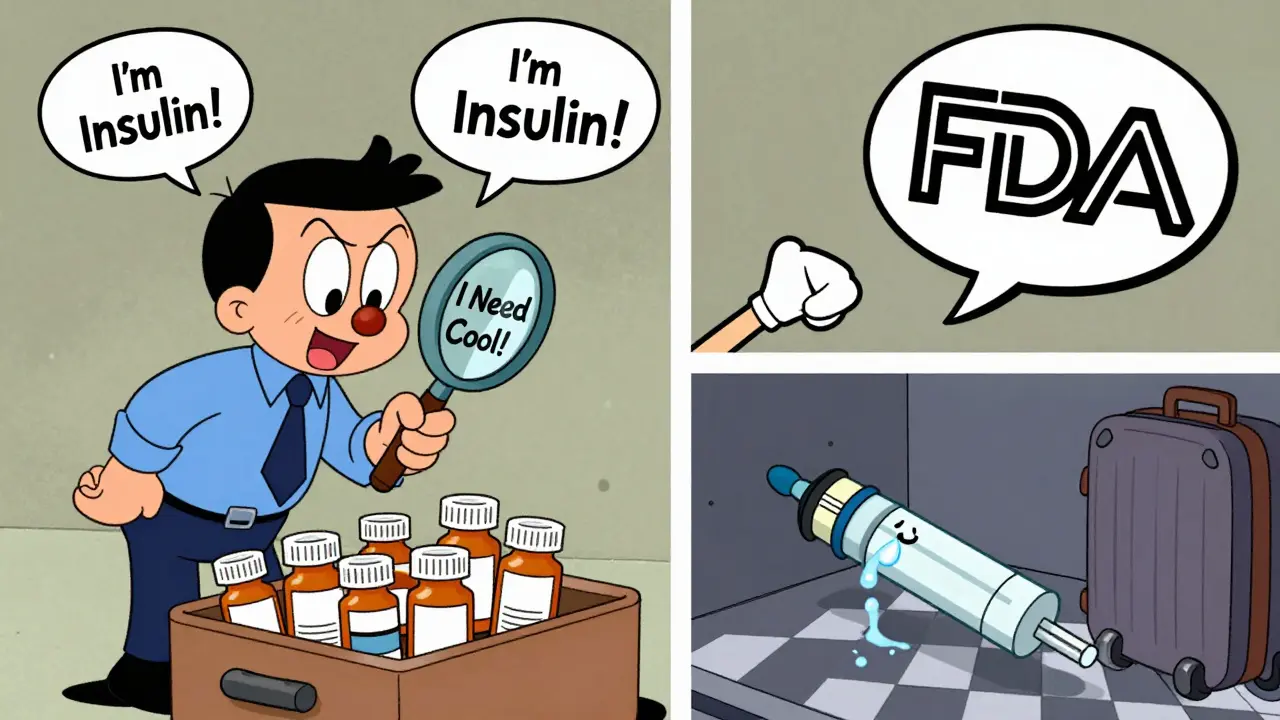
It’s tempting to dump pills into a pill organizer. It’s neat. It’s easy. But doing it while traveling is risky. The FDA and TSA require all prescription meds to be in their original containers with the pharmacy label. Why? Because labels include your name, the doctor’s name, the drug name, and the National Drug Code (NDC). Without it, TSA agents will pull you aside for secondary screening-which adds an average of 22.7 minutes to your security check.
And it’s not just about TSA. If you have a medical emergency abroad, a doctor needs to know exactly what you’re taking. A 2022 study from Johns Hopkins found that keeping meds in original containers reduces identification errors by 92.4% during international incidents. That’s huge. Imagine being in a foreign country, unable to speak the language, and the ER staff can’t tell what’s in your bag. Original bottles are your lifeline.
TSA Rules: What You Can and Can’t Bring
Yes, you can bring liquids through security-even if they’re over 3.4 ounces (100ml). But you need to declare them. The TSA Medical Notification Form (TSA-1400) lets you carry larger amounts of liquids like insulin, liquid antibiotics, or oral rehydration solutions. Just show the form at the checkpoint. No need to put them in the clear plastic bag. But here’s the catch: you must have a doctor’s note on official letterhead. It should list the medication, dosage, and why you need it. Over 92 international destinations require this.
For electronic devices like insulin pumps or nebulizers, you need FAA Special Authorization Form 8110-3. Battery limits? No more than 100 watt-hours per device. Most pumps are under that, but always check. And never check your meds in luggage. Checked baggage can freeze in cargo holds or overheat. One FDA report (MEDWATCH-2023-7841) tells the story of a traveler whose epinephrine auto-injector froze in checked luggage. When they needed it during an allergic reaction, it didn’t work. That’s life-threatening.
How to Keep Cold Medications Cold-Without Ice Packs
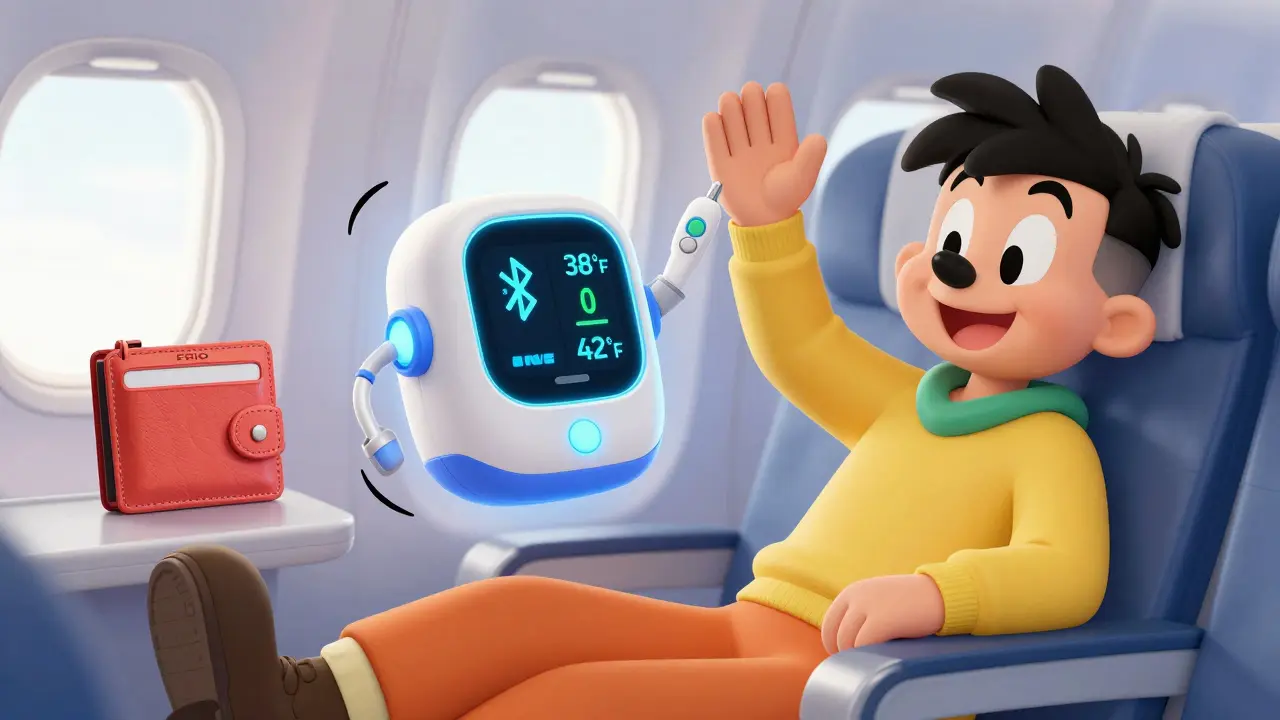
Forget regular coolers. They don’t hold temperature long enough. You need a phase-change material (PCM) cooler. These are designed to maintain 36°F to 46°F (2°C to 8°C) for 72 hours. Two trusted brands: Frio Wallet (holds 59°F/15°C for 45 hours) and TempAid MedCooler (72-hour stability). Both are FDA-cleared. Pre-freeze the gel packs for 12 hours at 0°F (-18°C) before use. Don’t skip this step. A cold pack that’s only been in the fridge won’t cut it.
Pro tip: Use a data logger. These tiny devices record temperature over time. One traveler on HealthUnlocked used one during a 14-day trip and confirmed her meds stayed between 38°F and 42°F. That’s perfect. If you’re flying, ask the airline if they offer temperature-controlled storage in the cabin. Some do, especially on long-haul flights.
Plan Ahead-Start 14 Days Before You Go
Don’t wait until the night before. Begin planning two weeks out. First, refill your prescriptions. Medicare Part D and most insurers allow 5-day early refills. Use that window. Second, get a doctor’s letter. It should include your diagnosis, medication list, dosages, and a statement of medical necessity. Signatures matter-on official letterhead, with contact info. Carry two printed copies.
Third, adjust for time zones. If you’re crossing three time zones, don’t just take your pill at the same clock time. Consult your pharmacist. For circadian meds like melatonin or certain blood pressure drugs, shift your dose by 15 minutes per day leading up to travel. This prevents spikes or crashes.
What’s New in 2026? Smart Tech Is Coming
There’s a reason this topic is growing. More people are on complex meds. Biologics-like those for arthritis, MS, or cancer-now make up 43.7% of new drug approvals. These require strict cold chain control. That’s why the FDA approved temperature-indicating labels in 2023. Brands like 3M’s MonitorMark change color if exposed to 86°F or higher. You’ll see it. No guessing.
Next up? Smart containers. Proteus Digital Health is testing Bluetooth-enabled pill boxes that log temperature, humidity, and whether the pill was taken. Expected to hit the market in 2026. Until then, stick to proven methods. No gadget replaces a cool, dark, labeled container.
What Not to Do
- Don’t leave meds in the car-even if it’s cloudy.
- Don’t transfer pills to organizers unless you’re carrying the original bottles too.
- Don’t assume your hotel fridge is cold enough. Test it with a thermometer.
- Don’t skip the doctor’s letter. It’s not paperwork-it’s insurance.
- Don’t pack meds in checked luggage. Ever.
Final Checklist Before You Leave
- Refill prescriptions 5-7 days early.
- Get a doctor’s letter on official letterhead.
- Use original containers with labels intact.
- For refrigerated meds: use a validated cooler (Frio or TempAid), pre-frozen gel packs.
- Carry TSA-1400 form if bringing liquids over 3.4 oz.
- Bring a data logger if you’re traveling with sensitive biologics.
- Keep all meds in your carry-on.
- Know your time zone adjustment plan with your pharmacist.
Medications aren’t like clothes or chargers. They’re life-support tools. Treat them like it. The difference between a smooth trip and a medical crisis often comes down to one thing: how you pack them.
jared baker
I used to toss my insulin in the glovebox until I learned the hard way. One 95°F day in Arizona and I was dizzy for hours. Now I use a Frio wallet - no joke, it’s a lifesaver. Pre-freeze it, keep it in your carry-on, and you’re golden. Simple as that.
Michelle Jackson
People really need to stop treating their meds like snacks. If you can’t handle the responsibility of carrying a pill bottle, maybe you shouldn’t be traveling. The fact that this even needs explaining is ridiculous.
David Robinson
I’ve been in ERs in three different countries because people didn’t follow basic storage rules. The CDC stat isn’t even the tip of the iceberg. Airlines don’t care. TSA doesn’t care. Your doctor probably doesn’t care enough to warn you. So who does? You. And if you’re not reading this carefully, you’re one bad trip away from a coma. No one’s coming to save you.
Sanjana Rajan
In India, we’ve been using coolers with wet cloths for decades. It’s not fancy, but it works. Just wrap the bottle in damp cotton and keep it in the shade. No need to spend $100 on a gadget. Sometimes old-school beats marketing.
Kyle Young
It’s fascinating how little we consider the materiality of pharmaceuticals. A pill isn’t just a chemical compound - it’s a fragile system shaped by decades of engineering. Heat doesn’t just degrade potency; it alters molecular kinetics. The body doesn’t know the difference between a degraded dose and no dose. That’s why we die quietly on vacation. We assume biology is predictable. It’s not.
Aileen Nasywa Shabira
Oh wow, so the FDA says we can’t trust our own judgment? Let me guess - next they’ll tell us not to breathe air without a permit. And why do we need a doctor’s letter for insulin? Did someone really think ‘oh I’ll just take my meds and pretend I’m fine’? This is the most patronizing thing I’ve read since ‘just drink more water’.
Kendrick Heyward
I lost my dad because of this. He kept his epinephrine in his checked bag. They told him it was fine. He didn’t make it home. I’m not mad. I’m just done pretending people care. If you don’t read this and act on it, you’re part of the problem.
lawanna major
This post is a gift. Not everyone has access to Frio wallets or data loggers, but the principles are universal: keep it cool, keep it labeled, keep it with you. I’ve helped elderly travelers in airports with their meds - just a little attention goes a long way. You’re not just packing pills. You’re packing peace of mind.
Ryan Voeltner
The original container requirement is not bureaucracy it is safety. The NDC code is not a suggestion it is a lifeline. When you are in a foreign hospital with no translator the label is the only thing that speaks for you. This is not about rules it is about dignity in crisis.
Linda Olsson
Did you know the FDA has been quietly pushing this agenda since 2021? The real goal is to force people into expensive branded coolers. Look at the patents. Frio and TempAid are owned by the same conglomerate that makes insulin. This isn’t about safety. It’s about profit. You’re being manipulated.
Ayan Khan
In my village in Bihar, we carry medicine in clay pots. They stay cool naturally. No electricity, no gel packs. Just tradition and physics. Maybe we don’t need high-tech solutions. Maybe we just need to remember how humans lived before corporations told us how to live.
Emily Hager
I find it deeply offensive that anyone would suggest carrying medication in a non-original container. This isn’t a suggestion. It’s a legal requirement. And if you’re too lazy to follow it, don’t expect sympathy when you end up in a hospital. You brought this on yourself.
Melissa Starks
I’m so glad someone finally said this. I used to put my meds in a pill organizer until I got pulled over by TSA in Denver. They thought I was trafficking because my bottles were empty. I had to show them the originals in my bag - took 45 minutes. I cried. Now I carry both. And I always test my hotel fridge. It was 14°C last time. Not cold enough. I’m not taking chances anymore.
Lauren Volpi
America needs to chill. Everyone’s acting like this is a war zone. It’s just medicine. You don’t need a PhD to carry pills. Stop overcomplicating it. Just keep them in your pocket and don’t leave them in the sun. That’s it. The rest is fearmongering.
Kal Lambert
Simple truth: if it’s cold chain sensitive, treat it like a baby. Keep it close. Keep it cool. Keep it labeled. No gadgets needed. Just awareness. I’ve flown 47 countries with insulin. Never had a problem. Just follow the basics. You don’t need a checklist. You need to care.