
Antihistamine Side Effect Checker
Choose the type of antihistamine you are taking or considering to see its potential side effect profile.
Select all that apply to personalize your risk assessment.
Select a medication and symptoms above to see your personalized analysis.
Have you ever taken an allergy pill for a sneeze and ended up with a desert-dry mouth, a stubborn stomach, or trouble getting to the bathroom? It’s not just bad luck. You’re likely experiencing anticholinergic effects, which are unintended pharmacological actions caused by blocking muscarinic acetylcholine receptors in addition to histamine H1 receptors. These side effects are the hidden cost of many popular over-the-counter medications, particularly older drugs like diphenhydramine (Benadryl). While they stop your allergies, they also disrupt the chemical signals that control your saliva, digestion, and bladder.
Understanding why this happens-and how to avoid it-can save you from unnecessary discomfort and serious health risks, especially as you age. This guide breaks down the science behind these symptoms, compares old versus new allergy meds, and gives you practical steps to manage or eliminate these issues entirely.
The Science Behind the Side Effects
To understand why antihistamines cause dry mouth or constipation, we need to look at what they actually do in your body. Antihistamines were designed to block histamine H1 receptors, which trigger allergic reactions like itching, swelling, and runny noses when exposed to allergens. That’s their job. But some antihistamines, specifically the older "first-generation" ones, don’t pick locks cleanly. They also block muscarinic acetylcholine receptors, which regulate involuntary bodily functions including salivation, gut movement, and bladder contraction.
When these receptors get blocked, your body loses its ability to perform automatic tasks efficiently. Here is how that translates into specific symptoms:
- Dry Mouth (Xerostomia): Salivary glands rely on M3 receptor stimulation to produce spit. When blocked, secretion drops by roughly 60-70%. Your mouth feels sticky, swallowing becomes harder, and your risk of cavities spikes because saliva normally washes away bacteria.
- Constipation: Your gut muscles move food along through peristalsis, driven by M2 and M3 receptors. Blocking them slows this process down by 30-40%, doubling the time it takes for waste to pass through your system.
- Urinary Retention: Your bladder needs to contract to push urine out, while the sphincter needs to relax. Anticholinergics weaken the bladder’s squeeze by 25-35% and tighten the sphincter, making it difficult or impossible to empty your bladder completely.
This isn't a rare quirk; it's a direct chemical consequence of the drug class. First-generation antihistamines like diphenhydramine have a high affinity for these muscarinic receptors, meaning they bind to them tightly and cause significant disruption even at standard doses.
First-Generation vs. Second-Generation Antihistamines
Not all allergy pills are created equal. The biggest factor in whether you experience anticholinergic side effects is which generation of antihistamine you choose. Developed in the 1940s, first-generation drugs were derived from compounds that inherently possessed strong anticholinergic properties. In contrast, second-generation antihistamines, developed in the 1980s and 1990s, were engineered specifically to stay out of the central nervous system and avoid blocking muscarinic receptors.
| Feature | First-Generation (e.g., Diphenhydramine) | Second-Generation (e.g., Cetirizine, Fexofenadine) |
|---|---|---|
| Anticholinergic Activity | High (Blocks M1-M5 receptors significantly) | Minimal to None (Ki values >1,000 nM for M1) |
| Dry Mouth Incidence | ~28% of users | 2-4% of users |
| Constipation Incidence | 15-20% of users | 3-5% of users |
| Urinary Retention Risk | 5-8% in elderly patients | <1% in elderly patients |
| Duration of Action | 4-6 hours | 24 hours |
| Sedation Level | High (Crosses blood-brain barrier) | Low (Mostly peripheral action) |
The data is clear. If you take fexofenadine (Allegra) or loratadine (Claritin), you are far less likely to suffer from these disruptive side effects than if you take diphenhydramine. In fact, clinical studies show that second-generation options reduce the incidence of dry mouth from nearly 30% to just 2-4%. For most people seeking daily allergy relief, the newer generation is the safer, more comfortable choice.
Who Is Most at Risk?
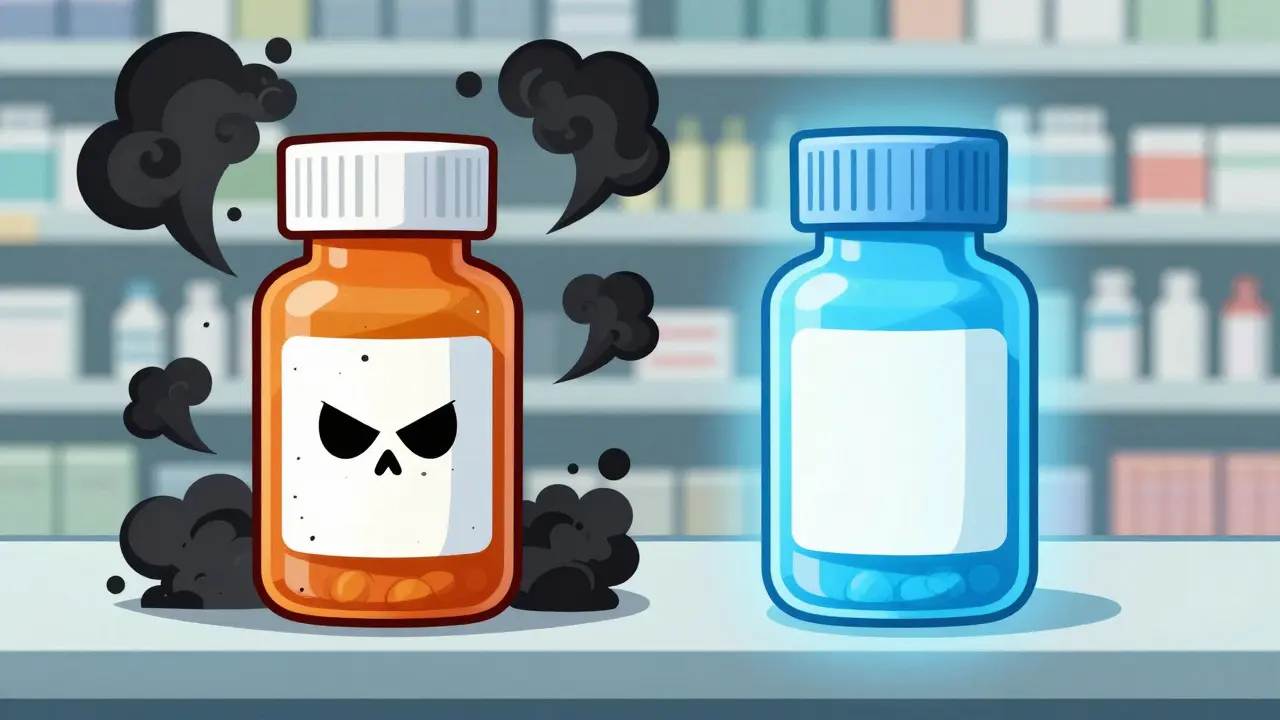
While anyone can experience these side effects, certain groups are much more vulnerable. The aging population faces the highest risk due to natural physiological changes and increased likelihood of taking multiple medications.
As we age, our bodies produce less saliva naturally, our gut motility slows down, and men often develop enlarged prostates. Adding a drug that further suppresses these functions creates a perfect storm. According to the American Geriatrics Society’s Beers Criteria, first-generation antihistamines are listed as "potentially inappropriate medications" for adults over 65. Why? Because the risks outweigh the benefits.
Dr. Shelley Gray, Director of the Aging and Pharmacology Research Lab at the University of Washington, found that long-term use of first-generation antihistamines is associated with a 54% increased risk of dementia over seven years. The anticholinergic burden-the cumulative effect of blocking these receptors-impacts cognitive function severely. Dr. Malaz Boustani notes that diphenhydramine has the highest possible cognitive burden score of 3.0, indicating severe impact on mental clarity.
Additionally, men with benign prostatic hyperplasia (BPH) should avoid first-generation antihistamines entirely. The American Urological Association warns that 31% of men with moderate-to-severe prostate symptoms experience acute urinary retention within 48 hours of using these drugs. This isn't just uncomfortable; it can lead to kidney damage and require emergency catheterization.
Managing and Mitigating Symptoms
If you must use a first-generation antihistamine-for example, for short-term sleep aid purposes-you can take steps to minimize the damage. However, prevention is always better than cure. Here is how to handle each symptom if it arises:
For Dry Mouth
Don't just drink water constantly; it doesn't replace the enzymes in saliva. The American Dental Association recommends chewing sugar-free gum containing xylitol, which a sugar alcohol that stimulates salivary flow and helps prevent tooth decay. Chewing xylitol gum increases salivary flow by 40-60% within five minutes. You can also use saliva substitutes or lozenges designed for xerostomia.
For Constipation
Proactive management is key. If you know you’ll be taking an anticholinergic drug, increase your fiber intake immediately. Drink plenty of water and consider a mild osmotic laxative like polyethylene glycol (PEG 3350). The American Gastroenterological Association suggests that prophylactic PEG reduces constipation incidence from 18% to 5% in patients requiring these medications. Don't wait until you're backed up to start moving things along.
For Urinary Issues
If you feel hesitancy or incomplete emptying, stop the medication immediately. Do not try to "push" through it. Double voiding (trying to urinate again after a few minutes) can help, but if you cannot pass urine at all, seek medical attention. For men with known prostate issues, switch to a second-generation antihistamine before the allergy season starts. Avoid combining antihistamines with decongestants like pseudoephedrine, which can also worsen urinary retention.
Why People Still Use Old Drugs
If second-generation antihistamines are so much better, why do first-generation drugs still hold about 15-25% of the market? Cost and habit play big roles. Generic diphenhydramine costs $4-6 for a month’s supply, while brand-name second-generation options can cost $12-18. Many people buy Benadryl for its sedative effect, unaware that the drowsiness comes partly from the same mechanism causing their dry mouth and confusion.
However, the tide is turning. Regulatory bodies are stepping in. The FDA added a dementia risk warning to diphenhydramine labels in 2021. Hospitals like Mayo Clinic have removed diphenhydramine from their inpatient formularies due to unacceptable rates of delirium. Consumer Reports found that 63% of adults over 65 who switched to second-generation options preferred them specifically to avoid these side effects. One user noted, "I didn't realize how much the dry mouth and bathroom struggles were part of my daily life until they disappeared."
Making the Switch
Switching is simple. You don't need a prescription for most second-generation antihistamines. Look for cetirizine, loratadine, or fexofenadine on the shelf. Read the label carefully. Avoid products labeled "PM" or "Nighttime" unless you specifically want the sedation, as these almost always contain diphenhydramine or doxylamine.
If you are currently taking a first-generation antihistamine daily, talk to your doctor about transitioning. You may experience a brief rebound in allergy symptoms as your body adjusts, but the relief from dry mouth and constipation is usually immediate. For those over 65, this switch isn't just about comfort-it's about protecting your cognitive health and preventing falls.