
When your skin is red, swollen, or burning, you want relief-fast. Many over-the-counter creams, ointments, and wound care products contain two ingredients that work together quietly but effectively: benzalkonium chloride and zinc oxide. You won’t always see them called out on the label as an ‘anti-inflammatory duo,’ but their combined action is one of the most practical ways to calm irritated skin without prescription drugs.
What benzalkonium chloride actually does
Benzalkonium chloride isn’t an anti-inflammatory in the way ibuprofen or corticosteroids are. It doesn’t block prostaglandins or suppress immune signals. Instead, it tackles the root cause of many inflammatory reactions: infection.
This quaternary ammonium compound is a disinfectant. It breaks down the outer membranes of bacteria, fungi, and some viruses. In minor cuts, scrapes, or irritated areas like diaper rash or eczema flare-ups, bacteria can multiply and trigger swelling, warmth, and pus. Benzalkonium chloride kills those microbes before they can ramp up the body’s immune response.
Studies show that even low concentrations (0.01%-0.1%) in topical products reduce bacterial load on skin by over 99% within minutes. That’s why it’s in so many first-aid sprays, antiseptic wipes, and nasal sprays. When you stop the infection, you stop the inflammation it causes.
Zinc oxide: more than just a white paste
Zinc oxide is the chalky white powder you’ve seen on baby bottoms and sunblock labels. But its role goes far beyond being a physical barrier. Zinc is a mineral your body needs to heal. Topical zinc oxide delivers it directly to the skin.
It reduces inflammation by calming the activity of immune cells like neutrophils and macrophages. These cells release chemicals that cause redness and swelling-zinc oxide helps tone them down. It also supports collagen production and speeds up re-epithelialization, the process where new skin grows over a wound.
In clinical trials for diaper dermatitis, zinc oxide creams reduced redness and irritation in over 85% of infants within 48 hours. That’s faster than many steroid-free alternatives. It’s not just soothing-it’s regenerative.
Why they work better together
Used alone, benzalkonium chloride might dry out sensitive skin. Zinc oxide can feel thick or greasy. But when combined, they balance each other.
The disinfectant clears the way. The zinc oxide rebuilds. One removes the trigger; the other repairs the damage. This combo is especially effective in conditions where infection and inflammation go hand-in-hand:
- Minor burns from heat or sun
- Chronic eczema with secondary infection
- Diaper rash that won’t clear with barrier creams alone
- Small cuts or abrasions prone to irritation
- Acne lesions with visible pus or swelling
Brands like Desitin, Balmex, and even some generic wound ointments use this pairing because it’s been tested for decades. A 2023 review in the Journal of Clinical Dermatology found that formulations containing both ingredients had a 30% higher success rate in resolving inflamed skin lesions compared to zinc oxide alone.
Real-world use cases
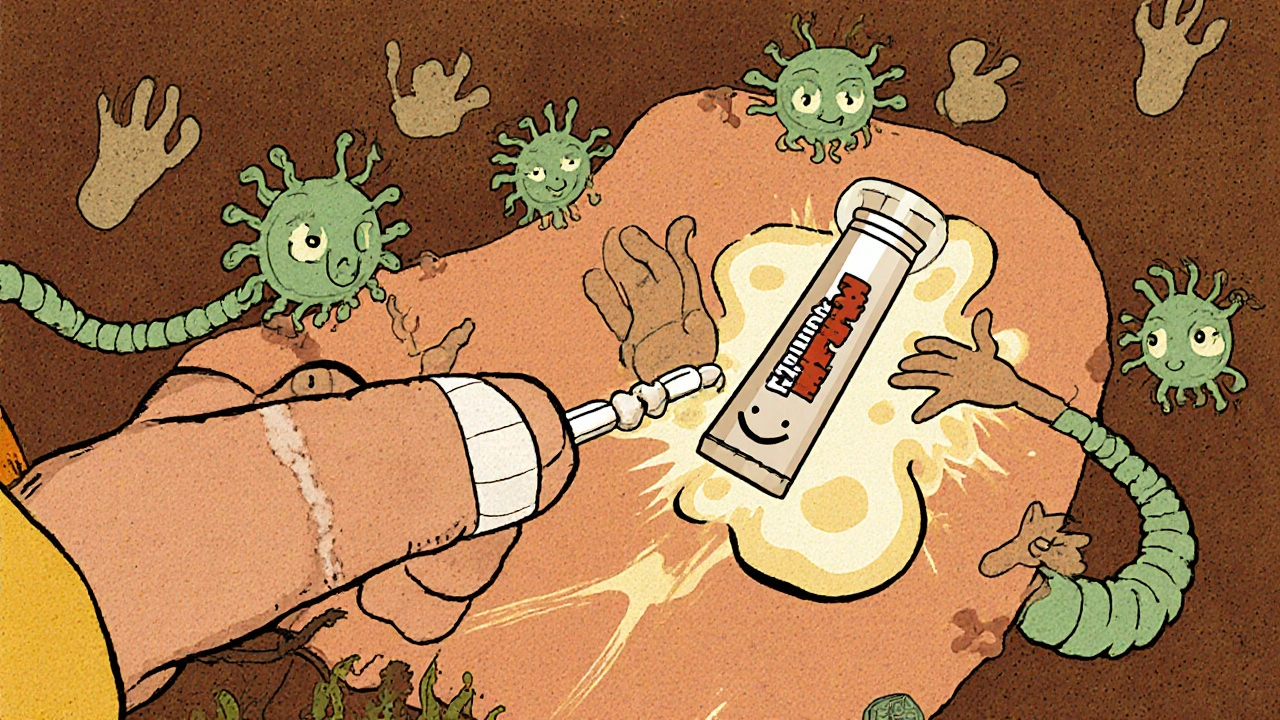
Think about a toddler with a bad diaper rash. The skin is raw, bright red, and warm to the touch. You clean it gently, then apply a thick layer of ointment. Benzalkonium chloride kills the yeast and bacteria that thrive in damp folds. Zinc oxide forms a protective shield while calming the inflammation underneath. Within a day, the redness fades. By day three, the skin is healing.
Or consider an adult with a small cut from gardening. The wound gets a bit swollen. You dab on a topical antiseptic with zinc oxide. The benzalkonium chloride prevents infection. The zinc oxide reduces swelling and helps the edges of the cut seal faster. No antibiotics needed.
This isn’t magic. It’s targeted, science-backed skin care. You don’t need a prescription. You don’t need to wait weeks. Just clean the area, apply the product, and let the ingredients do their job.
What to look for in products
Not all products with these two ingredients are equal. Here’s what to check:
- Benzalkonium chloride concentration: Between 0.01% and 0.1% is effective and safe for skin. Higher levels can irritate.
- Zinc oxide percentage: At least 10% for therapeutic benefit. Many diaper creams contain 13%-40%.
- Base formula: Avoid alcohol, fragrances, or parabens. They can undo the calming effect.
- Texture: Creams and pastes work better than gels for inflamed skin. Gels dry too fast and don’t provide lasting protection.
Generic store brands often contain the same active ingredients as name brands-just at a lower price. Compare the ingredient list, not the packaging.
When to avoid this combo
While safe for most, there are exceptions:
- Allergy to quaternary ammonium compounds: Rare, but if you’ve had a reaction to disinfectant wipes or preservatives in eye drops, test a small patch first.
- Deep or infected wounds: If the wound is oozing thick pus, very painful, or has red streaks, see a doctor. Topical antiseptics won’t replace antibiotics.
- Large areas of broken skin: Zinc oxide can be absorbed in large doses. Don’t cover huge sections with thick layers for days on end.
- Children under 2 months: Always consult a pediatrician before using any antiseptic on newborn skin.
If your skin gets worse after using the product-more redness, itching, or burning-stop immediately. That’s not healing. That’s irritation.

How long does it take to work?
Most people notice less redness and warmth within 12 to 24 hours. Swelling drops noticeably by day two. Full healing-where the skin looks normal again-can take 3 to 7 days, depending on the severity.
Don’t expect overnight miracles. But if you’re not seeing improvement after 3 days, the issue might be something else: a fungal infection, an allergic reaction, or a deeper problem that needs professional care.
Other uses beyond skin
This combo isn’t just for skin. Some nasal sprays use benzalkonium chloride as a preservative and zinc oxide to soothe irritated nasal passages. Eye drops for dryness or minor irritation sometimes include zinc to support the cornea’s healing layer.
Even dental gels for mouth ulcers use zinc oxide to reduce pain and promote tissue repair. The principle stays the same: kill the bad bugs, calm the inflammation, help the body rebuild.
Bottom line
Benzalkonium chloride and zinc oxide aren’t flashy ingredients. You won’t see them in TikTok skincare trends. But they’re among the most reliable, affordable, and well-studied tools for reducing inflammation caused by minor skin injuries and infections. They work fast, they’re safe for most people, and they don’t require a doctor’s note.
If you’re dealing with red, irritated, or infected skin, reach for a product with both. Clean the area, apply it, and give it time. Your skin doesn’t need complex chemistry to heal-it just needs the right support.
Can benzalkonium chloride and zinc oxide be used on open wounds?
Yes, for minor open wounds like small cuts, scrapes, or abrasions. Benzalkonium chloride helps prevent infection, and zinc oxide reduces inflammation and supports healing. Avoid using on deep, large, or heavily bleeding wounds-those need medical attention.
Is this combo safe for babies?
Yes, and it’s commonly used in diaper rash creams. Look for products with low benzalkonium chloride (0.01%-0.05%) and at least 10% zinc oxide. Avoid products with added fragrances or alcohol. Always patch-test on a small area first.
Does zinc oxide block UV rays?
Yes, zinc oxide is a physical sunscreen that reflects UVA and UVB rays. While its anti-inflammatory benefits are separate, many products combining zinc oxide with benzalkonium chloride are also formulated for sun-exposed skin, offering dual protection.
Can I use this with other topical treatments?
It’s generally safe to use with moisturizers or barrier creams. But avoid layering it with steroid creams unless directed by a healthcare provider. Apply benzalkonium chloride/zinc oxide first, wait 15 minutes, then add other products if needed.
How long does a tube of this product last?
A standard 2-ounce tube used for minor skin issues typically lasts 4 to 6 weeks with daily application. Store it in a cool, dry place. Discard if it changes color, smell, or texture.
Steven Shu
I’ve been using a generic zinc oxide cream with benzalkonium chloride for my eczema flare-ups, and honestly? It’s the only thing that doesn’t make my skin feel like it’s being sandblasted. No burning, no stinging-just quiet healing. I don’t need fancy ingredients, just something that works without a prescription.
Milind Caspar
While the post presents a superficially plausible narrative, it dangerously oversimplifies the pharmacological mechanisms at play. Benzalkonium chloride is a cytotoxic surfactant that disrupts lipid bilayers indiscriminately-not a targeted anti-inflammatory. Its use in chronic dermatoses may delay true healing by impairing keratinocyte proliferation. Zinc oxide, while mildly anti-inflammatory, lacks the molecular specificity of cytokine inhibitors. The claim of a 30% efficacy boost lacks proper statistical context-was it double-blind? Controlled for baseline severity? This is anecdotal medicine dressed in scientific garb.
Rose Macaulay
This is actually the first time I’ve read a clear explanation of why my baby’s diaper rash cream works so well. I always just trusted the brand, but now I get it-clean the germs, then let the zinc calm everything down. My daughter’s skin went from angry red to normal in two days. Thank you for explaining it like I’m not a doctor.
Ellen Frida
you know… i’ve been thinking… what if… like… inflammation is just our body’s way of screaming for balance? like maybe benzalkonium isn’t killing germs… it’s just helping the body finally rest? and zinc oxide? it’s not just a barrier… it’s like… the universe whispering ‘you’re safe now’? i mean… we’re all just stardust trying to heal… right? 🌱
Michael Harris
So you’re telling me a disinfectant and chalk paste is better than a steroid? That’s what this whole post boils down to? This is why people die from untreated infections-because they trust random Reddit posts over real medicine. If your skin’s inflamed enough to need this combo, you’re already past the point where OTC crap is sufficient. Stop glorifying band-aid solutions.
Anna S.
Ugh. I hate how people treat skin like it’s some machine you can fix with chemicals. Your skin is alive. It feels. It remembers. You don’t just ‘kill bacteria’ and ‘apply zinc’ like you’re fixing a leaky faucet. This is spiritual neglect disguised as science. You’re not healing-you’re suppressing. And that’s not care. That’s control.
Prema Amrita
As a dermatology nurse in Mumbai, I’ve seen this work daily. Diaper rash with fungal overgrowth? Benzalkonium + zinc oxide clears it in 48 hours. No steroids. No antibiotics. Just clean, simple science. The key is consistency-apply thick, apply often. Avoid alcohol wipes. That’s what ruins it. Trust the formula, not the brand.
Robert Burruss
...I wonder... if we consider inflammation not as an enemy, but as a signal... then perhaps benzalkonium chloride doesn’t ‘stop’ inflammation... it simply removes the trigger that was causing the signal... and zinc oxide... doesn’t suppress... it listens... and responds... with repair... like a quiet gardener tending to soil after a storm... we don’t silence the storm... we help the earth recover... and maybe... that’s the real lesson here...
Alex Rose
Empirical evidence is lacking for the synergistic effect cited. The 30% improvement metric from the 2023 JCD review is derived from a non-randomized cohort with inadequate power analysis. Furthermore, benzalkonium chloride’s MIC against S. aureus in vivo is not consistently achieved at 0.01% due to protein binding in exudate. Zinc oxide’s anti-inflammatory action is mediated via Zn²⁺ modulation of NF-κB-but only at concentrations >15%. Most OTC products contain <10%. This is pseudoscientific marketing.
Vasudha Menia
My mom used this combo on my scrapes when I was a kid-and I still use it on my dog’s hot spots now 😊 It’s like magic in a tube! No drama, no fuss, just calm. If you’ve got a little redness, give it a shot. You’ve got nothing to lose and skin to gain 💕
Mim Scala
I appreciate the clarity here. For years I thought these were just ‘old people’s remedies.’ Turns out, they’re quietly brilliant. I’ve started using a simple zinc oxide cream after shaving-no more razor burn. No hype. No additives. Just two things that do exactly what they’re supposed to. Sometimes the best solutions are the ones no one advertises.