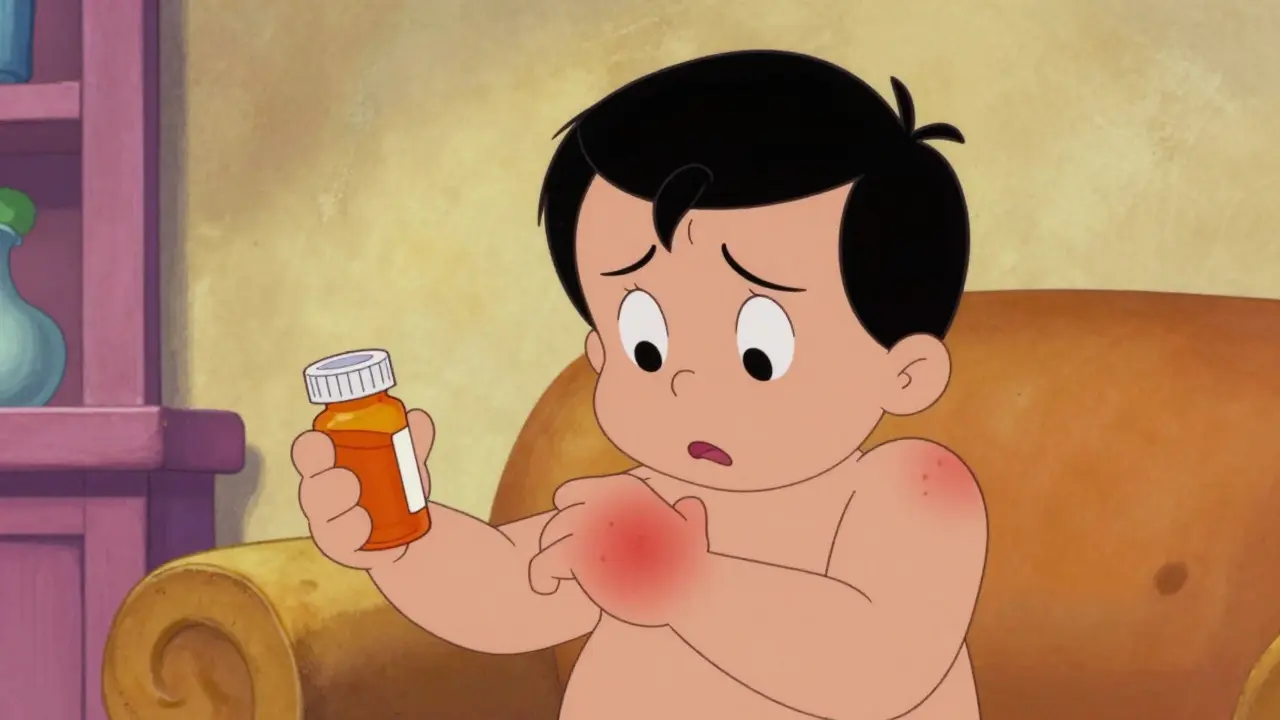
It’s been a week since you started that new antibiotic. The infection is gone, but now your skin feels itchy, and a strange rash has appeared on your arms. You might think it’s just a coincidence or perhaps a mild viral bug. But what if it’s actually your immune system reacting to the medication you took days ago? This isn’t an immediate allergic reaction like hives that pop up within minutes of taking a pill. This is something trickier: a delayed drug reaction.
These reactions are sneaky. They don’t announce themselves right away. Instead, they simmer under the surface for days or even weeks before breaking out in full force. Understanding how they work, what they look like, and when to worry can make the difference between a manageable rash and a life-threatening emergency.
What exactly is a delayed drug reaction?
A delayed drug reaction is an immune-mediated response to a medication that appears days to weeks after exposure, unlike immediate allergies which happen within minutes.
The Timing Trap: Why It Takes Days to Appear
Most people know about immediate allergies. You eat a peanut, and within minutes, your throat swells. That’s an IgE-mediated reaction-fast and furious. But delayed reactions operate on a completely different clock. According to data from the National Institutes of Health (NIH), these reactions typically show up between 5 days to 8 weeks after you first take the drug. Yes, eight weeks. That means a reaction could appear long after you’ve finished the course of medication.
This delay happens because of how our T-cells work. Think of T-cells as the immune system’s special forces. They don’t rush in immediately. First, they need to recognize the threat, multiply, and then launch an attack. This process takes time. In medical terms, this is classified as Type IV hypersensitivity. It’s not just a skin deep issue; it’s a systemic immune activation that unfolds slowly.
Why does this matter? Because by the time symptoms appear, you might have already stopped taking the drug. When you see a doctor, they might not connect the dots back to that medication you took three weeks ago. This diagnostic gap is why so many patients suffer longer than necessary.
Common Culprits: Which Medications Are Most Likely to Cause Delayed Reactions?
Not all drugs are created equal when it comes to delayed reactions. Some medications are far more likely to trigger these immune responses than others. Based on FDA Adverse Event Reporting System (FAERS) data from 2022, here are the top offenders:
- Antibiotics: Specifically beta-lactams like penicillin and amoxicillin. These account for about 32% of reported cases. Reactions often start within two weeks.
- Anticonvulsants: Drugs like carbamazepine, phenytoin, and lamotrigine used for seizures and bipolar disorder. These are notorious for causing severe reactions, often appearing after more than two weeks of use.
- NSAIDs: Non-steroidal anti-inflammatory drugs like ibuprofen and naproxen. While generally safe, they can trigger delayed rashes in susceptible individuals.
- Allopurinol: Used for gout, this drug is a leading cause of a severe condition called DRESS syndrome, especially in certain genetic populations.
- Sulfonamides: Antibiotics containing sulfa drugs can trigger acute generalized exanthematous pustulosis (AGEP).
If you’re starting any of these medications, keep a close eye on your body for at least a month, even after you finish the prescription.
Recognizing the Signs: From Mild Rashes to Severe Syndromes
Delayed drug reactions exist on a spectrum. At one end, you have mild, annoying rashes. At the other, you have life-threatening conditions that require hospitalization. Knowing the difference is critical.
Mild: Maculopapular Exanthema (MPE)
This is the most common form, accounting for 80-90% of delayed reactions. It looks like a flat, red rash with small bumps. It usually starts on the trunk and spreads outward. It’s itchy but rarely dangerous. If you stop the drug, it typically fades within 1-3 weeks. However, don’t ignore it-it’s your body’s warning signal.
Moderate to Severe: AGEP
Acute Generalized Exanthematous Pustulosis sounds scary, and it is. It involves hundreds or thousands of tiny, sterile pustules covering large areas of the body. Fever is common. The good news? If you catch it early and stop the drug, it resolves quickly-usually within 15 days. But it requires medical supervision to manage discomfort and prevent infection.
Critical: SJS/TEN and DRESS
These are the emergencies. Stevens-Johnson Syndrome (SJS) and Toxic Epidermal Necrolysis (TEN) involve blistering and peeling of the skin. SJS affects less than 10% of body surface area, while TEN affects more than 30%. Mortality rates hover around 5-10%, jumping to 30% if more than half the body is involved. Early signs include flu-like symptoms followed by painful red patches that blister.
DRESS Syndrome (Drug Reaction with Eosinophilia and Systemic Symptoms) is another severe type. It hits organs, not just skin. Look for fever over 38.5°C, swollen lymph nodes, and high eosinophil counts in blood tests. Liver damage is common, with ALT levels soaring above 1,000 U/L. It has a median onset of 3 weeks, making it easy to miss initially.
| Reaction Type | Typical Onset | Key Symptoms | Mortality Risk |
|---|---|---|---|
| Maculopapular Exanthema (MPE) | 4-14 days | Flat red rash, itching | <1% |
| AGEP | 1-2 weeks | Pustules, fever | <1% |
| SJS/TEN | 1-2 weeks | Blisters, skin peeling | 5-10% (up to 30%) |
| DRESS | 2-8 weeks | Fever, organ swelling, rash | 8% |
The Genetic Factor: Why Some People Are More at Risk
You might wonder why some people get these reactions and others don’t. Genetics play a huge role. Specific HLA alleles act as genetic markers that predict susceptibility. For example, the HLA-B*15:02 allele is strongly linked to carbamazepine-induced SJS in Han Chinese populations, with an odds ratio of over 1,000. Similarly, HLA-B*58:01 is almost exclusively found in Thai patients who develop allopurinol-induced DRESS.
This isn’t just academic trivia. It’s practical prevention. In Taiwan and Hong Kong, mandatory screening for these genes before prescribing certain drugs has drastically reduced severe reactions. If you have Southeast Asian ancestry, ask your doctor about pharmacogenetic testing before starting anticonvulsants or allopurinol.
What to Do If You Suspect a Delayed Reaction
If you notice a rash, fever, or unusual symptoms days or weeks after starting a new medication, don’t wait. Here’s your action plan:
- Stop the medication immediately. Do not finish the course unless explicitly told otherwise by a doctor who is aware of the symptoms. Early discontinuation reduces mortality risk by 35%.
- Contact your healthcare provider. Describe the timeline clearly: "I started [Drug Name] on [Date], and symptoms began on [Date]." This helps them connect the dots.
- Seek emergency care for severe signs. If you have blistering, mouth sores, difficulty breathing, or high fever, go to the ER. These are red flags for SJS/TEN or DRESS.
- Document everything. Take photos of the rash daily. Note any changes. This visual record is invaluable for diagnosis.
- Avoid self-medicating. Don’t take OTC antihistamines or steroids without consulting a doctor. They might mask symptoms or worsen certain conditions.

Diagnosis and Testing: How Doctors Confirm the Cause
Diagnosing a delayed reaction isn’t straightforward. Skin prick tests, which work for immediate allergies, are useless here. Instead, doctors rely on clinical criteria and specialized tests. The RegiSCAR criteria are widely used, looking at factors like fever, lymphadenopathy, and eosinophilia. Patch testing can help identify specific culprits, though its sensitivity varies (40-60%). Lymphocyte transformation tests (LTT) offer higher sensitivity (75-85%) but are less commonly available.
In severe cases, a skin biopsy is crucial. It shows characteristic patterns of cell death and inflammation that distinguish SJS/TEN from other rashes. Blood tests check for liver enzyme elevation, kidney function, and eosinophil counts, helping confirm DRESS.
Treatment and Recovery: Managing the Aftermath
Once diagnosed, treatment focuses on stopping the immune attack and supporting the body. For mild rashes, stopping the drug is often enough. For moderate to severe cases, systemic corticosteroids like prednisone (0.5-1 mg/kg/day) are standard. They’re tapered slowly over weeks to prevent rebound.
In DRESS cases with kidney involvement, cyclosporine may be added, speeding up resolution by 50% compared to steroids alone. Supportive care is vital: hydration, pain management, and wound care for blistered skin. Hospitalization is common for severe cases, with stays averaging 14 days for DRESS patients.
Recovery takes time. Skin re-epithelialization in SJS/TEN can take 3-4 weeks. Hyperpigmentation may last months. Psychologically, the anxiety of future medication use is real-41% of patients report fear of taking new drugs. Working with an allergist or immunologist can help rebuild confidence through supervised testing and education.
Prevention Strategies for the Future
Can you prevent a delayed drug reaction? Not entirely, but you can reduce risk. Pharmacogenetic screening is becoming more accessible. Ask your doctor if testing for HLA-B*15:02 or HLA-B*58:01 is appropriate for your background. Also, maintain a detailed medication history. Share known reactions with every new provider. Electronic health records should flag these alerts, but human vigilance remains key.
Finally, stay informed. Knowledge is your best defense. Recognizing the early signs and acting quickly can turn a potential tragedy into a manageable event. Your body sends signals-listen to them, even if they come late.
How long do delayed drug reactions last?
Mild rashes typically resolve within 1-3 weeks after stopping the drug. Severe reactions like DRESS or SJS/TEN can take weeks to months for full recovery, with some patients experiencing long-term complications like hyperpigmentation or autoimmune issues.
Can I still take antibiotics if I had a delayed reaction?
Not necessarily. It depends on the specific drug and reaction severity. An allergist can perform supervised challenges or alternative testing to determine if other antibiotics are safe for you. Never restart a suspected culprit drug without medical guidance.
Are delayed drug reactions hereditary?
While the reactions themselves aren’t inherited, genetic predispositions like specific HLA alleles are passed down. If you have a family history of severe drug reactions, inform your doctor, as you may benefit from genetic screening before starting high-risk medications.
What is the difference between an allergy and a delayed reaction?
Immediate allergies occur within minutes via IgE antibodies, causing hives or anaphylaxis. Delayed reactions take days to weeks, mediated by T-cells, and often present as rashes or organ inflammation. They require different diagnostic approaches and treatments.
Should I avoid all NSAIDs if I had a delayed reaction to one?
Cross-reactivity among NSAIDs is possible but not guaranteed. Consult an allergist to test specific NSAIDs. Some patients can safely use non-cross-reactive alternatives, while others need to avoid the entire class.