
Imagine waking up and noticing that the center of your vision is blurry, or perhaps you see tiny dark spots that look like floaters. For millions of people living with diabetes, these aren't just random occurrences; they are often the first signs of Diabetic Retinopathy is a microvascular complication of diabetes that damages the blood vessels in the retina, potentially leading to blindness. It is currently the leading cause of preventable blindness among working-age adults worldwide. The scary part? You can lose a significant amount of your vision before you even notice a symptom. However, the good news is that catching it early can prevent up to 98% of severe vision loss.
Understanding the Stages of Diabetic Retinopathy
Not all cases of retinopathy are the same. Doctors generally group the condition into five categories to decide how aggressively to treat it. Understanding where you fall on this scale helps you understand why your doctor might want to see you every few months or only every few years.
- No Apparent Retinopathy: Your eyes look healthy. This is the goal, but it doesn't mean you stop screening.
- Mild Nonproliferative DR (NPDR): Small swellings in the blood vessels (microaneurysms) appear. Most people have no symptoms here.
- Moderate NPDR: The damage progresses, and blood vessels may start to leak more fluid.
- Severe NPDR: More vessels are blocked, which triggers the eye to try and grow new, fragile blood vessels.
- Proliferative DR (PDR): This is the most advanced stage. New, abnormal blood vessels grow on the surface of the retina. These can leak or bleed, causing sudden vision loss.
Alongside these stages, some people develop Diabetic Macular Edema (DME) is swelling in the macula, the part of the retina responsible for sharp, central vision. This can happen at any stage of retinopathy and often causes the "blurriness" people complain about.
How Often Do You Really Need a Screening?
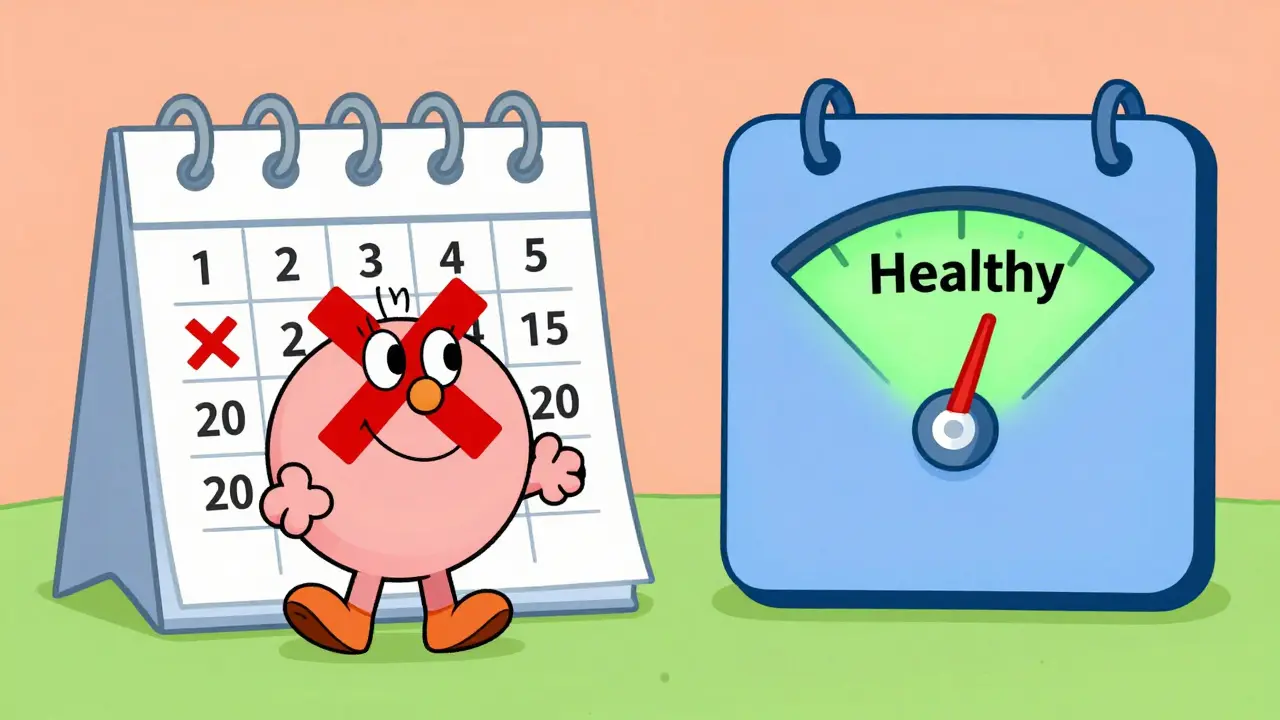
For years, the gold standard was a simple rule: get your eyes checked every year. But we're moving toward a more personalized approach called risk-stratified screening. Instead of a one-size-fits-all calendar, your diabetic retinopathy screening interval depends on your specific health data, such as your HbA1c levels, blood pressure, and how long you've had diabetes.
| Retinopathy Stage | Recommended Follow-up | Action Required |
|---|---|---|
| No DR / Mild NPDR | 1 to 2 years | Routine monitoring |
| Moderate NPDR | 3 to 6 months | Ophthalmology referral |
| Severe NPDR | Within 3 months | Urgent evaluation |
| Proliferative DR (PDR) | Within 1 month | Immediate specialist care |
If you have type 2 diabetes and your first few screenings are clean, your doctor might suggest moving to an exam every 2 to 3 years. This is a huge relief for patients who feel "healthcare burnout." However, if your blood sugar is consistently high (HbA1c > 9%) or your blood pressure is over 140/90 mmHg, you stay on a tighter schedule. Why? Because uncontrolled hypertension and hyperglycemia act like fuel for the fire, speeding up the damage to those tiny retinal vessels.
Modern Treatment Options to Save Your Sight
When a screening reveals that you've moved into a sight-threatening stage, the focus shifts from monitoring to intervention. Depending on the stage and the symptoms, your specialist will likely suggest one or more of the following options.
Intravitreal Injections
This is one of the most common treatments for DME and advanced NPDR. Doctors inject medications-often Anti-VEGF is a class of drugs that block Vascular Endothelial Growth Factor, a protein that stimulates the growth of abnormal blood vessels-directly into the eye. By blocking this protein, the medication reduces swelling and stops new, leaky vessels from growing.
Laser Therapy (Photocoagulation)
Laser treatment is used to seal leaking blood vessels or shrink abnormal ones. While it doesn't usually "improve" vision back to 20/20, it is incredibly effective at stopping the disease from getting worse. In PDR, lasers can be used to create a "wall" that prevents bleeding into the vitreous gel of the eye.
Vitrectomy
In severe cases where blood has filled the center of the eye (vitreous hemorrhage) or the retina has actually detached, a surgeon may perform a vitrectomy. This involves removing the vitreous gel and replacing it with a salt solution or gas to clear the vision and stabilize the retina.
The Role of Technology in Modern Screening
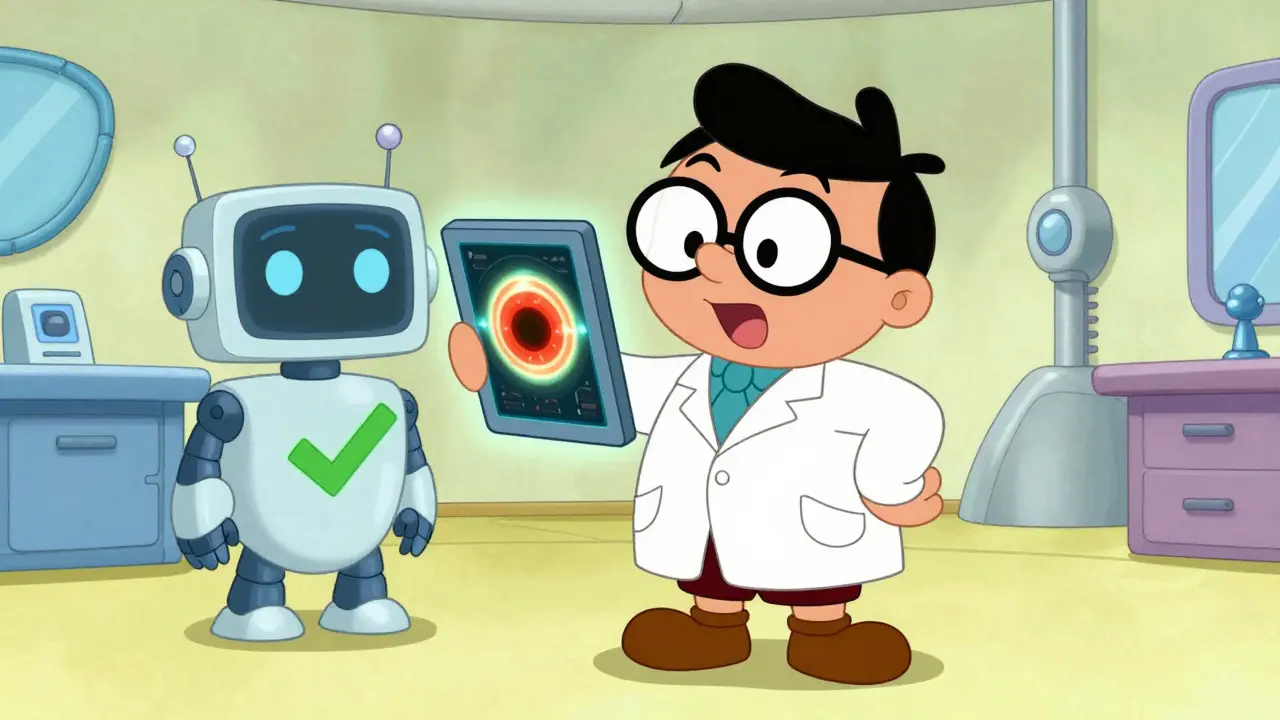
You might not always have to visit a specialist for your initial check. Digital Fundus Photography is a specialized camera system that takes high-resolution images of the back of the eye. These photos can be sent to a grader or an AI for analysis.
AI is changing the game. Tools like Google Health's DeepMind algorithms can now detect referable retinopathy with over 94% sensitivity. This means a primary care doctor could potentially screen you during a regular check-up using a smartphone adapter and an AI app, only sending you to the eye surgeon if the AI flags a problem. This is a lifesaver for people in rural areas who can't drive hours to a city clinic.
Practical Tips for Managing Your Eye Health
Screening is only half the battle. To keep your intervals long and your vision clear, you need to manage the systemic drivers of the disease. Here are a few rules of thumb:
- Watch the Swings: It's not just about your average HbA1c. Frequent, wild swings in blood sugar (variability > 1.5%) are more damaging to retinal vessels than a steady, slightly high level.
- Blood Pressure is Non-Negotiable: Keep your systolic blood pressure under 140 mmHg. High pressure literally pushes fluid out of your retinal vessels, leading to edema.
- Kidney Health Matters: There is a strong link between diabetic nephropathy (kidney disease) and retinopathy. If your eGFR drops below 60, tell your eye doctor immediately.
- The "New's" Rule: If you're pregnant or starting a new, intensive insulin regimen, your risk of rapid progression increases. Get an eye exam regardless of when your last one was.
Can diabetic retinopathy be reversed?
While the structural damage to blood vessels can't be completely "undone," the vision loss can often be halted or partially recovered. Treatments like Anti-VEGF injections can reduce swelling in the macula, restoring central vision for many patients. The key is early detection; once a retina has scarred or fully detached, that vision is usually gone forever.
Why do I need a dilated eye exam if I can see fine?
This is the most dangerous part of the disease. Retinopathy often progresses without symptoms until it reaches a critical stage. By the time you notice blurriness or floaters, you may already have severe NPDR or PDR. Dilated exams allow doctors to see the periphery of the retina where the first signs of damage usually appear.
Will AI replace my eye doctor?
Not exactly. AI is a screening tool, not a treatment tool. It's excellent at saying "This person has retinopathy and needs to see a specialist." However, the actual decision on whether to use lasers, injections, or surgery requires the clinical judgment and physical skill of an ophthalmologist.
How does blood pressure affect my eyes?
High blood pressure damages the walls of the small blood vessels in the retina. This makes them "leaky," allowing fluid and proteins to seep into the surrounding tissue. This fluid buildup causes the retina to swell (edema), which distorts your vision and can eventually lead to permanent scarring.
What is the difference between NPDR and PDR?
NPDR (Nonproliferative) means the damage is limited to the existing blood vessels-they might leak or close off. PDR (Proliferative) is the more advanced stage where the eye tries to compensate for the lack of oxygen by growing entirely new, abnormal blood vessels. These new vessels are weak and prone to rupturing, which can cause massive bleeding inside the eye.
Next Steps for Your Care Plan
If you are just starting your diabetes journey, your first eye exam should happen at diagnosis for type 2 diabetes, or 3-5 years after diagnosis for type 1. Once you have a baseline, work with your endocrinologist and ophthalmologist to set a schedule that fits your risk profile. If you're feeling overwhelmed by the frequency of visits, ask your doctor if you are a candidate for risk-stratified screening based on your current HbA1c and blood pressure. Don't wait for symptoms to appear-by then, the conversation changes from prevention to salvage.
Mark Koepsell
Risk-stratified screening is a significant shift in protocol. By utilizing biomarkers like HbA1c and blood pressure, clinicians can reduce the burden on patients who are stable while prioritizing those with higher metabolic volatility.
Kelly Feehely
Oh sure, let's just trust "AI algorithms" to diagnose our eyes now!! What's next, letting a computer decide our whole life? These tech companies just want a backdoor into your medical data to sell it to insurance companies so they can hike your rates the moment a bot sees a pixel out of place. Wake up people, the medical industrial complex is just using "convenience" to strip away actual human oversight!
kelvin villa saab
Srsly this is a total disaster waitng to happen!! How can anyone just go every 2 years?? That is just insane. Absolute madness!! I can't believe some doctors actually sugest this... absolute joke!
princess lovearies
It's all about finding a balance that works for your own mental health. Healthcare burnout is a real thing, and if a longer window between exams helps someone stay compliant with their overall treatment, then that's a win for everyone.
Andrew Hanssen
The premise that early detection prevents 98% of severe vision loss is a statistically convenient narrative. In reality, the progression of retinopathy is often dictated by systemic failures that a simple screening cannot rectify.
Spencer Farrell
One must consider that the ocular manifestation of diabetes is merely a mirror reflecting the broader systemic decay of the vascular architecture. To focus solely on the retina is to treat the symptom while ignoring the ontological tragedy of the metabolic disorder itself. It is an exercise in futility if one does not first master the discipline of glucose regulation through a rigorous philosophical commitment to health.
Kartik Agarwal
The synergy between fundus photography and AI-driven triage is a game changer for accessibility. By optimizing the screening pipeline, we can reduce the burden on tertiary care centers and ensure that patients with proliferative changes receive urgent vitreoretinal intervention through a more streamlined referral pathway.
Allison Maier
too long didn't read 🙄
Jimmy Crocker
It is quite frankly an embarrassment that most people are only now discovering the criticality of blood pressure in relation to retinal edema, though I suppose the average patient is far too preoccupied with their trivial daily existence to understand the complexities of microvascular permeability... and honestly, the way some of these clinics handle scheduling is just utterley abysmal, bordering on the incompetent.
Prudence Wesson
The lack of discipline in blood sugar management is simply appalling!!! One cannot expect a miracle cure when the basic tenets of glycemic control are ignored... it is truly a failure of will!!!
Divya Patel
The eye is a window to the soul, but in this case, it is a window to our internal health... such a fragile balance we maintain between sight and darkness!!!
Alexa Mack
I wonder if different cultures have different ways of coping with the fear of vision loss. It's interesting how much we rely on technology now to catch things we can't even feel.