Fluoroquinolone Tendon Risk Estimator
Select additional risk factors that apply to you:
Risk Assessment Result
Select your antibiotic and risk factors to see your estimated risk profile.
Imagine finishing a run or simply stepping out of bed, only to hear a loud pop in your ankle. One moment you’re fine; the next, you can’t put weight on your foot. For many people, this terrifying scenario is linked not to an accident, but to a common prescription: antibiotics called fluoroquinolones. You’ve likely heard the warnings. Doctors tell you these drugs carry a black-box warning for tendon damage. But there’s a specific myth that keeps circulating online and even in some medical circles: that taking NSAIDs (non-steroidal anti-inflammatory drugs like ibuprofen) alongside these antibiotics drastically spikes your risk of a tendon rupture.
Here is the hard truth based on current clinical data: The evidence linking NSAIDs directly to increased tendon rupture risk when combined with fluoroquinolones is surprisingly weak. In fact, most major regulatory bodies, including the FDA, do not list NSAIDs as a primary contraindication. The real villain in this story isn’t usually ibuprofen-it’s often corticosteroids, age, or the specific type of antibiotic you are taking. Understanding the nuance here could save you from unnecessary anxiety or, conversely, help you spot the actual danger signs before it’s too late.
The Fluoroquinolone Family: Not All Antibiotics Are Created Equal
To understand the risk, we first need to look at the drug itself. Fluoroquinolones are broad-spectrum antimicrobial agents used to treat serious bacterial infections. They have been around since the 1980s, but their reputation took a hit after the FDA mandated black-box warnings in 2008, updated again in 2016. These warnings exist because the drugs can cause disabling and potentially permanent side effects involving tendons, muscles, joints, nerves, and the central nervous system.
However, treating all fluoroquinolones as having the same risk profile is a mistake. Recent research shows significant variation between generations and specific drugs within the class. A pivotal 2022 study published in BMJ Open analyzed massive datasets and found that third-generation fluoroquinolones did not show a significant association with Achilles tendon rupture. The incidence rate ratio was 0.92, meaning there was no elevated risk compared to the general population. This contrasts sharply with first- and second-generation drugs, which showed an incidence rate ratio of 2.94-a nearly threefold increase in risk.
When we break it down by individual medication, the picture gets even clearer. Levofloxacin consistently demonstrates a higher risk profile. Studies indicate it carries a 120% increased risk for Achilles tendon rupture (Hazard Ratio = 2.20). On the other hand, Ciprofloxacin and Moxifloxacin have shown no significant risk in multiple large-scale studies. If you are prescribed one of these, knowing which specific drug you are taking changes your risk calculation entirely.
| Antibiotic | Generation | Relative Risk Profile | Key Data Point |
|---|---|---|---|
| Levofloxacin | Second | High | HR 2.20 for Achilles rupture |
| Ciprofloxacin | Second | Low / Neutral | No significant risk in BMJ Open study |
| Moxifloxacin | Third | Low / Neutral | No significant risk identified |
| Gatifloxacin | Third | Low | IRR 0.92 (no elevated risk) |
The NSAID Myth vs. The Corticosteroid Reality
So, where does the idea about NSAIDs come from? It’s logical to assume that if a drug causes inflammation (tendinitis), taking another drug that affects inflammation might make things worse. However, extensive documentation from the FDA and other health agencies highlights corticosteroids-like prednisone-as the true dangerous companion to fluoroquinolones. The black-box warning explicitly advises avoiding concomitant use of corticosteroids because this combination may exacerbate tendinitis and tendon rupture risk significantly.
In contrast, search results and clinical reviews contain little to no specific evidence that NSAIDs increase tendon rupture risk beyond the baseline risk of the fluoroquinolone alone. While some older case reports suggested a link, modern epidemiological studies haven’t borne this out. This is a crucial distinction. If you are taking ibuprofen for a headache while on ciprofloxacin, you are likely safe regarding tendon interactions. If you are taking prednisone for asthma, your risk skyrockets.
This confusion often stems from conflating different classes of anti-inflammatory drugs. Corticosteroids suppress the immune system and alter collagen synthesis more aggressively than NSAIDs. By focusing on the wrong drug interaction, patients might unnecessarily stop pain management they need, or conversely, ignore the real red flags associated with steroid use.
How the Damage Happens: The Biology of Rupture
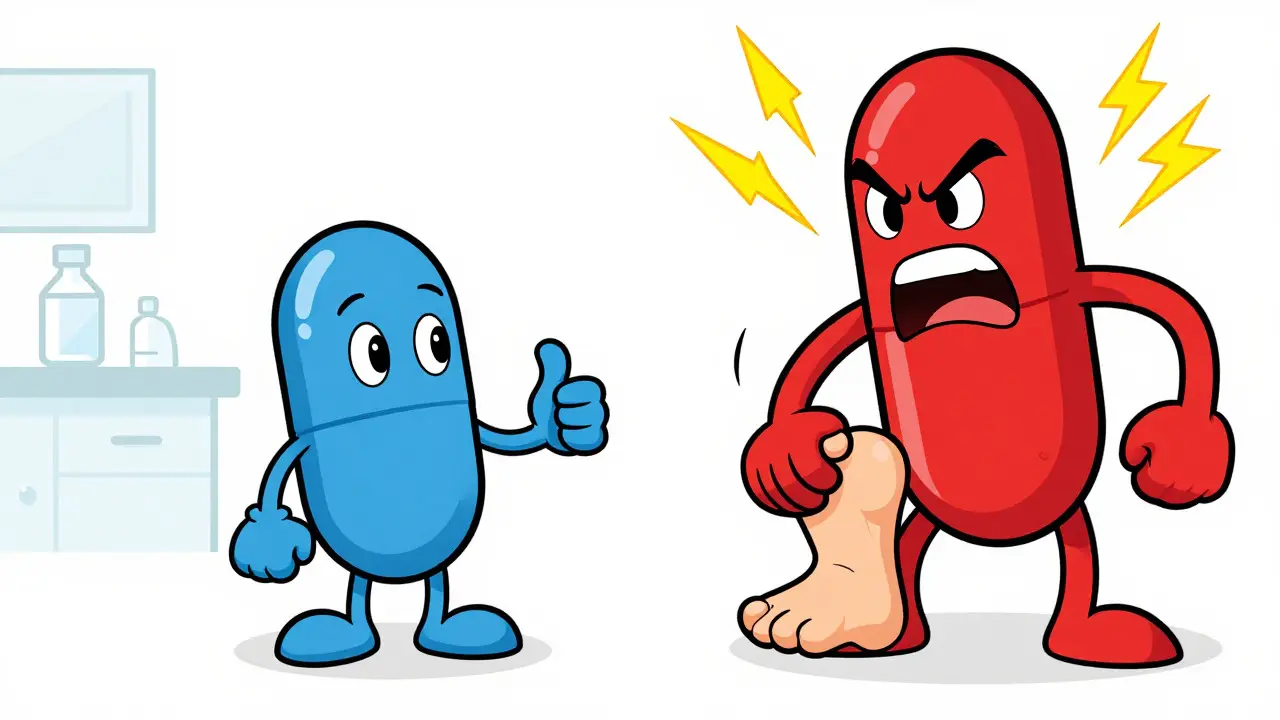
Understanding the mechanism helps explain why certain people are more vulnerable. Fluoroquinolone-induced tendon damage isn’t just random bad luck; it involves specific biological processes. The drugs appear to upregulate matrix metalloproteinases (MMPs), enzymes that break down collagen. Think of collagen as the steel cables in a rope bridge. MMPs are the rust that eats away at those cables.
Additionally, these antibiotics can cause tenocyte toxicity through oxidative stress and apoptosis (cell death). Tenocytes are the cells responsible for maintaining tendon health. When they die off or function poorly, the tendon loses its structural integrity. The drugs also inhibit new collagen synthesis by interfering with DNA replication. So, you get a double whammy: existing structure breaks down faster, and new repair material isn’t being produced efficiently.
The Achilles tendon is the primary victim, accounting for nearly 90% of cases. Interestingly, up to 50% of cases show bilateral involvement, meaning both heels can be affected. The median time from starting the drug to feeling symptoms is just six days. Eighty-five percent of cases occur within the first month of treatment. This rapid onset is why vigilance during the first two weeks of therapy is critical.
Who Is Actually at Risk?
Not everyone who takes a fluoroquinolone will experience tendon issues. The overall risk remains relatively low for the average healthy young adult, but certain groups face a dramatically higher threat level. Identifying these factors allows for better decision-making between patient and doctor.
- Age Over 60: Patients over 60 years old face a 3.8-fold greater risk of Achilles tendinitis or rupture. Aging tendons have less blood flow and slower turnover, making them more susceptible to the toxic effects of the drug.
- Renal Impairment: Kidney issues can lead to higher concentrations of the drug in the body, increasing toxicity.
- Solid Organ Transplant Recipients: These patients often take immunosuppressants and steroids, compounding the risk.
- Concurrent Steroid Use: As mentioned, combining fluoroquinolones with corticosteroids is the most potent risk factor identified.
- Physical Activity: Athletes or individuals engaging in high-impact activities while on these antibiotics may stress already-weakened tendons, leading to rupture.
If you fall into one of these categories, the conversation with your doctor should shift. Is there an alternative antibiotic? For example, for uncomplicated urinary tract infections, nitrofurantoin or trimethoprim-sulfamethoxazole might be safer options. Reserve the fluoroquinolones for when they are truly necessary, such as for complicated infections or anthrax exposure.
Recognizing the Warning Signs Early
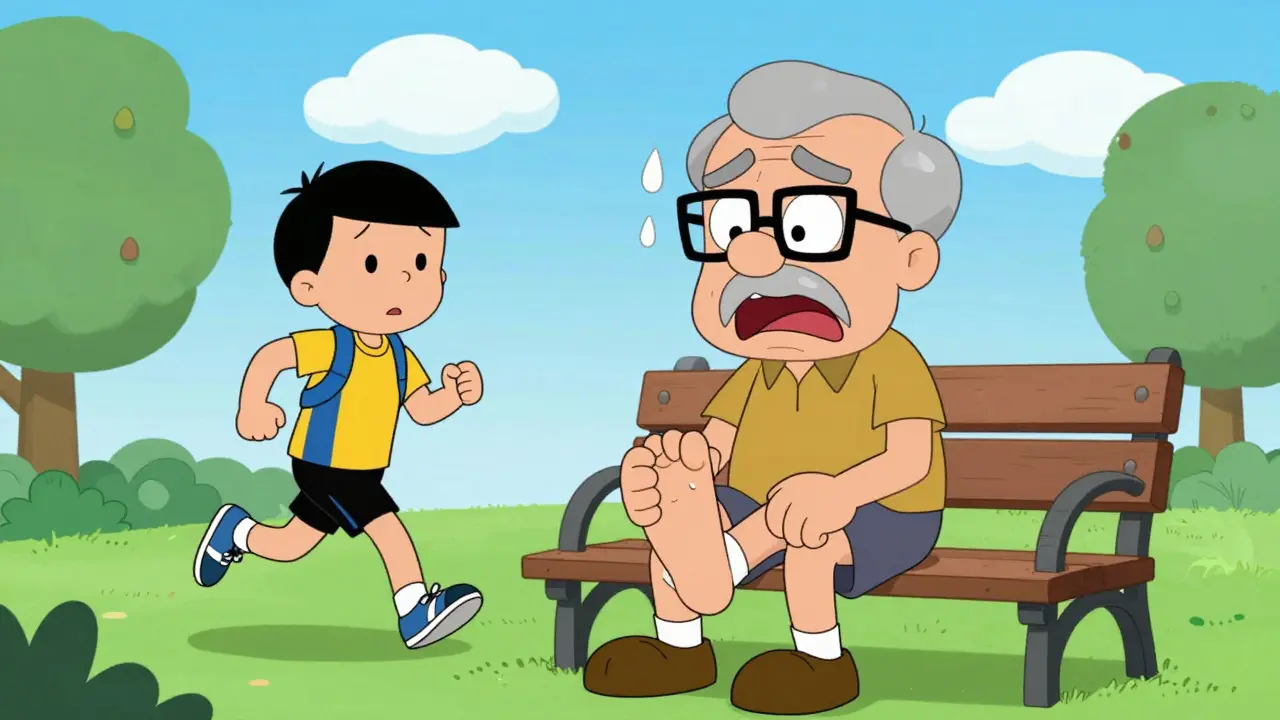
The window for preventing a rupture is narrow but exists. The key is recognizing tendinopathy before it becomes a tear. Symptoms don’t always start with severe pain. Often, they begin subtly as general leg pain, stiffness, or mild swelling near the heel, shoulder, or thumb.
If you feel any unusual pain, swelling, or inflammation in a tendon area while taking a fluoroquinolone, stop the medication immediately. Do not wait for your next scheduled dose. Contact your healthcare provider right away. Immobilize the affected limb to prevent further stress. According to UK government drug safety updates, symptoms can manifest within 48 hours of starting treatment, though they can also appear months after stopping. This delayed onset means you should remain cautious even after finishing your course.
It is also worth noting that oral administration carries a stronger signal for tendon issues than intravenous administration, according to FAERS database analysis. If you are taking pills, pay extra attention to your body’s feedback loops.
Navigating Treatment Decisions Today
The landscape of antibiotic prescribing has changed. Following the FDA’s 2016 safety announcement, systemic fluoroquinolone prescriptions in the United States dropped by 21% between 2016 and 2019. Regulatory agencies worldwide, including the European Medicines Agency, now recommend reserving these drugs for infections where no suitable alternative exists. This "last resort" approach minimizes population-wide risk.
Despite this, fluoroquinolones remain vital for specific conditions. They are still the go-to for certain complicated UTIs, prostatitis, and pneumonia caused by resistant bacteria. The goal isn’t to ban them, but to use them wisely. Patient awareness plays a huge role here. A 2021 survey revealed that only 32% of patients recalled receiving specific counseling about tendon risks. Don’t rely on assumption. Ask your pharmacist or doctor: "What is my personal risk profile for tendon damage with this specific antibiotic?"
Future developments offer hope. Researchers are working on next-generation quinolones designed to minimize tendon toxicity. Candidates currently in Phase II trials show promising preliminary safety profiles. Meanwhile, newer antibiotic classes like lefamulin provide alternatives for community-acquired pneumonia with more favorable safety records. Until then, informed caution is your best defense.
Does taking ibuprofen with Levofloxacin increase tendon rupture risk?
Current clinical evidence does not strongly support the claim that NSAIDs like ibuprofen significantly increase tendon rupture risk when taken with fluoroquinolones. The primary drug interaction warned against by the FDA is with corticosteroids (e.g., prednisone), not NSAIDs. However, always consult your doctor before combining medications.
Which fluoroquinolone has the highest risk of tendon damage?
Levofloxacin consistently demonstrates a higher risk profile for tendon rupture compared to other fluoroquinolones. Studies show a Hazard Ratio of 2.20 for Achilles tendon rupture. Ciprofloxacin and Moxifloxacin have shown lower or non-significant risks in recent large-scale studies.
How soon do tendon symptoms appear after starting antibiotics?
The median latency period is 6 days. Approximately 85% of tendon-related adverse events occur within the first month of treatment. Symptoms can start as early as 48 hours after the first dose, so monitor closely during the first two weeks.
What should I do if I feel pain in my heel while on Ciprofloxacin?
Stop taking the medication immediately and contact your healthcare provider. Rest and immobilize the affected limb. Early intervention can prevent a full rupture. Do not continue the course hoping the pain will pass, as this can lead to permanent damage.
Are older adults at higher risk for fluoroquinolone side effects?
Yes. Patients over 60 years old have a 3.8-fold greater risk of Achilles tendinitis or rupture. Age-related changes in tendon health, combined with potential kidney function decline, make this demographic particularly vulnerable.