Imagine taking a pill you trust completely, only to find out later it contained traces of a different medication or invisible bacteria. For most people, generic drugs are just cheaper versions of brand-name meds. But behind the scenes, generic drug contamination is a real risk that affects millions of patients every year. It’s not just about saving money; it’s about ensuring that what goes into your body actually works as intended without causing harm.
You might wonder why generics face this scrutiny if they have to meet the same standards as brands. The answer lies in the sheer volume and complexity of their supply chains. With 90% of prescriptions in the U.S. being filled with generics, even a tiny error rate translates to massive numbers of affected products. Understanding how these risks happen-and how we stop them-is crucial for anyone relying on daily medication.
What Exactly Is Generic Drug Contamination?
At its core, contamination means unwanted stuff getting into your medicine. This could be chemical impurities, like leftover solvents from manufacturing, or biological agents, such as bacteria and mold. The U.S. Food and Drug Administration (FDA) defines cross-contamination specifically as the undesired introduction of impurities from the environment, other products, or the process itself. It’s a strict definition because the source matters when trying to fix the problem.
There are two main types you should know about. First is physical contamination, which involves visible particles like metal shavings or plastic fragments. Second is chemical or microbial contamination, which is often invisible but potentially more dangerous. For instance, nitrosamines are carcinogenic compounds that can form during certain chemical reactions. They were famously linked to the valsartan crisis in 2018, where batches from multiple manufacturers had to be recalled globally.
| Type | Source | Example Risk |
|---|---|---|
| Cross-Contamination | Residue from previous products | Allergic reactions, dosage errors |
| Microbial | Bacteria, yeast, mold | Infection, spoilage |
| Chemical Impurities | Manufacturing byproducts | Toxicity, long-term health issues |
Why Generics Face Unique Challenges
You might assume that since generics must prove bioequivalence to brand-name drugs, they are equally safe. While true in theory, the economic reality creates pressure points. Generic manufacturers typically operate on much thinner profit margins-averaging 20-25% compared to 60-70% for innovator firms. This can impact how much they invest in state-of-the-art quality control systems.
The global nature of the supply chain adds another layer of complexity. About 80% of active pharmaceutical ingredients (APIs) used in U.S. drugs are manufactured overseas, primarily in India and China. When the raw materials come from one country, the formulation happens in another, and the final packaging occurs in a third, there are more opportunities for things to go wrong. Dr. Scott Gottlieb, former FDA Commissioner, noted that globalization has created risks that outpace current inspection capabilities, especially since the FDA inspects only about 1% of imported drug products for impurities at the border.
Facility age also plays a role. Older plants built before 2000 show a 34% higher contamination risk than newer facilities. This isn't just about rust; it's about outdated ventilation systems, less effective cleaning protocols, and infrastructure that hasn't kept up with modern Good Manufacturing Practices (GMP).
Prevention: Building Safety Into the Process
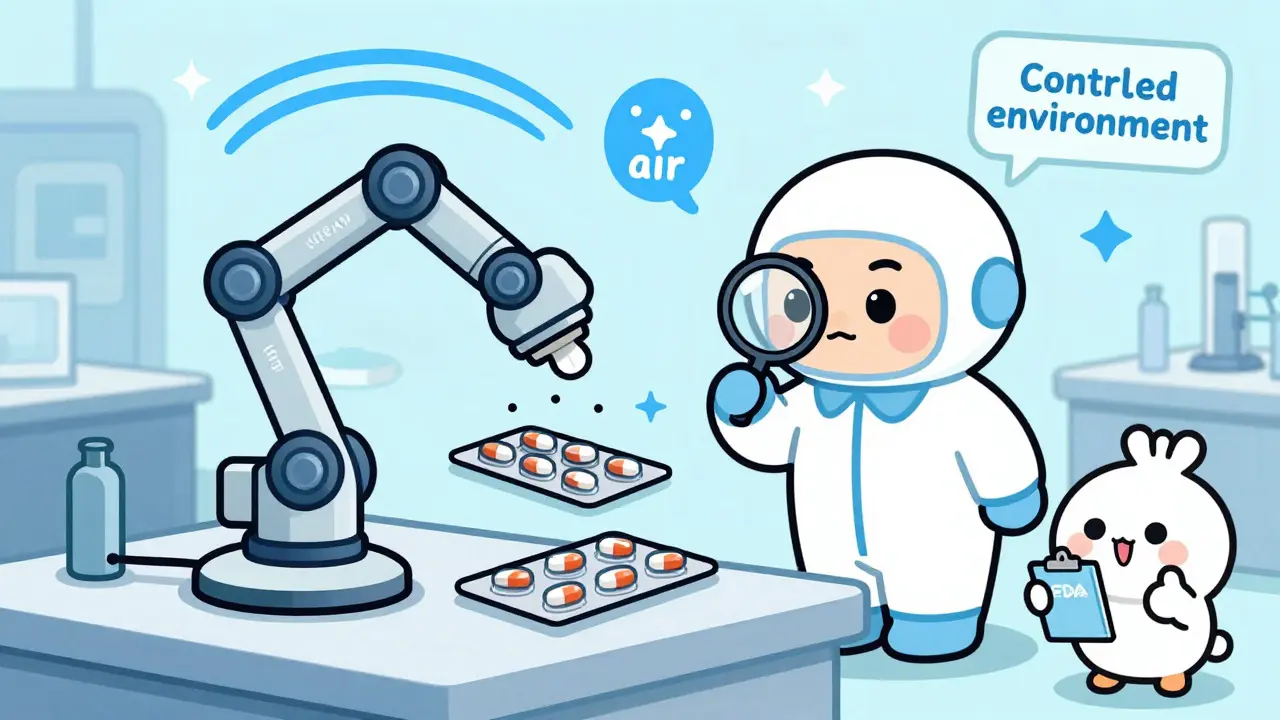
Preventing contamination is far easier and cheaper than dealing with a recall. The backbone of prevention is GMP compliance, but what does that actually look like on the factory floor? It starts with facility design. Non-sterile manufacturing requires ISO Class 8 environments, while sterile products need ISO Class 5. These aren't just clean rooms; they are controlled ecosystems where air pressure, temperature, and humidity are monitored constantly.
Human factors are surprisingly significant. Personnel contribute 75-80% of particles in pharmaceutical cleanrooms. A single person standing still can shed 40,000 skin cells per minute. That’s why gowning procedures are so strict. Companies like Mylan reduced contamination incidents by 82% between 2019 and 2022 by implementing real-time particle monitoring and enhancing how staff move through production areas.
- Cleaning Validation: Manufacturers must prove they remove 99% of residue from the previous product. This usually requires demonstrating three consecutive successful cleaning cycles with swab tests showing residues below 10 parts per million (ppm).
- Environmental Monitoring: Regular sampling of air and surfaces to catch microbial growth before it becomes a batch issue.
- Rapid Testing Methods: Traditional microbiological testing takes seven days. New rapid methods cut that down to four hours, allowing companies to release safe batches faster and hold bad ones sooner.
Response: What Happens When Things Go Wrong
Despite best efforts, mistakes happen. When they do, the response mechanism is critical. In 2022, contamination-related issues accounted for 22% of all drug recalls, with 37% of those affecting generic drugs specifically. The average cost of a single contamination-related recall is $18.7 million, a hit that can devastate smaller generic companies.
The process usually starts with an internal discovery or a report from a patient or pharmacist via the FDA’s MedWatch system. Once a potential issue is identified, the manufacturer must conduct a root cause analysis. Was it a machine failure? A human error? A compromised ingredient? Based on the severity, the FDA may require a voluntary recall or mandate one under 21 CFR Part 7.
For patients, the key is awareness. If you notice unusual smells, colors, or textures in your medication, don’t ignore it. Report it to your pharmacist and use the MedWatch portal. Your input helps the FDA track trends and identify systemic problems before they become widespread crises.
Technological Innovations Changing the Game
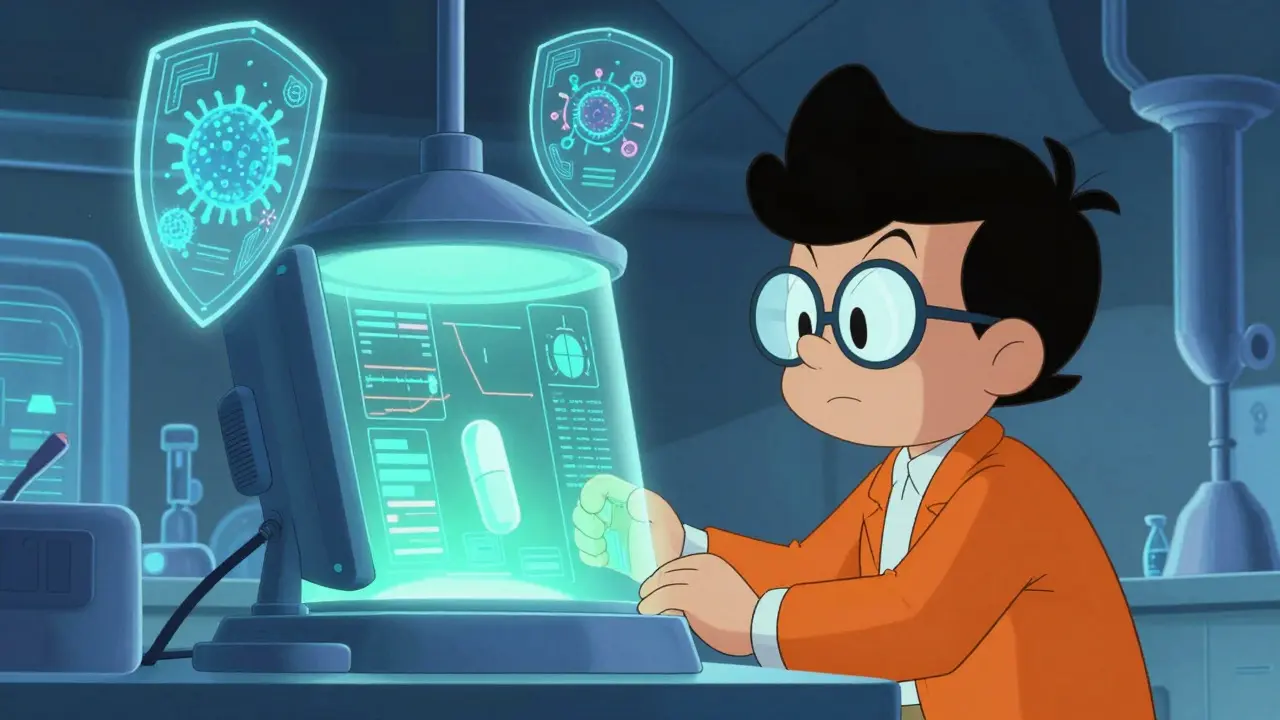
We’re moving away from reactive checks toward predictive analytics. The FDA’s PREDICT system now flags 37% more potentially contaminated imports than its predecessor did. This AI-driven approach analyzes historical data, supplier performance, and environmental factors to predict which shipments are likely to have issues.
Inside factories, closed isolator systems are becoming standard. These sealed units prevent human contact with the product entirely, drastically reducing the risk of particulate and microbial contamination. While expensive-adding $500,000 to $2 million per production line-they offer peace of mind for high-potency drugs where even micrograms matter.
Furthermore, the FDA’s planned implementation of AI-powered environmental monitoring aims to analyze over 15,000 data points per facility. By predicting contamination risks with 89% accuracy, these systems allow managers to intervene before a batch is ruined. Industry analysts project that these advances will reduce contamination-related recalls by 40% by 2027.
Practical Steps for Patients and Pharmacists
While regulators and manufacturers handle the heavy lifting, you play a part too. Here is how you can protect yourself:
- Check the NDC Number: Every bottle has a National Drug Code. If you suspect a problem, note this down. It helps trace the exact batch back to the manufacturer.
- Report Anomalies: Blue specks in white tablets? A strange odor? Don’t assume it’s normal. Call your pharmacy first, then file a MedWatch report if advised.
- Ask About Sources: If you have a history of sensitivities, ask your pharmacist where your specific generic is sourced from. Some brands have stricter internal controls than others.
- Store Properly: Contamination isn’t always from the factory. Improper storage can introduce moisture and microbes. Keep meds in cool, dry places away from direct sunlight.
Pharmacists, especially those in independent practices, often lack resources for independent testing. However, visual inspection remains your first line of defense. Trust your eyes. If it looks off, it probably is.
Are generic drugs less safe than brand-name drugs due to contamination?
Not necessarily, but they face different logistical challenges. While both must meet identical FDA quality standards, generics often have tighter margins and rely more heavily on global supply chains. This can increase the statistical likelihood of supply chain disruptions or minor quality variances, but rigorous GMP compliance ensures most generics are as safe as their brand counterparts.
What should I do if I think my medication is contaminated?
Stop taking the medication immediately. Contact your pharmacist to describe the issue and keep the bottle with the NDC number. If advised, file a report with the FDA through the MedWatch program. Do not return the medication to the shelf unless instructed by a professional, as it may help with investigation.
How common are contamination-related drug recalls?
They are a significant portion of total recalls. In 2022, contamination issues accounted for 22% of all drug recalls in the United States. Among those, 37% specifically involved generic drugs, highlighting the importance of robust quality control in the generic sector.
What is the role of the FDA in preventing generic drug contamination?
The FDA sets the standards (like GMP), inspects facilities, approves new applications (ANDAs), and manages recalls. They also use tools like the PREDICT system to screen imports for risk. Their goal is to ensure that any drug reaching the market meets safety and efficacy benchmarks.
Can I test my generic drugs for contamination at home?
No, reliable testing requires laboratory equipment to detect chemical impurities and microbial loads. Home tests are generally not accurate enough for pharmaceutical-grade verification. Instead, rely on visual inspections and report suspicions to professionals who have access to proper diagnostic tools.