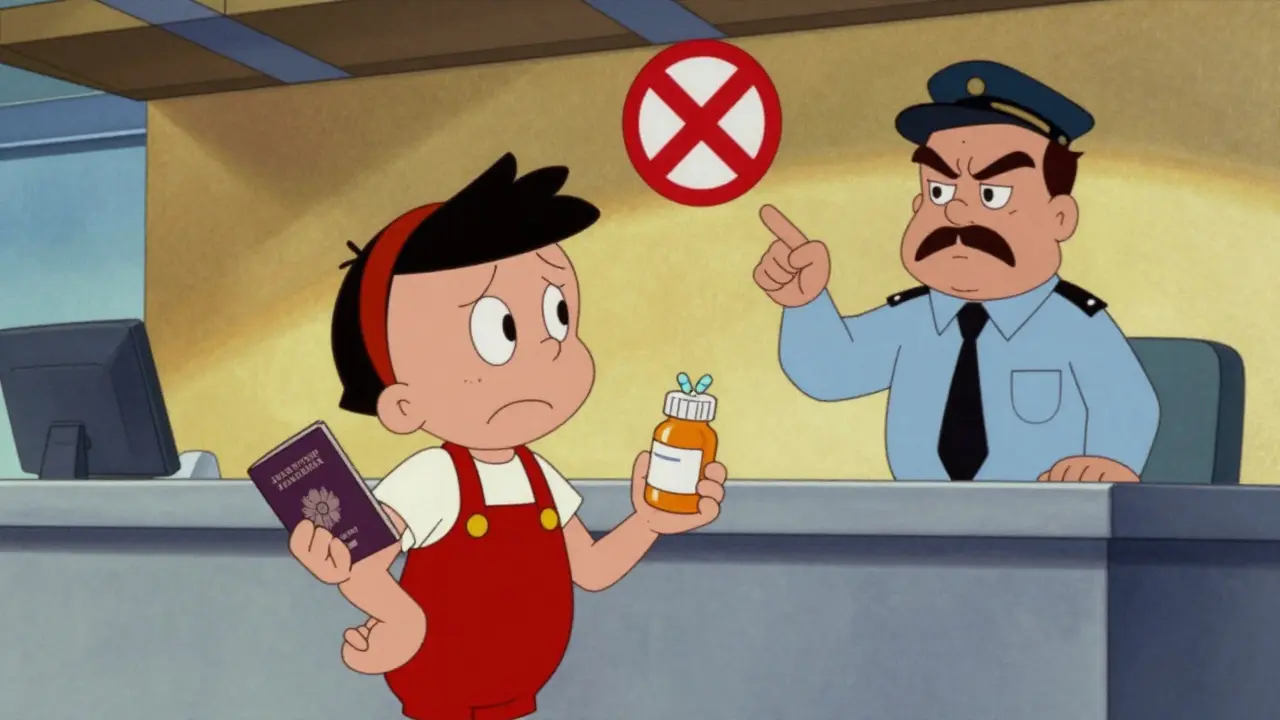
You pack your bags, book the flight, and check your passport. But have you checked if your daily medication will actually be legal-or even available-in your destination? For millions of travelers, this is the silent nightmare of international trips. You can’t just walk into a foreign pharmacy with a prescription from home and expect it to work. In fact, in most cases, it won’t.
Prescription transfers between countries are not like transferring them between two pharmacies in your own city. There is no global database that links doctors and pharmacists across borders. Instead, you are navigating a patchwork of national laws, cultural norms, and strict regulatory walls. If you don’t prepare correctly, you risk having your medication confiscated at customs or being unable to refill a life-saving drug halfway through your trip.
This guide breaks down exactly how to handle these transfers, where the rules apply, and what specific documents you need to carry to stay safe and compliant.
Why You Can’t Just “Transfer” a Prescription Internationally
First, let’s clear up a major misconception. When you move from one pharmacy to another within the United States, the Drug Enforcement Administration (DEA) allows for electronic transfers of prescriptions, including controlled substances, under specific conditions established in their July 2023 Final Rule. This works because both pharmacies operate under the same federal and state laws.
Cross-border transfers do not work this way. International prescription transfer is generally prohibited by law in most jurisdictions, meaning your home country's prescription has no legal standing abroad. Each country treats its pharmaceutical market as a sovereign entity. The U.S. Food and Drug Administration (FDA), for instance, strictly prohibits the personal importation of prescription drugs under 21 U.S. Code § 384. While they sometimes exercise enforcement discretion for small quantities, the law itself remains a barrier.
In the European Union, the system is slightly more integrated. Under mutual recognition frameworks, a prescription issued in one EU member state is technically valid in others. However, this comes with a catch: the medication must be available in the destination country, and often, brand names differ. A heart medication called "Lipitor" in the U.S. might be known as "Atorvastatin" in Germany, requiring a pharmacist to verify the generic equivalent manually.
For travelers outside these specific blocs, such as those moving between North America and Asia, or Europe and South America, there is no automatic transfer mechanism. You are essentially starting from scratch.
The Documentation Checklist: What You Must Carry
Since you cannot rely on an electronic transfer, your physical and digital paperwork becomes your lifeline. Here is the non-negotiable checklist for traveling with prescription medications:
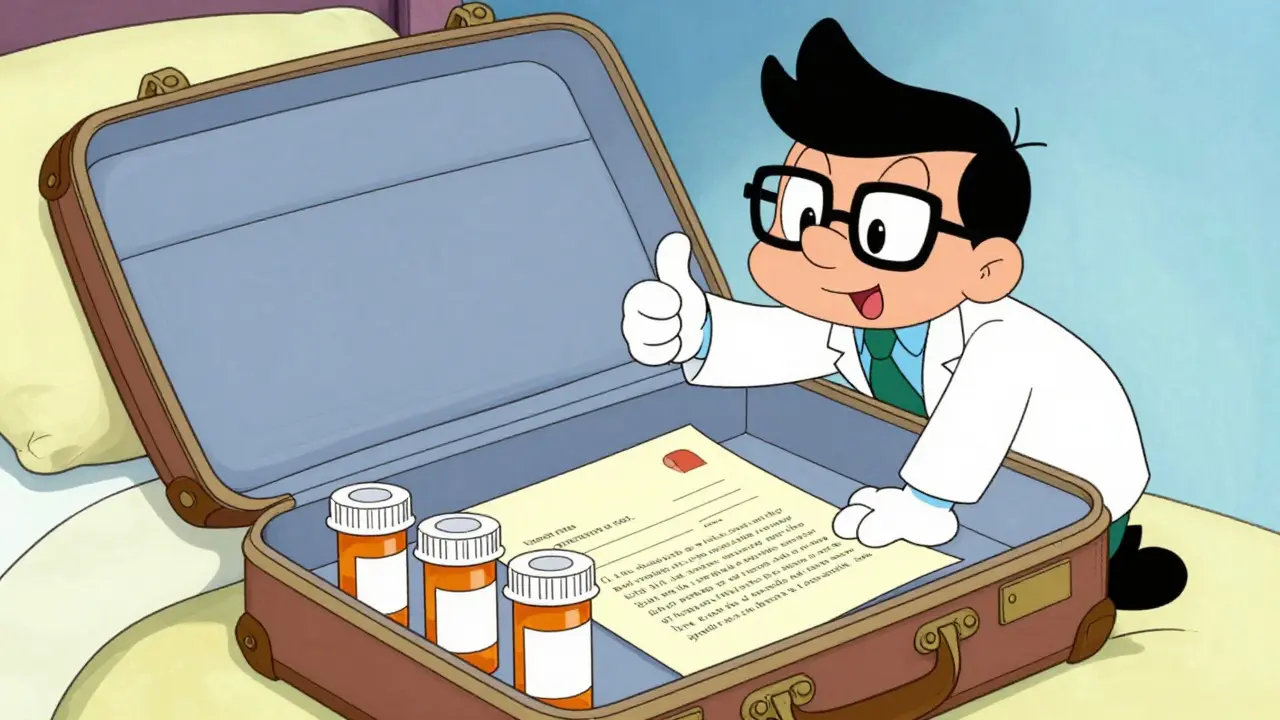
- The Original Prescription: Keep the original signed prescription from your doctor. Do not throw it away after filling it at home. Some countries require proof of the original authorization.
- A Physician’s Letter: This is critical. Ask your doctor for a letter on official letterhead that includes:
- Your full name and date of birth.
- The diagnosis (be specific).
- The generic name of the medication (not just the brand name).
- The dosage and frequency.
- A statement confirming the medication is medically necessary for your travel.
- Medication in Original Packaging: Never transfer pills to generic pill organizers before you fly. Customs agents need to see the pharmacy label matching the prescription and the physician’s letter. Mismatched labels raise red flags.
- Translation of Documents: If you are traveling to a country where English is not widely spoken, get your physician’s letter translated into the local language. In China and many Middle Eastern countries, an untranslated English letter may be ignored entirely.
According to MedAire’s Global Health Report, 43% of travelers to regions like China and the Middle East faced medication access issues specifically due to insufficient documentation. Having this packet ready can save you from hours of confusion at border control.
Navigating Specific Regional Rules
Not all destinations treat medications the same way. Understanding the specific regulatory environment of your destination is key to avoiding trouble.
| Region/Country | Transfer Policy | Key Restrictions & Notes |
|---|---|---|
| European Union (EU) | Mutual Recognition | Prescriptions are valid across 27 member states. Medication must be available locally. Brand names often differ; generic names are essential. |
| United States | No International Transfer | Federal law prohibits importing prescriptions. FDA allows 90-day supply for personal use with discretion. Controlled substances are strictly monitored. |
| Canada | Cosigning Required | U.S. prescriptions are invalid. A Canadian physician must review your history and "cosign" a new Canadian prescription. Direct transfers from U.S. pharmacies are refused. |
| China / Middle East | Strict Documentation | Require explicit medical diagnosis letters. Some common OTC drugs in the U.S. (like pseudoephedrine) are controlled substances here. High risk of confiscation without proper papers. |
The Canada-U.S. Corridor: The Cosigning Process
If you are a U.S. resident traveling to or living in Canada, or vice versa, you face a unique hurdle. You cannot simply hand a U.S. prescription to a Canadian pharmacist. Canadian provincial regulations require that all medications be dispensed pursuant to a valid prescription authorized by a Canadian practitioner.
This means the prescription must undergo a process called "cosigning." Here is how it works in practice:
- Contact a Canadian Pharmacy First: Before you travel, identify a licensed online or brick-and-mortar pharmacy in Canada. Services like PharmacyChecker can help locate verified providers.
- Submit Your Records: You will need to send your U.S. prescription, along with a detailed health history survey, to the Canadian pharmacy.
- Physician Review: A licensed Canadian physician reviews your medical history and the U.S. prescription. They determine if the treatment is appropriate under Canadian standards.
- New Prescription Issued: If approved, the Canadian doctor issues a new, valid Canadian prescription. The original U.S. prescription is effectively set aside.
This process takes time-often several days. Do not wait until you are at the border. According to user data from 2023, 78% of Americans attempting to transfer prescriptions to Canada faced initial rejection by U.S. pharmacies because staff were unfamiliar with the cosigning protocol. Bypass the U.S. pharmacy entirely and work directly with the Canadian provider.
Controlled Substances: The Highest Risk Category
If you take medications containing opioids, stimulants (like Adderall or Ritalin), or strong sedatives, you are entering high-risk territory. These are classified as controlled substances in almost every jurisdiction, but the schedules differ wildly.
In the United States, the DEA’s 2023 rule streamlined domestic transfers for Schedule II-V substances, but it explicitly excludes international transfers. This means if you run out of your ADHD medication while in Mexico, you cannot call your U.S. pharmacy to transfer it. You must have a local Mexican doctor write a new prescription.
Many countries ban certain controlled substances entirely. For example, some Asian and Middle Eastern nations classify common painkillers or anxiety medications as illegal narcotics. Carrying these without explicit government pre-approval can lead to arrest, not just confiscation.
To mitigate this risk:
- Check the Destination’s Controlled Substance List: Most embassies publish lists of banned medications.
- Carry Only What You Need: Bring a 90-day supply maximum, as allowed by many customs agencies for personal use. Bringing six months’ worth looks like intent to distribute.
- Declare Everything: When passing through customs, declare your medications. Hiding them is far worse than carrying them legally.
Practical Steps for Smooth Travel
Handling prescription transfers is less about "transferring" and more about "preparing for continuity." Here is a timeline to follow:
2 Weeks Before Travel: Contact your primary care physician or specialist. Request the physician’s letter and ensure your prescription refills are sufficient for the entire trip plus a buffer. If you need a new script, get it now.
1 Week Before Travel: If traveling to Canada or a region requiring cosigning, initiate the process with the destination pharmacy. Submit your health history and U.S. prescription copies via secure fax or email as directed by the pharmacy.
Day of Departure: Pack all medications in your carry-on luggage. Checked bags can get lost, and temperatures in cargo holds can damage sensitive drugs. Ensure each bottle is labeled with your name, the pharmacy’s name, and the generic drug name.
At Customs: Keep your documentation packet (physician’s letter, original prescription, translation if needed) easily accessible. If asked, present the medications alongside the documents. Be polite, concise, and honest.
What If You Run Out Abroad?
Despite best efforts, emergencies happen. If you find yourself without medication in a foreign country:
- Do Not Go Without It: Missing doses of blood pressure, insulin, or psychiatric medications can be dangerous.
- Visit a Local Clinic: You will likely need to see a local doctor. Bring your documentation packet. Explain your situation clearly. Show them your empty bottles and the physician’s letter from home.
- Ask for the Generic Equivalent: Brand names rarely match. Know the generic name (e.g., Sertraline instead of Zoloft). This helps the local pharmacist find a substitute.
- Use Trusted Telehealth Services: Some international telehealth platforms allow you to consult with a doctor licensed in the country you are visiting, who can then issue a local prescription for pickup at a nearby pharmacy.
Remember, the goal is not to bypass regulations but to navigate them safely. By treating your prescription as a critical piece of travel documentation-just like your passport-you ensure that your health remains protected wherever you go.
Can I transfer my U.S. prescription to a pharmacy in another country?
No, you generally cannot transfer a U.S. prescription directly to a foreign pharmacy. Most countries do not recognize U.S. prescriptions as valid legal documents. You will typically need to see a local doctor in the destination country to get a new prescription, or in some cases like Canada, go through a "cosigning" process where a local physician validates your medical history.
How much medication can I bring into another country?
Most countries allow travelers to bring a 90-day supply of prescription medication for personal use. However, this varies by jurisdiction. Always check the specific customs regulations of your destination. Bringing more than 90 days may raise suspicions of intent to sell or distribute, which can lead to severe legal consequences.
Do I need a doctor’s letter to travel with medication?
Yes, it is highly recommended. A physician’s letter should include your name, diagnosis, the generic name of the medication, dosage, and a statement of medical necessity. This document is crucial for customs officials and local pharmacies to verify that the medication is for your personal use and prescribed by a legitimate healthcare provider.
Is it legal to mail prescription drugs from the U.S. to Canada?
It is complex. While U.S. federal law restricts exporting prescriptions, many Canadians use licensed online pharmacies that facilitate the "cosigning" process. You send your U.S. prescription to a Canadian pharmacy, a Canadian doctor reviews it, and then they dispense the medication under Canadian law. Direct mailing of unapproved packages from U.S. pharmacies is risky and often rejected by carriers or customs.
What happens if my medication is banned in the country I’m visiting?
Some medications common in the U.S., such as those containing codeine or pseudoephedrine, are controlled or banned in other countries. If you must take such medication, you may need special permission from the destination’s health ministry before traveling. Always check the embassy website for banned substance lists. If you accidentally bring a banned item, declare it immediately to avoid criminal charges.