
Imagine waking up one day to find your body moving in ways you never intended. A hand twitches, a leg kicks out, or your head jerks sideways-all without your permission. For the roughly 40,000 to 45,000 Americans living with Huntington’s disease, a progressive neurodegenerative disorder, this isn’t a nightmare scenario; it is daily life. First described by American physician George Huntington in 1872, this condition strikes a complex chord of motor dysfunction, cognitive decline, and psychiatric challenges. While there is currently no cure, understanding the genetics behind the disease, managing symptoms like chorea, and implementing robust care planning can significantly improve quality of life.
If you or a loved one has received this diagnosis, the path forward might feel overwhelming. But knowledge is power. By breaking down the science, the symptoms, and the practical steps for care, we can navigate this journey with clarity and confidence.
The Genetic Blueprint: What Causes Huntington’s Disease?
At its core, Huntington’s disease (HD) is a genetic lottery you didn’t ask to play. It is an autosomal dominant disorder, meaning you only need to inherit one copy of the mutated gene from one parent to develop the disease. This mutation occurs in the HTT gene, located on chromosome 4p16.3, which was identified by the Huntington's Disease Collaborative Research Group in 1993.
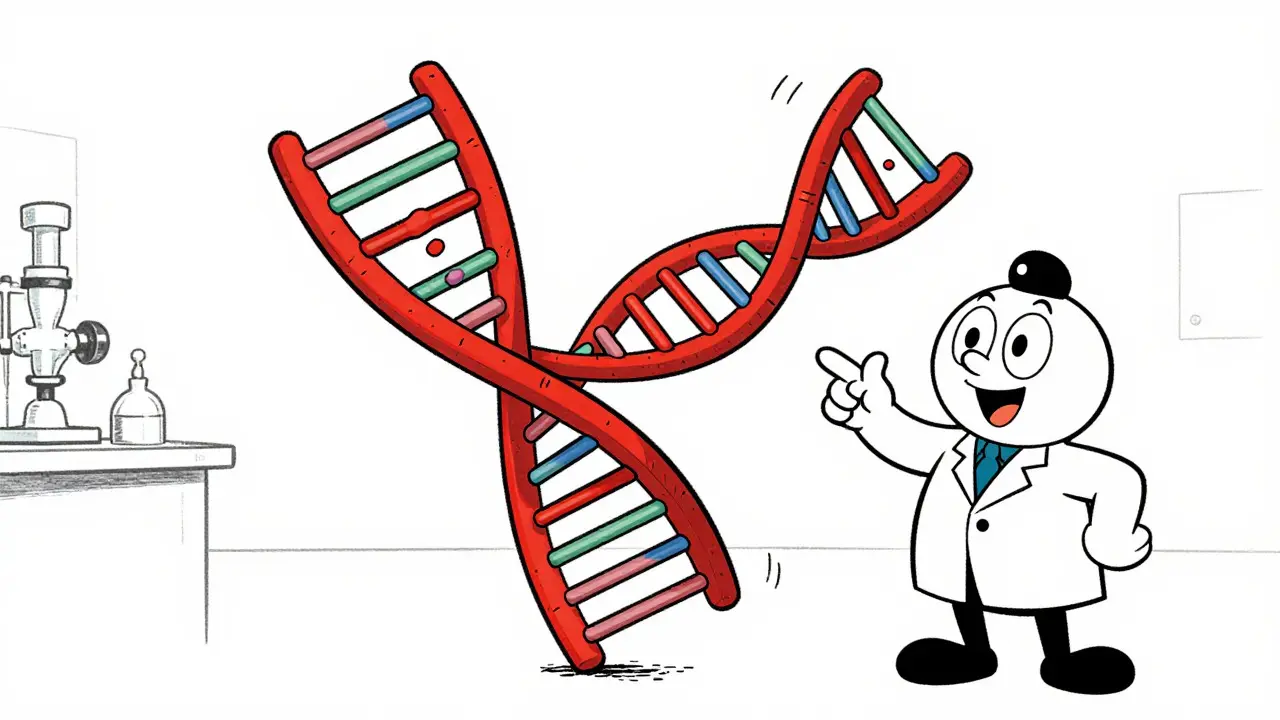
The specific culprit is a CAG trinucleotide repeat expansion. In healthy individuals, the HTT gene contains between 10 and 26 CAG repeats. When these repeats expand beyond normal limits, they create a toxic protein called mutant huntingtin (mHtt). Here is how the repeat count breaks down:
- Normal: 10-26 repeats (no risk of HD).
- Intermediate: 27-35 repeats (no symptoms, but risk of expansion in future generations).
- Reduced Penetrance: 36-39 repeats (may or may not cause disease).
- Full Penetrance: 40+ repeats (will definitely cause disease).
Each child of an affected parent has a precise 50% chance of inheriting the mutant allele, regardless of gender. Interestingly, a phenomenon known as genetic anticipation often occurs, particularly with paternal transmission. Studies show that CAG repeats tend to expand more significantly when passed from father to child, explaining why juvenile-onset cases are predominantly inherited paternally. The higher the number of repeats, generally, the earlier the onset and the more severe the progression.
Chorea: The Hallmark Motor Symptom
When people think of Huntington’s disease, they often picture chorea, the involuntary, irregular, and purposeless movements that characterize the early to mid-stages of the disease. These movements can flow from one body part to another, resembling dancing, though the reality is far less graceful. Chorea results from the degeneration of GABAergic neurons in the striatum, a part of the brain crucial for movement control.
Chorea typically worsens with stress and disappears during sleep. Clinicians measure its severity using the Unified Huntington’s Disease Rating Scale (UHDRS), scoring each body region from 0 (none) to 4 (severe, continuous). In early stages, you might see mild twitching in the hands or feet. As the disease progresses, these movements become more pronounced and widespread, eventually affecting the entire body. Later stages often see a shift from hyperkinetic movements (too much movement) to hypokinetic symptoms like rigidity and bradykinesia (slowness of movement).
Treating Symptoms: Medications and Therapies
While we cannot stop the underlying genetic damage yet, we can manage the symptoms. Currently, two main medications are FDA-approved specifically for chorea associated with Huntington’s disease: tetrabenazine (Xenazine) and valbenazine (Ingrezza). Tetrabenazine, approved in 2008, reduces chorea by about 25-30% but comes with side effects like depression and sedation. Valbenazine, approved in May 2023, offers a similar benefit profile with potentially fewer side effects for some patients.
Beyond medication, physical therapy plays a critical role. Evidence suggests that aquatic therapy can be 35% more effective than land-based therapy for improving balance in HD patients. Occupational therapy helps adapt daily activities, while speech therapy addresses dysarthria (difficulty speaking). Nutrition support is also vital, as many patients lose weight rapidly due to increased energy expenditure from constant movement and difficulty swallowing.
| Medication | Approval Year | Efficacy (UHDRS Improvement) | Key Side Effects |
|---|---|---|---|
| Tetrabenazine (Xenazine) | 2008 | ~25-30% | Depression (22%), Sedation (18%) |
| Valbenazine (Ingrezza) | 2023 | ~28% | Fewer depressive episodes reported |
Care Planning: A Multidisciplinary Approach
Managing Huntington’s disease requires more than just pills; it demands a comprehensive care plan. The Huntington’s Disease Society of America (HDSA) recommends coordinating care through specialized Centers of Excellence. There are currently 53 such centers in the United States. Data shows that patients receiving care at these specialty clinics live, on average, 2.3 years longer than those seeing general neurologists. They also experience a 32% reduction in hospitalizations for aspiration pneumonia and a 58% reduction in suicide rates.
Effective care planning evolves as the disease progresses:
- Early Stage (Diagnosis to 5 years): Focus on genetic counseling for family members, employment adjustments, and establishing advance directives. About 78% of patients complete living wills within two years of diagnosis.
- Mid-Stage (5 to 15 years): Address functional impairment. Most patients will need occupational therapy for daily living activities and speech therapy for communication difficulties. Home modifications, like removing throw rugs to prevent falls, become essential.
- Late Stage (15+ years): Full-time supervision is usually required. By year 20 post-diagnosis, 89% of patients require residential care facilities. Costs can reach $125,000 annually, making financial planning crucial.

Navigating the Emotional and Financial Landscape
The emotional toll of HD extends beyond the patient to caregivers and family members. Care coordination is frequently cited as the most challenging aspect, with many caregivers spending over 15 hours a week managing appointments across multiple specialists. The decision to undergo predictive genetic testing is deeply personal; despite the availability of counseling, 72% of at-risk individuals delay testing until symptoms appear.
Financially, the burden is significant. With annual healthcare costs totaling $1.5 billion USD nationwide, individual families face steep out-of-pocket expenses. Approximately 42% of U.S. patients spend over $5,000 annually on non-covered services like specialized therapies. Connecting with organizations like the HDSA or local support groups can provide resources, advocacy, and community connection that make this heavy load slightly more manageable.
Looking Ahead: Research and Hope
While the current landscape focuses on symptom management, research into disease-modifying therapies is accelerating. Clinical trials are exploring antisense oligonucleotides and other gene-targeting approaches aimed at reducing the production of mutant huntingtin protein. Although timelines suggest widespread availability of curative treatments may still be 15-20 years away, every step forward brings hope. For now, the best medicine remains a proactive, well-coordinated care plan tailored to the individual’s needs.
What is the life expectancy with Huntington’s disease?
Life expectancy varies widely but is typically 15 to 20 years after the onset of symptoms. However, structured care planning through specialty clinics has been shown to extend survival by an average of 2.3 years compared to general neurology care.
Can Huntington’s disease be prevented?
Currently, there is no way to prevent the genetic inheritance of Huntington’s disease. However, preimplantation genetic diagnosis (PGD) allows couples where one partner has HD to select embryos without the mutation for IVF, effectively preventing transmission to offspring.
What are the first signs of Huntington’s disease?
Early signs often include subtle changes in mood, personality, or cognitive function, followed by minor motor issues like clumsiness or slight twitching (chorea). Symptoms typically manifest between ages 30 and 50, though juvenile forms exist.
Is genetic testing for Huntington’s disease mandatory?
No, genetic testing is entirely voluntary. Due to the emotional impact and lack of a cure, many at-risk individuals choose not to test until symptoms appear. Pre-test counseling is strongly recommended to help individuals process the potential results.
How does Huntington’s disease affect mental health?
Psychiatric disturbances are a core component of HD, occurring in up to 90% of patients. Common issues include depression, anxiety, irritability, and apathy. These symptoms often precede motor signs and require integrated psychiatric care alongside neurological treatment.