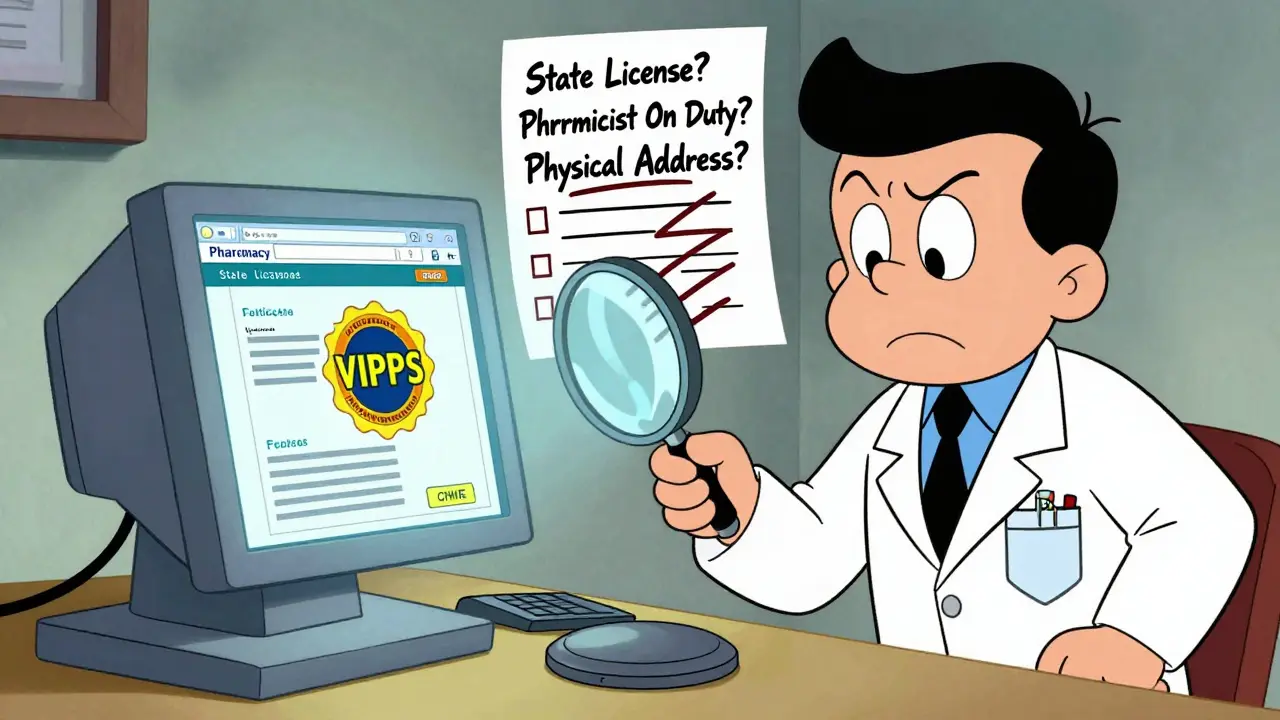
Every year, millions of people buy prescription meds online. Some get the real thing. Others get pills with no active ingredient, wrong dosages, or dangerous contaminants. The FDA estimates that 1-3% of the $575 billion U.S. prescription drug market comes from unlicensed, illegitimate pharmacies. That’s billions in fake or harmful drugs circulating in the system. And it’s not just a problem overseas - fake pharmacies are targeting U.S. consumers every day, often using websites that look exactly like real ones.
What Makes a Pharmacy Legitimate?
A licensed pharmacy isn’t just a business with a website. It’s a regulated healthcare provider. Every legitimate pharmacy in the U.S. must be licensed by the state board of pharmacy where it operates. That means they’ve met strict standards for facility safety, pharmacist qualifications, record-keeping, and controlled substance handling. Pharmacists must pass the North American Pharmacist Licensure Examination (NAPLEX) with a score of at least 75 out of 150, and often a state-specific law exam too.Legitimate pharmacies don’t sell prescriptions without a valid doctor’s order. They have a physical address you can visit or verify. They employ licensed pharmacists who are available to answer questions. And they display their license number - usually on their website, in the store, or both.
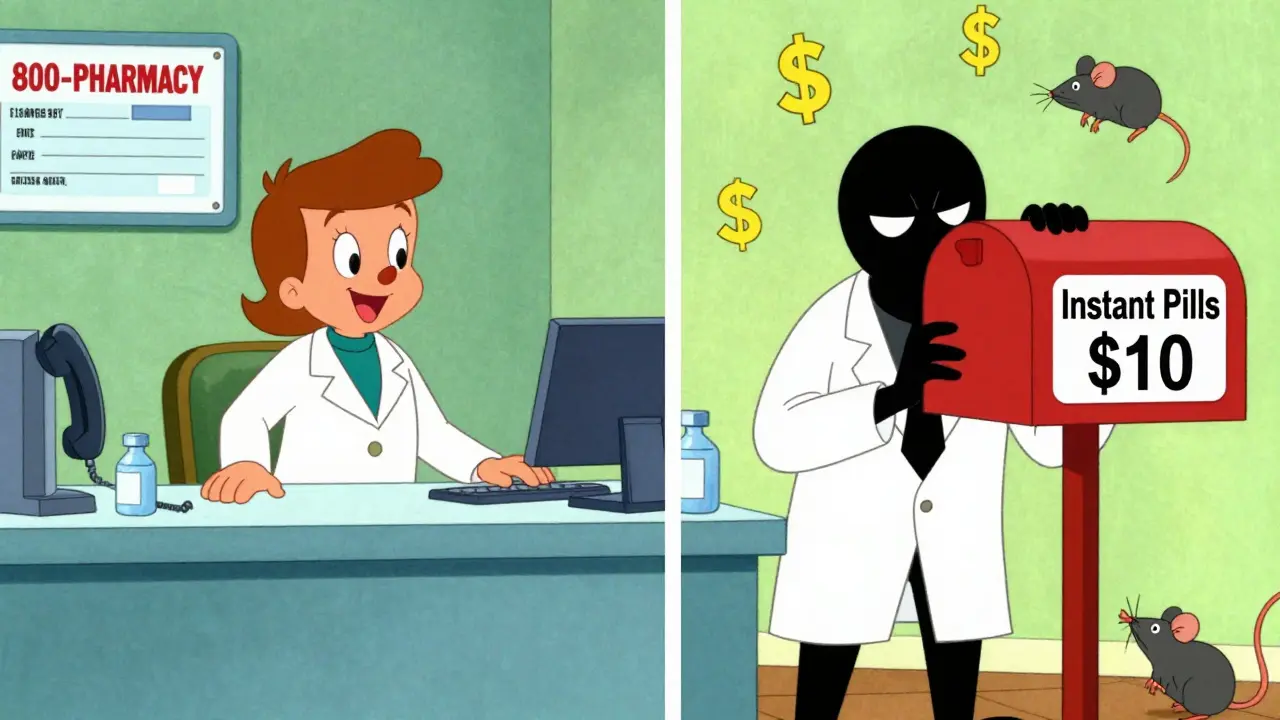
If a pharmacy offers to sell you controlled substances like oxycodone or Adderall without a prescription, walks you through how to fake a prescription, or ships from a PO box with no real location - it’s not legitimate. These are red flags the FDA and NABP flag every day.
How to Check if a Pharmacy Is Licensed
Verifying a pharmacy takes less than five minutes. Here’s how to do it right:- Find your state’s board of pharmacy website. Every state has one. For example, if you’re in California, go to pharmacy.ca.gov. In Florida, it’s flhealthsource.gov. These sites let you search by pharmacy name, pharmacist name, or license number.
- Search for the pharmacy’s license. Enter the exact name as it appears on their website. Don’t include “Pharmacy” or “Rx” if the state says not to. California, for instance, warns users: “Enter the number only - do not use the prefix.” If the license shows as “inactive,” “suspended,” or “expired,” walk away.
- Look for the pharmacist-in-charge. Legitimate pharmacies list who’s responsible for the pharmacy. If that person has resigned or been disciplined, the pharmacy may be operating illegally. A real case in California in March 2024 showed a pharmacy continuing to fill prescriptions after the pharmacist-in-charge had left - caught only because a patient checked the state database.
- Check for NABP’s VIPPS seal. The Verified Internet Pharmacy Practice Sites (VIPPS) program is the gold standard for online pharmacies. Only pharmacies that pass strict audits on licensing, privacy, and pharmacist access earn this seal. You can search for VIPPS-accredited pharmacies directly on the NABP website. As of 2024, NABP has verified over 4,500 pharmacies through this program.
- Use NABP’s License Verification tool. If you’re buying from a pharmacy in another state, use NABP’s national verification portal. It pulls data from 50+ state boards and gives you real-time status. It costs $125 a year for professionals, but consumers can search for free. Results usually appear within 24 hours.
Don’t rely on a seal on the website alone. In 2023, the Better Business Bureau reported a case where a fake pharmacy used a forged NABP seal to trick customers into paying $850 for fake insulin. Always cross-check with the official state or NABP site.
Why State Licenses Vary - and Why It Matters
Not all states make verification easy. California requires a $120 fee and takes up to 30 days to process written verification requests. Florida offers free, instant online checks. Some states require fingerprint background checks ($65+), others accept online checks ($35). This inconsistency creates confusion.For consumers, that means you can’t assume all verification processes are the same. If you’re using a pharmacy in a different state, always go to that state’s board website - not just NABP. NABP is a helpful tool, but it’s not a replacement for state-level verification.
Multi-state pharmacies face even more complexity. The Verified Pharmacy Program (VPP), launched in 2020, lets them apply once for multiple states, but the initial setup costs around $1,850. As of late 2023, only 312 pharmacies had enrolled - meaning most online pharmacies still operate under separate licenses in each state they serve.
Red Flags That a Pharmacy Is Fake
Here’s what to watch for - the signs most people miss:- No physical address or only a PO box
- No phone number to speak with a pharmacist
- Offers “no prescription needed” or “instant approval”
- Prices that are way below market (e.g., $10 for a 30-day supply of brand-name blood pressure med)
- Website has poor grammar, broken links, or uses “.net” or “.info” instead of “.com”
- Asks for payment via wire transfer, cryptocurrency, or gift cards
- No privacy policy or terms of service
One Reddit user in February 2024 shared how they caught a fake pharmacy: they noticed the “pharmacist” on the live chat had no license number listed and couldn’t answer basic questions about drug interactions. A quick check on the state board site showed the pharmacist’s license had been revoked two years earlier.
The Role of Online Pharmacies and Digital Risks
The rise of telehealth and home delivery has made online pharmacies more popular - and more dangerous. The FDA says 1 in 4 online medication sellers operate without proper licensure. Many of these sites mimic real pharmacies, using similar logos, layouts, and even fake customer reviews.Legitimate online pharmacies still require a valid prescription. They connect you to a licensed pharmacist. They store your records securely. And they comply with state and federal laws on controlled substances.
Since January 2024, California has required out-of-state pharmacies shipping to residents to provide an 800-number for direct pharmacist access. That’s a new standard - and it’s one you should expect from any pharmacy you buy from.
What Happens When You Buy From an Unlicensed Pharmacy?
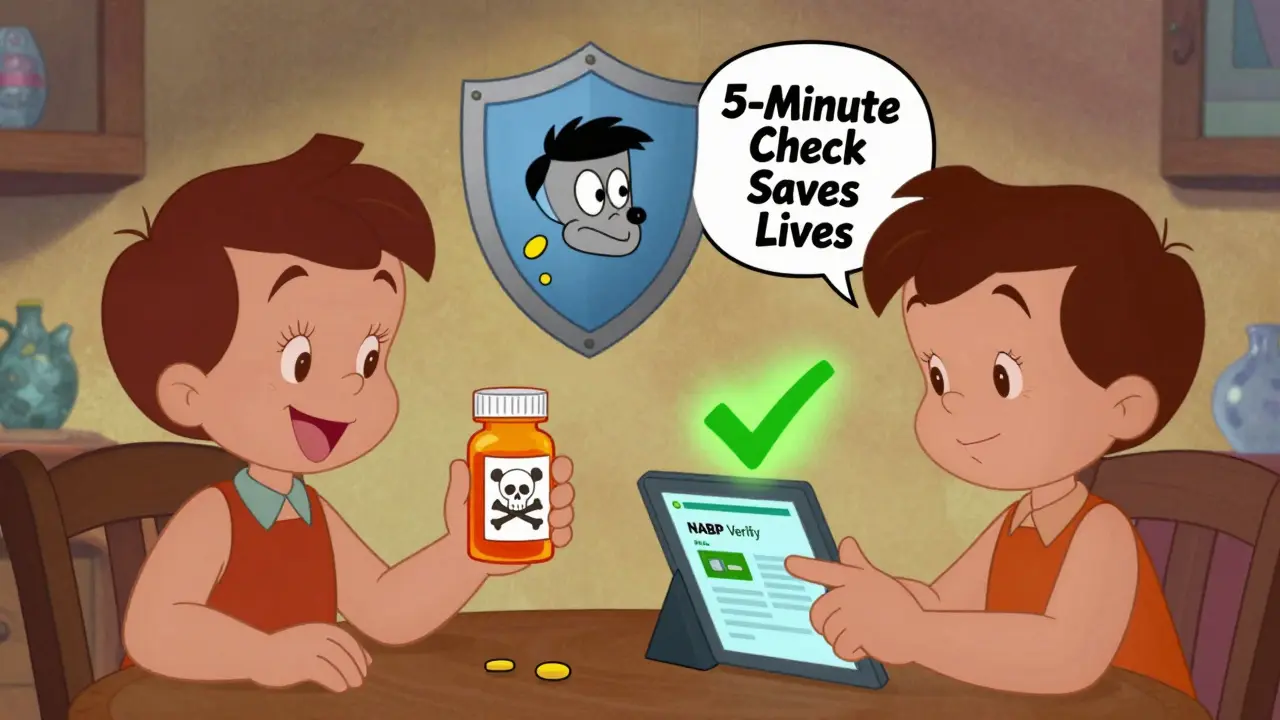
It’s not just about wasting money. Fake drugs can kill.Counterfeit versions of popular medications like Viagra, Xanax, and metformin have been found to contain rat poison, floor cleaner, or no active ingredient at all. The NABP’s 2022 enforcement data shows unlicensed pharmacies are 4.7 times more likely to dispense incorrect medications and 8.2 times more likely to be involved in controlled substance diversion.
One patient in Ohio took a fake version of a blood thinner and suffered a stroke. Another in Texas bought counterfeit insulin - the sugar content was so high it caused severe hypoglycemia. These aren’t rare cases. They’re documented by the FDA and state health departments every year.
And once you’ve bought from a fake pharmacy, your personal data is often sold to scammers. Your name, address, prescription history, and credit card info end up on dark web marketplaces.
What You Can Do - And What You Shouldn’t
Don’t assume your local pharmacy is safe just because it’s been around for years. Pharmacies can lose their license and keep operating quietly. Always verify - even if you’ve used them for years.Don’t trust Google ads. Many fake pharmacies pay to appear at the top of search results. Always go directly to the state board or NABP site - don’t click links from search results.
Do talk to your doctor or regular pharmacist. If you’re considering a new pharmacy, ask them if they’ve heard of it. Most pharmacists know which ones are trustworthy.
Do report suspicious pharmacies. File a complaint with your state board of pharmacy and the FDA’s MedWatch program. Your report helps shut down dangerous operations.
What’s Changing in 2026?
The system isn’t perfect - but it’s getting better. In January 2024, NABP launched Phase 2 of its InterConnect system, allowing real-time license updates across 43 states. The FDA has pledged $15 million to improve detection of fake online pharmacies, aiming for a 40% drop in consumer harm by 2026.Experts predict that by 2027, we’ll see national licensing standards emerge, cutting down the current patchwork of state rules. But until then, the burden is on you.
Every time you buy medication - online or in person - you’re trusting someone with your health. Don’t skip the five-minute check. It could save your life.
How do I know if an online pharmacy is real?
Check the pharmacy’s license on your state’s board of pharmacy website. Look for the NABP VIPPS seal and confirm the pharmacy requires a valid prescription. Never buy from sites that offer medications without a prescription or ship from a PO box. Use NABP’s free License Verification tool to check across states.
Can I trust pharmacies that appear on Google search results?
No. Many fake pharmacies pay to appear at the top of search results. Always go directly to the official state board of pharmacy or NABP website to verify. Don’t click links from ads or search results - type the official site address yourself.
What’s the difference between NABP Verify and VIPPS?
NABP Verify is a tool that checks if a pharmacy holds an active license in any U.S. state. VIPPS is a voluntary accreditation program that requires pharmacies to meet strict standards for safety, privacy, and pharmacist access. A VIPPS seal means the pharmacy has passed a full audit - it’s a higher level of trust than just having a license.
Why do some pharmacies have different license numbers?
Each state issues its own license. A pharmacy operating in multiple states has a separate license for each one. Always verify the license for the state where the pharmacy is physically located or where it ships from. Don’t assume a license from one state is valid in another.
What should I do if I bought medicine from a fake pharmacy?
Stop taking the medication immediately. Contact your doctor or pharmacist to discuss potential risks. Report the pharmacy to your state board of pharmacy and the FDA’s MedWatch program. If you paid with a credit card, dispute the charge. Keep any packaging or receipts - they can help investigators.
Is it safe to use mail-order pharmacies?
Yes - if they’re licensed. Many legitimate pharmacies offer mail-order services, including your local pharmacy or large insurers’ preferred providers. Always verify their license through your state board or NABP. Avoid any mail-order pharmacy that doesn’t require a prescription or won’t let you speak to a pharmacist.
brooke wright
I bought insulin from a site that looked legit last year. Turned out the bottle had no batch number, and the pills were the wrong color. My doctor caught it when I showed him. I almost died. Don't trust anything that feels too good to be true. Ever.
Riya Katyal
So let me get this straight - we're supposed to spend 20 minutes verifying a pharmacy while scammers just slap a VIPPS seal on a .info site and call it a day? Brilliant. The system's designed to make patients do the regulator's job. Thanks, capitalism.
Henry Ip
This is the kind of info everyone needs to see. I work in a clinic and we see the fallout every week. The NABP tool is free and fast - use it. No excuses. Your life matters more than your laziness.
waneta rozwan
OH MY GOD. I just checked my pharmacy's license and it says "suspended" from last year. I've been getting my blood pressure meds from them for THREE YEARS. I'm crying. I'm so mad. I feel violated. This isn't just negligence - it's a betrayal. Who do I sue?
Cheryl Griffith
I used to think fake meds were just a problem overseas. Then my aunt got sick from a $15 online Xanax order. She ended up in the ER. Now I check every pharmacy I use - even the one down the street. Five minutes could save someone you love. It's not a hassle. It's a habit.
swarnima singh
its funny how we blame the pharmas but what about the docs who prescibe so easily? and the ppl who just want to feel good? its not just the scammer its the whole system of craving pills like candy. we made this monster.
Isabella Reid
I'm from Canada and I've used U.S. pharmacies before because the prices were lower. I always check the state board and NABP - it’s not hard. But I wish more Americans knew this. We’re all connected. A fake pharmacy in Texas can hurt someone in Ontario. Stay vigilant. It’s the only way.
Joie Cregin
Remember that time when your grandma’s pharmacy had that weird smell and the pills looked like they were made in a garage? Yeah. Now imagine that’s happening to thousands of people every day. We’re not just saving money - we’re saving lives. And yeah, it’s annoying to check licenses. But so is lying in a hospital bed wondering if your meds were just sugar and rat poison.
Chelsea Harton
why do states even have diffrent rules its dumb
vivek kumar
People think they’re saving money by buying from sketchy sites. But they’re paying with their health. The FDA’s 1-3% statistic is a lie - it’s closer to 10% if you count the unreported cases. Stop being naive. This isn’t a scam. It’s a public health emergency.
Nick Cole
I’m a pharmacist. I’ve seen the logs. When a license is suspended, some pharmacies keep filling scripts for weeks. The state doesn’t shut them down fast enough. If you’re buying online, don’t just check the license - call the pharmacy. Ask for the pharmacist-in-charge by name. If they hesitate, walk away.