
It’s 2:00 AM. The house is silent. Your partner is breathing softly beside you. But inside your head? It sounds like a jet engine taking off in a library. That high-pitched ring, buzz, or hiss isn’t just annoying-it’s keeping you awake, stealing your rest, and making you dread bedtime. You are not alone in this struggle. Approximately 15% of people worldwide deal with tinnitus, which is the perception of sound such as ringing, buzzing, or hissing in the absence of an external acoustic source. When the world goes quiet at night, that internal noise often gets louder, creating a vicious cycle where lack of sleep makes the tinnitus feel worse, and the tinnitus makes it harder to sleep.
The good news? You don’t have to accept this as your new normal. While there is no magic cure that turns the volume knob to zero overnight, there are proven, evidence-based strategies that can help you reclaim your nights. From specific types of background noise to changes in your bedroom environment, small tweaks can lead to big improvements in how you rest. Let’s look at what actually works when the lights go out.
Why Tinnitus Gets Worse at Night
To fix the problem, you first need to understand why it spikes when you try to sleep. During the day, your brain is busy processing traffic, conversations, office chatter, and music. This external auditory stimulation acts as a natural mask, pushing your tinnitus into the background. At night, however, that stimulation vanishes.
Dr. Rachael Cook, an expert in audiology, explains that the lack of external sound allows the brain to focus intensely on internal signals. In fact, research suggests that tinnitus perception can amplify by up to 40% in quiet environments because the brain’s auditory centers are looking for input and finding none, so they turn up the gain on whatever signal is available-even if that signal is just neural static.
This creates a feedback loop. Poor sleep increases stress and cortisol levels. High stress, in turn, heightens your awareness of bodily sensations, including tinnitus. A 2021 study cited by Healthy Hearing found that breaking this cycle through proper management can reduce the time it takes to fall asleep (sleep onset latency) by an average of 27 minutes. That’s nearly half an hour of extra rest every single night.
The Power of Sound Masking
If silence is the enemy, then sound is your ally. Sound masking doesn’t eliminate tinnitus; instead, it reduces the contrast between your internal noise and the external environment. Think of it like trying to hear a whisper in a noisy room versus a quiet one. The whisper is still there, but it’s less noticeable against the backdrop of other sounds.
Sound masking is a therapeutic technique that uses external noise to make tinnitus less perceptible. The key is getting the volume right. Many people make the mistake of blasting loud music or white noise, which can cause additional auditory stress. According to guidelines from Healthy Hearing, the ideal volume is “just under the volume of your tinnitus.” This creates a subtle wall of sound that lowers the perceived loudness of your tinnitus by 30-50% without overloading your ears.
Choosing the Right Noise Color
Not all background noises are created equal. Different frequencies resonate differently with various types of tinnitus. Here is a breakdown of common noise colors:
- White Noise: Contains all frequencies at equal intensity (20Hz-20,000Hz). It sounds like static or a radio tuned between stations. Good for general masking but can be harsh for some.
- Pink Noise: Has equal energy per octave, emphasizing lower frequencies. It sounds softer and more balanced, like steady rain or rustling leaves.
- Brown Noise: Even more bass-heavy than pink noise. It sounds like a deep rumble, distant thunder, or a strong waterfall. Widex’s 2023 clinical guide noted that 68% of tinnitus sufferers find brown noise most effective for nighttime use because its low frequencies often better mask high-pitched ringing.
- Green Noise: Focused on mid-frequencies, similar to nature sounds like flowing water or wind in trees.
I recommend starting with brown noise if you haven’t tried it yet. Many users report that its deeper tone feels less intrusive and more soothing than the sharp hiss of white noise.
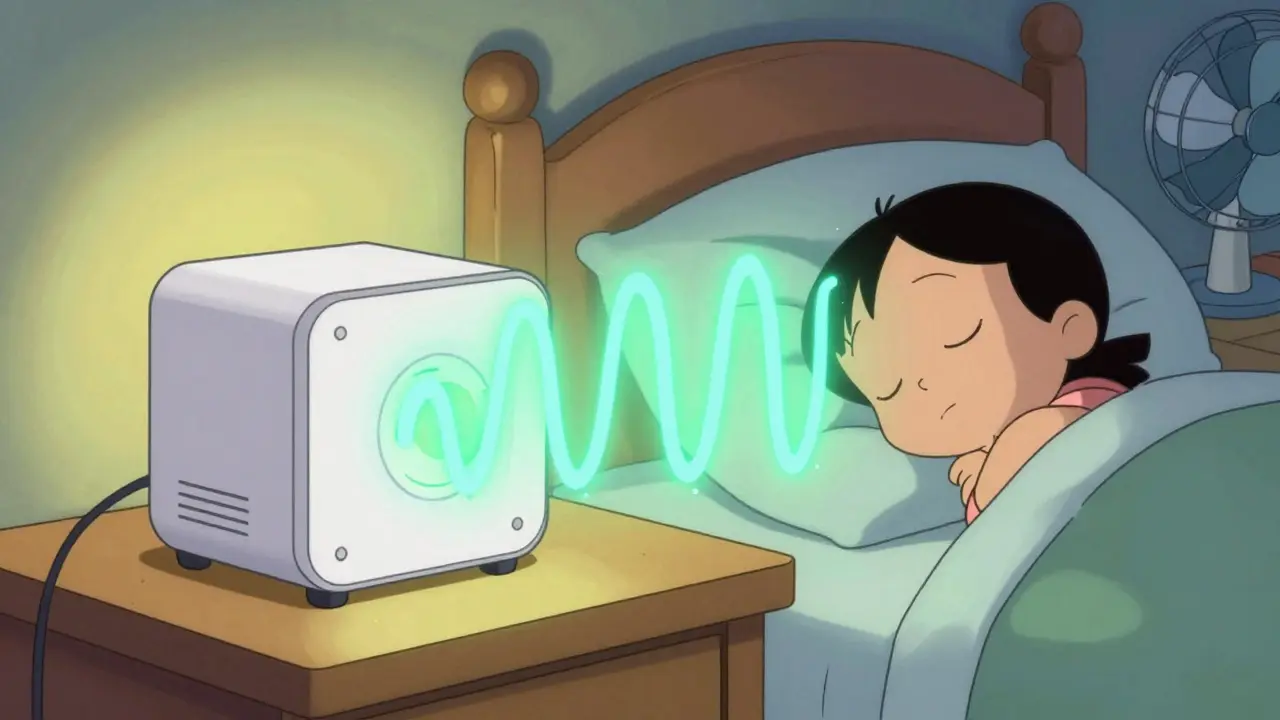
Tools for Better Sleep: Devices vs. Apps
You have several options for generating these sounds. The best choice depends on your budget, tech-savviness, and sensitivity to light.
| Option | Average Cost | Pros | Cons | User Satisfaction |
|---|---|---|---|---|
| Dedicated Sound Machine (e.g., LectroFan) | $99-$150 | No screen light, consistent performance, multiple sound options | Higher upfront cost, requires power outlet | 4.3/5 stars |
| Smartphone Apps (e.g., White Noise Lite) | $0-$10/month | Customizable, portable, many free options | Screen light disrupts melatonin, battery drain, inconsistent audio quality | 3.8/5 stars |
| Household Fans | $25-$50 | Cheap, cools the room, familiar sound | Fixed noise pattern, limited frequency range | 3.5/5 stars |
If you choose a smartphone app, keep the screen facing down or use a red-light filter, as blue light suppresses melatonin production. However, dedicated machines like the LectroFan Classic are often preferred by serious insomniacs because they offer pure audio without the temptation to check notifications. One user on Reddit reported reducing their sleep onset time from over 90 minutes to under 30 minutes using a fan set to brown noise at 52 decibels.
Optimizing Your Bedroom Environment
Sound is only part of the equation. Your physical environment plays a massive role in how your body processes stress and pain signals, including tinnitus. Dr. Sarah Voss, a board-certified otolaryngologist, emphasizes that environmental control is essential for immediate relief.
Sleep hygiene is a set of habits and environmental conditions that promote consistent, uninterrupted sleep. For tinnitus sufferers, two factors are critical: temperature and humidity.
The Sleep Foundation recommends keeping your bedroom between 60-67°F (15.6-19.4°C). A cooler room helps lower your core body temperature, a necessary step for entering deep sleep. Additionally, maintain humidity levels between 40-60%. Dry air can irritate the Eustachian tubes and auditory nerves, potentially exacerbating sensitivity. If you live in a dry climate, a simple humidifier can make a noticeable difference in comfort levels.

Behavioral Strategies: CBT and Routine
Changing your environment helps, but changing your mindset is often the game-changer. Many people with tinnitus develop anxiety around sleep. They lie in bed worrying about whether they’ll hear the ringing, which keeps their nervous system in a state of alert. This is where Cognitive Behavioral Therapy (CBT) comes in.
Cognitive Behavioral Therapy (CBT) is a psychological treatment that helps patients change negative thought patterns and behaviors associated with their condition. Specifically adapted for tinnitus, CBT has shown a 72% effectiveness rate in reducing nighttime distress after eight weeks, compared to 45% for sound therapy alone, according to a 2022 meta-analysis in the Journal of Clinical Sleep Medicine.
You don’t necessarily need months of therapy to see benefits. Start by establishing a strict sleep schedule. Go to bed and wake up at the same time every day, even on weekends. Research shows that keeping this window within 30 minutes reduces tinnitus-related sleep disturbances by 33%. It takes about 2-3 weeks of strict adherence to feel the shift, so stick with it.
Create a 60-minute pre-sleep ritual. This might include:
- 20 minutes of gentle meditation or deep breathing to lower cortisol.
- 20 minutes of screen-free reading (physical books only).
- 20 minutes of adjusting your sound therapy device to find the perfect masking level.
This routine signals to your brain that it is time to wind down, reducing the fight-or-flight response that amplifies tinnitus.
When to Seek Professional Help
While self-care strategies work for many, some cases require medical intervention. If your tinnitus is pulsatile (beating in sync with your heartbeat), unilateral (only in one ear), or accompanied by hearing loss or dizziness, you should see an ENT specialist immediately. These symptoms can indicate underlying issues like vascular problems or Meniere’s disease.
For chronic cases, consider asking your doctor about hearing aids with integrated tinnitus notch therapy. Devices like those from Widex or Phonak can generate a narrow band of sound that cancels out your specific tinnitus frequency. Studies show these are 61% effective for patients with concurrent hearing loss. Also, be aware of newer treatments like the Lenire device, which received FDA clearance in May 2023. It uses bimodal neuromodulation-combining sound with mild tongue stimulation-to retrain the brain’s response to tinnitus.
Remember, the goal isn’t always silence. The goal is habituation-a state where your brain learns to ignore the sound as unimportant background noise, allowing you to sleep peacefully regardless of what you hear.
What is the best type of noise for tinnitus at night?
Brown noise is often considered the best option for nighttime tinnitus relief. Its deep, bass-heavy frequencies (like distant thunder or heavy rain) are generally more soothing than high-pitched white noise. Clinical data from Widex indicates that 68% of tinnitus sufferers prefer brown noise for sleep because it effectively masks high-frequency ringing without being jarring.
How loud should my white noise machine be?
Your sound machine should be set to a volume just slightly below the level of your tinnitus. This creates a masking effect without overwhelming your ears. If the external noise is too loud, it can cause additional auditory stress and disrupt sleep architecture. Aim for a comfortable background hum rather than a dominant roar.
Can CBT really help with tinnitus insomnia?
Yes, Cognitive Behavioral Therapy (CBT) is highly effective. A 2022 meta-analysis showed that CBT tailored for tinnitus reduced nighttime distress in 72% of patients after eight weeks. It works by addressing the anxiety and negative thought patterns that amplify the perception of tinnitus, helping you break the cycle of fear and sleeplessness.
Is it better to use a phone app or a dedicated sound machine?
Dedicated sound machines are generally better for sleep hygiene. Phone apps emit blue light from the screen, which suppresses melatonin, and may trigger notifications that interrupt sleep. Dedicated devices like the LectroFan offer consistent audio quality without screens, leading to higher user satisfaction scores (4.3/5 vs 3.8/5 for apps).
How long does it take for sound masking to work?
Many users report significant improvement within the first week of proper implementation. However, full habituation-the process where your brain stops focusing on the sound-can take several weeks. Consistency is key; using the sound therapy every night helps train your brain to associate the sound with relaxation and sleep.
Naresh Chandra
I have been suffering from this for years,, and honestly,, the brown noise tip changed everything for me! I used to just sit there listening to the ringing,, but now I use a fan on low setting with a specific app that generates deep rumble sounds. It is not a cure,, but it helps my brain stop focusing on the internal noise. The key is consistency,, you have to do it every night without fail.
Christopher Laver
Most of this is just common sense wrapped in medical jargon to make it sound profound. White noise has worked for decades, why complicate it with 'brown' or 'green'? People just need to stop stressing about it and sleep. Simple as that.
Victoria Mangiapane
Oh please, tell me how much it hurts to be awake while everyone else sleeps like a baby. It's absolutely tragic, really. I tried all these apps and machines and they are total waste of money. My tinnitus is louder than any speaker can go. Just accept your fate, folks.
Christina Mitchell
Hey Victoria, I hear you, but don't give up hope! I know it feels impossible when the silence screams at you, but small changes really do add up. I started with just lowering the room temperature and using a humidifier, and suddenly the ringing felt less aggressive. You are stronger than the noise, even if it doesn't feel like it right now. Keep trying different strategies because one might click for you eventually.
Nivetha Narayanan
totally agree with Christina! i used to think it was hopeless too but then i found out about the cbit approach. its not magic but it helps retrain your brain to ignore the sound. also try not to look at ur phone before bed, the blue light makes it worse. stay positive guys!
Joseph Teichman
cbt works but its hard to find good therapists. most dont get it. just stick to the sound masking. keep it simple. dont overthink it.
Cyburg Adeoye
From an audiological perspective,, the concept of bimodal neuromodulation mentioned in the post is genuinely exciting for refractory cases. However,, for the majority of patients,, the issue is often central gain amplification due to lack of peripheral input. We must emphasize that sound therapy should never be louder than the tinnitus itself,, as this can lead to auditory fatigue. Furthermore,, the psychological component cannot be ignored; the distress response exacerbates the perceptual loudness. A holistic approach combining acoustic stimulation with cognitive restructuring yields the best long-term habituation outcomes.
Grace Gayle McMullen
i actually switched from white noise to pink noise last month and noticed a diff. white noise felt too harsh and made my teeth ache somehow lol. pink is softer. also my husband bought me that lectrofan thingy and its way better than my phone app bc no screen glow. worth the cash imo.
Russell Russell
The real breakthrough for me was realizing that anxiety was fueling the fire. I stopped checking the volume of my tinnitus constantly. Once I accepted it as background static, like a refrigerator hum, it faded into irrelevance. Do not fight it. Let it be there. Your brain will eventually tune it out if you stop giving it attention. This is not medical advice, just what worked for me after years of struggle.
Angela Niculescu
Brown noise is overrated. I hate bass. It vibrates my skull. White noise is fine if you set it right. Also, nobody talks about earplugs. Sometimes blocking external sound completely makes the internal sound disappear because the contrast is gone. Try sleeping with foam plugs. Might shock you.