
ADHD Medication Growth & Appetite Monitor
Enter your teen's baseline measurements (before starting medication) and current measurements to check for significant changes according to the American Academy of Pediatrics and Cleveland Clinic protocols.
Growth Velocity Analysis
Assessment:
Calculating...
Appetite & Weight Impact
Assessment:
Calculating...
Recommended Actions
Growth Recovery Context
Based on the Multimodal Treatment Study (MTA), here is what typically happens after growth suppression begins:
It is a common scene in many households: the morning rush is chaotic, lunch is skipped because "I'm not hungry," and dinner turns into a food coma as the medication wears off. For parents of adolescents with Attention-Deficit/Hyperactivity Disorder (ADHD), this pattern is familiar. But beneath the daily logistics lies a deeper concern. Will these medications stunt my child's growth? Is that weight loss permanent? These are valid questions, especially given that approximately 62% of US children with ADHD receive medication treatment according to recent data from the Centers for Disease Control and Prevention.
The short answer is nuanced. While stimulants can temporarily slow growth velocity, the long-term impact on adult height is often minimal or reversible. However, ignoring the signs can lead to unnecessary anxiety or health complications. This guide breaks down what the science actually says about growth, appetite, and how to monitor your teen effectively without panic.
How Stimulants Affect Growth and Height
To understand the risk, we first need to look at how these drugs work. Stimulant medications like methylphenidate (Ritalin, Concerta) and amphetamines (Adderall, Vyvanse) increase dopamine and norepinephrine in the prefrontal cortex. This improves focus and impulse control. However, they also affect the hypothalamus, which regulates hunger and growth hormones.
Research shows that during the first 12 to 24 months of treatment, some adolescents experience a slight slowdown in growth velocity. A study published in the Journal of Child and Adolescent Psychopharmacology found potential height reductions ranging from 1.39 to 2.55 centimeters (about 0.5 to 1 inch) in long-term users. Another meta-analysis in CNS Drugs noted that amphetamine-based medications might cause slightly more growth suppression (1.7 cm over three years) compared to methylphenidate (1.1 cm).
Does this mean your teen will be shorter as an adult? Not necessarily. The Multimodal Treatment Study of Children with ADHD (MTA) follow-up published in January 2023 reported that 89% of adolescents who experienced initial growth suppression caught up to their genetic height potential by age 25. Only 11% showed persistent height reduction greater than 1.5 cm. In other words, most teens grow into their expected height once the medication pressure is removed or adjusted.
| Medication Class | Average Height Reduction (3 Years) | Growth Recovery Potential |
|---|---|---|
| Methylphenidate (e.g., Concerta) | ~1.1 cm | High (most catch up by late teens) |
| Amphetamines (e.g., Adderall, Vyvanse) | ~1.7 cm | High (slightly slower recovery) |
| Non-Stimulants (e.g., Strattera) | Minimal to None | N/A (no significant suppression) |
The Appetite Suppression Challenge
If growth is the long-term worry, appetite is the daily battle. Up to 80% of adolescents on stimulants report significant appetite suppression. This isn't just picky eating; it is a physiological blunting of hunger signals. On forums like Reddit’s r/ADHDparents, parents frequently share stories of teens consuming fewer than 300 calories during school hours, only to binge-eat 2,000+ calories after 5 PM when the drug wears off.
This "rebound effect" can make weight management difficult. While some teens lose weight, others maintain it through evening binges, which may not provide balanced nutrition. A 2022 survey by CHADD (Children and Adults with ADHD) found that 19% of parents reported significant weight loss (more than 10% of body weight), requiring medication adjustment. One parent shared that their daughter’s weight percentile dropped from the 50th to the 15th after eight months on Concerta, leading to a switch to non-stimulant medication.
However, strategic timing helps. Many families find success by front-loading calories. Since the medication takes time to kick in, a high-calorie, nutrient-dense breakfast before the dose hits peak effectiveness is crucial. Think avocado toast, nut butter sandwiches, or smoothies with protein powder rather than light cereals.
Monitoring Protocols: What Doctors Recommend
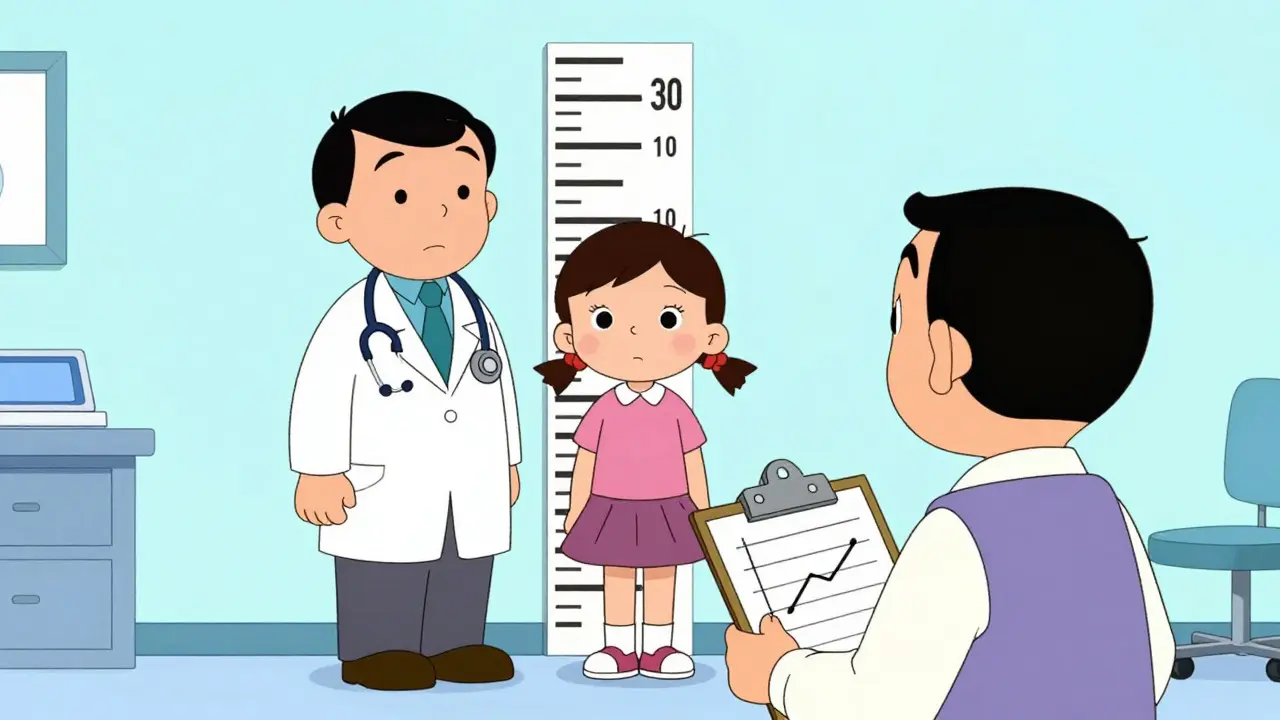
You do not need to become a statistician, but you do need to track trends. The American Academy of Pediatrics (AAP) recommends measuring height and weight at baseline, every three months during the first year, and every six months thereafter. Why so frequent? Because early detection allows for intervention before deficits become significant.
Here is a practical checklist for monitoring:
- Baseline Measurement: Record height, weight, and BMI percentiles before starting medication.
- Regular Tracking: Use a standard growth chart. Look for drops across percentile lines, not just absolute numbers.
- Intervention Thresholds: The Cleveland Clinic protocol suggests clinical intervention if there is a decline of more than 0.5 height z-score or 1.0 weight z-score within six months.
- Symptom Check: Monitor for insomnia (affects 25-50% of users), headaches (20-30%), and abdominal pain (10-25%). Sleep deprivation exacerbates growth issues.
If your teen’s growth velocity falls below the 25th percentile for their age, it is time to talk to their prescriber. Options include lowering the dose, switching to a non-stimulant like atomoxetine (Strattera), or implementing a "medication holiday."
Medication Holidays and Catch-Up Growth
A "medication holiday" involves pausing the drug for a set period, such as summer break or weekends. The goal is to allow the body to recover growth velocity without the suppressive effects of stimulants. A study in the Journal of Pediatrics found that 87% of adolescents recovered 75% of their expected growth velocity within six months of discontinuation.
Is this strategy right for everyone? Not always. For teens with severe ADHD where symptoms disrupt social functioning or academic performance even on weekends, continuous treatment may be better. Dr. Joseph Biederman of Harvard Medical School notes that the benefits of effective treatment-such as reduced risk of substance use disorders and improved academic achievement-often outweigh the minor height concerns. However, for those already at lower percentiles for height and weight, a holiday can be a valuable tool.
The NHS England guideline specifies that growth suppression occurs in less than 1 in 10 children taking methylphenidate longer than one year. They recommend considering holidays during summer breaks to facilitate catch-up growth. About 73% of pediatric psychiatrists surveyed in 2020 support this approach when clinically appropriate.

Alternatives and New Developments
If stimulants prove too harsh on growth or appetite, alternatives exist. Non-stimulants like atomoxetine (Strattera) show minimal growth effects. However, they are 30-40% less effective for core ADHD symptoms according to a 2017 Cochrane Review. This trade-off requires careful discussion with your healthcare provider.
Innovation is also changing the landscape. In 2023, the FDA approved Adhansia XR, a new extended-release amphetamine formulation designed to reduce appetite suppression. Phase 3 trials showed 18% less weight loss compared to standard formulations. Additionally, pharmacogenetic testing is emerging as a tool to personalize dosing. Companies like Genomind report a 40% reduction in growth-related side effects when dosing is guided by CYP2D6 genetic testing. While not yet universal, this represents a shift toward precision medicine in ADHD care.
Practical Tips for Parents and Teens
Managing ADHD medication is a team effort. Here are actionable steps to mitigate side effects:
- Prioritize Breakfast: Serve the largest meal before the medication peaks. Include healthy fats and proteins.
- Smart Snacking: Keep calorie-dense snacks available at school. Nuts, cheese sticks, and trail mix are easy to eat even with low appetite.
- Evening Nutrition: Plan substantial dinners. If your teen is still hungry later, have healthy options ready to prevent junk food binges.
- Hydration: Stimulants can cause dry mouth and dehydration, which mimics hunger cues. Encourage water intake throughout the day.
- Open Communication: Ask your teen how they feel. Are they tired? Hungry? Anxious? Their feedback is critical for adjusting treatment.
Remember, the goal is not perfection but balance. Effective ADHD treatment supports academic success, social relationships, and mental health. With proper monitoring, most adolescents thrive on medication while maintaining healthy growth trajectories.
Will ADHD medication permanently stunt my teen's growth?
In most cases, no. While stimulants can temporarily slow growth velocity, particularly in the first two years, studies show that 89% of adolescents catch up to their genetic height potential by age 25. Any height reduction is typically minimal (less than 1-2 inches) and often reversible.
How often should I measure my child's height and weight?
The American Academy of Pediatrics recommends measuring at baseline, every three months during the first year of treatment, and every six months thereafter. Track these measurements on a growth chart to identify any significant drops in percentiles.
What is a medication holiday, and is it recommended?
A medication holiday is a planned break from ADHD medication, often during school breaks or weekends. It can help restore growth velocity and reduce side effects. Studies show 87% of teens recover significant growth velocity within six months of discontinuation. Discuss with your doctor if this is suitable for your teen's specific needs.
Do non-stimulant medications affect growth?
Non-stimulants like atomoxetine (Strattera) have minimal to no impact on growth. However, they are generally 30-40% less effective for core ADHD symptoms compared to stimulants. They are often considered when growth suppression or appetite issues are severe.
How can I manage my teen's appetite suppression?
Focus on high-calorie, nutrient-dense meals before the medication peaks, such as a hearty breakfast. Provide calorie-dense snacks like nuts and cheese during school hours. Plan substantial dinners for when the medication wears off. Hydration is also key, as thirst can mimic hunger.