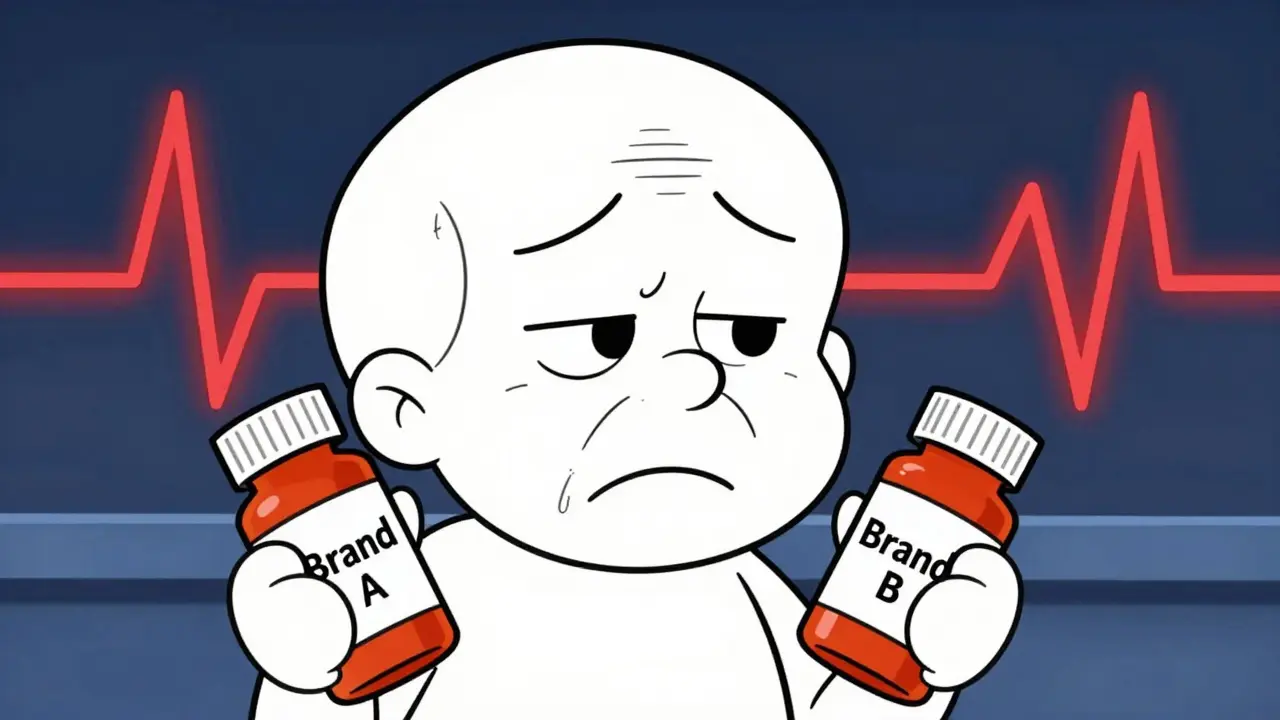
Imagine taking a medication that saves your life one week, but leaves you nauseous and dizzy the next. For patients on Digoxin, a cardiac glycoside with a notoriously narrow therapeutic index (NTI), this isn't just a hypothetical nightmare-it’s a real risk when switching between generic manufacturers. While generics are designed to be cost-effective alternatives to brand-name drugs like Lanoxin, digoxin behaves differently than most medications. Small changes in how your body absorbs the drug can push blood levels from "therapeutic" to "toxic."
The core problem? Bioavailability. Even if two pills contain the exact same amount of active ingredient, your body might absorb them at different rates. For a drug where the difference between helping your heart and stopping it is measured in tiny fractions of a nanogram per milliliter, those absorption differences matter immensely. This article breaks down why digoxin generics require extra caution, how bioequivalence standards work, and what you need to monitor to stay safe.
Why Digoxin Is Different: The Narrow Therapeutic Index Problem
Most drugs have a wide safety margin. If you take slightly more or less than prescribed, nothing bad happens. Digoxin does not. It belongs to a class of medications known as Narrow Therapeutic Index (NTI) drugs. These are medicines where the dose required to produce a therapeutic effect is very close to the dose that causes toxic effects.
The standard therapeutic range for digoxin is typically cited as 0.5-2.0 ng/mL. However, recent clinical evidence suggests that for heart failure patients, lower concentrations-specifically 0.5-0.9 ng/mL-are optimal for reducing mortality risk without increasing toxicity. This means the "safe zone" is incredibly small. A slight increase in absorption could push a patient from 0.8 ng/mL (safe) to 1.2 ng/mL (potentially toxic), especially in elderly patients who often have reduced kidney function.
This sensitivity makes digoxin unique among common cardiac medications. Unlike beta-blockers or ACE inhibitors, where minor fluctuations are usually tolerated, digoxin requires precise control. When we talk about generics, we aren't just talking about saving money; we're talking about maintaining that delicate balance within a razor-thin window.
Understanding Bioavailability and Bioequivalence Standards
To understand the risk, you need to understand the rules. The U.S. Food and Drug Administration (FDA) regulates generic drugs through the Abbreviated New Drug Application (ANDA) process. For digoxin, the FDA treats all oral products as new drugs requiring strict approval. To be approved, a generic must prove it is "bioequivalent" to the reference product, historically Lanoxin.
Bioequivalence doesn't mean the drugs are identical molecule-for-molecule in every single person's stomach. Instead, it relies on statistical averages. The FDA mandates that the 90% confidence interval for pharmacokinetic parameters-specifically the Area Under the Curve (AUC[0-12]) and maximum concentration (Cmax)-must fall within 80% to 125% of the brand-name drug.
| Metric | Definition | FDA Requirement |
|---|---|---|
| AUC (Area Under Curve) | Total amount of drug absorbed over time | 80-125% of reference product |
| Cmax (Peak Concentration) | Highest level of drug in blood | 80-125% of reference product |
| Confidence Interval | Statistical certainty of the results | 90% Confidence Level |
On paper, this sounds safe. Studies, such as one published in the *Journal of Immunoassay and Immunochemistry* (2004), have shown that specific generic formulations like Cardixin fall well within these acceptable ranges compared to Lanoxin. Similarly, research from Estonia confirmed bioequivalence for local market leaders. So, why the concern?
The Flaw in the Average: Individual Variability
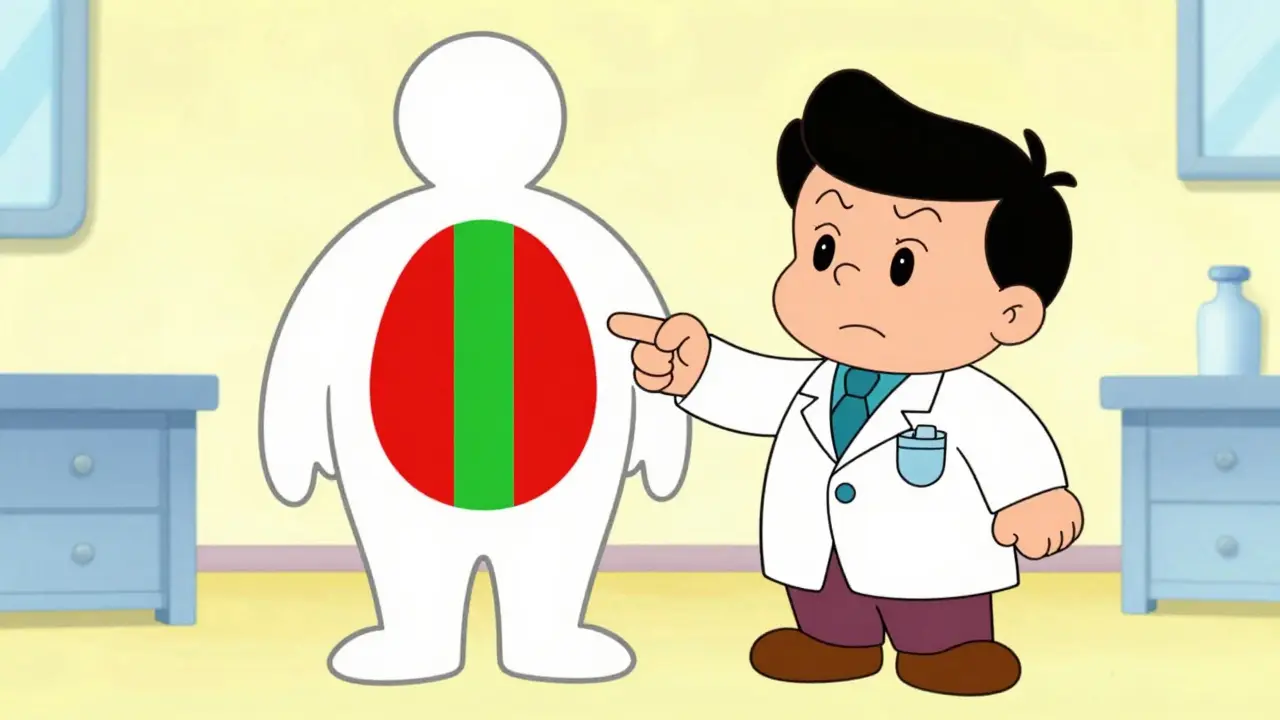
The issue lies in the math behind the average. The 80-125% rule applies to the *group* of test subjects, not necessarily to *you*. As noted by experts in *US Pharmacist* (2023), individual bioavailability can vary wildly. One patient might absorb only 45% of the drug, while another absorbs 110%. When averaged together, the group result might look perfectly bioequivalent, masking the extreme outliers.
For a drug with a narrow therapeutic index, being an "outlier" is dangerous. If you switch from Generic Brand A to Generic Brand B, there are no mandatory bioequivalence studies comparing Brand A directly to Brand B. The FDA only requires each generic to match the original brand (Lanoxin). This creates a gap:
- Generic A matches Lanoxin.
- Generic B matches Lanoxin.
- But Generic A may not match Generic B.
This lack of head-to-head data between different generic manufacturers is the crux of the problem. A switch between two generics that both meet FDA standards could still result in a significant change in your blood levels. Case reports in clinical literature document instances where switching between generic digoxin products resulted in serum concentration changes exceeding 25%, forcing doctors to adjust doses urgently.
Formulation Matters: Tablets vs. Elixir
Not all digoxin forms are created equal. The physical form of the drug affects how quickly and completely it dissolves in your digestive system. According to reviews in the *International Journal of Pharmaceutical Research* (2022), digoxin elixir (liquid form) has a higher bioavailability, ranging from 70% to 85% of the intravenous dose. Tablet formulations generally have lower and more variable absorption rates.
If a patient switches from a tablet to an elixir, or even from one tablet manufacturer to another with different excipients (inactive ingredients like binders or fillers), the dissolution rate changes. Faster dissolution can lead to a sharper spike in Cmax, increasing the risk of acute toxicity symptoms like nausea and visual disturbances. Slower dissolution might lead to sub-therapeutic levels, causing heart failure symptoms to return.
Monitoring Needs: What You Must Watch For
Because of these risks, passive management of digoxin therapy is not enough. Active monitoring is essential, especially during transitions. The American College of Clinical Pharmacy and the American Heart Association provide clear guidelines on how to handle this.
When to Test: Clinicians should obtain a baseline serum concentration 4-7 days after starting therapy or changing the dose. Crucially, if you switch manufacturers, repeat measurements should be taken 3-5 days after the switch. Trough levels (measured just before the next dose) are preferred to avoid peak-related variability.
What to Look For: You need to watch for signs of both toxicity and therapeutic failure.
- Toxicity Signs: Nausea, vomiting, loss of appetite, confusion, visual disturbances (such as yellow-green halos around lights), and irregular heart rhythms (arrhythmias).
- Therapeutic Failure Signs: Worsening shortness of breath, increased fatigue, swelling in legs/ankles, and increased ventricular rate in atrial fibrillation patients.
Elderly patients are at higher risk due to age-related decline in renal function. Since digoxin is cleared by the kidneys, reduced clearance combined with variable absorption from generic switches can lead to rapid drug accumulation.
Practical Steps for Patients and Clinicians
So, what should you do if you’re on digoxin? First, don’t panic. Generics are safe for the vast majority of people. However, awareness is your best defense.
- Maintain Consistency: Whenever possible, ask your pharmacy to dispense the same manufacturer. Many pharmacies allow you to request a specific National Drug Code (NDC) number. If you are stable on a specific generic, stick with it.
- Communicate Changes: If your pharmacist tells you they switched manufacturers, inform your doctor immediately. Do not assume the switch is seamless.
- Monitor Symptoms: Keep a log of any new gastrointestinal or visual symptoms. Report them promptly.
- Schedule Blood Tests: If a switch occurs, schedule a digoxin level check within one week. Do not wait for your next routine appointment if you feel unwell.
- Review Interactions: Digoxin interacts with many common drugs, including amiodarone, verapamil, and certain antibiotics. Any change in other medications can also alter digoxin levels, compounding the generic switch risk.
The goal is not to avoid generics entirely, but to manage the transition intelligently. By treating every manufacturer change as a potential dose change, you protect yourself from the hidden variability of bioavailability.
Is it safe to switch between different generic brands of digoxin?
While FDA-approved generics are statistically bioequivalent to the brand name, switching between different generic manufacturers carries a risk for digoxin due to its narrow therapeutic index. Individual absorption rates can vary significantly between formulations. It is safest to maintain consistency with one manufacturer. If a switch is necessary, close monitoring of blood levels and symptoms is required.
How long after switching digoxin generics should I get my blood tested?
Clinical guidelines recommend checking serum digoxin concentrations 3 to 5 days after switching manufacturers. This allows enough time for the new formulation to reach steady-state levels in your body, providing an accurate picture of your current therapeutic status.
What are the early signs of digoxin toxicity?
Early signs often include gastrointestinal issues like nausea, vomiting, and loss of appetite. Visual changes, such as seeing yellow or green halos around lights, are classic indicators. Other symptoms include confusion, fatigue, and irregular heartbeats. If you experience these after a medication change, seek medical attention immediately.
Why is digoxin considered a narrow therapeutic index drug?
Digoxin has a narrow therapeutic index because the difference between a helpful dose and a toxic dose is very small. The effective range is typically 0.5-2.0 ng/mL, with optimal heart failure treatment often occurring at the lower end (0.5-0.9 ng/mL). Slight increases in blood concentration can lead to serious side effects, while slight decreases can render the drug ineffective.
Does the FDA require direct testing between generic digoxin brands?
No. The FDA requires each generic to demonstrate bioequivalence to the original brand-name drug (reference listed drug). There is no requirement for direct head-to-head bioequivalence studies between different generic manufacturers. This gap means that while both generics may be "good," they may not be identical to each other in how your body processes them.
Can I take digoxin elixir instead of tablets?
Yes, but you cannot simply swap them dose-for-dose without adjustment. Digoxin elixir has higher bioavailability (70-85%) compared to most tablets. A dosage adjustment is usually required when switching between liquid and solid forms to prevent toxicity. Always consult your physician before changing the formulation type.