AGEP Probability Score Calculator
Select the clinical features present in the patient to calculate the probability of AGEP.
Diagnosis Result
- > 4.5 points: Highly Probable AGEP
- 2.5 - 4.5 points: Possible AGEP
- < 2.5 points: Unlikely AGEP
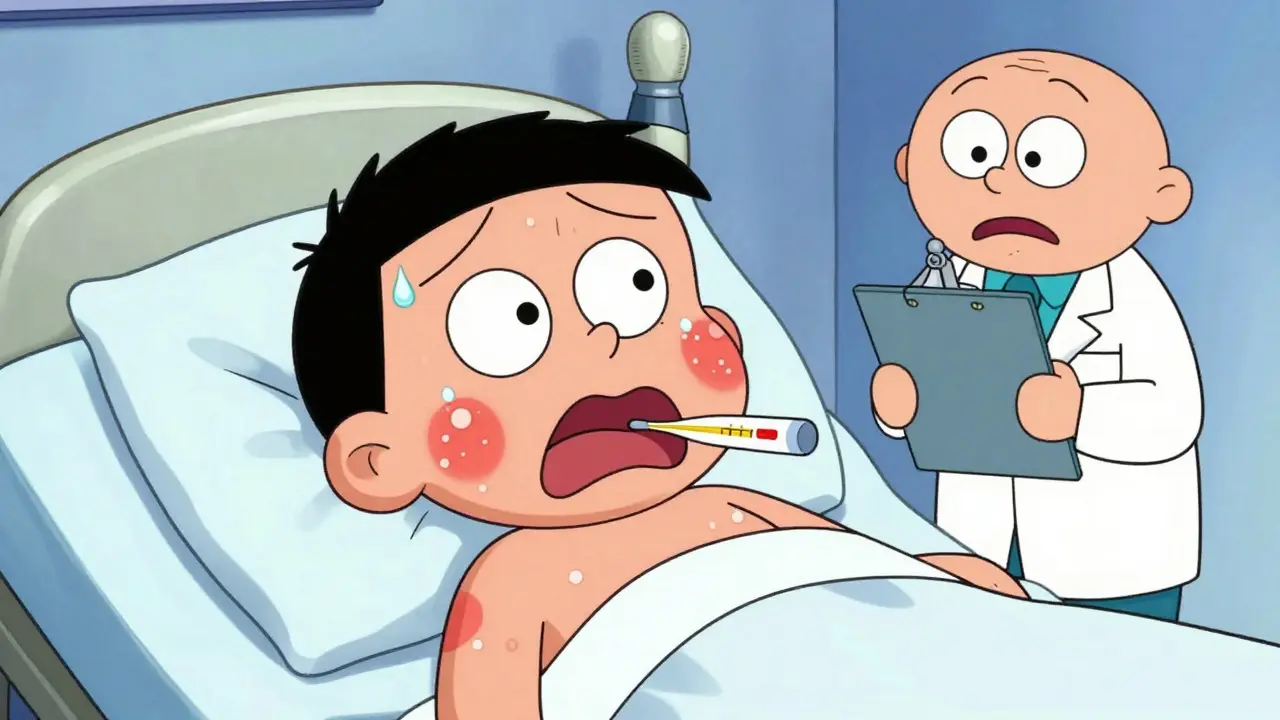
You take a common antibiotic for a sore throat. Two days later, your skin breaks out in hundreds of tiny, fluid-filled blisters. You feel feverish, your heart races, and the itching is unbearable. This isn't just an allergic reaction; it could be Acute Generalized Exanthematous Pustulosis, also known as AGEP. It is a rare but serious skin condition that strikes fast, usually within 48 hours of taking a new medication.
If you suspect you or someone else has this condition, time is critical. Unlike other rashes that might fade on their own, AGEP requires immediate medical attention to prevent complications. But here is the good news: with the right diagnosis and prompt removal of the offending drug, most people recover completely within two weeks.
What Exactly Is AGEP?
AGEP is a type of severe cutaneous adverse reaction (a serious skin response to a trigger, often a drug) characterized by the sudden appearance of numerous small, sterile pustules on red, inflamed skin. First described in 1980 by dermatologist R. Baker, it is now recognized globally as a distinct medical entity.
The key word here is "sterile." These pustules do not contain bacteria or infection. They are filled with white blood cells, specifically neutrophils, which are part of your immune system's rapid response team. While it looks alarming-like a widespread boil outbreak-it is essentially an immune system overreaction to a foreign substance, usually a pill you swallowed recently.
It is important to distinguish AGEP from other conditions. For instance, generalized pustular psoriasis (a chronic autoimmune skin disease causing widespread pus-filled bumps) can look similar but is much more dangerous, with a mortality rate of 20-25%. In contrast, AGEP has a mortality rate of only 2-4% if treated correctly. Getting the diagnosis right changes everything.
Who Gets AGEP and How Common Is It?
AGEP is rare. According to data from the European Study of Severe Cutaneous Adverse Reactions (EuroSCAR), it affects between 1 and 5 people per million annually. To put that in perspective, Stevens-Johnson Syndrome (SJS) is slightly more common, affecting 1.2 to 6 per million.
It does not discriminate based on gender. Men and women are affected equally. While it predominantly affects adults, cases have been documented in children and the elderly. If you are taking multiple medications, particularly antibiotics, your risk increases slightly, though the absolute risk remains low.
Recognizing the Symptoms: What Does AGEP Look Like?
The onset is dramatic. Within 24 to 48 hours of exposure to the triggering drug, symptoms appear rapidly. Here is what to look for:
- Skin Changes: The hallmark sign is the appearance of pinpoint (1-2mm) non-follicular pustules. These start on the face and in skin folds (intertriginous areas like underarms or groin) before spreading across the entire body. The skin underneath is bright red (erythematous).
- Fever: Most patients develop a high fever, often exceeding 38.5°C (101.3°F).
- Systemic Symptoms: You may experience a rapid heartbeat (tachycardia), low blood pressure, and general malaise.
- Laboratory Findings: A blood test will likely show leukocytosis (high white blood cell count) with significant neutrophilia (neutrophils making up more than 75% of white blood cells). C-reactive protein levels are also typically elevated.
A crucial diagnostic clue is the presence of target lesions and involvement of the palms and soles. These features are common in AGEP but rare in generalized pustular psoriasis. If you see these signs, tell your doctor immediately.
The Culprits: What Causes AGEP?
In over 90% of cases, AGEP is caused by medication. The timeline is usually short: symptoms appear 1 to 5 days after starting the drug, with a median of just 2 days. However, some drugs, like amoxicillin-clavulanate, can trigger a delayed reaction up to 14 days later.
Here are the most common triggers, based on EuroSCAR data:
| Drug Class | Percentage of Cases | Specific Examples |
|---|---|---|
| Antibiotics | 56% | Amoxicillin, Erythromycin, Macrolides |
| Antifungals | 12% | Itraconazole, Fluconazole |
| Calcium Channel Blockers | 8% | Amlodipine, Diltiazem |
| Other Drugs | 24% | NSAIDs, Anticonvulsants |
Note that antibiotics alone account for more than half of all cases. If you started a new antibiotic recently and developed a rash, stop taking it and seek medical advice immediately.
Diagnosis: Ruling Out Other Conditions
Diagnosing AGEP is challenging because it mimics other serious skin conditions. Misdiagnosis rates in community settings can be as high as 35-40%. Doctors rely on clinical criteria, histopathology (skin biopsy), and laboratory results.
A skin biopsy typically shows subcorneal or superficial intraepidermal pustules, papillary dermal edema, and an infiltrate of neutrophils. The presence of eosinophils in the dermis is another strong indicator of a drug reaction rather than psoriasis.
The EuroSCAR group has developed the AGEP Probability Score (APS), which helps clinicians determine the likelihood of AGEP versus other conditions. This tool has shown 94% sensitivity and 89% specificity in validation studies. If you are in a tertiary care center, your doctor may use this scoring system to confirm the diagnosis.
Treatment Strategies: Steroids vs. Supportive Care
The single most important step in treating AGEP is immediate discontinuation of the suspected drug. Without this, no amount of medication will help. Once the drug is stopped, the body begins to heal itself.
However, how aggressively should we treat the symptoms? There is ongoing debate among experts.
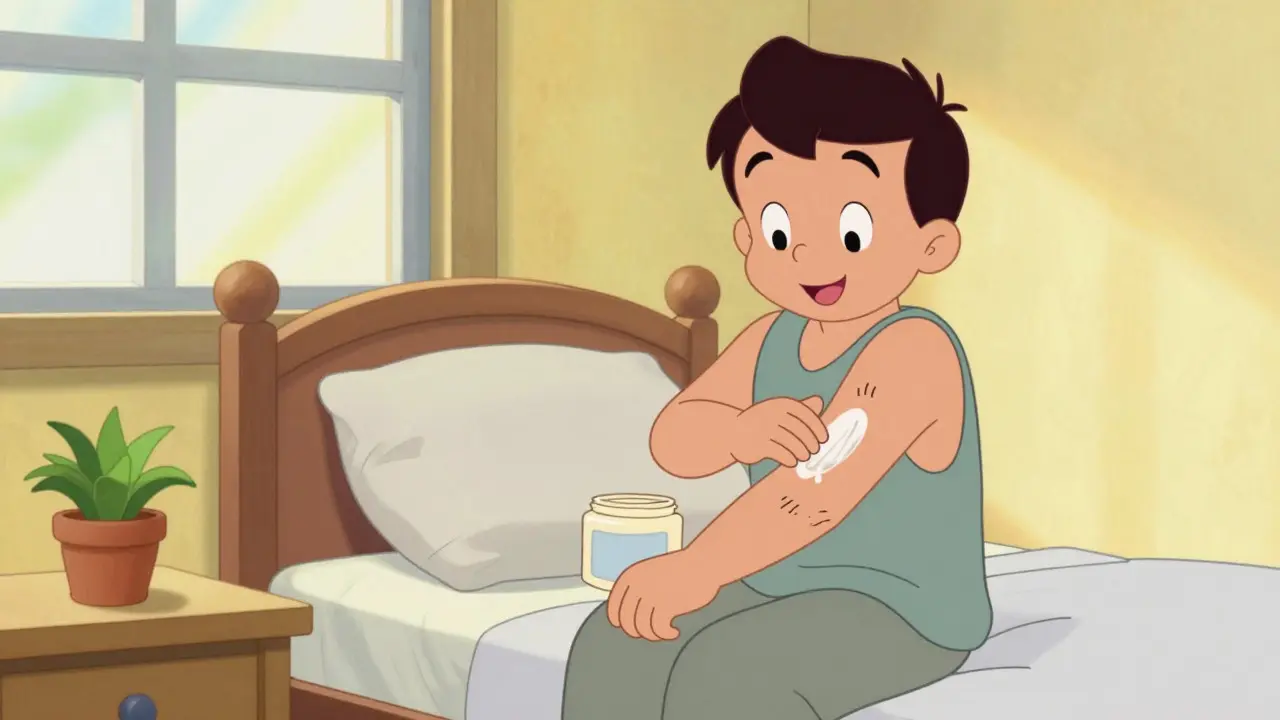
- Supportive Care: This includes topical corticosteroids, antihistamines for itching, and moist dressings to protect the skin. Some experts, like those at Baylor College of Medicine, argue that since AGEP is self-limiting, systemic steroids are unnecessary and potentially harmful.
- Systemic Corticosteroids: Many dermatologists prescribe oral prednisone (0.5-1 mg/kg/day). A 2023 review in the American Journal of Clinical Dermatology found that steroids reduced hospital stays by an average of 3.2 days and decreased morbidity. The European expert panel recommends them for patients with extensive skin involvement (>20% body surface area) or severe systemic symptoms.
- Alternative Therapies: For severe or refractory cases, cyclosporine (3-5 mg/kg/day) is an option. Recently, biologic agents like secukinumab (an IL-17 inhibitor) have shown promise, with one case report documenting complete resolution within 72 hours.
The decision to use systemic steroids should be individualized. If you have diabetes or a history of infections, your doctor might lean toward supportive care or cyclosporine instead.
Recovery and Aftercare
Most patients see improvement within 10-14 days after stopping the culprit drug. The pustules dry up, and the skin begins to peel (desquamation). This peeling phase occurs 7-10 days after onset and can be uncomfortable.
During recovery:
- Use gentle emollients to soothe dry, peeling skin.
- Avoid sun exposure, as new skin is highly sensitive to UV rays.
- Keep the skin clean to prevent secondary bacterial infections.
Patient compliance with aftercare instructions is higher when written guides are provided. Ask your doctor for a printed care plan.
Prevention and Future Directions
Since AGEP is drug-induced, prevention focuses on identifying and avoiding the offending agent. Once you have had AGEP, you should never take that specific drug again. Inform all your healthcare providers about this reaction.
Research is advancing quickly. Genetic studies have identified HLA-B*59:01 as a potential susceptibility marker in Asian populations, with an odds ratio of 8.7. This could lead to pre-treatment genetic screening for high-risk individuals in the future.
Regulatory agencies like the FDA and EMA are requiring stricter monitoring for drugs with neutrophil-mediated reaction potential. Newer biologics targeting IL-17 and IL-23 pathways are currently in clinical trials, offering hope for faster and safer treatments.
How long does an AGEP rash last?
With proper treatment and immediate cessation of the causative drug, AGEP typically resolves within 10 to 14 days. The initial pustules dry up, followed by a peeling phase that lasts another week. Complete recovery usually occurs within three weeks.
Is AGEP contagious?
No, AGEP is not contagious. The pustules are sterile, meaning they do not contain bacteria or viruses that can spread to others. It is an internal immune reaction, not an external infection.
Can AGEP come back?
AGEP rarely recurs unless the patient is re-exposed to the same drug or a chemically similar one. Once the specific trigger is identified and avoided, the risk of recurrence is extremely low.
What is the difference between AGEP and SJS?
Stevens-Johnson Syndrome (SJS) involves blistering and detachment of the top layer of skin, often affecting mucous membranes. AGEP presents with numerous small, sterile pustules on red skin. SJS has a higher mortality rate and requires more intensive care, while AGEP generally has a better prognosis if the drug is stopped early.
Do I need to go to the hospital for AGEP?
Hospital admission is recommended for patients with high fever (>38.5°C), extensive skin involvement, or systemic symptoms like low blood pressure. Average hospital stays range from 5.7 to 9.3 days depending on the severity and treatment approach.
Are steroids safe for treating AGEP?
The use of systemic corticosteroids is debated. Some experts discourage them due to the self-limiting nature of AGEP, while others recommend them for severe cases to reduce hospital stay and discomfort. The decision should be made by a dermatologist based on your specific health profile.
What should I avoid during the healing phase?
Avoid hot showers, harsh soaps, and tight clothing that can irritate the peeling skin. Protect new skin from sunlight using physical barriers like loose clothing, as sunscreen may sting. Keep the skin moisturized with fragrance-free emollients.