
Have you ever noticed a lump in your neck or felt like your collar is suddenly too tight? It might not just be weight gain. You could be dealing with a goiter, which is an abnormal enlargement of the thyroid gland that creates a visible bulge in the neck. While it sounds alarming, this condition is surprisingly common, affecting about 5% of people in the United States. But here’s the twist: what causes a swollen thyroid in one part of the world is often different from what causes it in another.
In places where salt isn’t fortified, lack of iodine is the main culprit. Here in North America, however, autoimmune diseases are the primary drivers. Understanding why your thyroid swells-and whether adding more iodine will help or hurt-is key to getting the right treatment. Let’s break down what’s happening inside your body, how doctors diagnose the issue, and what your options actually look like.
What Is a Goiter and Why Does the Thyroid Swell?
Your thyroid is a small, butterfly-shaped gland sitting at the base of your neck. In a healthy adult, it weighs only about 15 to 20 grams. When we talk about a goiter, we’re talking about this gland growing significantly larger-sometimes reaching 50 to 100 grams or more. Doctors typically consider a thyroid volume over 25 mL as abnormal when measured via ultrasound.
The swelling happens because the thyroid is working overtime or fighting an internal battle. Think of it like a muscle that gets bigger when stressed. If your body doesn’t have enough iodine, the thyroid enlarges in a desperate attempt to capture every bit of available iodine to make hormones. Conversely, if your immune system attacks the gland, inflammation sets in, causing it to puff up. This distinction matters because treating an iodine-deficient goiter with the same approach as an autoimmune one won’t work.
Iodine Deficiency vs. Autoimmune Disorders: The Two Main Culprits
To treat a goiter effectively, you first need to know what caused it. Historically, iodine deficiency was the leading cause of goiter worldwide, accounting for roughly 90% of cases in regions without universal salt iodization programs. Dr. David Marine proved this link in 1917 with a landmark study on schoolgirls in Ohio, showing that supplementing iodine prevented the swelling. Today, thanks to public health efforts, iodized salt has reduced global endemic goiter by half since the 1990s. However, nearly 1.9 billion people still live in areas where iodine deficiency remains a risk.
In contrast, the landscape in the United States looks very different. Because most table salt here contains iodine (about 45 mcg per gram), deficiency is rare. Instead, autoimmune disorders dominate. Hashimoto's thyroiditis is the most frequent cause of goiter in the U.S., where the immune system mistakenly attacks the thyroid tissue. This leads to chronic inflammation and enlargement. Another condition, Graves' disease, causes the thyroid to overproduce hormones, also resulting in a swollen gland known as a toxic goiter. Knowing which camp you fall into changes everything-from your diet to your medication.
Recognizing the Symptoms: More Than Just a Neck Lump
A visible bulge in the front of your neck is the classic sign, but goiters can grow silently for years. You might not notice anything until the gland becomes large enough to press on surrounding structures. That’s when things get uncomfortable. Compression of the trachea (windpipe) can lead to difficulty breathing, especially when lying down. Pressure on the esophagus makes swallowing feel difficult, while irritation of the recurrent laryngeal nerve can cause hoarseness or voice changes.
Beyond physical pressure, your hormone levels dictate other symptoms. If the enlarged thyroid is underactive (hypothyroidism), you’ll likely feel fatigued, gain weight, and feel cold all the time. If it’s overactive (hyperthyroidism), you might experience rapid heartbeat, anxiety, heat intolerance, and unintended weight loss. Women are particularly susceptible, with prevalence rates hitting 7.5% compared to 2.5% in men, and risks increasing after age 40.
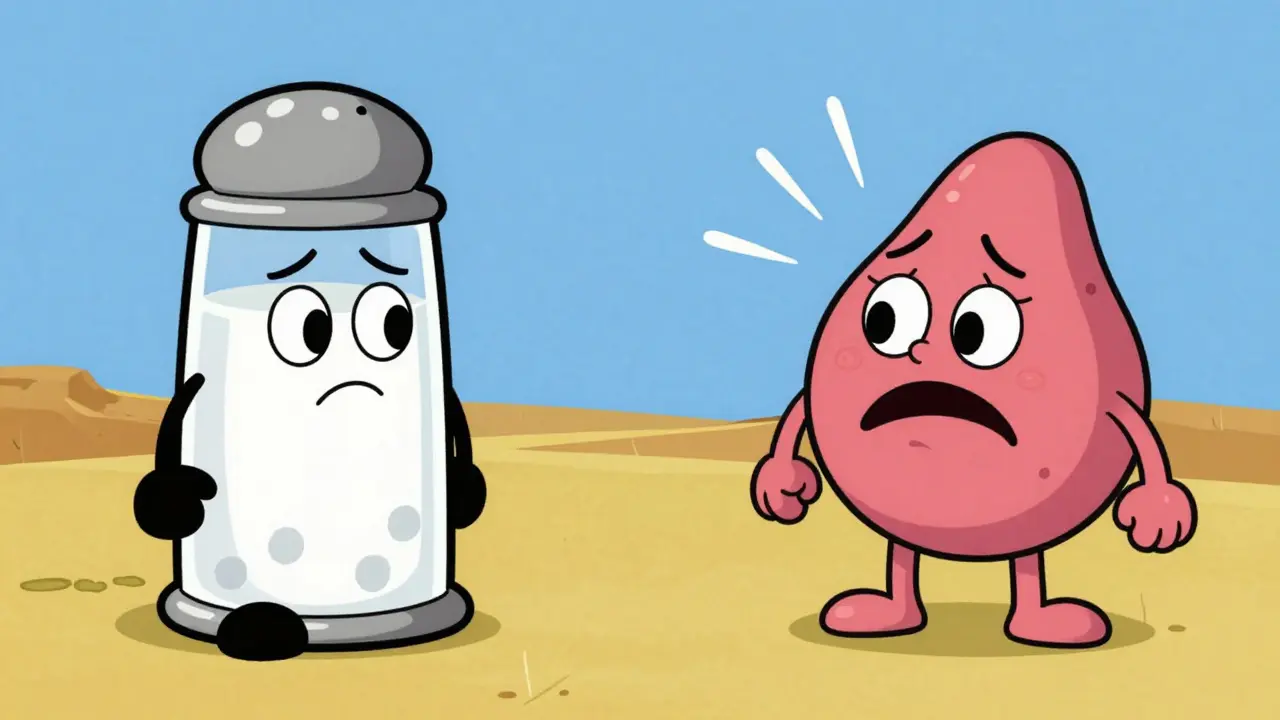
The Role of Iodine Supplementation: Help or Harm?
This is where many people get confused. Should you take iodine supplements? The answer depends entirely on your diagnosis. If your goiter is caused by iodine deficiency, supplementation is a game-changer. The World Health Organization recommends daily doses of 150-250 mcg for adults and pregnant women. Clinical guidelines show that taking 150 mcg daily can reduce thyroid volume by 30-40% within six to twelve months. In fact, simple iodine-deficient goiters resolve completely in 70-85% of cases within two years of proper supplementation.
However, if you have an autoimmune condition like Hashimoto’s or Graves’, adding extra iodine can backfire. Excess iodine can trigger or worsen autoimmune thyroiditis, potentially leading to severe hypothyroidism or hyperthyroidism. The American Thyroid Association emphasizes that unless a deficiency is confirmed through blood tests, self-supplementing with high-dose iodine is risky. For those in the U.S., meeting the Recommended Dietary Allowance (RDA) of 150 mcg through a balanced diet-including dairy, seafood, and iodized salt-is usually sufficient. Pregnant women need slightly more (220 mcg), and breastfeeding mothers need even more (290 mcg).
Treatment Options: From Medication to Surgery
If lifestyle changes and basic supplementation don’t shrink the goiter, medical intervention becomes necessary. The path forward depends on the size of the gland, your hormone levels, and whether cancer is suspected.
- Levothyroxine Therapy: For goiters linked to Hashimoto’s and hypothyroidism, doctors prescribe levothyroxine, a synthetic thyroid hormone. A typical dose is 1.6 mcg per kilogram of body weight per day. This normalizes hormone levels but only shrinks the goiter by 10-20% because the gland often develops fibrotic (scarred) tissue that doesn’t respond well to hormone replacement.
- Antithyroid Medications: For toxic goiters caused by Graves’ disease, drugs like methimazole (5-30 mg daily) block hormone production. This can reduce thyroid volume by 40-60% over 12-18 months, offering significant relief without surgery.
- Radioactive Iodine (RAI): This non-surgical option uses a dose of radioactive iodine (5-15 mCi) to destroy overactive thyroid cells. It effectively shrinks the gland by 50-60% within a year. However, there’s a catch: 75-80% of patients develop permanent hypothyroidism afterward, requiring lifelong hormone replacement therapy.
- Surgery (Thyroidectomy): When a goiter exceeds 80-100 mL in volume or causes severe compressive symptoms like breathing difficulties, surgery is often the best choice. Total thyroidectomy removes the entire gland, averaging 30-40 grams of tissue removal. While effective, patient satisfaction scores hover around 42% due to potential complications like voice changes (15% incidence) and temporary or permanent hypocalcemia (low calcium levels, 8% incidence).
Prognosis and Long-Term Management
Living with a goiter is manageable, but it requires vigilance. Simple iodine-deficient goiters have an excellent prognosis, often disappearing entirely with proper nutrition. Autoimmune-related goiters, however, are a long-term commitment. Studies indicate that about 60% of Hashimoto’s cases progress to atrophic thyroiditis over 10-15 years, meaning the gland eventually shrinks and stops producing hormones altogether.
Regular monitoring is crucial. Annual thyroid function tests (TSH, T3, T4) and periodic ultrasounds help track changes in size and structure. Recent research, such as the NIH-funded TRIPOD study, is exploring genetic factors, identifying 37 genetic loci associated with thyroid volume regulation. This suggests that future treatments may become more personalized based on your DNA profile.
| Treatment Method | Best For | Expected Reduction in Size | Key Risks/Side Effects |
|---|---|---|---|
| Iodine Supplementation | Iodine Deficiency | 30-40% in 6-12 months | Rare; possible worsening of autoimmune thyroiditis |
| Levothyroxine | Hashimoto's / Hypothyroidism | 10-20% | Heart palpitations if overdosed; weight changes |
| Methimazole | Graves' Disease / Hyperthyroidism | 40-60% in 12-18 months | Skin rash, liver issues, low white blood cell count |
| Radioactive Iodine | Toxic Goiter | 50-60% in 6-12 months | High risk (75-80%) of permanent hypothyroidism |
| Thyroidectomy | Large/Compressive Goiters | Complete removal | Voice changes (15%), hypocalcemia (8%), surgical risks |
Frequently Asked Questions
Can eating more salt cure a goiter?
Only if your goiter is caused by iodine deficiency. In countries with universal salt iodization, like the U.S., most goiters are autoimmune-related, and extra salt will not help. In fact, excessive sodium intake can raise blood pressure without addressing the underlying thyroid issue. Always confirm the cause with a doctor before changing your salt intake.
Is selenium supplementation helpful for goiters?
The evidence is mixed. A 2021 Cochrane Review found no significant benefit of selenium for reducing goiter size overall. However, some European guidelines suggest it may help in specific autoimmune cases by reducing antibodies. It’s not a standalone cure, so discuss it with your endocrinologist rather than self-prescribing.
When is surgery necessary for a goiter?
Surgery is typically recommended when the goiter is very large (over 80-100 mL), causes compressive symptoms like difficulty breathing or swallowing, or if there is suspicion of thyroid cancer. It is also considered if other treatments fail to control hormone levels or shrink the gland sufficiently.
Does a goiter mean I have thyroid cancer?
Not necessarily. Most goiters are benign. However, any new lump in the neck should be evaluated by a doctor. They will likely perform an ultrasound and possibly a fine-needle aspiration biopsy to rule out malignancy. Early detection is key, but statistically, the vast majority of goiters are not cancerous.
How long does it take for a goiter to shrink with medication?
It varies by cause. Iodine supplementation can show results in 6-12 months. Levothyroxine for Hashimoto’s may take longer and often only reduces size slightly due to scarring. Antithyroid drugs for Graves’ disease can reduce volume by up to 60% over 12-18 months. Patience and consistent monitoring are essential.
Are women more likely to get goiters than men?
Yes, significantly. Data shows that goiter affects approximately 7.5% of women compared to 2.5% of men. Hormonal fluctuations, particularly during pregnancy and menopause, play a role in thyroid health, making women more susceptible to both enlargement and autoimmune thyroid diseases.