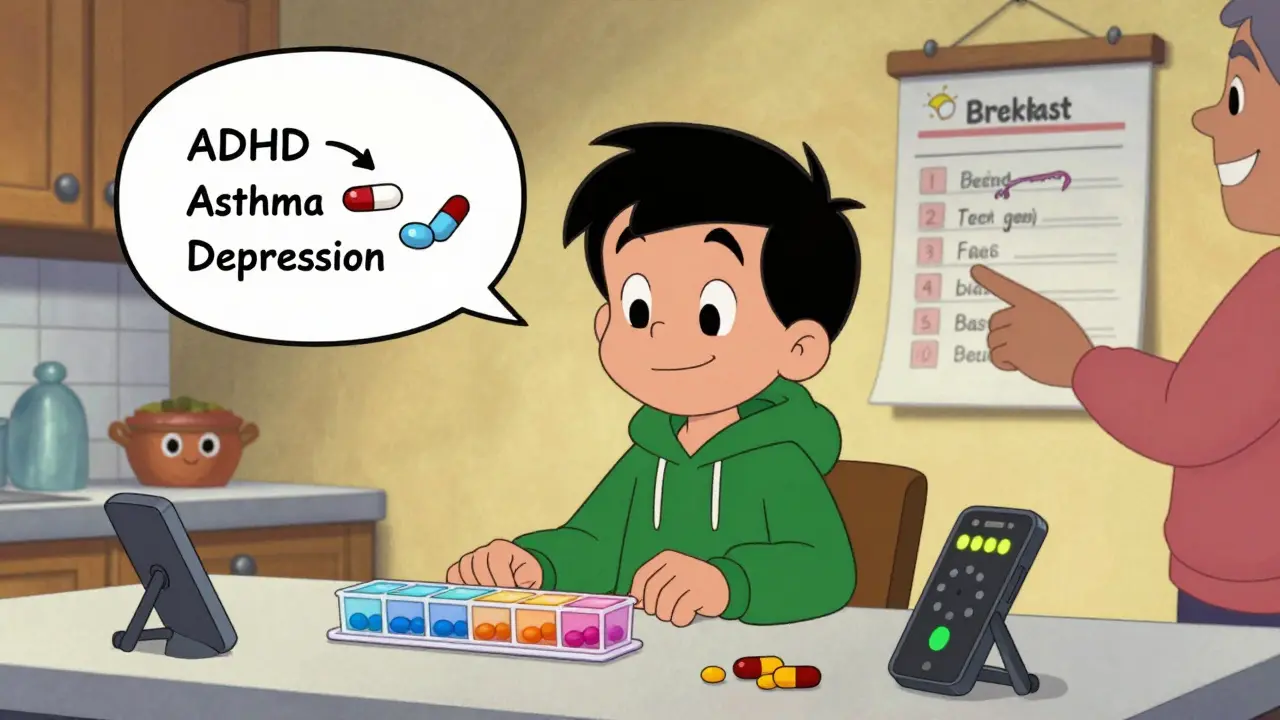
Teens are growing up fast. One day they’re asking you to help them remember their asthma inhaler; the next, they’re heading off to college with a full prescription cabinet and no one to remind them when to take their meds. If your teen is on regular medication-for ADHD, asthma, depression, seizures, or even chronic pain-it’s not enough to just hand them the bottle and hope for the best. Teaching them to manage their own prescriptions isn’t just about responsibility. It’s about safety, independence, and preventing serious harm.
Start Early, But Don’t Rush
You don’t wait until your teen is packing for college to teach them how to drive. The same goes for medication management. Experts recommend starting the conversation in 10th grade. That’s when most teens are mentally ready to understand why a pill matters, not just that they’re told to take it. By 11th grade, they should be handling refills and scheduling doses. By 12th grade, they should be able to talk to their doctor about side effects and know how to contact their pharmacy. Many parents think, “They’re just a kid,” but the reality is teens are already making adult decisions-about social media, relationships, and even alcohol. Prescription drugs are no different. The DEA says prescription medication misuse is the second most common form of illegal drug use among teens, right after marijuana. And the biggest danger? They think it’s safer because it’s legal. A 2020 DEA report found that 70% of teens believe prescription drugs are less risky than street drugs. That’s a dangerous myth.Teach Them What’s in the Bottle
Before your teen can manage their meds, they need to know what they are. Don’t assume they’ve read the label. Sit down with them and go through each prescription. Ask: What is this for? Why do I need it? What happens if I skip it? Make sure they can explain it in their own words. For example, if they’re on Adderall for ADHD, they should understand it’s not a study hack-it’s a controlled substance that can cause anxiety, insomnia, or heart issues if misused. If they’re on an antidepressant, they need to know not to stop suddenly. If it’s a painkiller like oxycodone, they need to know it’s not a party drug. It’s a powerful opioid that can shut down breathing. Use real numbers. The 2022 Monitoring the Future study showed 14% of high school seniors have misused prescription drugs at least once. That’s one in seven. That’s someone in their class. That’s someone they know. Make it real.Build a Routine That Sticks
The biggest reason teens miss doses? No routine. They forget. They’re busy. They get distracted. The fix? Tie medication to something they already do every day. Research from the University of Rochester shows that pairing meds with a daily habit-like brushing teeth, eating breakfast, or charging their phone-boosts adherence by 37%. So if they take their pill after brushing their teeth at night, it becomes automatic. No thinking required. Set up a simple system:- Use a pill organizer with morning, afternoon, evening, and night compartments.
- Set phone alarms with different sounds for each dose (don’t use the same ringtone as your text messages).
- Try a medication app like Medisafe or MyMeds. These apps send reminders, track doses, and even notify you if they miss one.
Give Them Tools, Not Just Warnings
Teens respond better to tools than lectures. A pill organizer isn’t just a container-it’s a symbol of trust. A phone alarm isn’t nagging-it’s their personal assistant. Apps like Medisafe let them log doses with a tap and even share progress with a parent if they choose. That’s accountability without micromanaging. But here’s the catch: not all apps are created equal. A 2023 Mayo Clinic review found that only 22% of teen medication apps have been clinically tested. Stick to ones backed by hospitals or health systems. Avoid random apps with flashy graphics and no medical oversight. Also, keep a simple written log. A small notebook or even a notes app where they check off each dose. It’s low-tech, but it works. When they see a week of green checkmarks, they feel proud. When they see gaps, they know where to improve.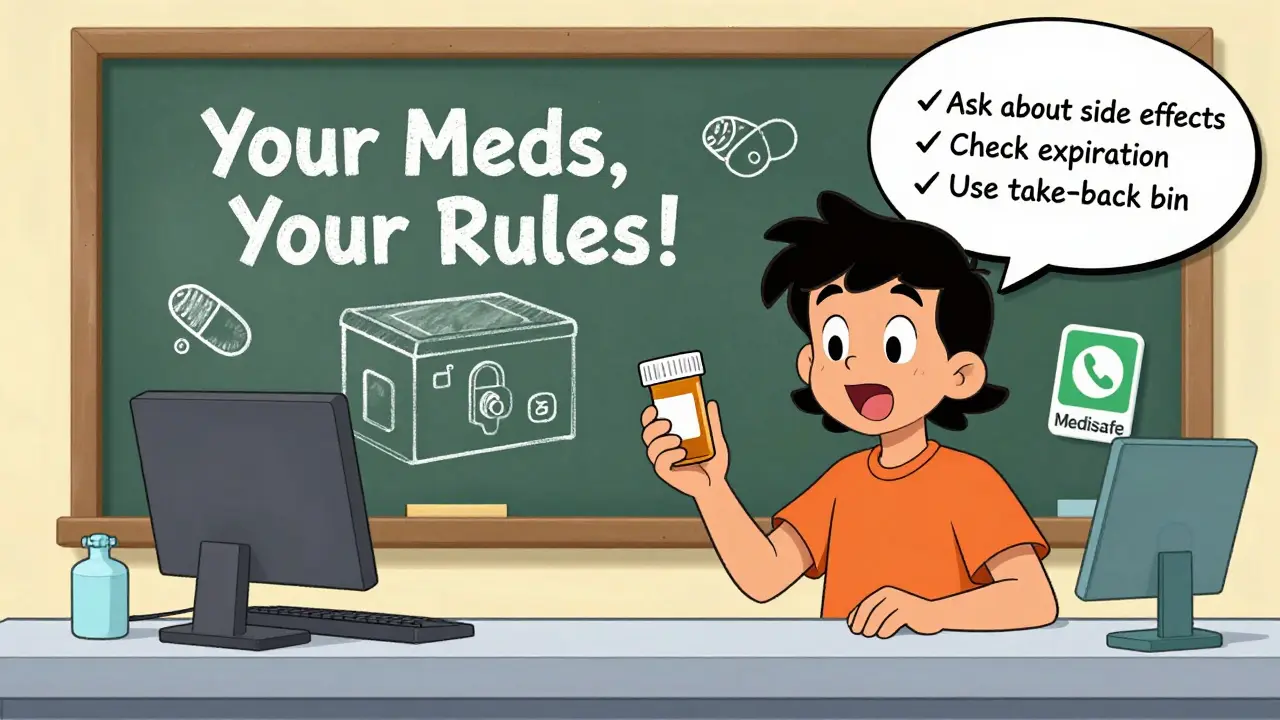
Practice Communication Skills
Teens need to learn how to talk to doctors. Not just say “I’m fine.” But ask: “Is this dose still right for me?” “Why am I feeling dizzy?” “Can I switch to a once-a-day version?” Role-play it. Pretend you’re the doctor. Ask them questions. Let them answer. Then switch roles. This builds confidence. It also helps them notice when something feels off. And teach them how to talk to pharmacists. Many teens don’t realize pharmacists are trained to answer medication questions too. Encourage them to ask: “What side effects should I watch for?” “Can I take this with my vitamins?” A 2021 study in the Journal of Adolescent Health found that teens who practiced talking to healthcare providers had 22% higher adherence rates. Why? Because when they feel heard, they care more.Supervise, But Don’t Spy
Parents often swing between two extremes: hovering over every pill or handing over the keys and disappearing. Neither works. The middle ground? Phased responsibility.- Phase 1 (10th grade): You give the meds. They take them in front of you.
- Phase 2 (11th grade): You leave the pill organizer on the counter. They take it alone. You check in with a text: “Did you take your pill today?”
- Phase 3 (12th grade): They handle refills. You do a monthly spot-check-open the bottle, count the pills.
Dispose of Unused Meds-Immediately
Old antibiotics? Extra painkillers? Leftover anxiety pills? Don’t keep them. Don’t flush them. Don’t toss them in the trash. Use a pharmacy take-back program. The DEA says there are over 14,000 drop-off locations across the U.S. and Canada. Most pharmacies, police stations, and hospitals have them. Find one near you. Go with your teen. Make it a habit. Why? Because unused pills are a magnet for misuse. A 2023 Children’s Safety Network report found that teens who had access to leftover meds were three times more likely to misuse them. Out of sight, out of mind-literally.
Use Peer Support
Teens listen to their friends more than their parents. That’s why peer support works. Encourage them to find one trusted friend who also takes medication. They can remind each other. They can share tips. They can say, “I’m not taking that. It’s not worth it.” Schools are starting to catch on. Programs like Generation Rx’s “My Generation Rx” teach teens how to say no to peer pressure around pills. Schools using the program saw a 33% drop in prescription misuse in just one year. If your teen’s school doesn’t have a program, ask them to start one. Teens can lead it. They’re the ones who need to hear the message.What to Do If They Mess Up
They missed a week of their antidepressant. They took two painkillers because they were stressed. They forgot their inhaler at school. Don’t yell. Don’t punish. Don’t take away their meds. Talk. Ask: “What happened?” “What made it hard?” “What can we change?” Non-adherence isn’t rebellion. It’s often overwhelm, fear, embarrassment, or side effects they’re too scared to mention. The goal isn’t perfection. It’s progress.Look Ahead: What’s Coming Next
The future of teen medication management is digital. By 2025, most electronic health records will let teens 13 and older access their own medication history through secure patient portals. AI tools are being tested in hospitals to predict when a teen is likely to miss a dose-and send a gentle reminder before it happens. But tech won’t fix everything. The real solution is still human: a parent who shows up, a doctor who listens, and a teen who feels trusted. The goal isn’t to raise a perfect medication manager. It’s to raise a confident, informed young adult who knows how to take care of themselves-and who won’t be one of the 4.8 million teens in 2022 who needed treatment for prescription drug misuse.Final Thought
This isn’t about control. It’s about connection. The more you involve your teen in their own care, the more they’ll own it. And when they walk out the door for college, they won’t just have a backpack and a phone-they’ll have the skills to stay healthy, safe, and in control.At what age should I start teaching my teen about their medications?
Start in 10th grade, around age 15 or 16. That’s when most teens are ready to understand why their meds matter, not just that they’re told to take them. Begin with simple education-what each pill does and why. By 11th grade, they should handle refills and scheduling. By 12th grade, they should be able to talk to their doctor and pharmacy independently.
What if my teen refuses to take their medication?
Don’t force it. Ask why. They might be scared of side effects, embarrassed to take pills at school, or feel like the medication changes who they are. Talk to their doctor together. Sometimes switching to a different form-like a patch, liquid, or once-daily pill-helps. If it’s an antidepressant or ADHD med, stopping suddenly can be dangerous. Work with a professional to find a solution.
Are medication apps safe for teens to use?
Only if they’re clinically validated. A 2023 Mayo Clinic review found only 22% of teen medication apps have been tested for safety and accuracy. Stick to apps recommended by hospitals or health systems like Medisafe or MyMeds. Avoid random apps with no medical backing-even if they look fun or have cool features.
Should I lock up my teen’s prescription drugs?
Yes-if they’re controlled substances like opioids, ADHD medications (e.g., Adderall), or benzodiazepines. The DEA and Aetna both recommend locking these in a secure box, even if your teen has never shown signs of misuse. Most teens who misuse prescription drugs get them from home. Locking them up doesn’t mean you don’t trust them-it means you’re protecting them.
How do I know if my teen is misusing their prescription?
Watch for signs: missing pills, mood swings, secrecy about meds, changes in sleep or appetite, or sudden interest in getting prescriptions from multiple doctors. Also, if they’re taking pills “just to feel better” or “to study,” that’s a red flag. If you’re worried, talk to their doctor. Don’t wait for a crisis.
What if my teen is on multiple medications?
Use a pill organizer with clear labels for morning, afternoon, evening, and night. Pair each dose with a daily habit like brushing teeth or eating dinner. Use a medication app to track all doses. Schedule weekly check-ins with your teen to review what’s working and what’s not. Ask their pharmacist if any meds can be combined into a single daily dose to simplify the routine.
Can my teen refill their own prescriptions?
Yes, once they’re ready. Most pharmacies allow teens 16 and older to request refills in person or online with parental consent. Start by having them call the pharmacy with you present. Then let them do it alone while you check the delivery. This builds confidence and responsibility. Always keep a backup supply at home in case of delays.
How do I handle side effects my teen doesn’t want to talk about?
Create a safe space. Say: “I know some meds make you feel weird. I’m not here to judge-I’m here to help.” Keep a side effect journal together. Write down when they feel off, what they were taking, and how long it lasted. Bring it to their next appointment. Often, changing the dose or switching meds fixes the issue. Silence is riskier than speaking up.
Diana Dougan
lol so now we're teaching teens to be pharmacists too? next they'll be doing their own MRIs. i mean sure, let's just hand a 16-year-old a bottle of Adderall and say 'good luck' while we binge-watch netflix. 🙄
Holly Robin
THIS IS WHY OUR KIDS ARE TURNING INTO ZOMBIES. THE GOVERNMENT IS PUSHING DRUGS ON TEENS AND THEN TELLING PARENTS TO 'TRUST THEM'?? THEY'RE 16 NOT A DOCTOR. I SAW A KID AT THE GAS STATION TAKE 5 ADDERALLS AND SAY 'IT'S JUST FOR FOCUS'... WE'RE ALL GONNA DIE FROM THIS MEDICAL INDUSTRY GREED. #SAVEOURKIDS
KATHRYN JOHNSON
The premise of this article is fundamentally flawed. Adolescents lack the cognitive maturity to manage controlled substances. The state has a duty to protect minors from self-harm, not outsource pharmaceutical responsibility to them. This is not empowerment. It is negligence.
Sazzy De
i just let my kid use medisafe and it works fine. they set their own alarms and i get a weekly summary. no drama. no yelling. just a kid who remembers to take their meds because they wanna feel okay. simple.
Beth Beltway
You're all missing the point. This isn't about responsibility. It's about control. The system wants teens to believe they're 'in charge' so they don't question why they're on 4 different psych meds in the first place. Wake up.
Marc Bains
In my community, we teach kids about meds at 14. We sit down with their pharmacist, use the app, and talk about side effects like we talk about sex ed. No shame. No secrecy. Just facts. Works every time.
Adarsh Uttral
in india we dont have this problem because most teens dont even get prescribed these meds unless its serious. plus parents still give them pills. but i like the app idea. my cousin uses one for epilepsy. its good.
April Allen
The behavioral economics here are sound. Implementation intention theory-pairing a target behavior with a contextual cue-significantly increases adherence through automaticity. The pill organizer + habit stacking paradigm leverages dopaminergic reinforcement loops, reducing executive function load. This is not parenting. This is cognitive architecture.
Shawn Peck
Just lock the meds. No apps. No talks. Just lock them. If they need it, they ask. Simple. Done.
Sarah Blevins
The cited studies lack longitudinal data. Adherence rates at 41% do not equate to sustained behavioral change. Furthermore, the reliance on digital tools introduces privacy and data security risks that are inadequately addressed in this piece.
Yanaton Whittaker
USA FOREVER!!! WE DO IT OUR WAY!!! LOCK THE MEDS AND TRUST NO ONE!!! 💪🇺🇸 #AMERICA
Kathleen Riley
The ontological shift from parental stewardship to adolescent autonomy in pharmaceutical management constitutes a profound epistemological rupture within the familial epistemic structure. One must question whether such a transition, premised upon instrumental rationality, truly serves the telos of the developing subject.
Beth Cooper
Wait… so you’re telling me the government doesn’t want us to know that these ‘meds’ are just a way to keep kids quiet so they don’t ask why their school has no art program? Coincidence? I think not.