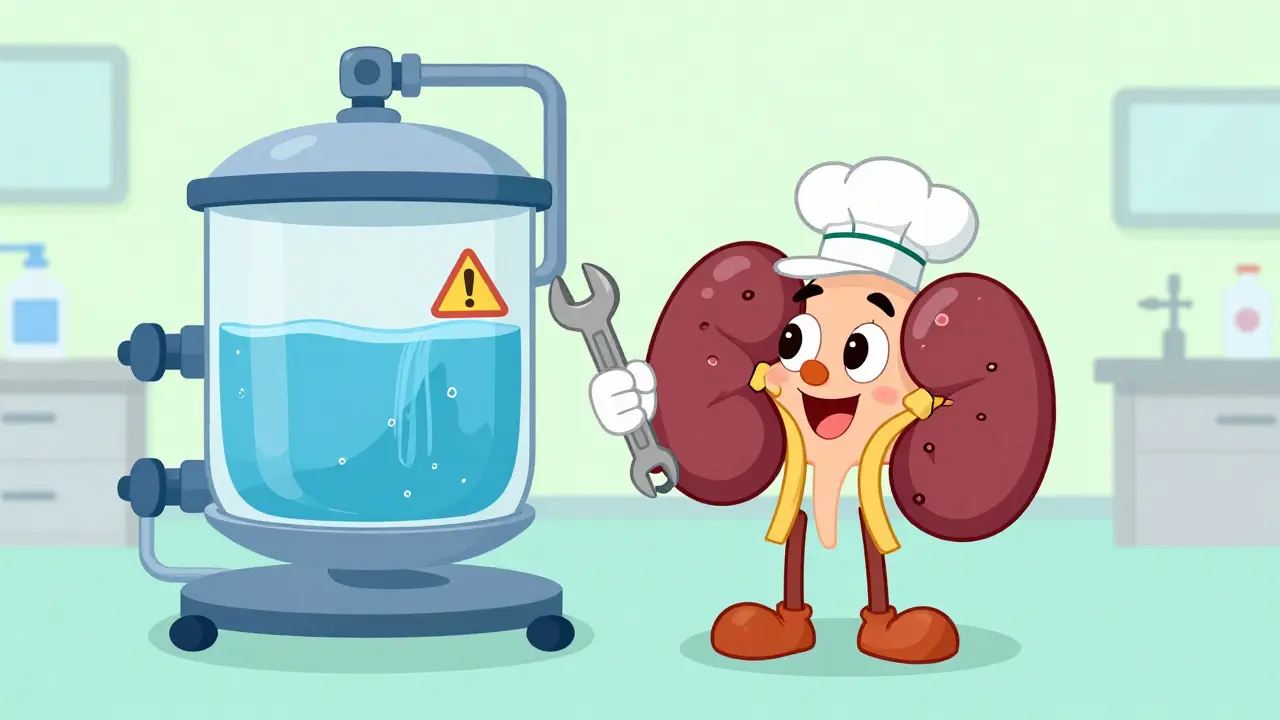
Your kidneys are the master regulators of your body’s fluid and salt balance. When they start to fail, that delicate equilibrium breaks down. You might not feel sick at first, but your blood sodium levels could be drifting into dangerous territory. Hyponatremia (too little sodium) and hypernatremia (too much sodium) are not just lab numbers; they are signals that your kidneys can no longer handle the water and salt load you’re putting on them. For the millions of people living with chronic kidney disease (CKD), understanding these disorders is the difference between staying stable and ending up in the hospital.
Sodium isn’t just about taste. It controls how water moves in and out of your cells. In healthy kidneys, this process is automatic. In damaged kidneys, it becomes a manual, high-stakes balancing act. If you get it wrong, the consequences range from confusion and falls to seizures and death. This guide cuts through the medical jargon to explain exactly what happens to your sodium levels when kidney function declines, why standard advice often fails CKD patients, and how to manage it safely.
The Broken Thermostat: Why Kidneys Struggle with Sodium
To understand sodium disorders, you have to look at how the kidney normally works. Think of your kidney as a sophisticated filtration plant. It filters blood, reabsorbs what you need, and excretes waste. Sodium and water go hand-in-hand here. The kidney adjusts how much sodium and water it keeps or throws away based on your body’s needs, largely directed by hormones like vasopressin (also known as ADH).
In Chronic Kidney Disease (CKD), this system gets clogged and confused. As your Glomerular Filtration Rate (GFR) drops, fewer nephrons-the tiny filtering units-are working. Each remaining nephron has to work harder, but there’s a limit. According to research published in the Journal of the American Society of Nephrology, disordered extracellular fluid volume becomes nearly universal in CKD patients. Here is the core problem:
- Reduced Clearance: Your kidneys can’t flush out excess water or salt quickly enough.
- Hormonal Chaos: The renin-angiotensin-aldosterone system (RAAS), which usually helps regulate blood pressure and sodium, goes haywire. Sometimes it’s too active, causing salt retention; other times, it fails, leading to salt wasting.
- Dilution Issues: Healthy kidneys can produce very dilute urine to get rid of extra water. Damaged kidneys lose this ability. They become "isosthenuric," meaning they produce urine with the same concentration as blood, regardless of how much water you drink.
This loss of flexibility means that even small changes in your diet or medication can cause massive swings in your blood sodium levels. You aren’t just dealing with one condition; you’re dealing with a compromised regulatory system.
Hyponatremia: The Silent Danger in CKD
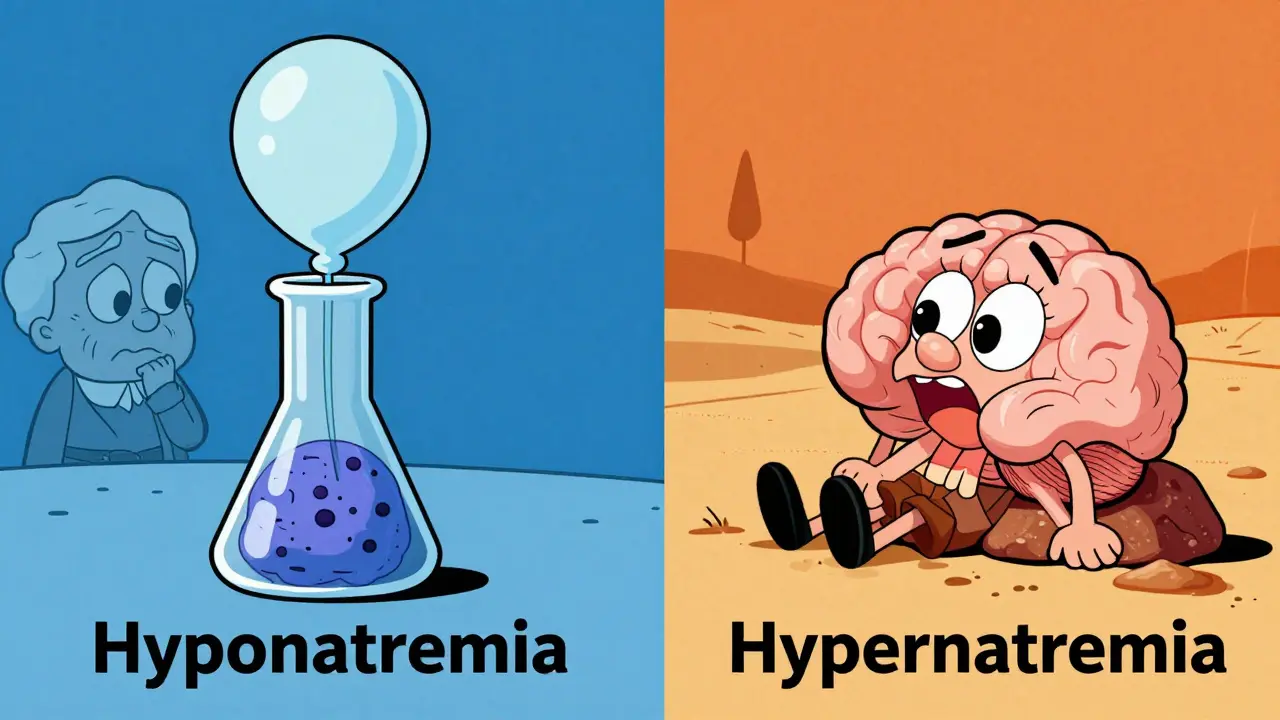
Hyponatremia occurs when your serum sodium drops below 135 mmol/L. It is surprisingly common in CKD, affecting up to 60-65% of cases where sodium imbalance is present. But why does sodium drop if the kidney is failing? Isn’t failure supposed to mean buildup?
It’s counterintuitive, but in CKD, hyponatremia is usually a problem of water, not just salt. Because your kidneys can’t excrete free water efficiently, any extra water you drink stays in your body, diluting the sodium already in your blood. This is called euvolemic or hypervolemic hyponatremia. You have normal or high total body sodium, but too much water.
There is another, less common type: hypovolemic hyponatremia. This happens when you actually lose both salt and water, but lose more salt. In CKD, this can happen due to:
- Diuretic Use: Thiazide diuretics, commonly prescribed for blood pressure, are notorious for causing hyponatremia, especially when GFR drops below 30 mL/min/1.73m².
- Salt-Wasting Syndromes: Some CKD patients paradoxically lose excessive amounts of sodium in their urine. This affects about 5-8% of advanced CKD patients.
- Over-Restriction: Many patients are told to restrict protein, potassium, and sodium. A study in PMC11828805 (2023) found that strict solute restriction can impair the kidney’s ability to excrete water, inadvertently raising the risk of hyponatremia.
The risks are severe. Hyponatremia causes brain cells to swell. Symptoms include nausea, headache, confusion, and lethargy. In the elderly, it significantly increases the risk of falls (odds ratio of 1.82) and fractures. More alarmingly, it is an independent predictor of mortality. Hospitalized patients with hyponatremia face a 28% higher mortality rate than those with normal sodium levels.
Hypernatremia: The Dehydration Trap
Hypernatremia, defined as serum sodium above 145 mmol/L, is less common but equally dangerous. It typically indicates a deficit of water relative to sodium. In CKD, this usually happens because the patient cannot concentrate urine effectively to save water, or because they are losing water faster than they can replace it.
Who is most at risk? Elderly CKD patients are the primary victims. Why? Two reasons:
- Blunted Thirst Mechanism: Aging reduces the sensation of thirst. By the time you feel thirsty, you may already be significantly dehydrated.
- Impaired Concentrating Ability: Even if you drink water, damaged kidneys may not be able to retain it efficiently if the tubular structures are scarred.
Other causes include osmotic diuresis (where high levels of glucose or urea pull water into the urine) and inadequate fluid intake due to fear of swelling or heart failure. The result is cellular dehydration. Brain cells shrink, pulling away from the skull, which can cause tearing of blood vessels and intracranial hemorrhage. Symptoms include intense thirst, restlessness, muscle twitching, and eventually seizures or coma.
| Feature | Hyponatremia (<135 mmol/L) | Hypernatremia (>145 mmol/L) |
|---|---|---|
| Primary Issue | Excess water relative to sodium | Deficit of water relative to sodium |
| Common Cause in CKD | Impaired water excretion, thiazide diuretics | Dehydration, impaired thirst, osmotic diuresis |
| Cell Effect | Cells swell (risk of brain edema) | Cells shrink (risk of bleeding) |
| Key Symptom | Confusion, nausea, falls | Intense thirst, restlessness, twitching |
| Mortality Risk | High (HR 1.94 in ambulatory settings) | Very High if untreated |
Treatment Strategies: Precision Over Guesswork
Treating sodium disorders in CKD is not one-size-fits-all. Standard protocols for healthy individuals can be deadly for CKD patients. Dr. Richard H. Sterns, a leading nephrologist, notes that the most common error is failing to recognize the reduced capacity for water excretion. Here is how treatment differs.
Managing Hyponatremia
The goal is to raise sodium levels slowly. Rapid correction can cause Osmotic Demyelination Syndrome (ODS), a devastating neurological condition where the brain’s protective coating strips away. This leads to paralysis, speech difficulties, and permanent disability. Retrospective analyses show that 12-15% of ODS cases in CKD patients result from applying standard correction rates without adjusting for renal clearance.
First-Line Therapy: Fluid Restriction
For most CKD patients with hyponatremia, drinking less is the answer. However, the amount depends on your stage:
- Early CKD (Stages 1-2): Limit fluids to 1,000-1,500 mL/day.
- Advanced CKD (Stages 4-5): Limit fluids to 800-1,000 mL/day. This includes all liquids: water, coffee, soup, ice cream.
Medication Adjustments
If you are on thiazide diuretics, your doctor may switch you to loop diuretics (like furosemide). Loop diuretics are more effective in low-GFR states and help excrete water while preserving some sodium handling. Vasopressin receptor antagonists (vaptans) are generally contraindicated in advanced CKD because the kidneys don’t respond well to them, increasing the risk of liver toxicity and ineffective treatment.
Correction Limits
Never correct sodium faster than 4-6 mmol/L in the first 24 hours. The absolute maximum is 8 mmol/L in 24 hours. This slow pace allows brain cells to adjust gradually.
Managing Hypernatremia
The goal here is to replace water carefully. The danger is cerebral edema-brain swelling-if you correct the sodium too fast. Brain cells, shrunken from dehydration, will rapidly take in water, potentially bursting.
Water Replacement
Free water replacement is key. This can be done orally if the patient is conscious and can swallow safely. If not, intravenous dextrose solutions (which provide free water once the sugar is metabolized) are used. The correction rate should not exceed 10 mmol/L in the first 24 hours.
Addressing the Root Cause
If hypernatremia is driven by osmotic diuresis (e.g., high blood sugar), treating the underlying diabetes is crucial. If it’s due to poor intake, establishing a routine for regular sips of water throughout the day, rather than waiting for thirst, is essential.
Dietary Navigation: Beyond "Low Salt"
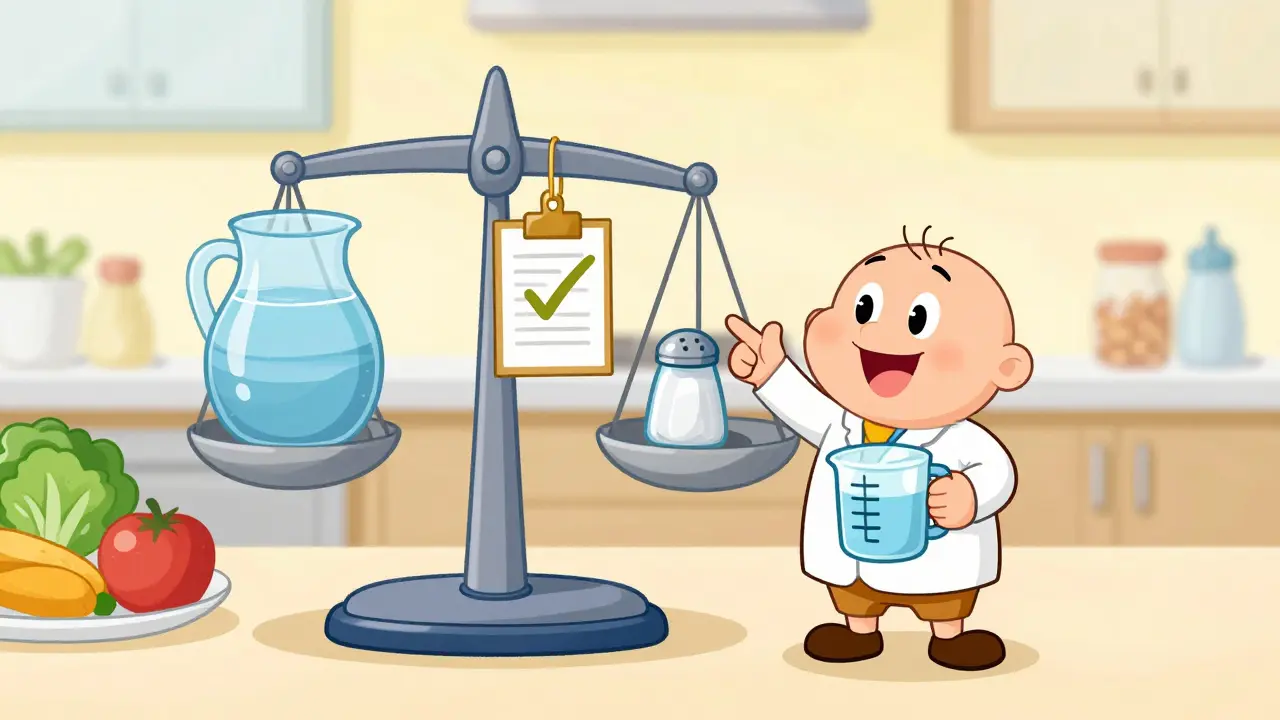
Kidney diets are notoriously complex. You are often told to limit sodium, potassium, phosphorus, and protein simultaneously. This cognitive burden is heavy, especially for elderly patients who make up 70-75% of advanced CKD cases. Misinterpretation is common. For instance, 22% of hyponatremia cases in Stage 4-5 CKD are linked to excessive sodium restriction, where patients cut salt so drastically that they trigger salt-wasting or reduce solute load enough to impair water excretion.
Here is a practical approach:
- Don’t Blindly Restrict Salt: If you have salt-wasting syndrome, you may need *more* sodium (4-8 g/day supplementation). Ask your nephrologist to check your volume status. Are you dry or swollen? Swollen? Restrict salt. Dry/dizzy? You might need more.
- Count All Fluids: Ice cubes, gelatin, soups, and fruits with high water content (watermelon, oranges) count toward your daily fluid limit.
- Protein Matters: Protein metabolism produces urea, which acts as an osmole helping to excrete water. Severely restricting protein can reduce this effect, making it harder to get rid of water. Work with a renal dietitian to find the right protein balance.
Education is critical. Studies show that 3-6 sessions with a renal dietitian significantly improve compliance and outcomes. Don’t try to guess. Get a personalized plan.
Monitoring and Future Tools
Blood tests are the gold standard, but they only tell you what happened yesterday. Continuous monitoring is the future. In 2023, the FDA approved a novel sodium monitoring patch for CKD patients. This device provides continuous interstitial sodium measurements, correlating 85% with serum sodium levels in Phase 3 trials. While not yet widespread, this technology promises to catch dangerous trends before they become emergencies.
Until then, home monitoring of weight and symptoms is your best tool. A sudden gain of 2-3 pounds in a day likely means fluid retention (risk of hyponatremia). A sudden loss might mean dehydration (risk of hypernatremia). Keep a log. Share it with your care team.
What are the early signs of hyponatremia in CKD patients?
Early signs are subtle and often mistaken for aging or fatigue. Look for mild nausea, a feeling of fullness in the stomach, slight confusion or difficulty concentrating, and unsteady gait. If you notice yourself stumbling more often or feeling "foggy" after meals, check your sodium levels. These symptoms indicate brain cell swelling due to diluted sodium.
Can I eat salty foods if I have CKD and hyponatremia?
Not necessarily. Most hyponatremia in CKD is caused by excess water, not lack of salt. Eating more salt can lead to volume overload, worsening hypertension and heart strain. Instead, focus on restricting fluid intake. Only increase sodium if your doctor confirms you have a salt-wasting syndrome or hypovolemia (low blood volume).
Why are thiazide diuretics dangerous for CKD patients?
Thiazide diuretics block sodium reabsorption in the distal tubule. In healthy kidneys, this is manageable. In CKD, especially when GFR is below 30 mL/min, the kidney’s ability to compensate is gone. Thiazides can cause profound sodium loss and impair the kidney’s ability to dilute urine, leading to severe hyponatremia. Loop diuretics are generally safer and more effective in advanced CKD.
How fast should sodium levels be corrected?
Slowly. For hyponatremia, limit correction to 4-6 mmol/L per 24 hours, never exceeding 8 mmol/L. For hypernatremia, do not correct more than 10 mmol/L in the first 24 hours. Rapid correction risks osmotic demyelination syndrome (for low sodium) or cerebral edema (for high sodium), both of which can be fatal or cause permanent disability.
Does dietary protein affect sodium balance in CKD?
Yes. Protein breakdown produces urea, which acts as an osmole that helps pull water into the urine for excretion. Severely restricting protein can reduce this natural diuretic effect, making it harder for your kidneys to get rid of excess water, thereby increasing the risk of hyponatremia. Balance is key; work with a dietitian to determine the right protein level for your specific stage of CKD.