Malignant Hyperthermia Risk Checker
Select any factors that apply to you or a family member to check susceptibility.
Assessment Result
Select options on the left to see your risk assessment.
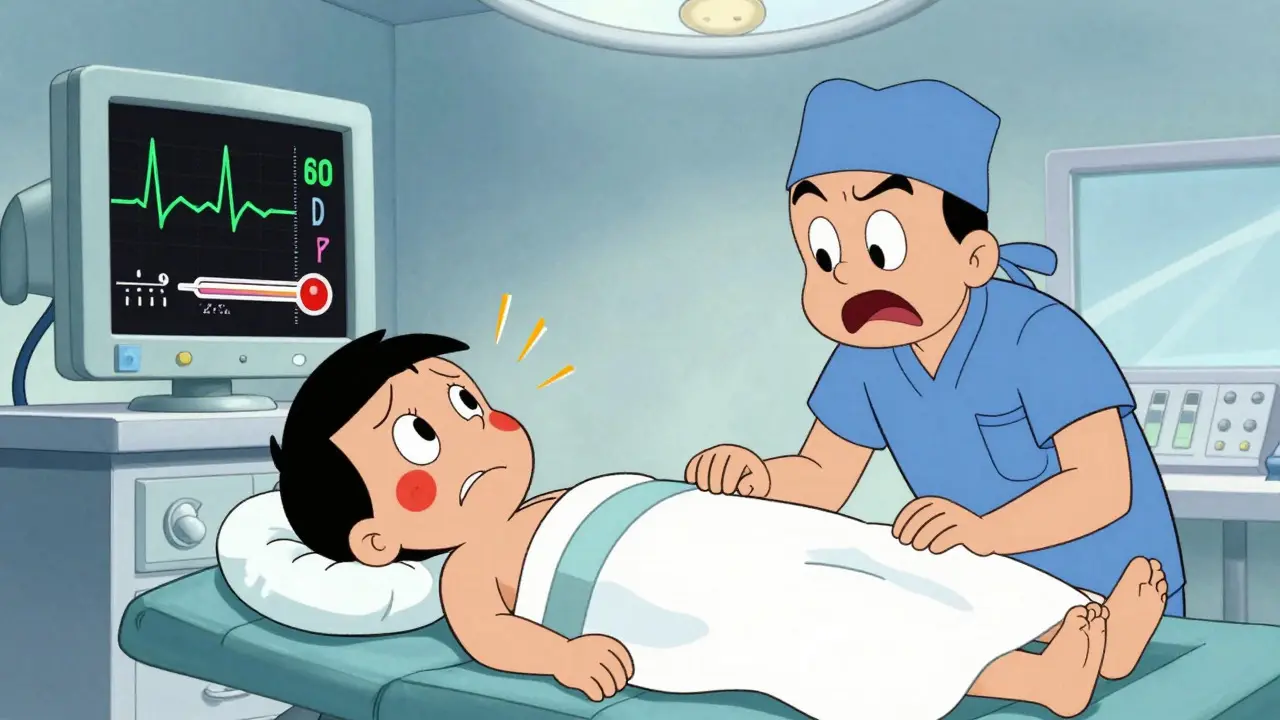
Imagine you are lying on an operating table. The surgery has just begun. You are under general anesthesia. Suddenly, your heart rate spikes. Your jaw muscles lock up tight. Your body temperature begins to climb rapidly, not because the room is hot, but because your metabolism has gone into overdrive. This is Malignant Hyperthermia, a rare but life-threatening genetic reaction triggered by specific anesthetic medications. It is not a fever in the traditional sense. It is a metabolic crisis where your skeletal muscles consume oxygen and produce heat at dangerous rates. If medical staff do not recognize it immediately and intervene with the right drugs, the outcome can be fatal.
This condition affects approximately 1 in 5,000 to 1 in 100,000 people undergoing anesthesia. While it sounds terrifying, modern medicine has turned this once-fatal event into a manageable emergency. The key lies in speed. When treated within minutes of onset, survival rates approach 100%. Understanding what triggers this reaction, how to spot the early signs, and why dantrolene sodium is the only cure is essential for patient safety.
What Triggers Malignant Hyperthermia?
Malignant hyperthermia is a pharmacogenetic disorder. This means it requires two things to happen simultaneously: a genetic susceptibility in the patient and exposure to a triggering agent. Most people have no idea they carry the genetic risk until they are exposed to these specific drugs during surgery.
The primary triggers fall into two categories:
- Volatile Anesthetic Gases: These are inhalation anesthetics that typically end in "-flurane." Common examples include sevoflurane, desflurane, and isoflurane. These gases are widely used for inducing and maintaining general anesthesia.
- Depolarizing Muscle Relaxants: Specifically, succinylcholine (often known by the brand name Suxamethonium). This drug is used to relax muscles to help insert breathing tubes or facilitate certain surgical procedures.
If you have a family history of malignant hyperthermia, or if a relative died unexpectedly during surgery, you must inform your anesthesiologist before any procedure. About 70% of cases are linked to mutations in the RYR1 gene located on chromosome 19. Another 1% involve mutations in the CACNA1S gene on chromosome 1q32. These genes control calcium release in muscle cells. In susceptible individuals, the trigger agents cause the calcium channels to stay open too long, leading to sustained muscle contraction and metabolic chaos.
Recognizing the Early Warning Signs
Time is the most critical factor in treating malignant hyperthermia. The symptoms usually appear within one hour of exposure to the triggering agents, often much sooner. Anesthesiologists monitor several vital signs continuously, but knowing what to look for helps everyone understand the urgency.
The earliest and most reliable sign is often a sudden, unexplained rise in end-tidal carbon dioxide (EtCO2). As your muscles work overtime, they produce massive amounts of CO2. If the EtCO2 level climbs above 55 mmHg without a clear reason (like hypoventilation), it is a major red flag.
Other critical symptoms include:
- Tachycardia: A rapid heart rate exceeding 120 beats per minute in adults, even when blood pressure remains stable.
- Masseter Muscle Rigidity: Stiffness in the jaw muscles, making it difficult to open the mouth or place a breathing tube. This is particularly common in children.
- Rapid Temperature Rise: Body temperature can shoot past 104°F (40°C) and potentially reach 109°F (43°C). However, temperature rise is often a late sign; waiting for it means missing the window for easiest intervention.
- Dark Urine: Known as myoglobinuria, this occurs when damaged muscle tissue releases myoglobin into the bloodstream, which the kidneys then filter out. It looks like dark brown or bloody urine.
In a real-world scenario, an anesthesiologist might notice the patient’s heart rate jumping from 80 to 140 bpm while the EtCO2 hits 78 mmHg. This combination, especially in a previously stable patient, demands immediate action.
The Critical Response Protocol
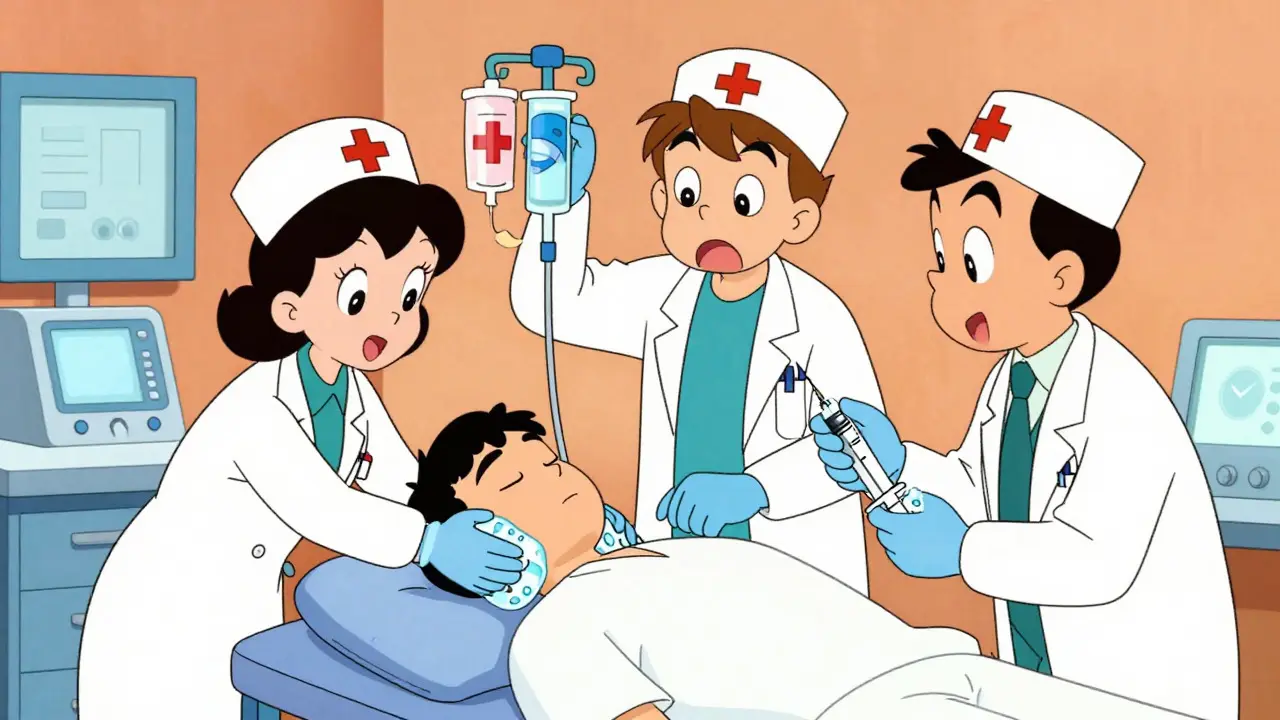
When malignant hyperthermia is suspected, there is no time for debate. The medical team follows a strict protocol established by organizations like the Malignant Hyperthermia Association of the United States (MHAUS). Every second counts.
- Stop the Trigger: The anesthesiologist immediately discontinues all volatile anesthetic gases and succinylcholine. The anesthesia machine is flushed with fresh gas to remove any residual triggers.
- Hyperventilate: The patient is hyperventilated with 100% oxygen at high flows (10 L/min or more) to blow off excess CO2 and provide maximum oxygen to starving muscles.
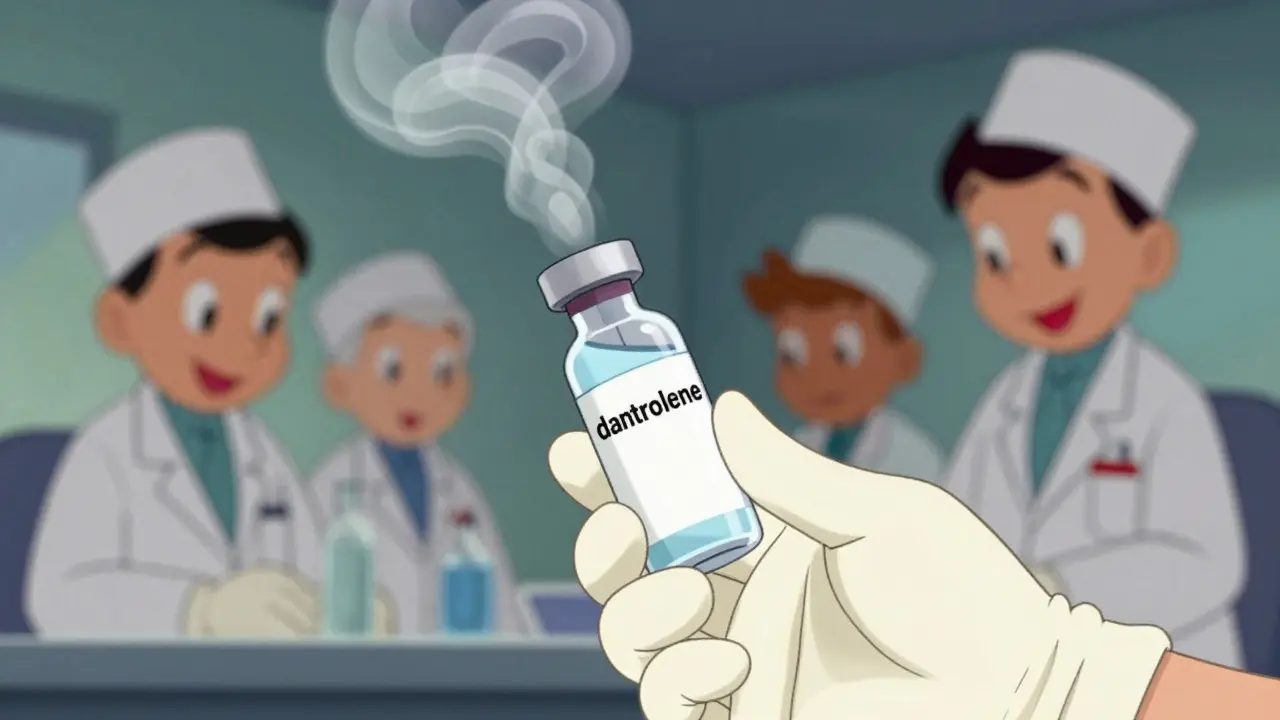
- Administer Dantrolene: This is the definitive treatment. Dantrolene sodium (brand names Dantrium® or Ryanodex®) works by blocking the abnormal calcium release in muscle cells. The initial dose is 2.5 mg/kg intravenously. If symptoms persist, this dose is repeated every 5-10 minutes until the reaction subsides. A typical adult may need up to 10 mg/kg initially.
- Active Cooling: To combat the extreme heat, teams apply ice packs to the groin, armpits, and neck. Cold intravenous fluids are administered. In severe cases, cardiopulmonary bypass may be used to cool the blood directly.
- Supportive Care: Doctors treat complications such as acidosis with sodium bicarbonate, high potassium levels with insulin and glucose, and potential kidney damage with mannitol and furosemide to protect against myoglobin-induced injury.
The MHAUS maintains a 24/7 hotline (1-800-644-9737) that provides immediate expert consultation to hospitals experiencing an MH crisis. Since its inception in 1997, this resource has contributed to a significant reduction in mortality rates.
Dantrolene: The Lifesaving Drug
Dantrolene is unique because it is the only medication that directly reverses the pathophysiology of malignant hyperthermia. Historically, getting this drug ready was a challenge. The older formulation, Dantrium®, required mixing powder with water, a process that could take up to 22 minutes. In a crisis where minutes matter, this delay was dangerous.
In December 2014, the FDA approved Ryanodex, a newer formulation of dantrolene sodium. It reconstitutes in just one minute. This speed has made it the standard of care in many hospitals. However, it comes with a steep price tag. Each vial costs approximately $4,000 USD. To treat an average adult, a hospital needs to keep a stock of at least 36 vials on hand, totaling around $144,000. This cost is a significant burden, especially for rural facilities, but it is a necessary investment for patient safety.
| Feature | Dantrium® | Ryanodex® |
|---|---|---|
| Reconstitution Time | Up to 22 minutes | Approximately 1 minute |
| Shelf Life (after mixing) | Short | Longer stability |
| FDA Approval Date | 1970s | December 2014 |
| Primary Use Case | Historical standard | Current emergency standard |
Prevention and Genetic Testing
Prevention starts with awareness. If you have a personal or family history of malignant hyperthermia, or if you have had unexplained complications during previous surgeries, you should undergo genetic testing. Tests for RYR1 mutations are available through certified laboratories and cost between $1,200 and $2,500. They offer about 95% sensitivity for known mutations.
However, genetics alone don’t tell the whole story. Recent research indicates that nearly 30% of MH cases occur in patients with no known family history. This is why preoperative screening is vital. Anesthesiologists should ask about:
- Family history of anesthesia-related deaths or complications.
- Personal history of masseter spasm or high temperature after surgery.
- History of unexplained rhabdomyolysis (muscle breakdown).
If a patient tests positive for an MH-susceptible mutation, they can safely undergo surgery using "trigger-free" anesthesia. This typically involves total intravenous anesthesia (TIVA) using drugs like propofol, along with non-depolarizing muscle relaxants like rocuronium or vecuronium. These agents do not trigger the malignant hyperthermic response.
Future Advances and Safety Measures
Medical technology continues to evolve to make surgeries safer. One exciting development is the integration of real-time detection algorithms into anesthesia information management systems (AIMS). Companies like Epic Systems are rolling out software updates that automatically alert staff when multiple MH indicators-such as rising EtCO2, tachycardia, and temperature-occur simultaneously. This AI-driven support can shave precious seconds off recognition time.
Additionally, researchers are exploring new treatments. Clinical trials are underway for novel RYR1 stabilizers, and there is hope that CRISPR-based gene editing may eventually correct the underlying genetic defects in the future. For now, however, the combination of vigilant monitoring, proper training, and immediate access to dantrolene remains the gold standard.
Hospitals are also improving their readiness. Academic medical centers have implemented "MH carts" containing dantrolene and emergency equipment, ensuring that everything needed is within 30 seconds of any operating room. This logistical improvement has reduced treatment initiation times dramatically in some institutions.
Is malignant hyperthermia hereditary?
Yes, it is primarily inherited in an autosomal dominant pattern. This means if one parent carries the gene mutation (usually in the RYR1 gene), there is a 50% chance each child will inherit it. However, expression can vary, so not everyone with the gene will necessarily react to anesthesia, though they remain at risk.
Can local anesthesia trigger malignant hyperthermia?
No. Local anesthetics like lidocaine or bupivacaine do not trigger malignant hyperthermia. The condition is specifically caused by volatile inhaled gases and the muscle relaxant succinylcholine. Patients with MH susceptibility can safely receive local or regional blocks.
How long does it take for symptoms to appear?
Symptoms typically develop within one hour of exposure to triggering agents. In many cases, signs like increased heart rate and carbon dioxide levels appear within minutes. Rarely, onset can be delayed up to 24 hours post-exposure, but this is uncommon.
What is the survival rate if treated quickly?
If dantrolene is administered within 20 minutes of symptom onset, survival rates approach 100%. Delaying treatment beyond 40 minutes significantly increases the risk of mortality, highlighting the importance of rapid recognition and response.
Do I need genetic testing if my sibling had MH?
Yes. If a first-degree relative (parent, sibling, or child) has malignant hyperthermia or tested positive for the associated gene mutations, you should consider genetic testing. A negative result can provide peace of mind and allow for standard anesthesia protocols, while a positive result ensures you receive trigger-free anesthesia.