
Liver Enzyme Elevation Calculator
Enter your specific lab result and the reference range's Upper Limit of Normal (ULN) provided by your doctor.
Mild 1x - 3x ULN
Moderate 3x - 5x ULN
Severe > 5x ULN
Result
0x ULNClinical Significance
Typical Action
Getting a blood test result that says your liver enzymes are "elevated" can feel like a punch to the gut. You start wondering if you’ve damaged your liver, if you need to stop taking your prescription meds, or if you’re heading for serious health trouble. But here is the reality check: mild elevations in liver enzymes caused by medications are incredibly common, often harmless, and rarely require you to change your treatment plan.
If your doctor recently flagged slightly high numbers on your lab report, take a deep breath. In most cases, this is just your body’s normal reaction to a new chemical input, not a sign of impending failure. Understanding what these numbers actually mean-and when they truly matter-can save you from unnecessary anxiety and prevent you from stopping life-saving medications.
What Are Liver Enzymes Anyway?
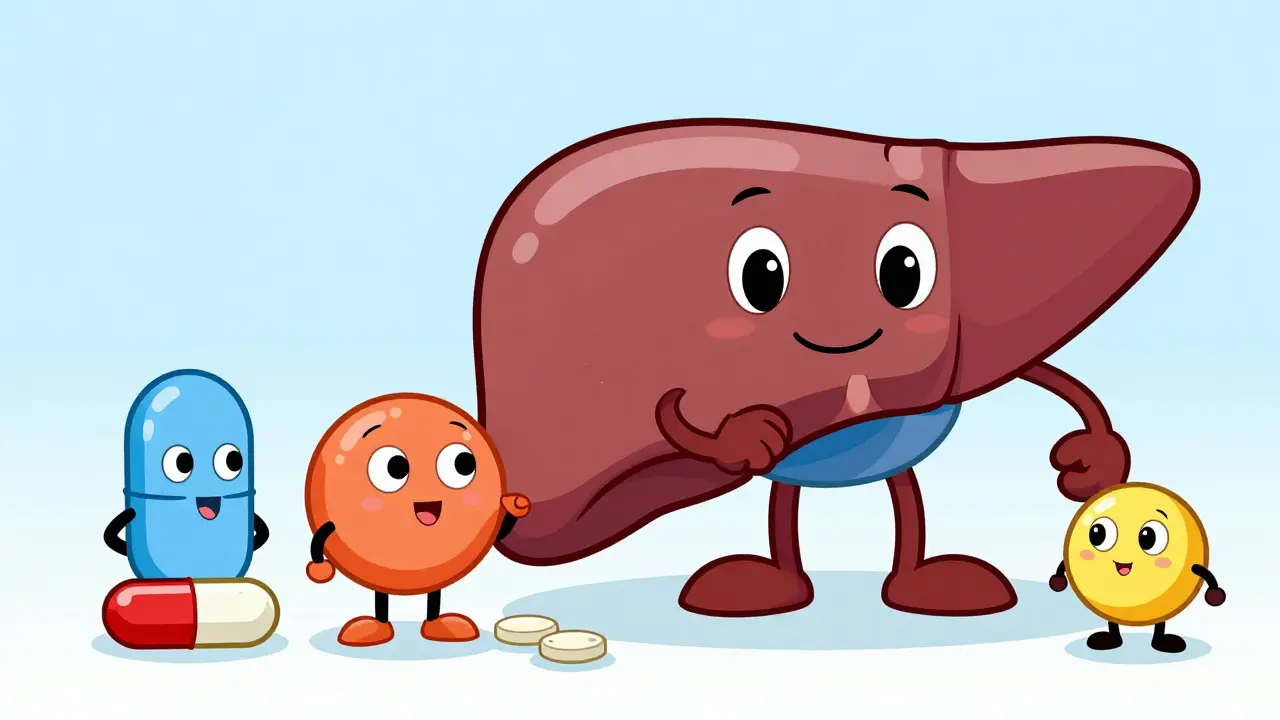
To understand the problem, we first have to look at the players involved. Your liver produces several proteins called enzymes that help it function. When liver cells are irritated or inflamed, they leak these enzymes into your bloodstream. Doctors measure them using blood tests to check for liver stress.
The two most commonly tracked markers are Alanine Aminotransferase (ALT) and Aspartate Aminotransferase (AST). These are found primarily in the liver, so when their levels rise, it usually points to hepatic activity. Another key marker is Alkaline Phosphatase (AP), which helps diagnose bile duct issues, and Bilirubin, a waste product that builds up if the liver isn’t processing toxins correctly.
When we talk about "mild elevation," we aren't talking about sky-high numbers. Medical guidelines, including those from the American Gastroenterological Association, define mild elevation as levels between one and three times the upper limit of normal (ULN). For context, if the normal range for ALT is up to 40 units per liter (U/L), a mild elevation might show a result of 41 to 120 U/L. Moderate elevations sit between three and five times the ULN, while severe elevations exceed five times the normal limit. The difference between "mild" and "severe" is massive in terms of clinical risk.
Common Medications That Cause Mild Elevations
You don’t have to be a heavy drinker or have a viral infection to see these numbers creep up. In fact, medications are among the top causes of mild enzyme bumps. According to data from the American Academy of Family Physicians, minor elevations occur in about 10-15% of the general population during routine testing, with drugs being a leading culprit.
Here are some of the most common offenders:
- Statins: These cholesterol-lowering drugs are famous for causing mild enzyme bumps. However, studies show that only 0.5% to 2.0% of patients experience significant elevations. The U.S. Food and Drug Administration (FDA) actually stopped recommending routine liver monitoring for statin users in 2012 because evidence showed these bumps were no different than those seen in people taking placebos.
- Acetaminophen: Yes, even over-the-counter pain relievers play a role. Research cited by the AAFP shows that taking therapeutic doses (4 grams daily) for 5-10 days can cause elevations in up to 58% of healthy non-drinkers. This is usually temporary and resolves quickly once you lower the dose.
- Amiodarone: Used for heart rhythm issues, this drug causes elevations in about 15-20% of users.
- Methotrexate: Often prescribed for autoimmune conditions like rheumatoid arthritis, this leads to abnormalities in 10-15% of patients on low-dose therapy.
- Isoniazid: An antibiotic used for tuberculosis, which can raise transaminases in 10-20% of patients within the first two months.
It is crucial to note that "common" does not mean "dangerous." Just because a medication appears on this list doesn’t mean it will hurt you. It simply means your liver is metabolizing the drug, and that process creates a slight ripple effect in your blood work.
Why Do Enzymes Rise? It’s Not Always Damage
This is where the confusion lies. We tend to think that elevated enzymes equal cell death. While that is true in severe cases, mild elevations often represent something else entirely: adaptation.
The American Association for the Study of Liver Diseases (AASLD) introduced the concept of "liver adaptations" in their 2023 guidance update. For drugs like statins, mild enzyme increases may reflect cellular responses rather than actual damage. Think of it like your muscles getting sore after a new workout routine-it’s a sign of activity, not necessarily injury. Histological studies (looking at liver tissue under a microscope) have shown no inflammation or necrosis (tissue death) in many patients with mild enzyme elevations.
Dr. Paul Y. Kwo, a professor at Stanford University, notes that asymptomatic elevation of hepatic enzymes is common but clinically significant liver injury is rare. The goal of monitoring is to catch the few cases that might progress, not to panic over the many that stay stable.
| Elevation Level | Definition (vs Normal Range) | Clinical Significance | Typical Action |
|---|---|---|---|
| Mild | 1 to 3 times Upper Limit of Normal (ULN) | Often benign; may indicate adaptation | Monitor; continue medication |
| Moderate | 3 to 5 times ULN | Requires closer investigation | Repeat tests; consider dose adjustment |
| Severe | More than 5 times ULN | Potential for serious liver injury | Immediate evaluation; likely discontinuation |
The Anxiety Trap: Why Patients Stop Meds Too Soon
Despite medical consensus, fear runs high. A survey by GoodRx involving 3,500 individuals found that 58% stopped their prescribed medications without consulting their doctor due to concerns about liver enzymes. On online forums, nearly 78% of posts about medication-induced elevations expressed worry despite doctor reassurance.
Why do we do this? Because "liver damage" sounds scary. But stopping medication can be far more dangerous than a mild enzyme bump. For example, stopping statins due to mild elevations costs the U.S. healthcare system an estimated $1.2 billion annually in additional cardiovascular events. You are trading a small, likely harmless lab anomaly for a significantly higher risk of heart attack or stroke.
Even doctors sometimes get it wrong. A 2020 survey found that primary care physicians managed mild medication-induced elevations according to guidelines only 62% of the time, compared to 89% for hepatologists (liver specialists). This gap highlights why patient education is so vital-you need to know that "watch and wait" is often the best strategy.
How Doctors Manage Mild Elevations
If your labs come back mildly elevated, don’t expect immediate drama. Standard protocols, such as those from the American College of Gastroenterology (ACG), suggest a calm approach.
- Repeat the Test: If you have mild elevations (1-3x ULN) and no symptoms (like jaundice, dark urine, or abdominal pain), your doctor will likely ask you to repeat the blood test in 2-4 weeks. One-off results can be influenced by recent alcohol consumption, intense exercise, or even a fatty meal.
- Monitor Trends: If the second test shows the levels stabilizing or decreasing, you typically continue the medication. The ACG notes that in most cases, liver tests return to normal despite continuing the drug.
- Dose Adjustment: If levels persist or creep higher, your doctor might reduce the dose or switch to an alternative medication. Discontinuation is rarely necessary for levels below 3x ULN.
- Symptom Check: Symptoms matter more than numbers. If you feel fine, the risk of serious injury is extremely low. If you develop fatigue, nausea, or yellowing of the skin, seek care immediately regardless of the specific number.
For acetaminophen specifically, the advice is stricter. If you have existing liver disease, the recommended daily limit drops to 2,000 mg or lower. Elevations here usually resolve within 1-2 weeks of reducing the dose.
New Tools for Better Diagnosis
Medicine is moving beyond simple enzyme counts. Recent research published in Hepatology Communications (May 2023) identified specific microRNA biomarkers that can differentiate benign statin-induced elevations from true hepatotoxicity with 92% accuracy. While this technology isn’t yet standard in every clinic, it represents a future where we won’t have to guess whether a bump is harmful or just noise.
Additionally, electronic health record systems like Epic have implemented alerts to prevent automatic discontinuation recommendations for mild elevations. This digital guardrail has reduced inappropriate statin stops by 29% in some hospitals, proving that better information flow saves lives.
When Should You Actually Worry?
You should not worry if:
- Your enzymes are less than 3 times the upper limit of normal.
- You have no symptoms (no pain, no jaundice, no swelling).
- Your doctor has reviewed your other health metrics and deemed the medication essential.
You should seek further evaluation if:
- Your enzymes exceed 3-5 times the normal range.
- You notice physical symptoms like yellow eyes/skin, dark urine, pale stools, or right-sided abdominal pain.
- You are taking multiple medications known to affect the liver simultaneously.
Remember, the goal is not to achieve perfect lab numbers at the expense of treating your underlying condition. Whether it’s high cholesterol, chronic pain, or an autoimmune disorder, the benefit of the medication usually outweighs the risk of a mild enzyme fluctuation.
Is mild liver enzyme elevation reversible?
Yes, in most cases. Mild elevations caused by medications often resolve on their own as your body adapts to the drug. Even if they don’t return to baseline, they often stabilize at a safe level without causing long-term damage. Reducing the dose or switching medications can also help normalize levels.
Do I need to stop my statin if my ALT is slightly high?
Generally, no. Major health organizations like the American Heart Association and the FDA advise against stopping statins for mild asymptomatic elevations (less than 3x ULN). Stopping the medication exposes you to higher cardiovascular risks with little benefit to your liver health. Always consult your doctor before making changes.
Can diet affect liver enzyme levels?
Yes. Excessive alcohol consumption, high-sugar diets, and obesity can contribute to Nonalcoholic Fatty Liver Disease (NAFLD), which raises liver enzymes. Maintaining a healthy weight and limiting alcohol can help keep your liver enzymes within normal ranges, independent of medication effects.
How often should I get my liver enzymes checked?
If you are on a medication known to affect the liver, your doctor may recommend checks every 6 to 12 months, or more frequently when you first start the drug. If your levels are stable and normal, annual screening is often sufficient. Follow your physician’s specific schedule based on your health history.
What are the symptoms of serious liver damage?
Serious liver injury often presents with visible symptoms such as jaundice (yellowing of skin or eyes), dark urine, pale stools, persistent nausea, vomiting, abdominal pain (especially in the upper right side), and unexplained fatigue. If you experience these alongside elevated enzymes, seek medical attention immediately.