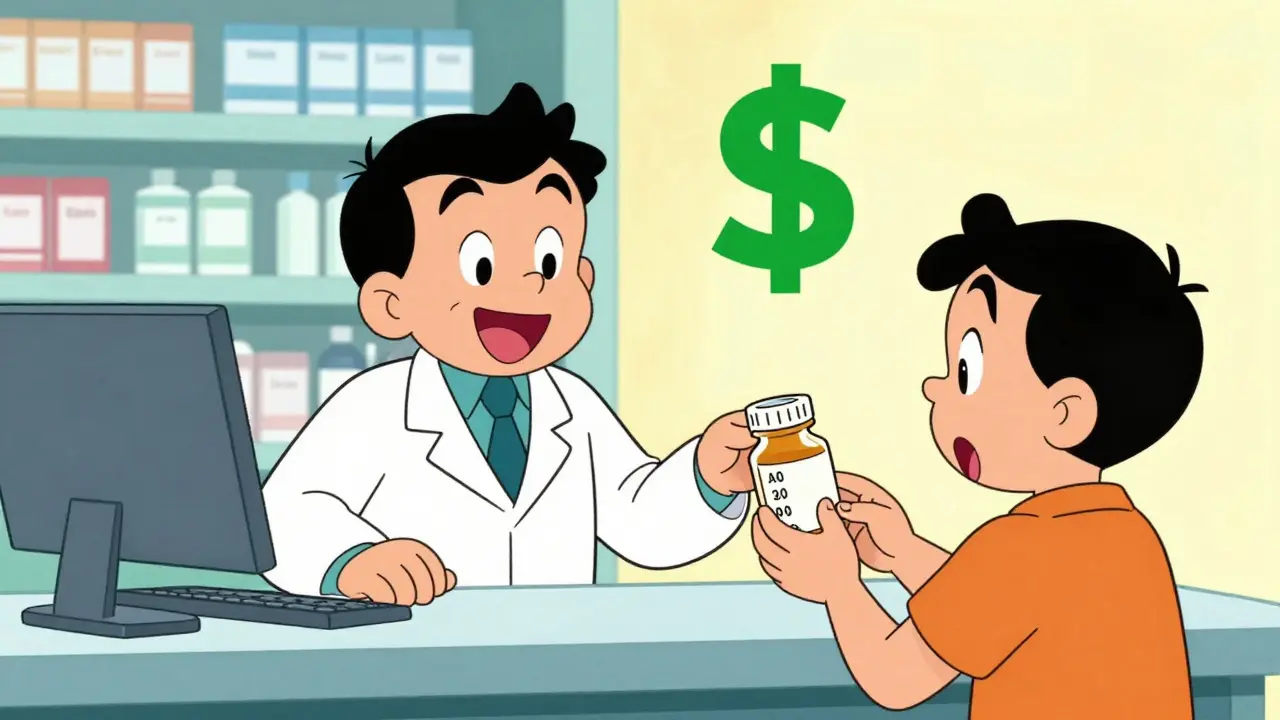
You pick up your prescription, and the pharmacist tells you it’s $15. You check your phone, and the brand-name version would have cost $200. That price gap isn’t magic; it’s a carefully designed system called a preferred generic list, which is a tiered structure within health insurance formularies that categorizes medications to optimize costs while maintaining efficacy. Insurers don’t just randomly decide which drugs are cheap and which are expensive. They use these lists to steer you toward medicines that save them money without compromising your health. But how do they choose? And why does your doctor sometimes fight to get you off this list?
To understand why insurers prefer certain products, we need to look under the hood of the American healthcare system. It starts with the Pharmacy Benefit Manager (PBM). These middlemen negotiate prices between drug manufacturers and insurance plans. In 2023, PBMs processed 5.8 billion prescriptions, with 89% involving generic drugs. The big players-CVS Health, Cigna’s Evernorth, and UnitedHealth’s OptumRx-control 78% of this market. Their goal is simple: lower the total cost of care for their clients (employers or government programs) while keeping patients healthy enough to stay insured.
How Insurance Formularies Are Built
Formularies aren’t created by actuaries looking at spreadsheets alone. According to Louise Norris, a licensed insurance broker and analyst for WebMD, these lists are built by committees of physicians and pharmacists. They evaluate every drug based on three pillars: safety, effectiveness, and overall value. This process became standardized after Medicare Part D launched in 2006, forcing commercial insurers to adopt similar structures to remain competitive.
The core logic is therapeutic equivalence. If Drug A and Drug B treat high blood pressure equally well, but Drug A costs $10 and Drug B costs $50, the formulary committee puts Drug A on the preferred list. The FDA backs this up, reporting in 2022 that generic drugs typically cost 80-85% less than their brand-name counterparts. When competition heats up, those savings grow even larger. The FDA documented that drugs with six or more generic competitors can see price reductions of up to 95%. By steering you to the preferred option, insurers pass some of those savings to you via lower copays, while keeping the rest to manage their risk pools.
Decoding the Tier System
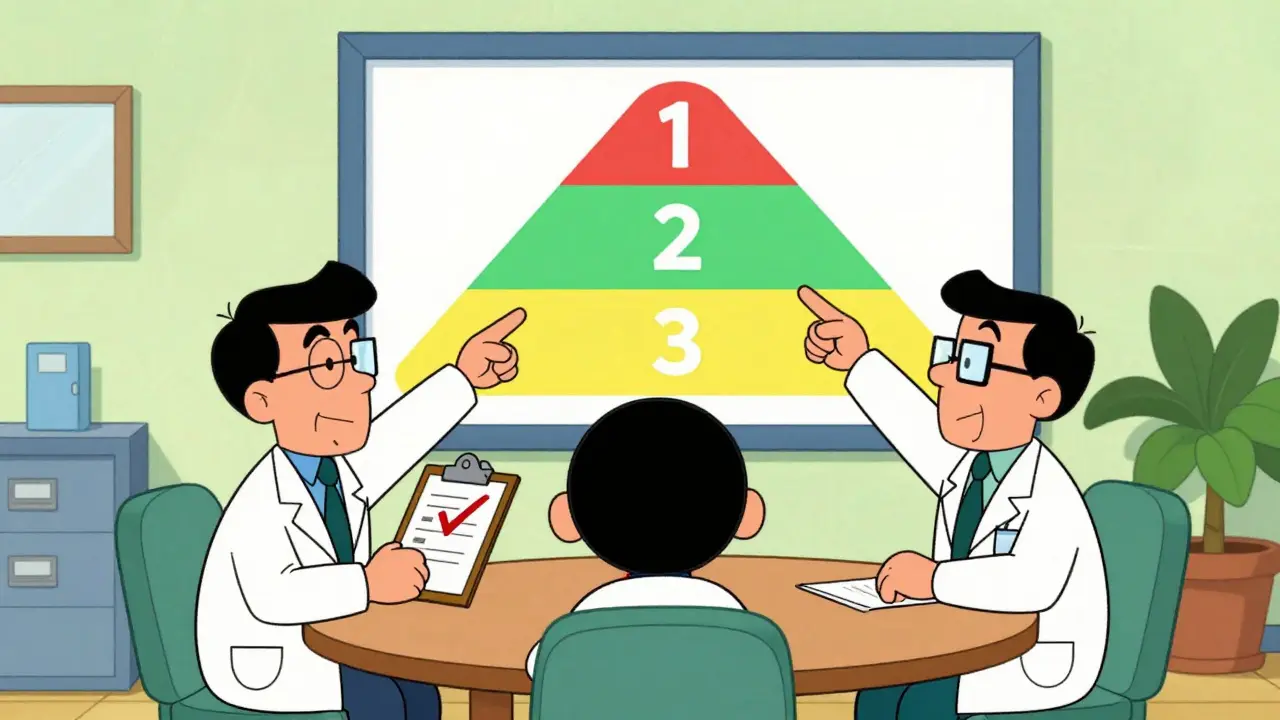
Your insurance plan likely uses a tiered formulary. Think of it as a menu where cheaper meals come with smaller portions of your wallet. Most plans have three to five tiers, though complex plans might go up to six. Here is how the standard structure breaks down:
- Tier 1 (Preferred Generics): These are the cheapest options. You usually pay a flat copay of $5-$15 for a 30-day supply. This tier includes most generic drugs and increasingly, biosimilars.
- Tier 2 (Non-Preferred Generics / Preferred Brands): If a generic isn’t on the preferred list, or if you need a specific brand-name drug that has negotiated rebates, it lands here. Copays range from $25-$50.
- Tier 3 (Non-Preferred Brands): These are brand-name drugs without significant discounts. Expect copays of $50-$100.
- Tier 4 (Specialty Drugs): High-cost biologics and injectables. Costs often exceed $100 per prescription or require percentage-based coinsurance.
The Centers for Medicare & Medicaid Services (CMS) mandates that all Medicare Part D plans maintain at least two tiers. In 2023, 92% of these plans implemented four-tier structures. The key takeaway? Staying on Tier 1 saves you the most money. But what happens when your doctor prescribes something outside that tier?
The Biosimilar Challenge
While generic substitution is routine for pills, it gets messy with biologics-complex drugs made from living organisms. Insurers want to switch patients from expensive brand-name biologics to biosimilars, which are highly similar versions of reference biologic products approved by the FDA. However, adoption in the U.S. lags behind Europe. Only 15% of eligible biologic prescriptions switched to biosimilars in 2023, compared to 85% in Europe.
Why the resistance? Co-pay assistance. Scott Glovsky, an insurance specialist, noted that 78% of brand-name biologic manufacturers offer co-pay cards that drastically reduce patient costs. Biosimilar manufacturers often lack these programs. As a result, a patient might face a lower list price for a biosimilar but end up paying more out-of-pocket because there’s no manufacturer discount. For example, one Reddit user reported paying $1,200 monthly for Humira versus $850 for its biosimilar Amjevita, despite the latter having a lower base price, solely due to missing co-pay support. This creates a paradox where the "cheaper" preferred option actually costs the patient more.
| Feature | Preferred Generic (Tier 1) | Brand Name (Tier 3/4) |
|---|---|---|
| Average Cost Reduction | 80-85% vs. brand | N/A (Baseline) |
| Typical Copay (30-day) | $5 - $15 | $50 - $100+ |
| Co-Pay Assistance Availability | Rare (generics are already cheap) | Common (manufacturer coupons) |
| Patient Substitution Rate | ~90% | Varies by condition |
When Doctors Fight the Formulary
Not everyone agrees with this system. Dr. Michael Botta of Sesame Care explains that open formularies cover any FDA-approved drug, but place expensive ones on higher tiers. This benefits 68% of commercially insured Americans who accept the trade-off. However, critics argue that insurers override physician judgment. Scott Glovsky points out, "Physicians know their patients best... it is unfortunate that physician decisions are questioned and altered by others who don't understand unique patient circumstances." The friction peaks with "step therapy" protocols. Insurers may require you to fail on a preferred generic before approving a brand-name alternative. The American Medical Association found that 42% of physicians report treatment delays in chronic pain management cases due to these hurdles. There is also a medical validity concern. While the FDA requires generics to be bioequivalent (within 80-125% of the brand’s performance), narrow-therapeutic-index drugs like warfarin pose risks. The American College of Clinical Pharmacy documented that 23% of physicians resist generic substitution for these drugs due to stability concerns. Dr. Aaron Kesselheim of Harvard Medical School published a 2023 JAMA analysis showing that while generic substitution saves the system $1.68 trillion annually, inappropriate substitution in 1.2% of cases leads to adverse events costing approximately $4.7 billion yearly.

How to Navigate Your Formulary
You don’t have to accept the formulary blindly. Here is how to work the system to your advantage: 1. **Check the Tier Before You Fill:** Use your insurer’s online tool or app. Medicare’s Plan Finder scores 4.2/5 for usability, while commercial plans average 2.8/5. If your drug is Tier 3, ask your doctor if a Tier 1 alternative exists. 2. **Ask About Automatic Substitution:** In 89% of states, pharmacists can automatically substitute a generic unless your doctor writes "dispense as written." However, 37% of patients don’t know this option exists. Ask your pharmacist explicitly. 3. **Appeal Denials:** If your doctor insists on a non-preferred drug, file an appeal. The Kaiser Family Foundation found that successful appeals succeed in 68% of cases. Your doctor needs to document "therapeutic necessity"-why the preferred option won’t work for you. 4. **Review Annually:** Formularies change every year. The Medicare Rights Center recommends reviewing your tier status during annual enrollment. This habit can save you an average of $417 annually per medication. Patients who actively engage with their formulary structures reduce medication costs by 32% on average. It takes about 45 minutes of research a year, but the payoff is substantial.
The Future of Preferred Lists
The landscape is shifting. The 2022 Inflation Reduction Act mandated a $2,000 annual out-of-pocket cap for Medicare Part D by 2025. This is projected to increase generic utilization by 7-12 percentage points. Additionally, CMS updated its formulary requirements in 2023, mandating enhanced transparency. Plans must now publicly disclose tier placement criteria. UnitedHealthcare introduced "Value-Based Formularies" in January 2024, dynamically adjusting tiers based on real-world effectiveness data. Meanwhile, Medicare’s 2024 final rule requires Part D plans to place biosimilars in the same tier as reference biologics starting in 2025. This move aims to boost biosimilar utilization from 15% to 45%. However, challenges persist. The Pharmaceutical Care Management Association reported that 63% of PBMs now use "accumulator adjuster" programs, which exclude biosimilar costs from out-of-pocket maximums, potentially undermining these incentives. By 2030, McKinsey & Company predicts preferred generic lists will evolve toward value-based pricing models, where tier placement depends on outcomes data rather than cost alone. Until then, understanding the current tier system remains your best defense against surprise bills.
What is a preferred generic list?
A preferred generic list is a tier within an insurance formulary (usually Tier 1) that contains the lowest-cost generic drugs and biosimilars. Insurers place drugs here to encourage their use because they offer equivalent therapeutic benefits at a fraction of the cost of brand-name medications, typically resulting in the lowest patient copays ($5-$15).
Why do insurers prefer certain generic drugs over others?
Insurers prefer certain generics based on negotiated rebates from Pharmacy Benefit Managers (PBMs) and overall market pricing. Even among generics, some manufacturers offer better deals to insurers. Additionally, formulary committees evaluate safety and effectiveness data. If multiple generics exist, the one with the strongest track record and lowest net cost to the insurer gets placed on the preferred list.
Can I refuse a generic substitution?
Yes, but it will likely cost you more. You can ask your doctor to write "Dispense as Written" or "Brand Medically Necessary" on your prescription. However, your insurance may then classify the drug as non-preferred (Tier 3 or 4), significantly increasing your copay. You may also need to go through a prior authorization process to prove why the generic won't work for you.
Are biosimilars always cheaper than brand-name biologics?
Not necessarily for the patient. While biosimilars have lower list prices, brand-name biologics often come with manufacturer co-pay assistance cards that reduce out-of-pocket costs. Biosimilar manufacturers frequently lack these programs. Consequently, patients might pay more out-of-pocket for a biosimilar despite its lower wholesale cost, creating a barrier to adoption.
How can I find out which tier my medication is on?
You can check your insurance provider's website or mobile app using their formulary search tool. Look for your drug by name and check its tier assignment. For Medicare Part D users, the CMS Plan Finder tool is highly rated for usability. It is crucial to check this annually, as formularies change during open enrollment periods.
What is step therapy?
Step therapy is a formulary restriction that requires patients to try and fail on one or more preferred, lower-cost medications (usually generics) before the insurer will approve coverage for a more expensive, non-preferred drug. This process can delay treatment, with 42% of physicians reporting issues in chronic pain management cases.