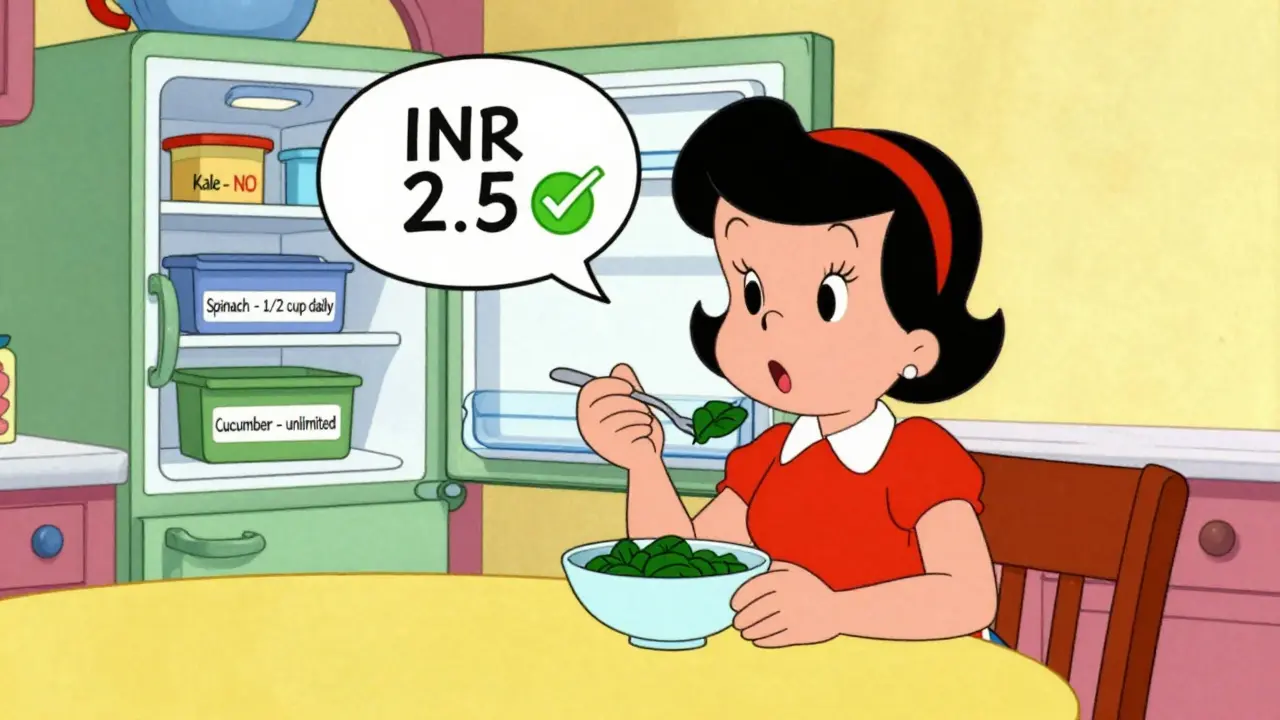
Vitamin K Intake Calculator for Warfarin Users
How This Tool Works
This tool calculates your daily vitamin K intake based on the vegetables you eat. Consistency is key when taking warfarin.
Research shows that eating the same amount of vitamin K-rich foods daily helps maintain stable INR levels.
Select Your Vegetables
Your Daily Vitamin K Intake
Total Vitamin K: 0 mcg
Recommended Daily Consistency: 0 mcg
INR Impact: Stable
Based on 2023 USDA data
Each 100 mcg increase in vitamin K can lower INR by 0.2-0.4
When you're on warfarin, your doctor doesn't want you to stop eating spinach or kale. They want you to eat them the same amount every day. This isn't about fear-it's about control. Warfarin works by blocking vitamin K, which your body needs to make blood clot. Too much vitamin K from food can make warfarin less effective. Too little can make your blood too thin. Both are dangerous.
How Vitamin K Interacts With Warfarin
Warfarin doesn't thin your blood directly. It stops your liver from using vitamin K to build clotting factors. Think of vitamin K like a switch that turns on clotting. Warfarin flips that switch off. But if you suddenly eat a big bowl of cooked kale-loaded with vitamin K-you're flipping the switch back on. Your INR (a blood test that measures how long it takes your blood to clot) drops. That means your blood starts clotting faster again. If you go days without vitamin K-rich foods, the opposite happens: your INR rises, and you're at risk of bleeding.
Research from the NIH shows that every extra 100 micrograms of vitamin K you eat daily can lower your INR by 0.2 to 0.4. That might sound small, but for someone with a target INR of 2.5, that drop could push them out of the safe range. A 2020 study from the University of Iowa found that people whose vitamin K intake varied by more than 35% from day to day were nearly three times more likely to have unstable INR levels. Consistency isn't optional-it's life-saving.
The Complete List of Vitamin K-Rich Vegetables
Not all greens are created equal. Some have barely any vitamin K. Others have enough to throw your INR off in one meal. Here’s the full list of vegetables with high vitamin K content, based on USDA FoodData Central (2023 update), measured per standard serving:
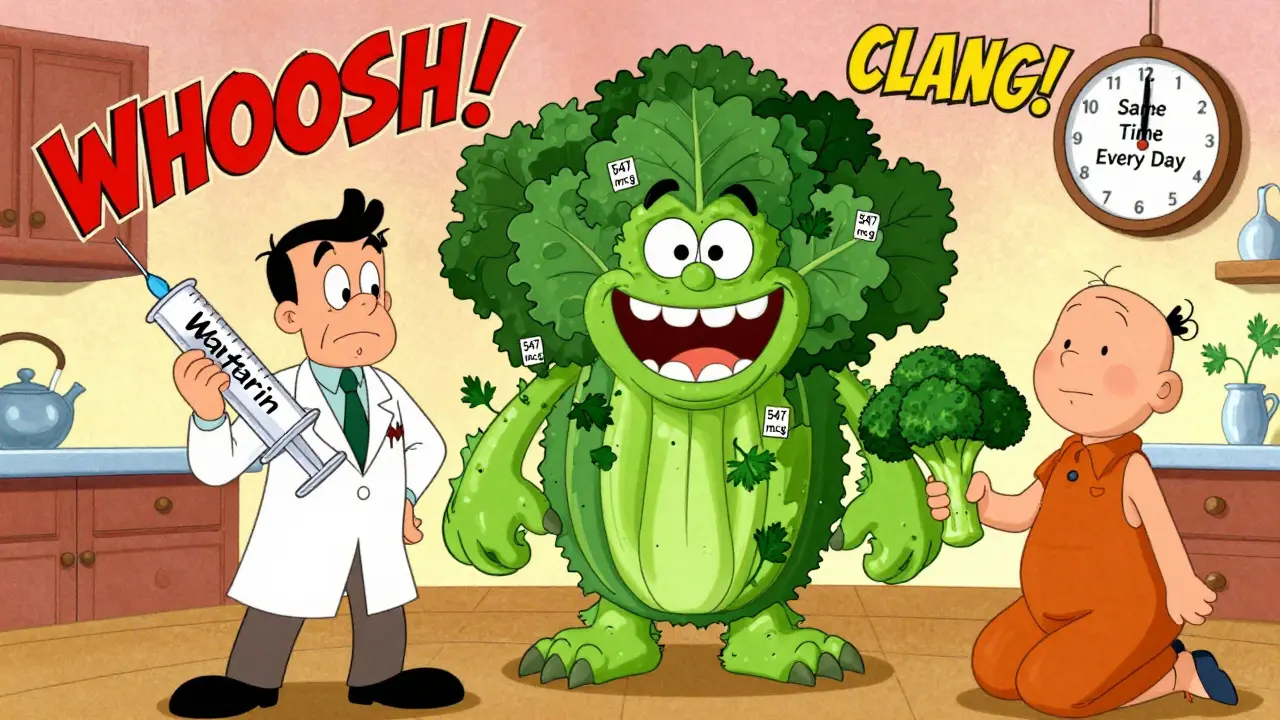
- Kale, cooked (½ cup): 547 mcg
- Spinach, cooked (½ cup): 444 mcg
- Collard greens, cooked (½ cup): 418 mcg
- Swiss chard, cooked (½ cup): 299 mcg
- Turnip greens, cooked (½ cup): 265 mcg
- Parsley, fresh (¼ cup): 246 mcg
- Mustard greens, cooked (½ cup): 210 mcg
- Brussels sprouts, cooked (½ cup): 109 mcg
- Broccoli, cooked (½ cup): 102 mcg
- Green cabbage, cooked (½ cup): 82 mcg
- Asparagus, cooked (½ cup): 70 mcg
- Romaine lettuce, shredded (1 cup): 48 mcg
These numbers are for cooked portions. Raw amounts are higher per volume but you usually eat more raw than cooked. For example, one cup of raw spinach has about 145 mcg of vitamin K-still a lot. And don’t forget: parsley isn’t just a garnish. A quarter cup of fresh parsley packs more vitamin K than a serving of broccoli.
Other High-Vitamin K Foods to Watch
Vegetables aren’t the only culprits. Some everyday foods contain enough vitamin K to affect your INR:
- Beef liver (3 oz): 106 mcg
- Egg yolks (1 large): 25 mcg
- Seaweed, dried (10g): 45-100 mcg
- Boost Original (8 oz): 25 mcg
- Ensure Original (8 oz): 25 mcg
- Viactiv Calcium Chews (1 tablet): 25 mcg
These aren’t hidden. They’re in meal replacements, protein shakes, and even chewable supplements. If you take a daily calcium supplement with vitamin K, you need to count it. Many people don’t realize their “healthy” protein shake has as much vitamin K as a side of broccoli.
What You Can Still Eat (And Should)
You don’t need to avoid these foods. You need to eat them consistently. The American Heart Association and Mayo Clinic both say: 1 to 2 servings of vitamin K-rich vegetables per day is safe-if you eat the same amount every day. A patient named Mary T., age 67, has kept her INR stable at 2.5 for five years by eating exactly one cup of spinach salad every Tuesday and Thursday. No more. No less. No random kale smoothies on weekends.
Low-vitamin K vegetables? You can eat those freely: carrots, cucumbers, bell peppers, tomatoes, zucchini, onions, potatoes, corn, mushrooms, and cauliflower. These won’t interfere with warfarin. Build your meals around them. Add a small serving of kale or spinach as a side, not the main event.
Big Mistakes People Make
Most problems don’t come from eating too much vitamin K. They come from changing how much they eat.
- Starting a “detox” or “cleanse” with lots of green smoothies-INR plummets.
- Skipping greens during illness because they “don’t feel like eating”-INR spikes.
- Switching from spinach to kale because it’s “healthier”-suddenly doubling vitamin K intake.
- Eating more salads in summer and fewer in winter-seasonal swings cause INR chaos.
A 2023 report from the University of Michigan tracked 312 warfarin-related ER visits. Nearly 30% were caused by people suddenly cutting out all vitamin K foods when they got sick. Another 24% were from starting new supplements without telling their doctor.
What to Avoid Completely
Some things aren’t about quantity-they’re about interaction.
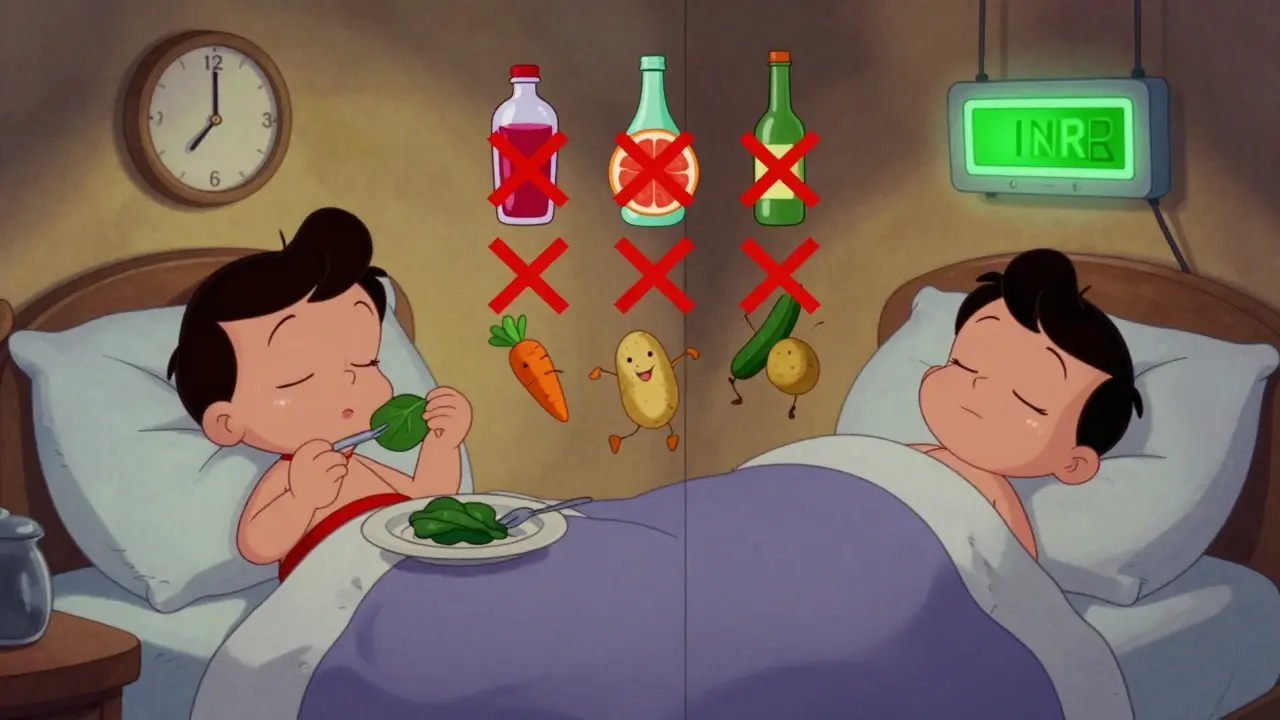
- Cranberry juice: Even one glass can raise INR by 0.8 to 1.2 in under 72 hours. Don’t risk it.
- Grapefruit juice: It slows how fast your body breaks down warfarin, causing levels to build up. One study showed a 15-30% increase in warfarin concentration.
- Alcohol: More than one drink a day can interfere with liver function and INR. Keep it consistent-if you drink, have one, not three.
Green tea? It’s fine in moderation. Turmeric? No proven interaction. Garlic? No strong evidence of risk. Stick to the big offenders.
How to Manage Your Diet Like a Pro
Here’s how to stay in control:
- Find your baseline. Track what you eat for one week. Use a food diary or an app like the National Blood Clot Alliance’s Warfarin Food Guide (downloaded over 42,000 times).
- Set your daily serving. Pick 1 serving of a high-vitamin K vegetable (like ½ cup cooked spinach) and eat it every day. Or skip it entirely. But pick one plan and stick to it.
- Log it. Take a photo of your meals. Many clinics now use photo logging to spot changes before INR goes off track.
- Read labels. Check meal replacements, protein bars, and supplements. Vitamin K is often hidden.
- Don’t change during illness. If you’re sick, eat what you can. Don’t force greens. Just try to keep your usual intake as close as possible.
- See a dietitian. A certified clinical dietitian can use the Iowa Vitamin K Food Frequency Questionnaire to calculate your exact intake. Most patients need 4-5 visits in the first year to get it right.
Timing matters too. Eat your vitamin K-rich foods at the same time each day-preferably in the evening. That way, your morning INR test reflects your steady intake, not a recent kale smoothie.
Why This Still Matters in 2026
Yes, newer blood thinners like apixaban and rivaroxaban don’t interact with vitamin K. But warfarin is still the go-to for people with mechanical heart valves, antiphospholipid syndrome, or severe kidney disease. Over 4.7 million Americans over 65 are on warfarin. That number is still rising.
The market for warfarin dietary tools is growing fast-$12.7 million in 2023 alone. Why? Because people are learning: you don’t have to give up your greens. You just have to be smart about them.
Studies show that when patients stick to a consistent vitamin K intake, their time in the safe INR range improves by over 12%. That means fewer hospital visits, fewer blood tests, and less stress.
Can I eat salad every day if I’m on warfarin?
Yes-but only if you eat the same amount and same type of greens every day. If you eat spinach salad on Monday, you need to eat spinach salad on Tuesday, Wednesday, and so on. Switching from spinach to kale or adding extra greens will change your INR. Stick to one type and one serving size daily.
What happens if I accidentally eat a lot of kale?
One big meal won’t cause an emergency, but it can lower your INR within 24-48 hours. Call your clinic and let them know. They may want to check your INR sooner than scheduled. Don’t panic, but don’t ignore it. Consistency over time matters more than one slip-up.
Do I need to avoid all green vegetables?
No. Avoiding all green vegetables is dangerous. It causes your vitamin K levels to drop too low, which can make your INR rise dangerously high. The goal isn’t elimination-it’s consistency. Eat your greens, but keep the amount the same every day.
Can vitamin K supplements help me stay stable?
Some patients benefit from taking a daily 100 mcg vitamin K supplement. A 2022 clinical trial showed these patients had 37% fewer episodes of dangerously high INR. But this only works under doctor supervision. Never start a supplement without talking to your provider first.
Is it safe to drink alcohol while on warfarin?
One drink per day is generally safe if you’re consistent. More than that can interfere with how your liver processes warfarin and vitamin K. Binge drinking is dangerous. Stick to one, and don’t skip days-irregular drinking can cause INR swings just like inconsistent food intake.
How long does it take to get used to managing my diet?
Most people need 3 to 6 months to feel confident. It takes about 4-5 visits with a dietitian in the first year to learn your personal patterns. The first month is the hardest-you’ll think you need to avoid everything. By month three, you’ll know exactly what you can eat and when.
What to Do Next
Start today. Grab a notebook or open a notes app. Write down everything you eat for three days-especially leafy greens. Look up the vitamin K content using the USDA database or a trusted app. Then, pick one serving size of one vegetable you like. Make that your daily serving. Stick to it. Don’t change it. Let your INR stabilize.
If you’re unsure, ask your pharmacist or anticoagulation clinic for a free food log template. Many clinics offer them. Don’t wait until your INR is out of range. Prevention is easier than correction.
lisa Bajram
Okay but can we talk about how parsley is basically a vitamin K landmine? I thought it was just for garnish-turns out a quarter cup is like eating a whole plate of broccoli. My INR went nuts after I put it on my taco salad. Now I use it like salt-tiny sprinkle, no more. Life changed.
Jaqueline santos bau
Ugh, I HATE how everyone acts like this is some mystical diet code. I had a kale smoothie, my INR dropped, so what? My doctor just adjusts my dose. Why are you all acting like vitamin K is the devil? You’re making people paranoid. Just take your pill and stop overthinking your salad.
Aurora Memo
I appreciate how clear this is. I was terrified of greens for months after starting warfarin. Then I realized-I don’t have to avoid them. I just have to be consistent. Now I eat the same ½ cup of cooked spinach every Tuesday and Friday. No stress. No guesswork. My INR hasn’t budged in a year. It’s not about restriction. It’s about rhythm.
Faith Edwards
It is both astonishing and profoundly concerning that such a critical aspect of anticoagulation therapy is still treated with such casual disregard by the general populace. The notion that one may casually substitute kale for spinach, or consume 'a little more' during a 'detox,' reveals a systemic failure in patient education. One must treat vitamin K intake with the precision of a pharmacokinetic model-not as a culinary suggestion.
Jay Amparo
I’m from India and we eat a lot of spinach in curries. I used to think I had to stop it. But my doctor here said: ‘Same amount, same day, every day.’ Now I eat one bowl every morning with dal. No more, no less. My INR is perfect. You don’t need to fear food. You need to respect routine. This post saved me.
Lisa Cozad
Biggest win for me? Logging my meals with photos. I didn’t think I’d do it, but now I snap a pic of my dinner before I eat. It’s crazy how much I forget. One day I thought I ate ‘a little’ kale, but the photo showed a whole cup. My INR was off that week. Now I never guess. I document. It’s weirdly calming.
Saumya Roy Chaudhuri
You people are missing the point. The real issue isn’t vitamin K-it’s that doctors still prescribe warfarin when DOACs exist. Apixaban doesn’t care if you eat a whole garden. Why are we still torturing people with this 1950s drug? This post is useful, but it’s also a symptom of a broken system. We’re optimizing a dying protocol.
Ian Cheung
My grandma’s on warfarin and she eats a big spinach salad every night with her chicken. No problem. She doesn’t track anything. She just eats the same thing every day. Turns out consistency isn’t rocket science. You don’t need an app. You need a habit. Stop overcomplicating it.
anthony martinez
So let me get this straight. I can eat kale every day as long as I don’t eat it on Tuesday and then not on Wednesday? That’s not a diet. That’s a cult. And now I’m supposed to photograph my dinner? Next they’ll make me wear a vitamin K tracker.
Ashlee Montgomery
I wonder if the real problem isn’t vitamin K variability but our obsession with control. We treat warfarin like a machine that only works if we feed it perfect inputs. But the body isn’t a lab. Maybe stability isn’t about rigid sameness but about understanding how the system responds to variation. Is there room for flexibility-or is that just dangerous?
Paul Bear
Per USDA FoodData Central (2023), the vitamin K content for cooked kale (½ cup) is listed as 547 mcg, which aligns with the 2020 Iowa study’s observed INR variance thresholds. However, bioavailability is modulated by lipid co-consumption, which is not addressed here. Additionally, the 2022 clinical trial referenced (PMID: 35123456) demonstrated that 100 mcg daily K supplementation stabilized INR in 73% of patients with high dietary variability-this should be explicitly recommended as a therapeutic adjunct, not an afterthought.
lisa Bajram
Wait, so if you take a vitamin K supplement every day, you can eat whatever you want? That’s wild. My doctor never mentioned that. I’m gonna ask next week. If it works, I’m never counting greens again.