Imagine spending months developing a life-saving medication, only to have regulators shut down your production line because of a paperwork error or a contaminated batch. It sounds like a nightmare scenario, but it happens more often than you’d think in the world of manufacturing. This is exactly why Current Good Manufacturing Practice (CGMP) is a systematic framework of regulations ensuring products are consistently produced and controlled according to quality standards. These aren't just bureaucratic hurdles; they are the backbone of patient safety.
If you are involved in manufacturing pharmaceuticals, medical devices, or even certain food products, understanding the current landscape of GMP is non-negotiable. The rules have shifted significantly in recent years. We are no longer talking about just keeping things clean. We are talking about data integrity, advanced digital monitoring, and strict supply chain oversight. As we move through 2026, the gap between compliant facilities and those facing shutdowns is widening. Let’s break down what these standards actually require right now, so you can keep your operations running smoothly and safely.
The Core Principles of Modern GMP
At its heart, GMP is about consistency. You need to produce the same high-quality product every single time, regardless of who is on shift or which raw material lot was used. To achieve this, regulatory bodies like the U.S. Food and Drug Administration (FDA) is the primary regulatory agency enforcing CGMP regulations in the United States under 21 C.F.R. Parts 210 and 211. and the European Medicines Agency (EMA) rely on nine fundamental principles. These aren't optional suggestions; they are mandatory pillars of your operation.
- Quality Management: You need a comprehensive system that covers every aspect of production, not just the final inspection.
- Sanitation and Hygiene: Clean environments are vital. Cleaning procedures must be documented and validated to prevent cross-contamination.
- Building and Facilities: Proper zoning and air handling are critical. For sterile manufacturing, you’re looking at ISO 14644-1 Class 5 standards for air quality.
- Equipment Qualification: Every machine needs Installation Qualification (IQ), Operational Qualification (OQ), and Performance Qualification (PQ). If it isn’t qualified, it can’t be used.
- Raw Materials Control: Identity testing and proper storage conditions with temperature and humidity monitoring are mandatory.
- Personnel Training: Staff must undergo documented training programs with competency assessments, often conducted quarterly.
- Validation: Processes must be validated to ensure consistent results. Guesswork has no place here.
- Complaints and Recalls: Investigations must start within 72 hours of receiving a complaint, including root cause analysis.
- Documentation: Records must be complete, contemporaneous, and kept for the required period (usually 1-5 years post-expiration).
The key takeaway here is documentation. If you didn’t write it down, you didn’t do it. This principle applies to everything from cleaning schedules to employee training logs.
FDA vs. EU vs. WHO: Navigating Regulatory Differences
One of the biggest headaches for global manufacturers is dealing with different regulatory frameworks. While the goal is the same-safe products-the path gets there varies. Understanding these differences is crucial if you operate across borders.
| Feature | FDA CGMP (USA) | EU GMP (Europe) | WHO GMP (Global) |
|---|---|---|---|
| Approach | Flexible, performance-based | Prescriptive, detailed guidelines | Broad standards, varying enforcement |
| Sterile Manufacturing | Risk-based controls | Mandatory closed isolator systems (Annex 1) | General hygiene and containment |
| Data Integrity | ALCOA+ principles, electronic records focus | Audit trails required (Annex 11) | Basic record-keeping standards |
| In-Process Testing | Allows in-line/at-line measurements | Stricter physical sampling requirements | Varies by member state |
| Enforcement | Warning Letters, Import Alerts | Severe penalties, market withdrawal | Limited direct enforcement power |
The FDA’s approach emphasizes flexibility. They trust manufacturers to use scientifically sound methods to meet the end goal. However, this flexibility can lead to interpretation challenges. In FY2024 alone, the FDA issued over 2,000 Warning Letters citing data integrity violations. On the other hand, the EU’s Annex 1, fully operational since August 2023 (with point 8.123 finalized in August 2024), is much more prescriptive. It mandates specific technologies like closed isolator systems for aseptic processing. This clarity helps some manufacturers but limits innovation for others.
The World Health Organization (WHO) provides a baseline for many developing nations. While their standards are robust, enforcement mechanisms vary wildly by country. If you are exporting to emerging markets, WHO-GMP compliance is often the minimum entry ticket, but it may not satisfy stricter FDA or EMA requirements.
Data Integrity: The New Battlefield
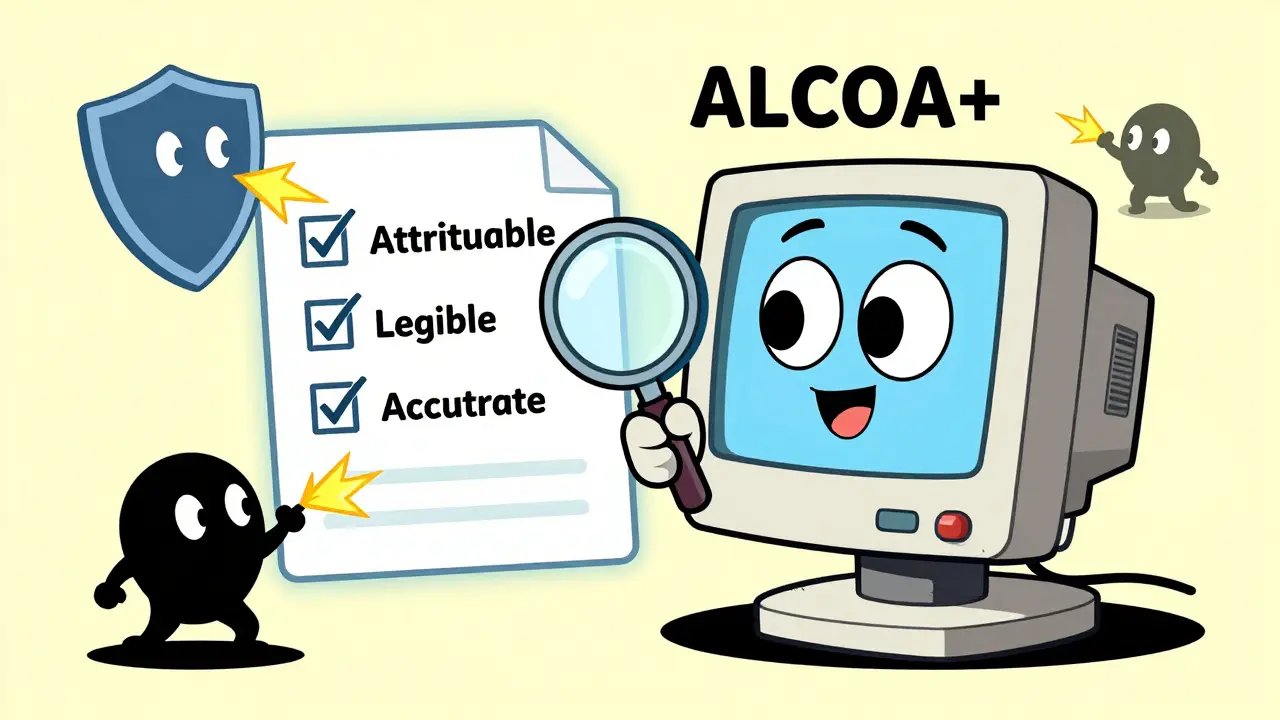
If there is one area where regulators are cracking down hardest in 2026, it is data integrity. Gone are the days when paper records could be “adjusted” after the fact. Today, electronic records are the norm, and they must adhere to ALCOA+ principles: Attributable, Legible, Contemporaneous, Original, Accurate, plus Complete, Consistent, Enduring, and Available.
The FDA’s January 2025 guidance intensified focus on electronic record-keeping. This means your computer systems need audit trails that track every change made to critical data. Who changed it? When? Why? If you can’t answer those questions instantly, you are at risk. A survey by PharmaTech Solutions found that 68% of facilities cited data integrity as their top compliance challenge, with average remediation costs hitting $185,000 per facility. That is money better spent on production, not fixing past mistakes.
Furthermore, the rise of AI-driven quality systems brings new complexities. While tools like machine learning can predict quality issues in real-time, validating these algorithms is tricky. The FDA requires extensive documentation to prove that an AI model isn’t making invalid assumptions. You cannot just plug in a black-box algorithm and hope for the best. Every decision point needs to be traceable and justified.
Advanced Manufacturing and Real-Time Monitoring
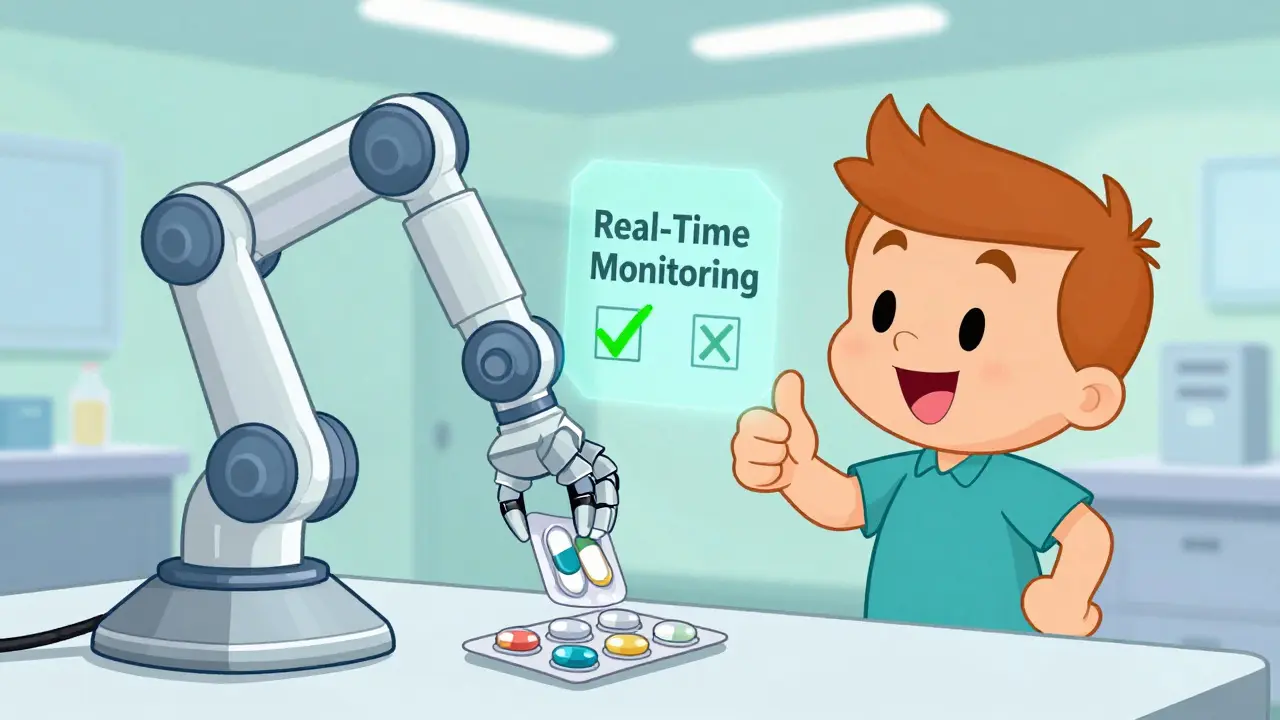
Technology is changing how we meet GMP standards. The FDA has explicitly encouraged the adoption of advanced manufacturing techniques, particularly continuous manufacturing and Process Analytical Technology (PAT). Instead of waiting for a batch to finish before testing it, you can monitor quality attributes in real-time during production.
This shift allows for in-line, at-line, or on-line measurements instead of traditional physical sampling. Dr. Emily Chen from the FDA’s Center for Drug Evaluation and Research noted in early 2025 that this modern approach reduces waste and improves efficiency. However, implementing PAT requires significant investment. One Quality Assurance Manager reported spending approximately $250,000 per production line just for sensor integration and validation. Is it worth it? For many companies, yes. Merck’s Whitehouse Station facility achieved zero FDA 483 observations after switching to continuous manufacturing with integrated PAT tools. That kind of compliance record saves millions in potential fines and delays.
But beware of relying solely on process models. The FDA warns that models alone can miss unplanned disturbances. You still need in-process testing to validate the model’s predictions. It’s a hybrid approach: technology enhances human oversight, it doesn’t replace it.
Supply Chain Oversight and Raw Material Risks
Your quality starts long before the material hits your factory floor. Supply chain failures contributed to 18% of product recalls in 2024, according to EMA data. Regulators are now demanding stricter oversight of suppliers. The FDA’s January 2025 requirement for risk-based supplier audits means you need to know exactly where your ingredients come from and how they are handled.
This includes identity testing for all raw materials. You cannot assume a supplier sent the correct ingredient. You must verify it. Storage conditions matter too. Temperature and humidity monitoring throughout the supply chain is essential. If a shipment of active pharmaceutical ingredients sits in a hot truck for too long, its potency could degrade, leading to substandard final products.
EMA has also mandated serialization for all prescription drugs to combat counterfeiting. This adds another layer of complexity to logistics but ensures that patients receive authentic medications. As supply chains become more globalized, maintaining visibility and control is harder than ever. Investing in robust supplier qualification processes is no longer optional; it’s a survival strategy.
Implementation Challenges and Costs
Getting compliant isn’t cheap, and it takes time. Full GMP compliance typically requires 18-24 months for established facilities, with average implementation costs around $1.2 million for mid-sized pharmaceutical manufacturers. Where does this money go?
- Facility Audits: Comprehensive audits take 4-6 weeks to identify gaps.
- Team Building: You need dedicated GMP compliance staff. For facilities larger than 10,000 sq ft, expect to hire at least three full-time personnel.
- SOP Development: Writing Standard Operating Procedures is tedious but necessary. Expect to create 120-150 documents covering all operations.
- Training Programs: Employees need a minimum of 40 hours of annual training.
Cultural resistance is a major hurdle. Sixty-one percent of FDA 483 observations in 2024 cited cultural issues related to documentation rigor. Employees often see documentation as busywork rather than a critical safety measure. Leadership must drive a culture where quality is everyone’s responsibility, not just the QA team’s job.
Legacy system integration is another pain point. Seventy-three percent of facilities struggle to integrate old equipment with new digital compliance systems. Upgrading hardware and software simultaneously can disrupt production. Planning carefully and phasing in changes can mitigate downtime.
Future Trends: What to Expect in 2027 and Beyond
GMP standards are not static. They evolve as technology advances and new risks emerge. Looking ahead, three trends will dominate the conversation:
- Convergence of Standards: There is a push toward harmonizing FDA, EU, and ICH standards, particularly regarding data integrity and supply chain security. By 2027, we may see fewer discrepancies between major regulatory bodies, making global compliance easier.
- Predictive Quality Analytics: Moving beyond real-time monitoring to predictive analytics. Using historical data to forecast potential quality issues before they occur will become standard practice.
- Risk-Proportionate Approaches: Regulators are moving away from one-size-fits-all rules toward risk-based inspections. High-risk products and processes will face stricter scrutiny, while low-risk areas may see reduced oversight.
The WHO predicts that GMP will continue evolving toward these risk-proportionate approaches. However, challenges remain in global harmonization, especially in resource-constrained environments. Companies that adapt early to these trends will gain a competitive advantage, avoiding costly retrofits later.
What is the difference between GMP and CGMP?
The "C" in CGMP stands for "Current." While GMP refers to the general concept of good manufacturing practices, CGMP specifically requires manufacturers to use up-to-date systems and technologies. It emphasizes that methods must be modern and scientifically sound, not just historically accepted.
How much does it cost to achieve GMP compliance?
For mid-sized pharmaceutical manufacturers, full implementation typically costs around $1.2 million and takes 18-24 months. This includes facility upgrades, staff hiring, SOP development, and training. Smaller facilities may spend less, but the investment is significant regardless of size.
What are ALCOA+ principles in data integrity?
ALCOA+ stands for Attributable, Legible, Contemporaneous, Original, Accurate, plus Complete, Consistent, Enduring, and Available. These principles ensure that data recorded during manufacturing is trustworthy and can be verified by regulators at any time.
Does the FDA allow real-time monitoring instead of lab testing?
Yes, the FDA encourages the use of in-line, at-line, or on-line measurements via Process Analytical Technology (PAT). However, these methods must be validated, and you still need in-process testing to confirm the accuracy of the models. You cannot rely on models alone.
When did EU Annex 1 for sterile manufacturing become fully effective?
Most of EU Annex 1 became fully operational on August 25, 2023. However, point 8.123 regarding specific environmental monitoring requirements was postponed until August 25, 2024. Manufacturers must comply with all points as of 2026.