Doctor Conversation Planner
Use this tool to build a personalized "Conversation Kit." Select the stage of your medication journey to get the right scripts and questions.
Pro Tip: The "Slow Start"
If you're anxious about side effects, ask your doctor: "Would a lower starting dose help my body acclimate before moving to the full therapeutic dose?"
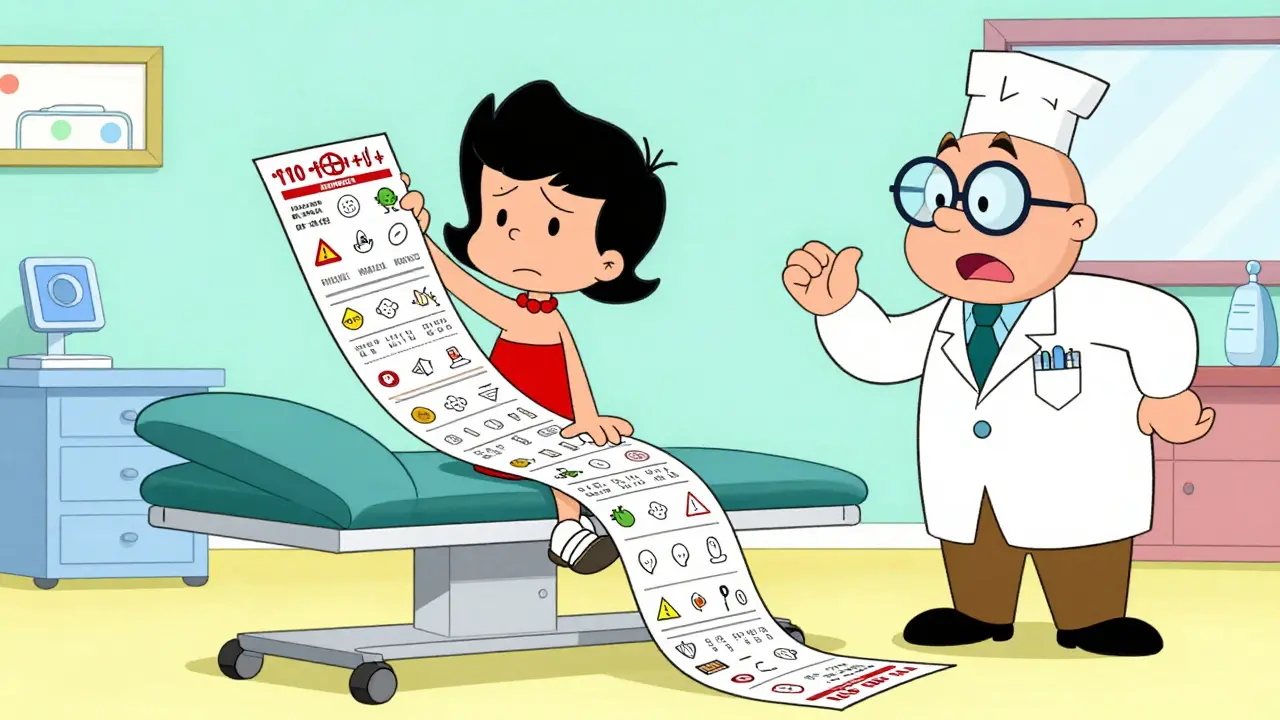
You’ve just been handed a new prescription. Your doctor says it’s the best option for your condition, but as you glance at the patient information leaflet, you see a daunting list of possible reactions. Maybe you're worried about fatigue, or perhaps you're terrified of something rare but severe. This is where side effect burden comes into play-the physical and psychological weight of dealing with adverse reactions while trying to get healthy. The problem is, most of us don't actually talk about this enough with our providers. In fact, while 90% of patients want to discuss these risks, only about 66% actually get a clear picture of common side effects before they leave the clinic.
When communication breaks down, the consequences are real. About 68% of patients stop taking their meds because of an unexpected side effect they weren't warned about. This isn't just a minor inconvenience; it leads to a medication non-adherence rate of nearly 50% for people with chronic diseases. If you feel like your doctor spends more time typing into a computer than explaining your treatment, you aren't alone. But you have the power to change that dynamic. By moving from a passive listener to an active partner in your care, you can manage your health without the anxiety of the unknown.
What Exactly Is Side Effect Burden?
Before you head into your next appointment, it's helpful to understand what you're actually discussing. Side effect burden is the cumulative impact of adverse drug reactions on a patient's quality of life, encompassing both physical symptoms and the mental stress of managing them. It is different from an allergic reaction. While an allergy is an immune response, a side effect is an undesired effect that happens even when the drug is taken at the correct dose.
These effects usually fall into two buckets: common issues and serious risks. For example, something like a mild headache might affect 10-30% of users. On the other hand, a severe reaction like liver failure is incredibly rare, affecting perhaps 0.01% of patients. The "burden" occurs when the side effects-even the mild ones-start to outweigh the benefits of the medication, making you want to quit the treatment entirely.
The Gap in Doctor-Patient Communication
Why is there such a disconnect? Most doctors are squeezed for time. In a typical 15-minute visit, a provider might only have about 1.8 minutes to discuss your medications. Because of this, they often use a "shorthand" approach. Research shows that physicians discuss an average of only 3.2 side effects per drug, even though the medical database for that drug might list 25 different reactions. They are trying to protect you from the Nocebo Effect, which is when simply being told about a side effect makes you more likely to experience it-sometimes increasing the occurrence by up to 40%.
While they mean well, this "filtered" information often leaves patients feeling blindsided. You might hear that a drug "can cause nausea," but that doesn't tell you if that happens to 1 in 10 people or 1 in 1,000. This vagueness is a major source of frustration. To get the most out of your visit, you need to push for specific frequency data and a clear management plan.
Strategies for a Better Conversation
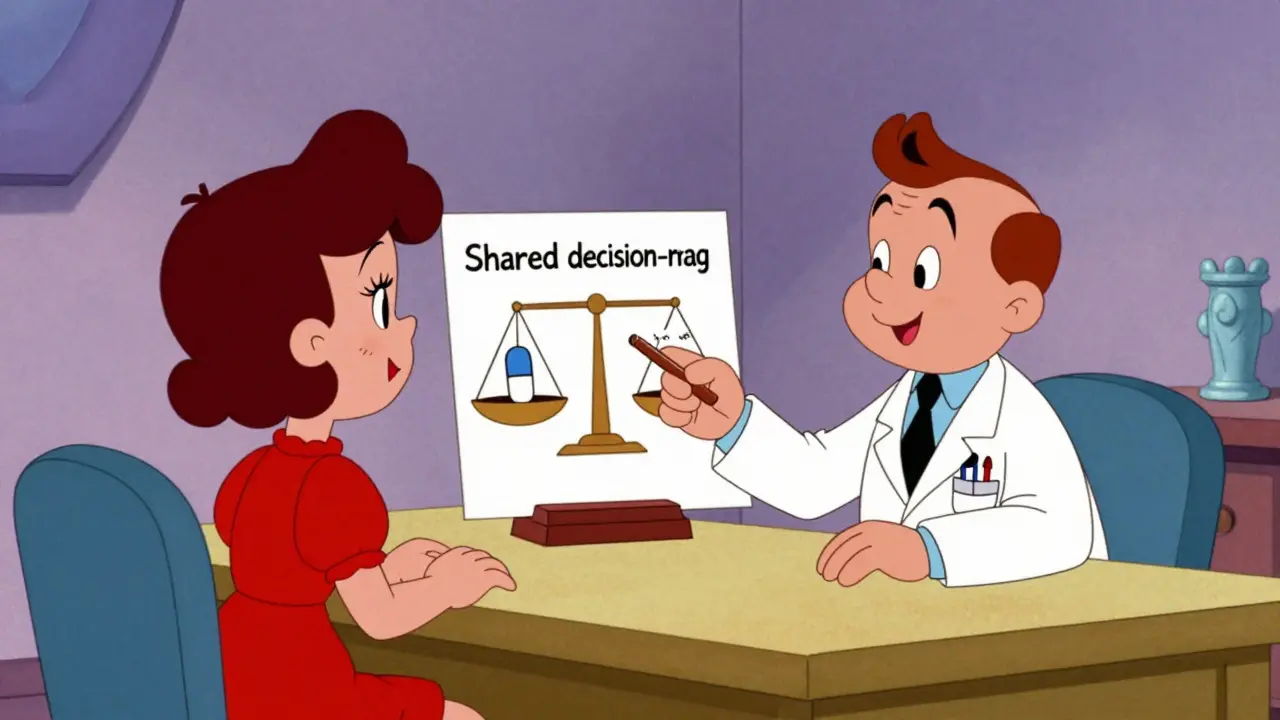
You don't need to be a medical expert to get the answers you need. The goal is to reach a state of Shared Decision-Making, where you and your provider agree on a treatment plan based on your specific preferences and risk tolerance. Here is a practical three-step process to guide your next conversation:
- Define Your Information Preference: Not everyone wants every single detail. Some people prefer to know only the "danger zone" risks, while others want a comprehensive list. Tell your doctor clearly: "I want to know both the common nuisances and the rare but serious risks so I can monitor myself."
- Ask for "Risk-Stratified" Information: Instead of asking "What are the side effects?", ask "How common is this specific effect?" Try to get numbers. Is it 1 in 10 patients? 1 in 100? This helps you weigh the actual risk versus the fear.
- Co-Create a Management Plan: Knowing a drug causes nausea is only half the battle. The other half is knowing what to do about it. Ask: "If I experience X, what is the first thing I should try? Should I take this with food? Should I call you immediately, or is this something that goes away after a week?"
If you are starting a new medication, you can also suggest a "slow start." This involves beginning with a lower dose to let your body acclimate to the drug before moving up to the full therapeutic dose. This simple move can significantly lower the initial side effect burden and make you more likely to stick with the treatment.
| Approach | What it is | Impact on Patient | Adherence Rate |
|---|---|---|---|
| Comprehensive Disclosure | Listing every possible side effect from the database | Increases anxiety by ~34% | Lower (due to fear) |
| Risk-Stratified | Focusing on common and severe effects with frequencies | Lowers anxiety; provides clarity | Increases by ~18% |
| Vague/Minimal | Briefly mentioning a few effects without data | Leads to surprise and distrust | Lowest (high discontinuation) |
Navigating the Healthcare System
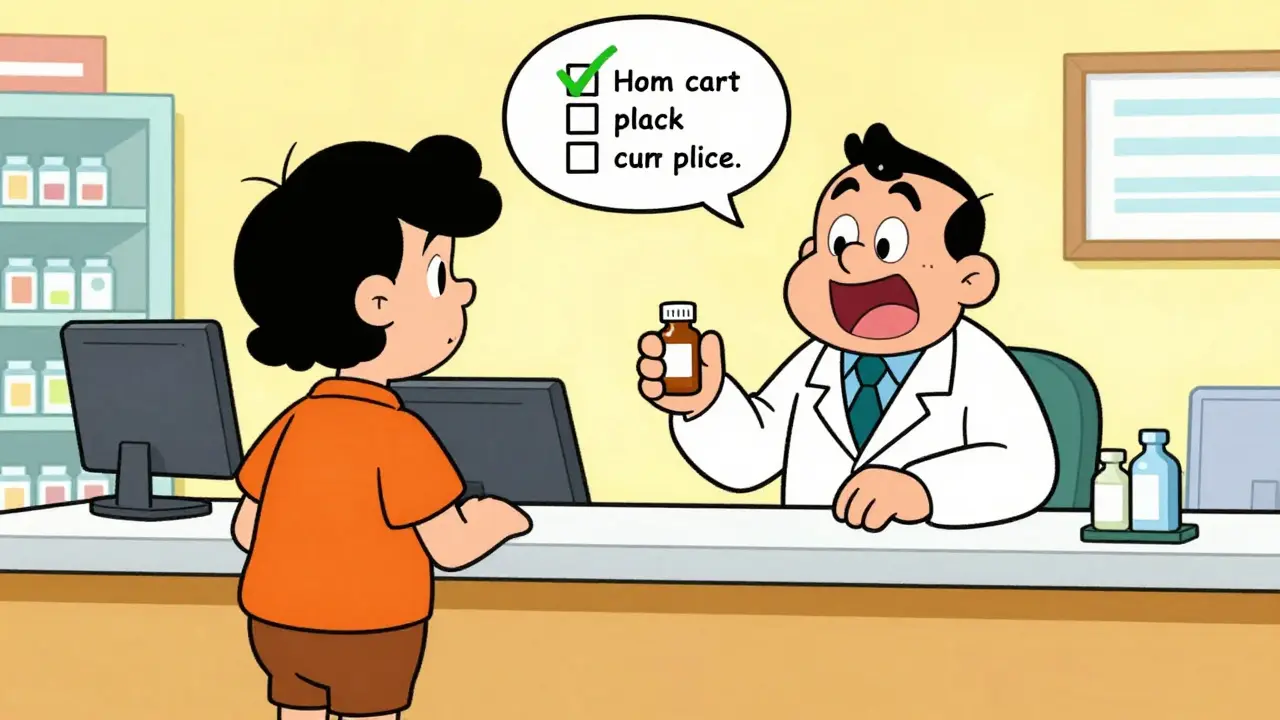
Your doctor isn't the only person in the loop. Many patients find that a hybrid approach works best. About 51% of people prefer getting side effect information from both their physician and their pharmacist. While your doctor manages the diagnosis and prescription, Pharmacists are often more attuned to the specific chemical interactions and the "fine print" of the medication. If your doctor's office is too rushed, the pharmacy counter is a great place to get a second, more detailed explanation.
Additionally, take advantage of the tools your clinic might offer. Many offices now use electronic health records that include patient education materials. Ask for an "after-visit summary" that lists the side effects you discussed. Having it in writing improves recall and gives you a reference point when you're at home and wondering if a new symptom is related to your medication.
Handling Non-Adherence Without Guilt
Let's be honest: sometimes the side effects are just too much. You might stop taking your pills for a week or two because you can't stand the dizziness or the insomnia. When you finally go back to the doctor, the instinct is to say, "Yes, I've been taking them," because you don't want to seem like a "bad patient."
Stop doing that. Your doctor needs to know if a drug is intolerable so they can switch you to an alternative. The American Medical Association now encourages providers to respond positively when patients admit to non-adherence. If you tell them you stopped the med, a good provider will respond with curiosity rather than judgment. They might say, "Thank you for letting us know; let's figure out why this isn't working and find a better option together." Being honest about the burden is the only way to find a treatment that actually fits your life.
Is every side effect dangerous?
No. Side effects range from minor nuisances, like a runny nose or dry mouth, to life-threatening events like liver failure or heart attack. The key is to ask your provider to categorize them into "common/mild," "infrequent/moderate," and "rare/severe" so you know what to expect and what to worry about.
What should I do if I suspect a side effect but can't reach my doctor?
First, check the Patient Information document that came with your medication. If the symptom is listed as "seek immediate medical attention," go to urgent care or the ER. For mild symptoms, keep a daily log of when the symptom occurs and how long it lasts. This data is incredibly valuable for your doctor to determine if the effect is dose-related or a genuine adverse reaction.
Can I ask for a different medication if I'm scared of the side effects?
Absolutely. This is part of the shared decision-making process. You can discuss the trade-off between symptom relief and side effect burden. In many cases, there are alternative drugs in the same class that may have a different side effect profile that is more tolerable for you.
How do I know if it's a side effect or just a coincidence?
It can be tricky. A helpful rule of thumb is to look at the timing: did the symptom start shortly after beginning the medication or increasing the dose? Does it disappear if you miss a dose (under doctor supervision)? Tracking these patterns in a journal helps your provider distinguish between a drug reaction and an unrelated health issue.
Why do some people get side effects while others don't?
Everyone's biology is different. Factors like genetics, age, weight, and other medications you're taking (polypharmacy) all influence how your body processes a drug. This is why personalized communication is so important; what is a "common" side effect for the general population might be a certainty-or a rarity-for you.
Next Steps for Your Health Journey
If you're feeling overwhelmed by your current medication regimen, start by auditing your apathetic habits. Grab your pill bottles and write down every single symptom you've noticed since starting each one, no matter how small. When you go into your next appointment, don't wait for the doctor to bring up side effects-bring them up yourself at the very beginning of the visit.
For those managing multiple chronic conditions, consider requesting a "pre-visit medication review." Some clinics have medical assistants who can go over your adherence and symptoms before the doctor even enters the room. This clears the air and ensures that the few minutes you have with your physician are spent solving problems rather than just listing them. Your goal isn't just to take a pill; it's to improve your quality of life. Don't let an unmanaged side effect burden stand in the way of that.
william wang
Pharmacists are seriously underrated for this stuff. I've always found that they have a way more practical handle on how a drug actually behaves in the real world compared to the quick check-ups at the clinic.
Anmol Garg
It's really about finding that balance between the clinical need and the human experience. We often forget that the person taking the pill is more important than the pill itself. Just taking a moment to breathe and be honest with your provider can change the whole trajectory of your healing process. It's a journey we're all on together, just trying to feel a bit better in a complex world.
Tama Weinman
The nocebo effect is just a convenient excuse for doctors to keep us in the dark. Why is it that they only "protect" us from the bad news but never mention the alternative treatments that aren't funded by big pharma? It's all part of the same script to keep patients compliant and dependent on a system that views us as numbers on a chart rather than human beings. The "filtered" information is just a way to ensure we don't ask too many questions about why we're really being prescribed these things in the first place.
Anna BB
This is such a gentle reminder that we have a voice in our own wellness!!! I love the idea of a management plan... it just feels so much more holistic to actually prepare for the bumps in the road rather than just hoping for the best!!!
Maggie Graziano
they just want us hooked on the chemicals
Josephine Wyburn
Omg I literally cannot even deal with how triggering it is to think about the time I started that one medication and my doctor basically ignored me for ten minutes while he stared at his screen 🙄 and then I woke up with the most HORRIBLE rash and I felt like my whole world was crashing down because nobody told me it could happen 😭 it was just such a nightmare and I felt so alone in my suffering while everyone else just told me to "deal with it" because it was for my own good 💔 honestly the trauma of not being heard by medical professionals is just a whole other level of pain 😩😫
ira fitriani
YES!! Be your own biggest cheerleader and advocate! 🌟 Don't let anyone make you feel small in that office! You deserve to know exactly what's going into your body! Let's get those answers! 💪✨
Nikki Grote
From a clinical perspective, achieving pharmacotherapeutic synergy requires mitigating the iatrogenic effects that lead to non-adherence. Implementing a risk-stratified disclosure model effectively minimizes the nocebo response while maximizing patient autonomy.
Cheryl C
idc what they say the US healthcare system is a joke lol 😂 just pay for a private doc if u want them to actually listen to u 🇺🇸
Heer Malhotra
It is highly regrettable that patients in certain regions are forced to navigate such inefficient systems. In India, we maintain a strong sense of community and duty, yet the professionalism of medical practitioners must be held to a higher moral standard to ensure the welfare of the populace.
Kim Hyunsoo
The concept of a "slow start" is kind of a wild game-changer... like just easing the body into the chaos of chemicals :) 🌀
Theresa Griffin MEP
Direct communication is essential. Be assertive.
Bonnie Piersall
Totally agree on the honesty part. There's no point in playing the "perfect patient" if you're miserable. Just lay it all out there and find a vibe that actually works for your body. It's way better to pivot now than to crash and burn later.
Colleen Tankard
Just chilling and reading through this... glad people are talking about the mental side of meds 🌿😊
Rock Stone
Keep that energy up everyone! Just keep tracking your symptoms and staying active in your own health journey. You've got this! Let's all start asking those specific questions next time we're at the clinic! 🚀