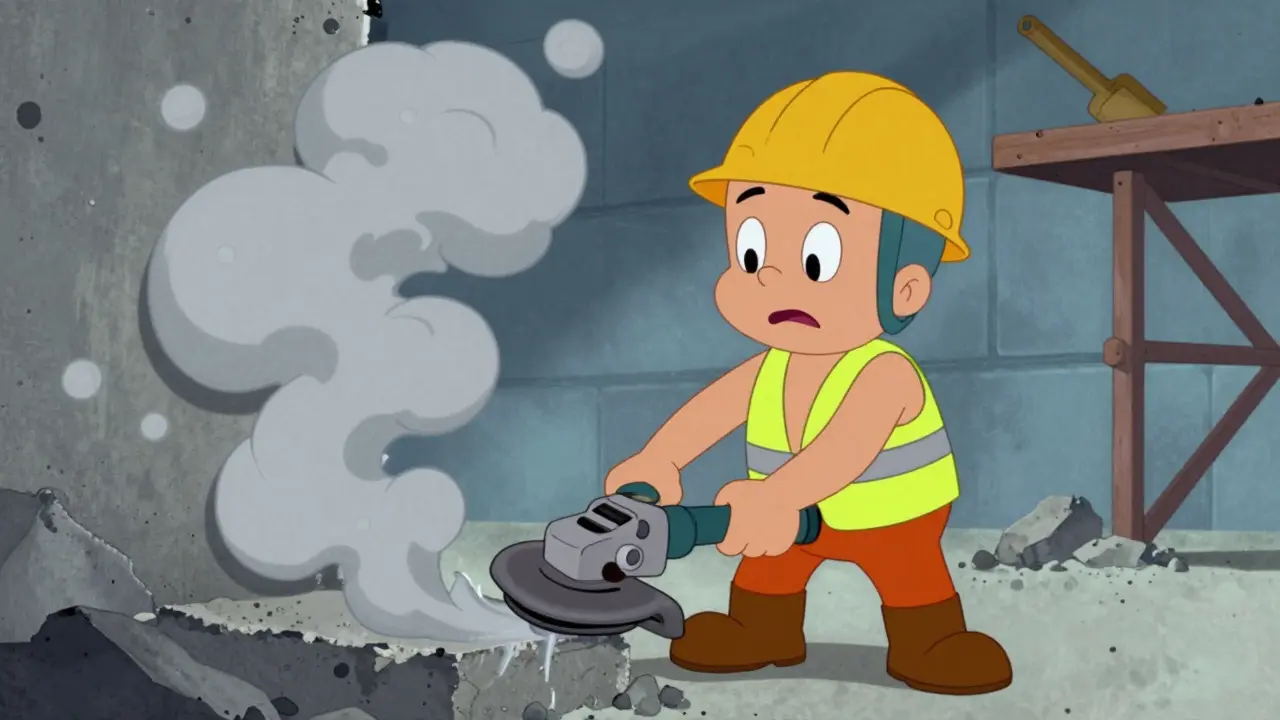
Imagine working a full career in construction or mining, only to find out at age 50 that your lungs are slowly scarring from dust you breathed in for decades. It sounds like an old story, but it is still happening today. Occupational lung diseases are conditions caused by breathing in harmful particles at work, such as crystalline silica dust or asbestos fibers. The scary part? They are entirely preventable with the right tools and habits.
Many workers assume that if they don't see the dust, they aren't breathing it in. That’s a dangerous myth. Particles can be so small they stay suspended in the air for hours, waiting to settle deep into your alveoli. This article breaks down exactly what causes these diseases, how to spot the early signs, and the specific steps you can take-whether you are a worker, a supervisor, or a concerned family member-to keep your lungs healthy.
Understanding the Culprits: Silica and Asbestos
To protect yourself, you first need to know what you’re up against. Two of the most common causes of occupational lung disease are silicosis and asbestosis. While both lead to lung scarring (fibrosis), they come from different sources and behave differently in the body.
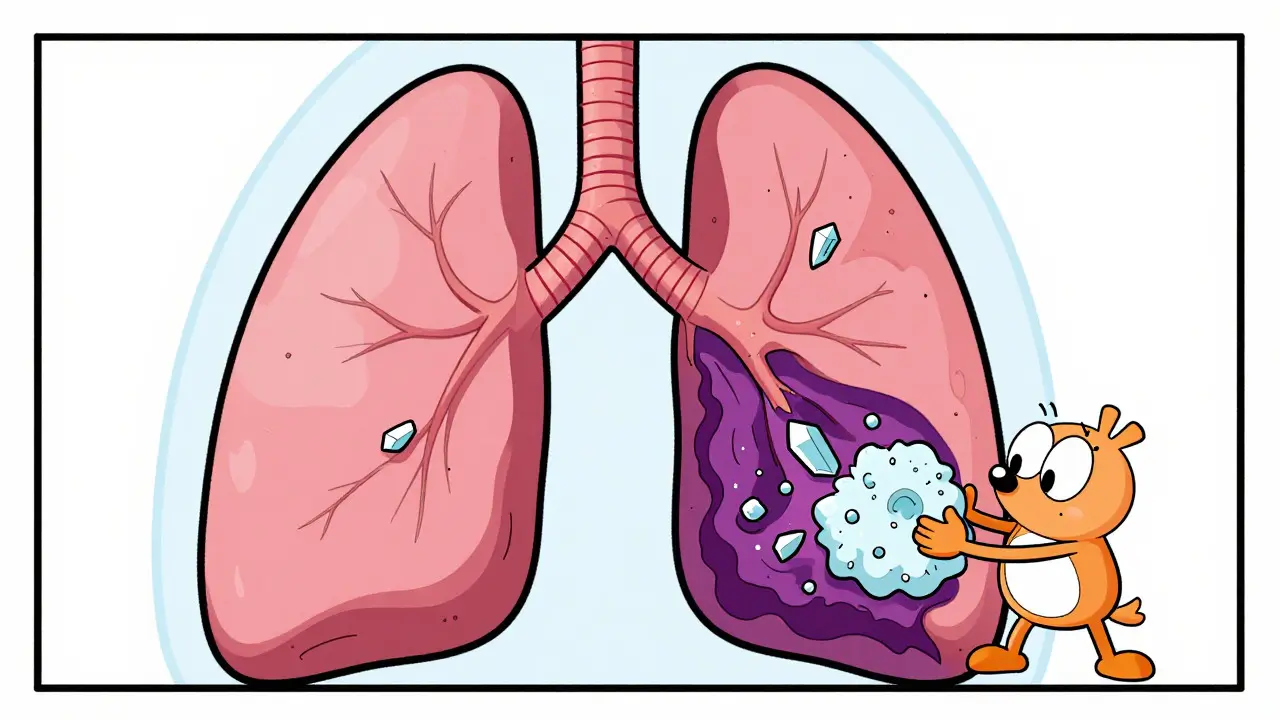
Silicosis occurs when you inhale crystalline silica dust, which is found in materials like sand, rock, concrete, and clay. When these sharp, microscopic shards land in your lungs, your immune system tries to fight them off. Instead of destroying the particles, your body wraps them in scar tissue. Over time, this scarring stiffens the lungs, making it harder to breathe. You might think this only happens in mines, but silica is everywhere in modern construction. Cutting brick, grinding concrete, or using abrasive blasting all release high levels of silica dust.
Asbestosis is caused by long-term exposure to asbestos fibers. Asbestos was once widely used in insulation, flooring, and roofing because it resists heat and fire. Unlike silica, which is a mineral dust, asbestos consists of thin, needle-like fibers. When these fibers get into your lungs, they lodge themselves in the tissue and cause chronic inflammation. The International Agency for Research on Cancer (IARC) classifies asbestos as a Group 1 carcinogen, meaning there is no known safe level of exposure. Even brief, intense exposures during renovation work can pose significant risks.
| Feature | Silicosis | Asbestosis |
|---|---|---|
| Cause | Inhalation of crystalline silica dust | Inhalation of asbestos fibers |
| Common Sources | Concrete cutting, sandblasting, mining, stone carving | Old building insulation, brake pads, pipe lagging, roofing tiles |
| Lag Time | Typically 10-30 years after exposure begins | Usually 15-40 years after exposure begins |
| Key Risk Factor | Dry cutting without water suppression | Disturbing aged, friable asbestos materials |
| Cancer Link | Increased risk of lung cancer and tuberculosis | High risk of mesothelioma and lung cancer |
Why Prevention Works Better Than Treatment
Here is the hard truth: there is no cure for silicosis or asbestosis. Once the scarring starts, it is permanent. Treatment focuses on managing symptoms like shortness of breath and coughing, often through oxygen therapy or pulmonary rehabilitation. But prevention? Prevention stops the damage before it starts.
The most effective way to prevent these diseases is by following the Hierarchy of Controls. This is a standard framework used by safety professionals to reduce hazards. It ranks controls from most effective to least effective:
- Elimination: Remove the hazard entirely. For example, stop using sandblasting and switch to a less dusty method.
- Substitution: Replace the hazardous material with a safer one. Use low-silica abrasives instead of pure silica sand.
- Engineering Controls: Isolate people from the hazard. This includes ventilation systems and wet methods.
- Administrative Controls: Change how people work. Rotate shifts to limit individual exposure time.
- Personal Protective Equipment (PPE): Protect the worker with gear like respirators. This is the last line of defense, not the first.
Many workplaces skip straight to PPE because it’s cheap and easy. But relying solely on masks is risky. If a mask isn’t fitted correctly, or if a worker takes it off to talk, protection drops significantly. Engineering controls, like local exhaust ventilation, can reduce exposure by 80-90%, whereas PPE typically reduces it by only 40-60% when used perfectly.
Practical Steps to Reduce Exposure on Site
You don’t need a PhD in industrial hygiene to make your job site safer. Here are specific, actionable steps that make a real difference.
Use Wet Methods for Cutting and Grinding
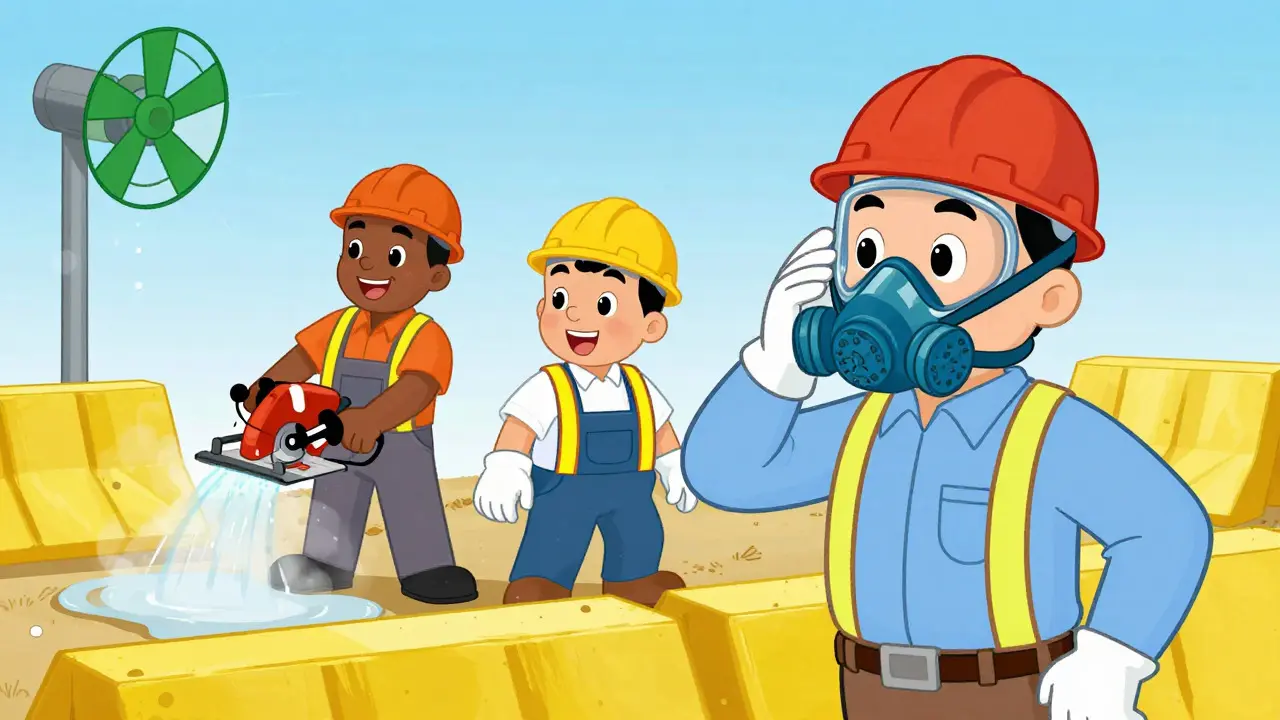
If you are cutting stone, brick, or concrete, use water. Wet cutting suppresses dust at the source. Studies show that wet methods can reduce silica dust exposure by up to 90% compared to dry cutting. If you must cut dry, ensure the tool has a built-in vacuum shroud that captures dust directly at the blade. Don’t just let the dust fly; capture it.
Optimize Ventilation
Air movement matters. Local exhaust ventilation (LEV) systems pull contaminated air away from the worker’s breathing zone. For these systems to work, they need to maintain an air velocity of 100-150 feet per minute at the source. If the fan is too weak or the duct is clogged, the system fails. Check your ventilation setup regularly. In enclosed spaces, general ventilation alone is rarely enough; you need targeted extraction.
Master Your Respirator Fit
If engineering controls aren’t enough, you need a respirator. Not just any mask-a properly fitted one. An N-95 respirator filters out 95% of particles 0.3 microns in size. A P-100 filter offers 99.97% efficiency. But here’s the catch: if the seal around your face leaks, you’re breathing unfiltered air. OSHA requires annual fit testing for all respirator users. More importantly, do a user seal check every time you put it on. Inhale sharply while holding the valve closed. If you feel suction, the seal is good. If not, adjust the straps or try a different size.
Comfort is key. If a respirator is uncomfortable, workers will remove it. Look for models with exhalation valves that reduce heat buildup, especially in summer. Keep spare filters in your pocket so you can swap them out immediately when they get dirty. A clogged filter makes breathing harder, leading to non-compliance.
Recognizing Early Signs and Symptoms
Both silicosis and asbestosis have long latency periods. You might not feel anything for 10, 20, or even 30 years after initial exposure. By the time symptoms appear, the disease is often advanced. That’s why regular health monitoring is critical.
Early symptoms are subtle and easy to dismiss as aging or smoking effects. Watch for:
- Persistent dry cough
- Shortness of breath during light activity
- Fatigue that doesn’t go away with rest
- Chest tightness
- Wheezing
The American Thoracic Society recommends spirometry testing-a simple breathing test-at baseline and at least every five years for workers exposed to respiratory hazards. If you have pre-existing conditions like asthma or COPD, annual testing is wise. Catching a decline in lung function early allows for intervention that can slow disease progression by 30-50%. Don’t wait for a diagnosis; monitor your health proactively.
The Role of Workplace Culture and Training
Technology and rules only work if people follow them. This is where culture comes in. A study of 15 construction companies found that those with strong safety cultures reduced respiratory incidents by 65% over three years. What did they do differently?
Supervisors modeled the behavior. If the foreman wears his respirator correctly every single day, workers are more likely to do the same. If the boss skips the fit check, workers assume it’s optional. Training also matters. OSHA mandates a minimum of two hours for respiratory protection programs, but experts recommend four to six hours initially, with annual refreshers. These sessions shouldn’t just be about rules; they should explain why the precautions matter. Show real case studies. Let workers share their experiences.
Also, empower workers to speak up. If someone sees a colleague working without proper protection, they should be able to report it without fear of retaliation. OSHA’s Whistleblower Protection Program exists for this reason. A culture where safety is valued over speed leads to fewer accidents and healthier workers.
Regulatory Landscape and Future Trends
Knowing the rules helps you advocate for better conditions. In the US, OSHA’s Respiratory Protection Standard (1910.134) applies to millions of workplaces. The 2016 Silica Standard set a permissible exposure limit of 50 micrograms per cubic meter of air, expected to save hundreds of lives annually. Enforcement is increasing. In 2021 alone, OSHA cited over 1,000 construction companies for silica violations, totaling $3.2 million in fines.
Looking ahead, technology is changing the game. Wearable sensors now provide real-time data on dust exposure, allowing supervisors to intervene instantly if levels spike. Digital platforms like NIOSH’s 'Prevent eTool' offer industry-specific guidance, helping small businesses implement best practices without hiring expensive consultants. The goal, as outlined by the European Respiratory Society, is to eliminate occupational lung diseases globally by 2030. It’s an ambitious target, but with consistent enforcement and cultural change, it’s achievable.
Can I get silicosis from just one exposure event?
While silicosis is typically associated with long-term exposure, acute silicosis can develop within weeks or months after a very high-intensity exposure, such as during sandblasting without proper protection. However, chronic silicosis, the more common form, usually results from repeated exposure over many years.
Is an N-95 mask enough for asbestos removal?
Generally, no. For asbestos abatement, half-face respirators with P-100 filters are recommended because they offer higher filtration efficiency (99.97%) and a tighter seal. N-95s are acceptable for some low-exposure tasks involving silica, but for asbestos, where there is no safe level, higher protection is standard practice.
How often should I get my lungs checked if I work in construction?
You should get a baseline spirometry test when you start working in a high-risk environment. After that, repeat the test every five years, or annually if you have existing respiratory issues. Regular checks help detect early declines in lung function before symptoms become severe.
Does smoking make occupational lung disease worse?
Yes, significantly. Smoking increases the risk of developing lung cancer from asbestos exposure by 50-70%. It also worsens the progression of silicosis and asbestosis. Quitting smoking is one of the most impactful things you can do to protect your lung health, regardless of your occupation.
What should I do if my employer won’t provide proper PPE?
First, document the issue and raise it with your supervisor. If unresolved, you can file a complaint with OSHA (or your local equivalent). Workers are protected from retaliation under whistleblower laws. In the meantime, if possible, use your own compliant equipment until the issue is fixed, though employers are legally required to provide necessary PPE.
Fabian Saldana
Great breakdown of the hierarchy of controls! It is so important to remember that PPE is the last line of defense, not the first. I have seen too many sites rely solely on masks when a simple wet-cutting method would have solved the problem entirely. Let's keep pushing for engineering solutions where possible!
Colin Finch
Oh my goodness, did you all see that table comparing silica and asbestos? It is absolutely terrifying how different they are yet lead to such similar fates! The lag time is just... wow. Who knew we could be breathing in death for decades before even knowing it? I am going to go check my old attic insulation right now, just in case. No pressure.
Betty Childers
I work in construction management and this article hits home hard. We recently switched to vacuum shrouds for our concrete cutting crew and the difference in air quality was immediate. It really does save money on sick days too, which nobody talks about enough. Prevention isn't just about health, it's about business continuity as well.
Amy Zalkin
my uncle was a sandblaster for like 20 years back in the day and he got sick real fast after he stopped working. everyone thought it was just age or smoking but turns out it was acute silicosis. its wild how invisible the danger is until its too late. gotta respect the dust cloud lol
Alex Brown
The philosophical implication here is profound: our modern comfort often comes at the cost of long-term biological integrity. When we prioritize speed over safety, we are essentially borrowing from our future selves with exorbitant interest rates. The latency period acts as a cruel buffer, allowing us to ignore the consequences until the debt becomes unpayable. It forces us to confront the reality that prevention is an act of faith in the future, requiring discipline in the present. We must value the unseen as much as the visible if we wish to preserve our health.
Kaylyn Mello
so glad someone wrote this up nicely because i always feel like we forget about the ventilation part. its not just about the mask its about the air around you. my boss finally got some better fans installed last month and honestly its made a huge difference in how tired i get by the end of the shift. less breathless means more energy for actually doing the job right
joyce Hogewoning
you know what the most dramatic thing about all this is that we basically have the technology to fix it like yesterday but somehow we still let people breathe in poison every single day without blinking their eyes or caring one bit about whether they live to see their grandchildren grow up or not which is just absolutely insane and makes you want to scream into a pillow every morning when you wake up and realize another day has started with no change in sight whatsoever
Thhomas Fox
Spot on regarding the culture piece. If the foreman doesn't wear his gear, the crew won't either. It's about leading by example. Keep it up folks, safety is a mindset, not just a checklist item.
Owen John
OSHA fines are a drop in the ocean compared to the liability insurers quietly accumulate. They love the data. Wearables? Sure, track us. But who owns the data? The corporation, naturally. Another tool for surveillance disguised as care. Enjoy your sensors, workers. They're watching your breath count while you watch the clock. Classic.
Maneesh kv
great info 🙌 but in india we dont have osha 😤 we have rules but no enforecement 💀 need to start our own safety groups in local areas 👊🔥